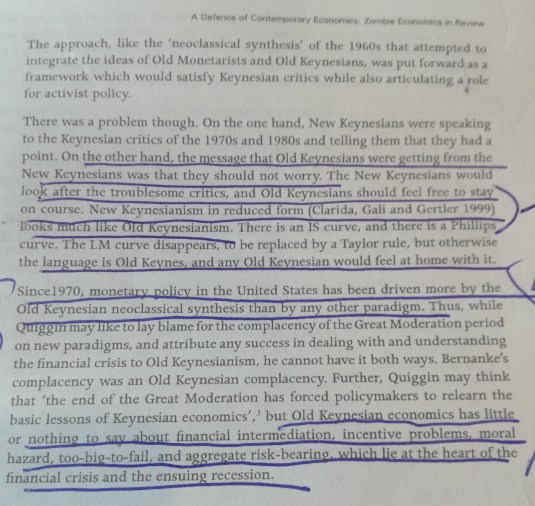
Which dead macroeconomist is to blame to monetary policy prior to the GFC?
19 Sep 2018 Leave a comment
in budget deficits, business cycles, fiscal policy, global financial crisis (GFC), great recession, macroeconomics, monetarism, monetary economics Tags: Keynesian macroeconomics
The current state of the economy Edward Prescott 2013
19 Sep 2018 Leave a comment
in budget deficits, business cycles, economic growth, Edward Prescott, Euro crisis, fiscal policy, global financial crisis (GFC), great recession, macroeconomics, monetary economics
Entrevista con Edward Prescott
07 Sep 2018 Leave a comment
in budget deficits, business cycles, development economics, economic growth, Edward Prescott, fiscal policy, global financial crisis (GFC), great depression, great recession
Edward Prescott, Monetary Policy with 100% Reserve Banking: An Exploration
06 Sep 2018 Leave a comment
in budget deficits, business cycles, economic growth, Edward Prescott, global financial crisis (GFC), great recession, macroeconomics, monetary economics
Nobel Symposium Harald Uhlig Modern DSGE models: Theory and evidence
17 Aug 2018 Leave a comment
in budget deficits, business cycles, economic growth, fiscal policy, great recession, macroeconomics, monetary economics Tags: real business cycles
From Lucas and Sargent’s After Keynesian Macroeconomics 1979
15 Aug 2018 Leave a comment
in budget deficits, business cycles, economic growth, great recession, history of economic thought, macroeconomics, monetary economics, Robert E. Lucas Tags: conjecture and refutation, Keynesian macroeconomics, stagflation, Thomas Sargent
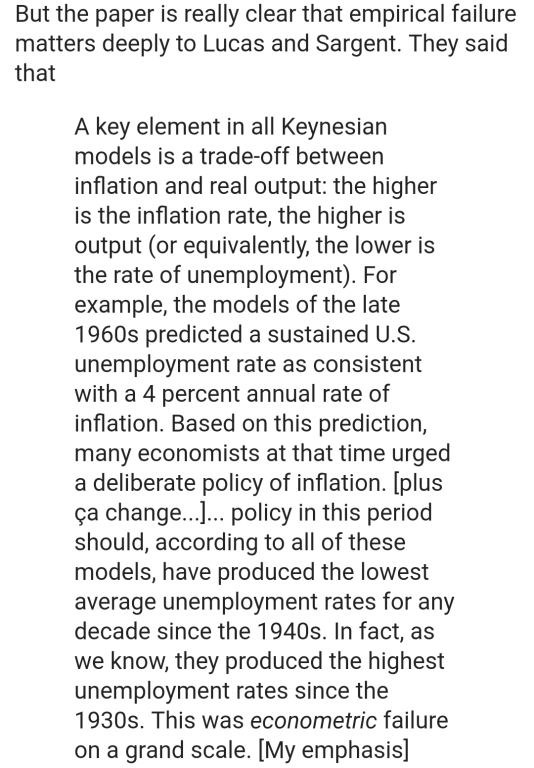
The Queen didn’t ask Keynesians about not predicting the 1970s stagflation, a phenomenon their macroeconomics strictly forbade
15 Aug 2018 2 Comments
in budget deficits, business cycles, economic growth, economic history, fiscal policy, global financial crisis (GFC), great recession, history of economic thought, macroeconomics, monetary economics Tags: conjecture and refutation, Keynesian macroeconomics, stagflation
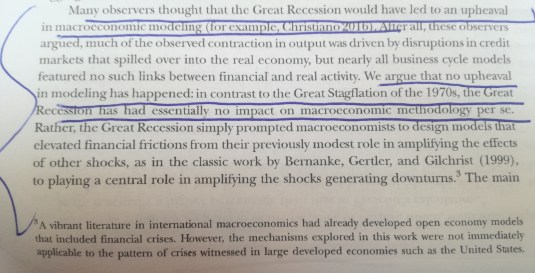
Source: Kehoe, Midrigan and Pastorino 2018.
New Keynesian macroeconomics isn’t a progressive research programme
06 Aug 2018 Leave a comment
in budget deficits, business cycles, economic growth, fiscal policy, great depression, history of economic thought, macroeconomics, monetarism, monetary economics, Robert E. Lucas Tags: New Keynesian macroeconomics

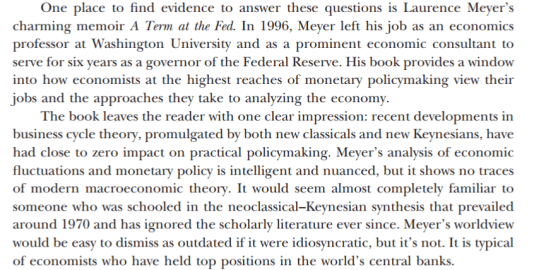
My favorite Greg Mankiw quote on the influence of modern macroeconomics
26 Jul 2018 Leave a comment
in budget deficits, business cycles, economic growth, fiscal policy, global financial crisis (GFC), great depression, great recession, macroeconomics, monetarism, monetary economics Tags: Greg Mankiw
Thomas J Sargent in conversation with Shekhar Shah
28 Jun 2018 Leave a comment
in budget deficits, development economics, economic growth, economic history, fiscal policy, growth disasters, growth miracles, labour economics, macroeconomics, unemployment Tags: Thomas Sargent
What Is Ricardian Equivalence?
23 May 2018 1 Comment
in budget deficits, fiscal policy, macroeconomics Tags: Ricardian equivalence
Thomas Sargent v. @AnnPettifor on macroeconomics before the #GFC
24 Apr 2018 Leave a comment
in budget deficits, business cycles, fiscal policy, global financial crisis (GFC), great depression, great recession, macroeconomics, monetary economics, Public Choice Tags: monetary cranks, Thomas Sargent

Game of Theories: The Great Recession
06 Dec 2017 Leave a comment
in budget deficits, business cycles, Euro crisis, fiscal policy, global financial crisis (GFC), great recession, macroeconomics, Public Choice, rentseeking
Debt repayment does not rule out tax cuts
20 Jul 2017 Leave a comment
in budget deficits, politics - New Zealand, public economics
The case for a tax cut is a distinct issue from repaying the recent large budget deficits and balancing the budget over the business cycle.
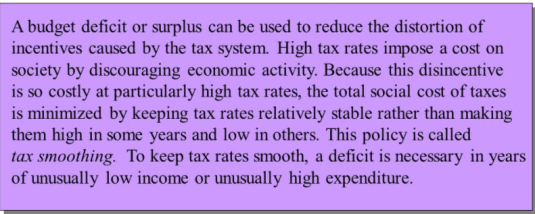
Ministers of Finance should pay more attention to the concept of tax smoothing. Unless something special is happening, income tax rates should be similar from one year to another. We should keep tax rates fairly smooth by borrowing during recessions and emergencies.
Instead, the Government not indexing the income tax thresholds for inflation collected $2.1 billion in extra revenue since 2008 according to Parliamentary Library calculations. Raising the income tax rate thresholds is becoming more pressing. Income growth is starting to push many ordinary taxpayers uncomfortably close to the next threshold and a much higher marginal tax rate. For example, 30% rather than the 17.5% income tax rate many taxpayers face.
New Zealand is already left behind on company tax rates; ours is currently 28%. The Australian company tax rate may drop to 25%; the British company tax rate is going down to 17% by 2020.
Large public deficits have their place
Prudent public debt management dictates that governments run temporary budget deficits in recessions and other emergencies such as the Canterbury earthquake and repay that debt as better times return. Recessions and natural disasters are infrequent so this extra debt should be paid down at a measured speed, not a frantic pace at the expense of other tax policy goals.
An increase in the budget deficit smooths over these bad times and avoids taxes going up and down like a Jack-in-the-Box over the business cycle. Who raises taxes in a recession?
Beware of foul-weather fiscal conservatives
After the start of the recession in 2009, foul weather fiscal conservatives wanted to do just that. The same usual suspects who always advocate bigger government argued for higher taxes rather than running a larger budget deficit, which New Zealand did. Imagine the massive income tax rises required every recession and in the last recession in particular if the large budget deficits were not run?
The large public debt from the temporary budget deficits that smoothed over the last recession is no special or additional reason to postpone income tax cuts. A sound long-term fiscal strategy has tax rates at levels that make up on the deficits in bad times with surpluses in the good times. Slowly repaying debts accumulated in a recession is a routine part of prudent public debt management.
There is room for tax cuts
Every budget allocates about $1.5 billion for new policy proposals that can be adopted without the Treasury thinking that they might harm long-term fiscal stability.
New Zealand budget allows for up to $1.5 billion on new policies every year. If this new spending was justified despite the large public debt from the recent recession, some tax cuts are too. They could start with raising the income tax rate thresholds to make up for past inflation.


Recent Comments