Revisiting Empirical Macroeconomics with Robert Barro (Harvard Economics…
28 Sep 2025 Leave a comment
in budget deficits, business cycles, economic growth, fiscal policy, history of economic thought, macroeconomics, monetary economics
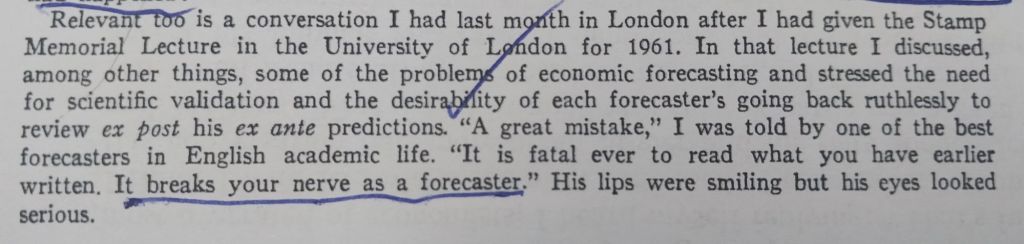
Samuelson on forecasting as a vocation
23 Sep 2025 Leave a comment
in budget deficits, business cycles, economic growth, fiscal policy, human capital, labour economics, macroeconomics, occupational choice Tags: forecasting errors
💰 Inflation, Debt & The Future of the Economy | A Conversation with John Cochrane
12 Sep 2025 1 Comment
in budget deficits, business cycles, currency unions, fiscal policy, history of economic thought, inflation targeting, macroeconomics, Milton Friedman, monetarism, monetary economics Tags: monetary policy
Reading Grant Robertson
25 Aug 2025 Leave a comment
in budget deficits, business cycles, economic growth, economic history, economics of bureaucracy, fiscal policy, inflation targeting, macroeconomics, monetary economics, politics - New Zealand, Public Choice Tags: economics of pandemics, monetary policy

I got home from Papua New Guinea at 1:30 on Saturday morning and by 3:30 yesterday afternoon I’d finished Grant Robertson’s new book, Anything Could Happen, and in between I’d been to two film festival movies, a 60th birthday party, and church. It is that sort of book, a pretty easy read. In some respects, […]
Reading Grant Robertson
The Milei Miracle, Part II
23 Jul 2025 Leave a comment
in applied price theory, budget deficits, comparative institutional analysis, constitutional political economy, development economics, economic growth, fiscal policy, growth disasters, growth miracles, law and economics, liberalism, libertarianism, macroeconomics, property rights Tags: Argentina

I almost feel sorry for the 108 leftist economists who predicted back in 2023 that Argentina would suffer if Javier Milei won the presidential election. Not only were they disappointed when he enjoyed a landslide victory, but the subsequent events in Argentina have shown that they were wildly wrong (all of which is discussed in […]
The Milei Miracle, Part II
Greg Mankiw on Modern Monetary Theory
30 Jun 2025 Leave a comment
in applied price theory, budget deficits, business cycles, economic growth, economics of education, fiscal policy, macroeconomics, monetary economics Tags: cranks, monetary policy
Modern Monetary Theory (MMT) had a real moment in the spotlight in the late 2010s, with political support in the US from Presidential hopefuls Bernie Sanders and Alexandria Ocasio-Cortez. However, mainstream economists mostly didn’t understand it, or ridiculed it, or both. I mostly ignored the detail of it, only picking up what I knew about it from…
Greg Mankiw on Modern Monetary Theory
*Crisis Cycle*
02 Jun 2025 Leave a comment
in budget deficits, business cycles, currency unions, Euro crisis, fiscal policy, global financial crisis (GFC), great recession, history of economic thought, international economic law, international economics, macroeconomics, monetarism, monetary economics, Public Choice Tags: European Union
That is the new book by John H. Cochrane, Luis Garicano, and Klaus Masuch, and the subtitle is Challenges, Evolution, and Future of the Euro. Excerpt: Our main theme is not actions taken in crises, but that member states and EU institutions did not clean up between crises. They did not reestablish a sustainable framework […]
*Crisis Cycle*
MPC members speaking
31 May 2025 Leave a comment
in budget deficits, business cycles, economic growth, economics of bureaucracy, macroeconomics, monetary economics, politics - New Zealand, Public Choice Tags: monetary policy

In both The Post and the Herald this morning there are reports of interviews with executive members of the Reserve Bank’s Monetary Policy Committee: the Bank’s chief economist Paul Conway in The Post and his boss, and the deputy chief executive responsible for monetary policy and macroeconomics, Karen Silk in the Herald. In a high-performing […]
MPC members speaking
May Monetary Policy Statement
30 May 2025 Leave a comment
in budget deficits, business cycles, economic growth, fiscal policy, inflation targeting, labour economics, macroeconomics, monetary economics, politics - New Zealand, public economics, unemployment Tags: monetary policy
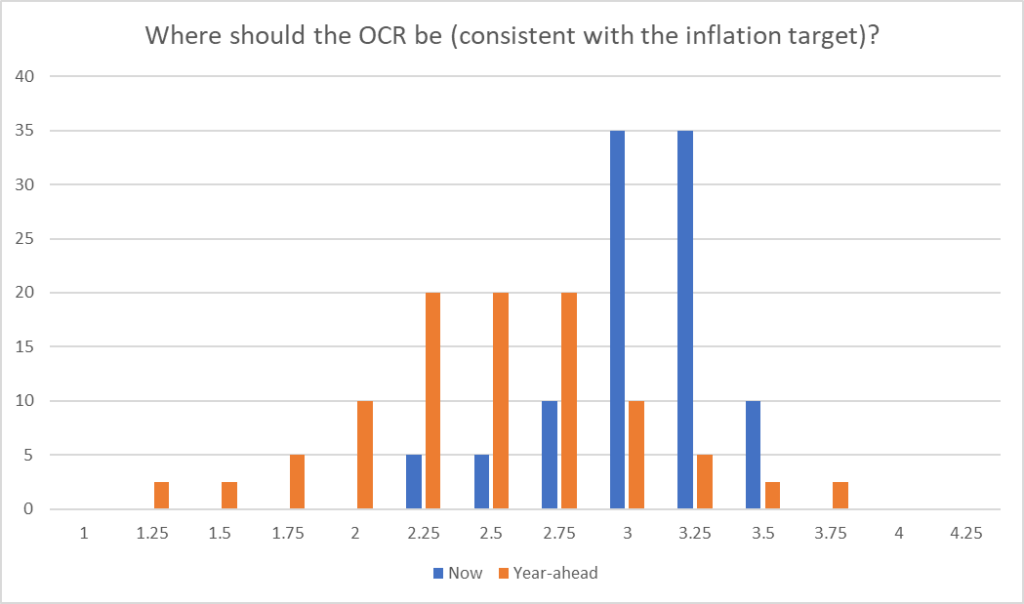
Michael Reddell writes – Procrastinating this morning, I asked Grok to write a post in my style on yesterday’s Monetary Policy Statement. Suffice to say, I think I’ll stick to thinking and writing for myself for the time being. Among the many oddities of Grok’s product was the conviction that Adrian Orr was still Governor. Mercifully […]
May Monetary Policy Statement
Some more post-Budget thoughts
27 May 2025 Leave a comment
in budget deficits, business cycles, economic growth, fiscal policy, macroeconomics, politics - New Zealand, Public Choice, public economics Tags: taxation and investment

On two separate themes; aggregate fiscal policy, and the Investment Boost initiative. Aggregate fiscal policy Over the weekend for some reason I was prompted to look up the Budget Responsibility Rules that Labour and the Greens committed to in early 2017 (my commentary on them here). At the time, the intention seemed to be to […]
Some more post-Budget thoughts
Deficits forever?
24 May 2025 Leave a comment
in budget deficits, fiscal policy, macroeconomics, politics - New Zealand, Public Choice, public economics
Eric Crampton writes – This week’s budget projected no return to balanced books. It is difficult to see how recent budgets from National and Labour comply with the Public Finance Act’s fiscal responsibility provisions. It is a problem.
Deficits forever?
The (deeply underwhelming) Budget
23 May 2025 Leave a comment
in applied price theory, budget deficits, economic growth, economics of regulation, entrepreneurship, fiscal policy, macroeconomics, politics - New Zealand, Public Choice, public economics

Michael Reddell writes – There were good things in the Budget. There may be few/no votes in better macroeconomic statistics and, specifically, a monthly CPI but – years late (for which the current government can’t really be blamed) – it is finally going to happen.
The (deeply underwhelming) Budget
Fiscal starting points
19 May 2025 Leave a comment
in budget deficits, business cycles, economic growth, fiscal policy, macroeconomics, politics - New Zealand, Public Choice Tags: economics of pandemics

Not that long ago, New Zealand’s fiscal balances looked pretty good by advanced country standards. Sure, the fiscal pressures from longer life expectancies were beginning to build – as they were in most of the advanced world – but in absolute and relative terms New Zealand still looked in pretty good shape. Just a few […]
Fiscal starting points
Interview with Robert Barro: Empirical Macroeconomics
24 Apr 2025 1 Comment
in budget deficits, business cycles, econometerics, economic history, fiscal policy, macroeconomics
Jon Hartley serves as interlocutor in “Revisiting Empirical Macroeconomics with Robert Barro” (Hoover Institution, Capitalism and Freedom Podcast, March 25, 2025, audio and transcript available). Here are a few of the comments from Barro that especially caught my eye. One basic question in economics is about “the multiplier”–that is, how much will an increase in…
Interview with Robert Barro: Empirical Macroeconomics
Bernanke on inflation targeting
09 Mar 2025 Leave a comment
in applied price theory, budget deficits, business cycles, economic growth, economic history, financial economics, fiscal policy, history of economic thought, inflation targeting, labour economics, macroeconomics, monetary economics, politics - New Zealand, unemployment Tags: monetary policy

Former chairman of the Federal Reserve Board of Governors (and FOMC), Ben Bernanke, was yesterday the first of two keynote speakers at the Reserve Bank’s conference to mark 35 years of inflation targeting, which first became a formalised thing here in New Zealand. He indicated that he’d be speaking about inflation targeting in general and […]
Bernanke on inflation targeting


Recent Comments