Maybe it’s just because I live in Minnesota, a state where the differences between immigrants from Sweden, Norway, and Finland are still apparent in the names of towns and the surnames of people. But when I run into people who would prefer that the US distribution of income be more equal, they often point to…
Predistribution, Not Redistribution, in the Nordic Countries
15 Sep 2025 Leave a comment
in applied price theory, economic growth, economics of education, fiscal policy, income redistribution, labour economics, labour supply, macroeconomics, poverty and inequality, Public Choice, public economics, rentseeking Tags: Denmark, Finland, Norway, Sweden
💰 Inflation, Debt & The Future of the Economy | A Conversation with John Cochrane
12 Sep 2025 1 Comment
in budget deficits, business cycles, currency unions, fiscal policy, history of economic thought, inflation targeting, macroeconomics, Milton Friedman, monetarism, monetary economics Tags: monetary policy
The Most Important Election(s) of 2025
28 Aug 2025 Leave a comment
in applied price theory, Austrian economics, development economics, economic growth, economics of regulation, fiscal policy, growth disasters, labour economics, labour supply, law and economics, liberalism, libertarianism, macroeconomics, monetary economics, Public Choice, unemployment Tags: Argentina

Javier Milei has generated amazingly good results in just 20 months. But more reform is needed to undo the damage of 80 years of Peronism, which is why I explain that Argentina’s mid-term elections will be very important. Milei wants to turn Argentina into the world’s freest economy. That won’t be possible so long as […]
The Most Important Election(s) of 2025
Reading Grant Robertson
25 Aug 2025 Leave a comment
in budget deficits, business cycles, economic growth, economic history, economics of bureaucracy, fiscal policy, inflation targeting, macroeconomics, monetary economics, politics - New Zealand, Public Choice Tags: economics of pandemics, monetary policy

I got home from Papua New Guinea at 1:30 on Saturday morning and by 3:30 yesterday afternoon I’d finished Grant Robertson’s new book, Anything Could Happen, and in between I’d been to two film festival movies, a 60th birthday party, and church. It is that sort of book, a pretty easy read. In some respects, […]
Reading Grant Robertson
The Greens’ weekend gift to the government
19 Aug 2025 Leave a comment
in economic growth, entrepreneurship, fiscal policy, income redistribution, labour economics, labour supply, macroeconomics, Marxist economics, politics - New Zealand, poverty and inequality, Public Choice, public economics Tags: taxation and entrepreneurship, wealth tax
Roger Partridge writes – The Greens’ coronation of Chlöe Swarbrick at last weekend’s AGM delivered a manifesto for economic transformation that would make Soviet economists nostalgic for their glory days.
The Greens’ weekend gift to the government
Milei’s Achievements…and Challenges
17 Aug 2025 1 Comment
in development economics, economic growth, economics of bureaucracy, economics of regulation, fiscal policy, growth disasters, income redistribution, industrial organisation, labour economics, law and economics, liberalism, libertarianism, macroeconomics, Marxist economics, monetary economics, property rights, Public Choice, public economics, rentseeking, unemployment Tags: Argentina

I’m back in Argentina, the South American country with the world’s best leader. What Javier Milei has accomplished is amazing. And the economic effects have been wonderful. One of my meetings earlier this week was with Marcelo Elizondo, the head of the International Chamber of Commerce for Argentina. He shared a presentation with me that […]
Milei’s Achievements…and Challenges
Treasury states what we all knew
14 Aug 2025 Leave a comment
in fiscal policy, health economics, income redistribution, macroeconomics, politics - New Zealand, Public Choice, public economics Tags: economics of pandemics
The Herald reports: A new Treasury paper has criticised the last Government for overspending during the pandemic, leaving the country with a high level of public debt that makes it vulnerable to future shocks. The paper calculated the total cost of the pandemic at about $66 billion. It put the total fiscal contribution to the […]
Treasury states what we all knew
A Small But Important Victory for Taxpayers
05 Aug 2025 1 Comment
in economics of bureaucracy, fiscal policy, politics - USA, Public Choice

Regular readers know I’m not a Trumpie. Some of his policies are terrible (protectionism), while others are irresponsible (punting on entitlements) or misguided (new tax loopholes). But I have to give credit where credit is due. Unlike every other Republican president over the past six decades – including the great Ronald Reagan – Donald Trump […]
A Small But Important Victory for Taxpayers
The Laffer Curve Triumphs Again: Class Warfare in the United Kingdom Backfires
02 Aug 2025 Leave a comment
in applied price theory, fiscal policy, labour economics, macroeconomics, public economics Tags: taxation and investment

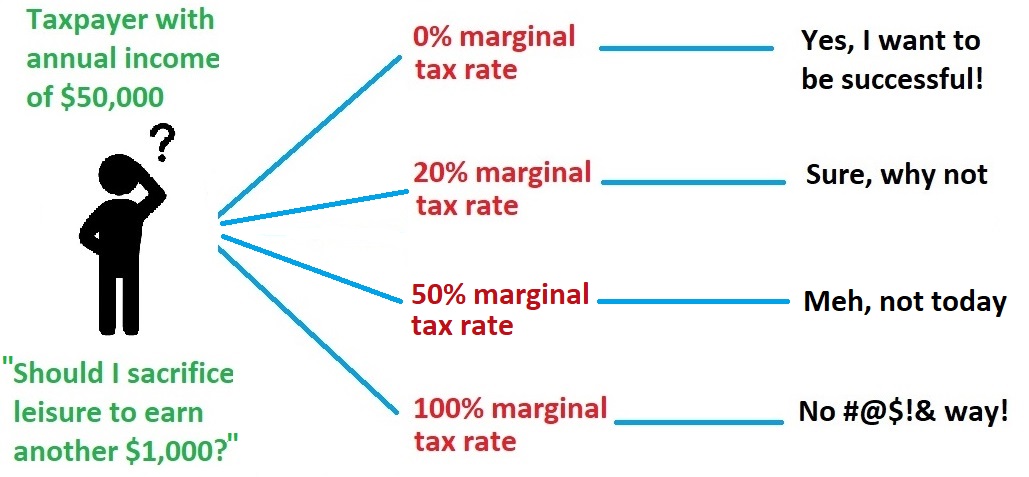
The Laffer Curve provides incredibly important insights about tax policy. Most important, it informs us that you don’t measure the revenue impact of tax policy changes merely by looking at what is happening to tax rates. You also have to consider whether changes in tax rates will alter incentives to earn and report income. Or, […]
The Laffer Curve Triumphs Again: Class Warfare in the United Kingdom Backfires
Should Catalonia receive more financial independence?
26 Jul 2025 Leave a comment
in constitutional political economy, development economics, Federalism, fiscal policy, macroeconomics, Public Choice, public economics Tags: Spain
Jesús details how Spain already operates one of the most decentralized fiscal systems in the world, “more latitude than most U.S. states,” he notes, yet Catalonia now seeks the bespoke privileges long enjoyed by the Basque Country and Navarra. The Regional Authority Index rates how much self‑rule and shared rule each country’s sub‑national governments actually wield. In its last […]
Should Catalonia receive more financial independence?
The Milei Miracle, Part II
23 Jul 2025 Leave a comment
in applied price theory, budget deficits, comparative institutional analysis, constitutional political economy, development economics, economic growth, fiscal policy, growth disasters, growth miracles, law and economics, liberalism, libertarianism, macroeconomics, property rights Tags: Argentina

I almost feel sorry for the 108 leftist economists who predicted back in 2023 that Argentina would suffer if Javier Milei won the presidential election. Not only were they disappointed when he enjoyed a landslide victory, but the subsequent events in Argentina have shown that they were wildly wrong (all of which is discussed in […]
The Milei Miracle, Part II
Govt fiscal constraints are the elephant in the pay equity room
11 Jul 2025 Leave a comment
in applied price theory, discrimination, fiscal policy, gender, human capital, income redistribution, labour economics, labour supply, occupational choice, politics - New Zealand, Public Choice, public economics, rentseeking Tags: gender wage gap, pay equity, sex discrimination
Michael Johnston writes – The way the government went about rolling back 33 pay equity claims lodged under the last government’s Pay Equity legislation was clumsy at best. The changes were made under urgency and applied retrospectively. It was not a good look. Predictable howls of rage and furious accusations ensued. Critics say the government […]
Govt fiscal constraints are the elephant in the pay equity room
‘Outright Massacre’: Senate GOP Takes Sledgehammer To Biden’s Green Energy Subsidies
30 Jun 2025 1 Comment
in economics of climate change, energy economics, environmental economics, environmentalism, fiscal policy, global warming Tags: solar power, wind power
The Senate dealt a series of blows to solar and wind energy in the latest version of President Donald Trump’s “big, beautiful” bill — taking a page out of House Republicans’ playbook to crack down on green energy tax credits enacted under former President Joe Biden.
‘Outright Massacre’: Senate GOP Takes Sledgehammer To Biden’s Green Energy Subsidies
Greg Mankiw on Modern Monetary Theory
30 Jun 2025 Leave a comment
in applied price theory, budget deficits, business cycles, economic growth, economics of education, fiscal policy, macroeconomics, monetary economics Tags: cranks, monetary policy
Modern Monetary Theory (MMT) had a real moment in the spotlight in the late 2010s, with political support in the US from Presidential hopefuls Bernie Sanders and Alexandria Ocasio-Cortez. However, mainstream economists mostly didn’t understand it, or ridiculed it, or both. I mostly ignored the detail of it, only picking up what I knew about it from…
Greg Mankiw on Modern Monetary Theory
*Crisis Cycle*
02 Jun 2025 Leave a comment
in budget deficits, business cycles, currency unions, Euro crisis, fiscal policy, global financial crisis (GFC), great recession, history of economic thought, international economic law, international economics, macroeconomics, monetarism, monetary economics, Public Choice Tags: European Union
That is the new book by John H. Cochrane, Luis Garicano, and Klaus Masuch, and the subtitle is Challenges, Evolution, and Future of the Euro. Excerpt: Our main theme is not actions taken in crises, but that member states and EU institutions did not clean up between crises. They did not reestablish a sustainable framework […]
*Crisis Cycle*
Recent Comments