From https://www.minneapolisfed.org/article/2010/interview-with-thomas-sargent
Celebrating humanity's flourishing through the spread of capitalism and the rule of law
12 Mar 2020 Leave a comment
in budget deficits, business cycles, econometerics, global financial crisis (GFC), great depression, great recession, history of economic thought, macroeconomics, monetary economics
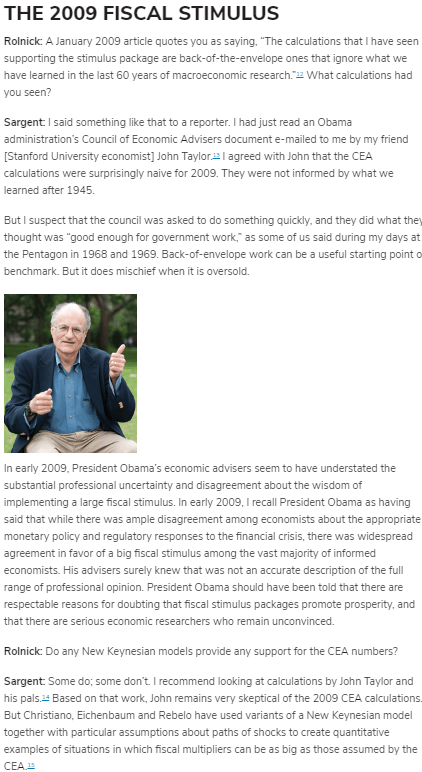
10 Mar 2020 Leave a comment
in budget deficits, business cycles, econometerics, economic growth, economic history, Edward Prescott, Euro crisis, fiscal policy, global financial crisis (GFC), great depression, great recession, history of economic thought, labour economics, labour supply, macroeconomics, monetarism, monetary economics, public economics, Robert E. Lucas Tags: real business cycle theory
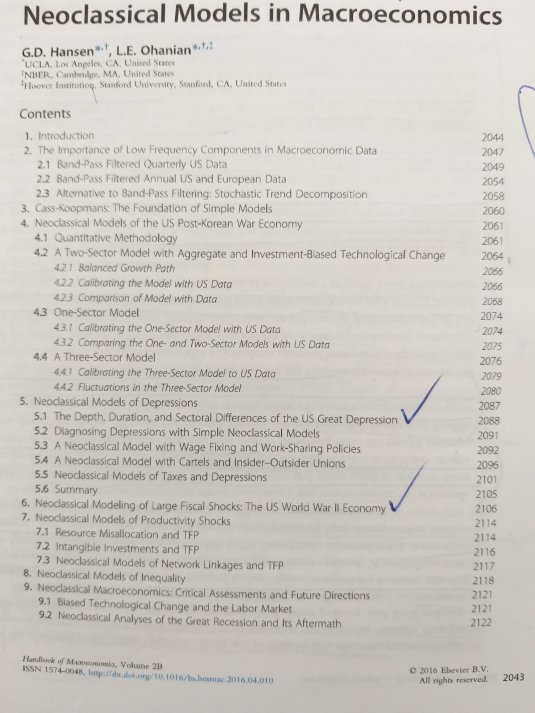
09 Mar 2020 Leave a comment
in business cycles, economic history, economics of information, Euro crisis, financial economics, fiscal policy, global financial crisis (GFC), great recession, law and economics, macroeconomics, monetary economics, property rights, Public Choice, public economics Tags: adverse selection, asymmetric information, efficient markets hypothesis, moral hazard
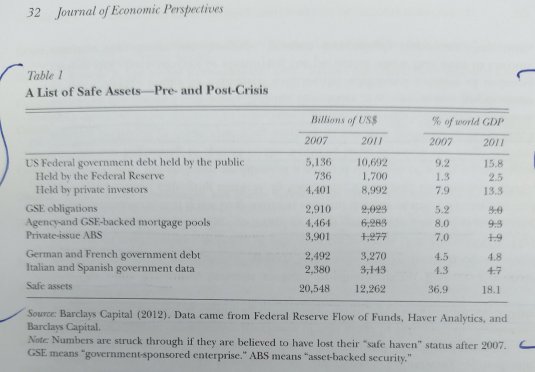
08 Mar 2020 Leave a comment
in budget deficits, business cycles, economic growth, economic history, Edward Prescott, Euro crisis, fiscal policy, global financial crisis (GFC), great depression, great recession, history of economic thought, labour supply, macroeconomics, monetary economics Tags: real business cycle theory
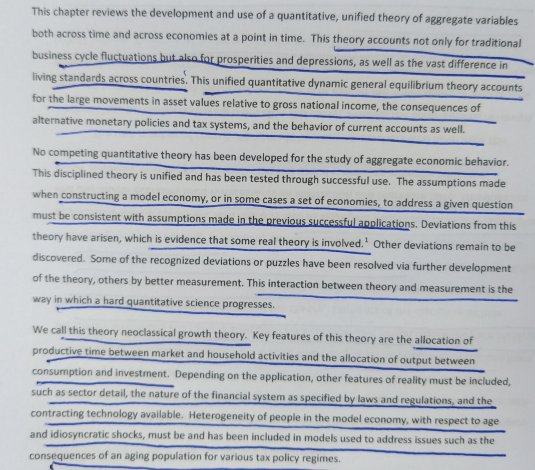
08 Mar 2020 Leave a comment
in business cycles, economics of information, economics of regulation, financial economics, global financial crisis (GFC), great recession, law and economics, macroeconomics, monetary economics
04 Mar 2020 Leave a comment

28 Feb 2020 Leave a comment

27 Feb 2020 Leave a comment
in budget deficits, business cycles, currency unions, economic growth, economic history, entrepreneurship, Euro crisis, financial economics, fiscal policy, global financial crisis (GFC), great recession, international economics, law and economics, macroeconomics, monetary economics, property rights, Public Choice Tags: adverse selection, asymmetric information, monetary policy, moral hazard, self-selection, sovereign debt crises, sovereign defaults
27 Feb 2020 Leave a comment
in business cycles, econometerics, economic history, Edward Prescott, global financial crisis (GFC), great depression, great recession, history of economic thought, job search and matching, labour economics, labour supply, macroeconomics, monetary economics, politics - USA, public economics, Robert E. Lucas, unemployment, unions Tags: Keynesian macroeconomics, new classical macroeconomics, New Keynesian macroeconomics, real business cycle theory
27 Feb 2020 Leave a comment
25 Feb 2020 1 Comment
in applied price theory, budget deficits, business cycles, economic growth, financial economics, fiscal policy, global financial crisis (GFC), great recession, labour economics, labour supply, macroeconomics, monetary economics, politics - USA, Public Choice, public economics Tags: fiscal policy
22 Feb 2020 Leave a comment
in applied welfare economics, econometerics, energy economics, environmental economics, global financial crisis (GFC)

See https://www.friendsofscience.org/assets/documents/McKitrick2014_ThePause.pdf and https://www.rossmckitrick.com/uploads/4/8/0/8/4808045/model_obs_comp_nov_2019.pdf
The fact that CO2 emissions lead to changes in the atmospheric carbon concentration is not controversial. Nor is the fact that CO2 and other greenhouse gases (GHGs) absorb infrared energy in the atmosphere and contribute to the overall greenhouse effect. Increases in CO2 levels are therefore expected to lead to atmospheric warming, and this is the basis for the current push to enact policies to reduce GHG emissions.
For more than 25 years, climate models have reported a wide span of estimates of the sensitivity of the climate to CO2 emissions, ranging from relatively benign to potentially catastrophic. These continuing uncertainties have direct policy implications. Economic models for analyzing climate policy are calibrated using climate models, not climate data. In a low-sensitivity model, GHG emissions lead only to minor changes in temperature, so the socioeconomic costs associated with the emissions are minimal. In a high-sensitivity model, large temperature changes would occur, so marginal economic damages of CO2 emissions are larger.
The data show that, over the past two decades, warming has actually slowed down to a pace well below most model projections. Depending on the data set used, there has been no statistically significant temperature change for the past 15 to 20 years. Yet atmospheric GHG levels have increased rapidly over this interval, and there is now a widening discrepancy between most climate model projections and observed temperatures.
Since economic models are trained to match climate models, if climate models overstate the effect of CO2 emissions, economic models will overstate the social damages associated with them. Consequently, there is good reason to suppose that economic models too may be subject to revision over the next few years. Hence, it is essential to build into the policy framework clear feedback mechanisms that connect new data about climate sensitivity to the stringency of the emissions control policy. And since important new information about climate sensitivity is expected within a few years, there is value to waiting for this information before making any irreversible climate policy commitments, in order to avoid making costly decisions that are revealed a short time later to have been unnecessary.
19 Feb 2020 Leave a comment
in applied price theory, business cycles, comparative institutional analysis, economics of regulation, global financial crisis (GFC), macroeconomics, politics - USA, Public Choice, rentseeking, urban economics
19 Feb 2020 Leave a comment
in budget deficits, business cycles, economic growth, economic history, economics of information, economics of regulation, Euro crisis, financial economics, global financial crisis (GFC), great depression, great recession, law and economics, macroeconomics, monetary economics, property rights, Public Choice, public economics Tags: sovereign defaults
A History of the Alt-Right
Econ Prof at George Mason University, Economic Historian, Québécois
Celebrating humanity's flourishing through the spread of capitalism and the rule of law
Scholarly commentary on law, economics, and more
Beatrice Cherrier's blog
Celebrating humanity's flourishing through the spread of capitalism and the rule of law
Why Evolution is True is a blog written by Jerry Coyne, centered on evolution and biology but also dealing with diverse topics like politics, culture, and cats.
Celebrating humanity's flourishing through the spread of capitalism and the rule of law
A rural perspective with a blue tint by Ele Ludemann
DPF's Kiwiblog - Fomenting Happy Mischief since 2003
Celebrating humanity's flourishing through the spread of capitalism and the rule of law
The world's most viewed site on global warming and climate change
Tim Harding's writings on rationality, informal logic and skepticism
A window into Doc Freiberger's library
Let's examine hard decisions!
Commentary on monetary policy in the spirit of R. G. Hawtrey
Thoughts on public policy and the media
Celebrating humanity's flourishing through the spread of capitalism and the rule of law
Politics and the economy
A blog (primarily) on Canadian and Commonwealth political history and institutions
Reading between the lines, and underneath the hype.
Economics, and such stuff as dreams are made on
"The British constitution has always been puzzling, and always will be." --Queen Elizabeth II
Celebrating humanity's flourishing through the spread of capitalism and the rule of law
WORLD WAR II, MUSIC, HISTORY, HOLOCAUST
Undisciplined scholar, recovering academic
Celebrating humanity's flourishing through the spread of capitalism and the rule of law
Res ipsa loquitur - The thing itself speaks
In Hume’s spirit, I will attempt to serve as an ambassador from my world of economics, and help in “finding topics of conversation fit for the entertainment of rational creatures.”
Researching the House of Commons, 1832-1868
Articles and research from the History of Parliament Trust
Reflections on books and art
Posts on the History of Law, Crime, and Justice
Celebrating humanity's flourishing through the spread of capitalism and the rule of law
Exploring the Monarchs of Europe
Cutting edge science you can dice with
Small Steps Toward A Much Better World
“We do not believe any group of men adequate enough or wise enough to operate without scrutiny or without criticism. We know that the only way to avoid error is to detect it, that the only way to detect it is to be free to inquire. We know that in secrecy error undetected will flourish and subvert”. - J Robert Oppenheimer.
The truth about the great wind power fraud - we're not here to debate the wind industry, we're here to destroy it.
Celebrating humanity's flourishing through the spread of capitalism and the rule of law
Recent Comments