On 21 March, Robert E. Lucas Jr., and Edward C. Prescott participated in a roundtable on “The Wealth of Nations in the 21st Century” in Barcelona.
via Chong-En Bai, Robert Lucas, Edward Prescott discuss economic growth in Barcelona – Barcelona GSE.
Celebrating humanity's flourishing through the spread of capitalism and the rule of law
10 Apr 2014 Leave a comment
in economic growth, great recession, macroeconomics Tags: Edward Prescott, Robert E. Lucas
On 21 March, Robert E. Lucas Jr., and Edward C. Prescott participated in a roundtable on “The Wealth of Nations in the 21st Century” in Barcelona.
via Chong-En Bai, Robert Lucas, Edward Prescott discuss economic growth in Barcelona – Barcelona GSE.
05 Apr 2014 Leave a comment
in global financial crisis (GFC), great recession, politics
Why is it that the further to the Left that people go, the more cheerful they seem to be in recessions and economic crises? They are miserable when times are good.
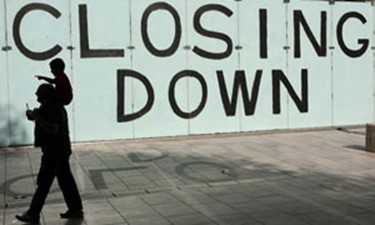
The Left supported the discretionary fiscal, monetary and regulatory policies that caused the recession and then supported crisis management policies that deepen the recession. The Left always wants to tax and regulate their way out of every recession.
Most crisis management policies distort the incentives to hire and invest and reduce competition and efficiency. While different sorts of shocks lead to ordinary downturns, it is overreactions by governments to stem the crisis that prolong and deepen economic downturns, turning them into depressions.
One in three EU unemployed are Spanish because of employment protection laws. Cahuc et al. 2012 estimated that Spanish unemployment would be 45% lower if Spain adopted the less strict French laws! Differences in their employment protection laws accounted for nearly half of the dramatic rise in Spanish unemployment since 2007. Who is for and against these terrible laws?
01 Apr 2014 Leave a comment
in global financial crisis (GFC), great recession, labour economics
31 Mar 2014 1 Comment
in global financial crisis (GFC), great recession
Robert Lucas in this speech noted that the implicit assumption is that the US economy will get back to old trend growth rate and the only question is how long it will take
Lucas asked whether this is really the case? He noted that:
If so, Lucas said that it may be that the weak recovery the USA has had so far is all the recovery it will get.
Ed Prescott also considers that tax rates are being increased in the USA. These increases lower amount of capital a firm chooses to have. The reason for low investment is not problem of getting loans – it is expected future high tax rates in the USA.
Ed Prescott also considers that investment suddenly became depressed beginning early in 2008 – because of a policy regime change. Business owners feared higher tax rates with the regime change and rationally cut investment, rationally cut employment ad rationally took more cash out of business.
29 Mar 2014 Leave a comment
in global financial crisis (GFC), great recession, labour economics, regulation
28 Mar 2014 Leave a comment
in Euro crisis, global financial crisis (GFC), great recession Tags: Tom Sargent
Sargent said: “A government can be said to be ambiguous when decision makers can’t yet agree what to do and decide to postpone making a decision.” He also raised questions over whether a country should join a currency union, whether it should pay its debts, and whether the central government in a federal system should pay the debts of subordinate government.
21 Mar 2014 1 Comment
in economics of regulation, global financial crisis (GFC), great recession, macroeconomics Tags: bank panics, Edward Prescott, Finn Kydland, global financial crisis, great recession, John Taylor, lender of last resort, moral hazard, Tom Sargent
Many of the key issues about what modern macroeconomics has to say on global financial crises are discussed in a 2010 interview with Thomas Sargent where he says that two polar models of bank crises and what government lender-of-last-resort and deposit insurance do to arrest or promote them were used to understand the GFC. They are polar models because:
in the Diamond-Dybvig and Bryant model of banking runs, deposit insurance and other bailouts are purely a good thing stopping panic-induced bank runs from ever starting; and
In the Kareken and Wallace model, deposit insurance by governments and the lender-of-last-resort function of a central bank are purely a bad thing because moral hazard encourages risk taking unless there is regulation or there is proper surveillance and accurate risk-based pricing of the deposit insurance.
In the Diamond-Dybvig and Bryant model, if there is government-supplied deposit insurance, people do not initiate bank runs because they trust their deposits to be safe. There is no cost to the government for offering the deposit insurance because there are no bank runs! A major free lunch.
Tom Sargent considers that the Bryant-Diamond-Dybvig model has been very influential, in general, and among policy makers in 2008, in particular.
Governments saw Bryant-Diamond-Dybvig bank runs everywhere. The logic of this model persuaded many governments that if they could arrest the actual or potential runs by convincing creditors that their loans were insured, that could be done at little or no eventual cost to taxpayers.
In 2008, the Australian and New Zealand governments announced emergency bank deposit insurance guarantees. In Bryant-Diamond-Dybvig style bank panics, these guarantees ward off the bank run and thus should cost nothing fiscally because the deposit insurance is not called upon. These guarantees and lender of last resort function were seen as key stabilising measures. These guarantees were called upon in NZ to the tune of $2 billion.
Kareken and Wallace called for much higher capital reserves for banks and more regulation to avoid future crises. This is not a new idea. Sam Peltzman in the mid-1960s found that U.S. banks in the 1930s halved their capital ratios after the introduction of federal deposit insurance. FDR was initially opposed to deposit insurance because it would encourage greater risk taking by banks.
Sargent also said that it is just wrong to say that the GFC caught modern macroeconomists by surprise: Allen and Gale’s 2007 book Understanding Financial Crises compiles many of the dynamic models of the causes of financial crises and government policies that can arrest or ignite them.
Stern and Feldman’s Too Big to Fail uses insights from the formal economic literature to warn in 2004 about the time bomb for a financial crisis set by current banking regulations and government promises.
In Great Depressions of the Twentieth Century (2007) written by a team of 24 economists, Kehoe and Prescott and others concluded that bad government policies are responsible for causing depressions. In particular, while different sorts of shocks can lead to ordinary business cycle downturns, it is overreactions by governments that can prolong and deepen the downturn, turning it into a depression. Depressions and great recessions, such as currently the case in the USA, are caused by crisis management policies that turn garden-variety recessions into something much worse. Crisis management policies distort the incentives to hire and invest and reduce competition and efficiency.
As an example, one in three unemployed in the EU are Spanish mainly because of Spanish employment protection laws.
Cahuc et al. 2012 estimated that Spanish unemployment would be 45% lower if Spain adopted the less strict French laws! About ten years ago, under French employment law, the contestants on the French version of Survivor sued successfully for wrongful dismissal by the Tribal Council! French workers cannot be laid off just to improve business profits. They can be laid off to avoid bankruptcy.
John Taylor argues that we should consider macroeconomic performance since the 1960:
These policy swings are correlated with economic performance—unemployment, inflation, economic and financial stability, the frequency and depths of recessions, the length and strength of recoveries. Less predictable, more interventionist, and more fine-tuning type macroeconomic policies have caused, deepened and prolonged the current recession.
Finn Kydland considers fiscal policy to be at the heart of current problems. Instead of restructuring and investing more prudently, Western countries faced with budget shortfalls will seek to increase taxes:
Those who disagree with the policy-based explanation for the depth and length of the Great Recession must explain why the US and EU economies have not recovered after the worst of the global financial crisis passed in November 2008?! The case that there were intervening government policies that prolonged and deepened each national recession is strong.
Celebrating humanity's flourishing through the spread of capitalism and the rule of law
Scholarly commentary on law, economics, and more
Beatrice Cherrier's blog
Celebrating humanity's flourishing through the spread of capitalism and the rule of law
Celebrating humanity's flourishing through the spread of capitalism and the rule of law
Celebrating humanity's flourishing through the spread of capitalism and the rule of law
Why Evolution is True is a blog written by Jerry Coyne, centered on evolution and biology but also dealing with diverse topics like politics, culture, and cats.
Celebrating humanity's flourishing through the spread of capitalism and the rule of law
Celebrating humanity's flourishing through the spread of capitalism and the rule of law
A rural perspective with a blue tint by Ele Ludemann
DPF's Kiwiblog - Fomenting Happy Mischief since 2003
Celebrating humanity's flourishing through the spread of capitalism and the rule of law
The world's most viewed site on global warming and climate change
Tim Harding's writings on rationality, informal logic and skepticism
A window into Doc Freiberger's library
Let's examine hard decisions!
Commentary on monetary policy in the spirit of R. G. Hawtrey
Thoughts on public policy and the media
Celebrating humanity's flourishing through the spread of capitalism and the rule of law
Politics and the economy
A blog (primarily) on Canadian and Commonwealth political history and institutions
Reading between the lines, and underneath the hype.
Economics, and such stuff as dreams are made on
"The British constitution has always been puzzling, and always will be." --Queen Elizabeth II
Celebrating humanity's flourishing through the spread of capitalism and the rule of law
Celebrating humanity's flourishing through the spread of capitalism and the rule of law
WORLD WAR II, MUSIC, HISTORY, HOLOCAUST
Undisciplined scholar, recovering academic
Celebrating humanity's flourishing through the spread of capitalism and the rule of law
Res ipsa loquitur - The thing itself speaks
Celebrating humanity's flourishing through the spread of capitalism and the rule of law
Researching the House of Commons, 1832-1868
Articles and research from the History of Parliament Trust
Reflections on books and art
Posts on the History of Law, Crime, and Justice
Celebrating humanity's flourishing through the spread of capitalism and the rule of law
Exploring the Monarchs of Europe
Cutting edge science you can dice with
Small Steps Toward A Much Better World
“We do not believe any group of men adequate enough or wise enough to operate without scrutiny or without criticism. We know that the only way to avoid error is to detect it, that the only way to detect it is to be free to inquire. We know that in secrecy error undetected will flourish and subvert”. - J Robert Oppenheimer.
The truth about the great wind power fraud - we're not here to debate the wind industry, we're here to destroy it.
Celebrating humanity's flourishing through the spread of capitalism and the rule of law
Celebrating humanity's flourishing through the spread of capitalism and the rule of law
Economics, public policy, monetary policy, financial regulation, with a New Zealand perspective
Celebrating humanity's flourishing through the spread of capitalism and the rule of law
Restraining Government in America and Around the World
 Utopia, you are standing in it!
Recent Comments