

Celebrating humanity's flourishing through the spread of capitalism and the rule of law
26 Jan 2015 Leave a comment
in business cycles, economics of information, history of economic thought, macroeconomics, Milton Friedman, monetarism, monetary economics Tags: Franco Modigliani, Keynes in macroeconomics, monetary policy, stabilisation policy, The fatal conceit, The pretence to knowledge
24 Jan 2015 Leave a comment
in applied welfare economics, business cycles, comparative institutional analysis, development economics, economic growth, global financial crisis (GFC), great recession, growth disasters, growth miracles, inflation targeting, macroeconomics, monetarism, Robert E. Lucas Tags: Robert E. Lucas
13 Jan 2015 2 Comments
in business cycles, economic growth, economic history, labour economics, labour supply, macroeconomics, monetarism Tags: Japan, Japanese banking system, Lost Decade
When I lived in Japan between 1995 and 1997, they are undergoing the transition from a six-day week to a five day week. At the time, workers at my University had to show up on Saturday morning. They then went home at lunchtime. Saturday morning at the office was phased out a few years later.
In explanations of the Lost Decade of growth in Japan dating from the early 1990s, with the exception of Ed Prescott, the explanation that the Japanese simply chose to produce less per worker over the course of the 1990s does not figure highly.
The Japanese working week was reduced by law from 48 to 44 hours per week in 1988 and further reduced by the same labour standards law to 40 hours per week from 1993 (Prescott 1999; Hayashi and Prescott 2002). The Japanese stopped routinely working on Saturdays over the 1990s. The number of national holidays was increased by three and an extra day of annual leave was also prescribed by law.
Figure 1 shows this regulatory change about the length of the standard working week that started in 1987 was followed by a sharp drop in hours worked per working per working age Japanese over the period 1988 to 1993. The Japanese working age population is defined as those aged 20 to 69 (Hayashi and Prescott 2002).
Figure 1: Weekly hours worked per Japanese aged 20 to 69, 1970-2000

Source: Hayashi and Prescott 2002.
The regulatory process to end the standard six day working week in Japan straddled the start of the Lost Decade. This major change in the regulation of the supply of labour per week in the number of hours worked and the stagnation of GDP growth soon after could be more than a coincidence (Prescott 1999; Hayashi and Prescott 2002).
Americans work more hours a year than workers in Japan. But both work less than before. Data: buff.ly/1LhU5gH http://t.co/7oaGYKLRmk—
HumanProgress.org (@humanprogress) August 18, 2015
More employment did not fill the short-fall in weekly labour supply per worker after the introduction of the 44 hour week and then the 40 hour week in Japan. Many offices and factories closed on Saturday rather than employ more to make up the hours. The regulatory change was a clear cut constraint on the length of the working week that was hard to get around because of the need to recruit a separate set of workers to come in on Saturday afternoon and then all day Saturday.
During the transition to a five day working week, Japanese real GDP growth should slow down because output levels must taper during a transitional period because one day per week less in labour is supplied in production and capital is being worked for one day a week less than before (Prescott 1999; Hayashi and Prescott 2002).
Output per working age person depends on capital-labour ratios, on hours worked per week and on changes in total factor productivity due to factors such as technological progress and changes in institutions and economic policies.
The effects of the change in the length of the working week on output per working age Japanese will persist for a significant time because investment plans and the capital stock must also adjust to a shorter working week. This is another example of a highly persistent shock that can partly account for the Lost Decade. As Prescott (1999) observed:
Given the change in Japanese law and the resulting drop in normal market hours, growth theory predicts the almost stagnant output of the Japanese economy in the 1990s. This reduction in market hours lowered the marginal product of capital, making investment unprofitable.
Given the lack of profitable domestic investment opportunities, the Japanese began saving by investing abroad. This explains Japan’s large trade surpluses
…The Japanese economy in the 1990s is not as depressed as the U.S. economy was in the 1930s. Market hours in Japan in the 1990s have fallen only half as much as market hours fell in the United States during the Great Depression.
More importantly, the reduction in market hours in Japan in the 1990s was the stated objective of policy.
The reduction in weekly hours worked will also reduce the working week of capital because labour and capital are usually complementary inputs. The reduced length of the working week will see some existing capital producing less, some capital will go spare, and the rate of wear and depreciation will fall.
The drop in weekly hours worked will lower the marginal productivity of existing and new capital which will make new capital investments in Japan less profitable than before. Net investment will be less while the Japanese capital stock is adjusting down to the reduced working week for capital and labour.
Measured total factor productivity will fall because of an under-utilisation of a capital stock that is now larger than required for the available labour force. Net investment will decline by a large amount because investment demand is a small yearly addition to the capital stock.
For example, if annual investment demand is 5 per cent of the capital stock, and the desired capital stock becomes 1 per cent smaller than previous, annual net investment will fall 20 per cent. GDP growth will resume at the trend rate once the lower level of output per working age person is reached.
For those that still doubt, consider the contrary, what would you expect to happen in your country moved from five day week before day working week? Do you expect workers to produce as much as before? Britain was on a three day working week during the coal miners’ strike. As expected, output fell because the working week was shorter.
The main gap in the English language literature about the reduction in the working week in Japan is a lack of publications I can find by Japanese economists discussing what predictions of a made about the likely consequences for output, investment and productivity before the reduction in the length of working week was legislated. Did the reduction in the length of the working week in Japan turn out as planned and predicted before it was implemented?
France introduced a 35 hour week some years ago. Although there were various options for over time, albeit strictly regulated, a uniform prediction was that the 35 hour week would reduce productivity. The new workweek was phased in slowly, with large firms adopting it in February 2000 and smaller firms doing so only in January 2002.
French employees were expected to bear only a small part of the cost of the working-time reduction, continuing to earn roughly the same monthly income – in line with the unions’ slogan ’35 hours pays. To ease that transition, the law reduced the overtime premium for small firms and increased their annual limit on overtime work compared with large firms.
The reduction in the length of the French working week failed as work sharing strategy and reduced productivity. This was a fair summary by the IMF:
The 35-hour workweek appears to have had a mainly negative impact. It failed to create more jobs and generated a significant—and mostly negative—reaction both from companies and workers as they tried to neutralize the law’s effect on hours of work and monthly wages.
While it cannot be ruled out that individuals who did not change their behaviour because of the law became more satisfied with their work hours, simple survey measures do not show increased satisfaction.
Between 1997 and 2000, Quebec reduced its standard workweek from 44 to 40 hours to stimulate jobs growth – the old work sharing ideal. The Quebec policy contained no suggestion or requirement that employers provide wage increases to compensate workers for lost hours.
Despite a 20% reduction among full-time workers in weekly hours worked beyond 40, the policy failed to raise employment at the provincial level or within industries. If anything, there were job losses.
Japan was the only case where a reduction in the length of the working week met with wide approval by the public and people simply stopped working on Saturdays. The law succeeded simply because it did but it was designed to do: reduce the number of days existing workers worked. Japan was undergoing mild deflation at the time, so the need to reduce wages was minimal.

Annual hours worked per employed Japanese has continued to slowly taper down since the late 1990s, which may be a further explanation of its continual slow growth.

David Andolfatto wrote a nice paper explaining the consequences for the financial and monetary sectors of this reduction in the length of the Japanese working week:
In his analysis, David Andolfatto referred generally to a productivity slowdown as discussed by Prescott rather than to the specifically to the reduction in the length of the Japanese working week. Nothing detracts in his analysis, as Andolfatto said, that Japan has a problem: lagging productivity growth and as Andolfatto concluded:
…monetary and fiscal policies, or reforms directed exclusively at the banking sector, are unlikely to re-establish productivity growth. What is likely needed are economy-wide reforms that enhance the willingness and ability of individuals to adopt potentially disruptive technological advancements and work practices.
17 Dec 2014 Leave a comment
in budget deficits, business cycles, economic growth, fiscal policy, global financial crisis (GFC), great depression, great recession, macroeconomics, monetarism, monetary economics Tags: bank runs, GFC, great depression, great recession, Robert E. Lucas
15 Dec 2014 Leave a comment
in macroeconomics, Milton Friedman, monetarism, monetary economics Tags: Austrian business cycle theory, Austrian macroeconomics, business cycle asymmetry, Milton Friedman, plucking model, Roger Garrison
Friedman (1993) proposed a model of the depth of recessions and steepness of recoveries built on two empirical regularities:
The strength of a recovery should be positively correlated with depth of the recession but there should be no correlation between expansions and recessions (Friedman 1993; Alchian 1969).
Figure 1 illustrates Friedman’s model, which likens the time path of output to a string on the underside of an upward sloping board that is plucked downward at random intervals to various extents into busts that are followed by booms.
Figure 1: Friedman’s plucking model of the economic fluctuations

Source: Garrison (1996).
The upward sloping board plotted as a thick line in Figure 6 represents a ceiling on feasible output and employment in a given year that is set by resource and technology availabilities. The upward slope of this board accounts for trend real GDP growth over time due to technological progress and other factors.
Output is close to the ceiling shown in Figure 6 except for every now and then when it is plucked downwards by a monetary contraction.
There is no floor on these contractions in output to moderate the depth and violence of contractions, so some recessions are deep and sharp (Hansen and Prescott 2005; Friedman 1993; Goodwin and Sweeney 1993; Sichel 1993).
Contraction depth can vary greatly as is shown by the minor, mild and deep recessions in Figure 1. In each episode of plucking illustrated in Friedman’s model in Figure 1, the rebound mirrors the previous fall in output, but the recovery cannot go beyond the ceiling.
Friedman’s model is a bust-boom model of business cycle fluctuations. The business cycle starts with a bust caused by an adverse policy or other shock and is then followed by a boom as the market self-adjusts and the policy errors are reversed.
Without the initial adverse policy or other shock, there would neither be a bust nor a boom. The economy would track close to the ceiling on output and employment as is shown in Figure 1 by the periods between the plucks.
The correlation between busts and booms arises from the monetary contraction that caused the bust eventually inducing an offsetting correction in monetary policy.
The monetary contraction that pushed or plucked output below the upward sloping ceiling is later followed by a monetary expansion that offset the earlier contraction.
With the amplitude of monetary expansions correlated to offset the prior contractions, GDP growth will have similar plucks or falls and rebounds to the upward sloping output ceiling because of the link albeit with a lag between monetary growth and output fluctuations.
The increases and decreases in monetary growth are independent policy choices with unique causes.
The associated upward and downward movements in GDP growth are not correlated with each other but should be correlated with the prior fluctuations in monetary growth.
There would not be a bust and later boom if there is no monetary contraction to start the cycle. This is why Friedman (1993) proposed that the depths of busts are unrelated to duration and strength of prior economic booms. This upset Austrians such as Roger Garrison:
…Austrians work at a lower level of aggregation in order to allow for the outputs of the two sectors to move relative to one another and even to allow for differential movements within the investment-goods sector…
During a credit-induced boom, investment in the relatively high stages of production is excessive in that resources are drawn away (by an artificially low rate of interest) from the relatively low stages of production and from the final stage, consumption.
The decrease in the amount of resources allocated to the low and final stages is forced saving; the misallocation of resources from low to high stages is malinvestment.
Empirically, a credit-induced boom would be but weakly reflected in the conventional investment aggregate and hardly at all in the Monetarists’ output aggregate, which includes consumption.
The boom for the Austrians refers to something going on largely within the output aggregate.
It is represented in Friedman’s plucking model not by a conspicuous recovery to trend but rather by some period preceding a pluck which Friedman, operating at a higher level of aggregation, presumes to be healthy growth.
The publication of Milton Friedman’s paper in 1993, which recalled an obscure paper he wrote in 1964, lead to a large literature blossoming under the heading business cycle asymmetry.
13 Dec 2014 Leave a comment
in macroeconomics, Milton Friedman, monetarism, monetary economics Tags: Milton Friedman, The Fed
25 Nov 2014 Leave a comment

02 Sep 2014 1 Comment
in Austrian economics, business cycles, economic growth, inflation targeting, monetarism, monetary economics, Murray Rothbard Tags: Austrian school of economics, business cycle, fractional reserve banking, hyperinflation, inflation, monetary business cycle, monetary cranks, quantity theory of money
I lost a good 15 minutes of my life that I will not get back on my deathbed listening to some monetary cranks at a Meet the Candidates forum last night for the New Zealand general election.

Monetary cranks advocate boundless inflation and credit expansion as the patent medicine for all our economic ills:
those who have Found the Light about Money take up their pens and write, with a conviction, a persistence and a devotion otherwise only found among the disciples of a new religion.
It is easy to scoff at these productions: it is not so easy always to see exactly where they go wrong. It is natural that practical bankers, vaguely conscious that the projects of monetary cranks are dangerous to society, should cling in self-defence to the solid rock, or what they believe to be so, of tradition and accepted practice. But it is not open to the detached student of economics to take refuge from dangerous innovation in blind conservatism.
D.H. Robertson (1928)
Listening to these monetary cranks in the audience last night rates with the worst movies I have ever ever seen for time I want back my deathbed. I think the worst movie I have ever seen was Absolute Beginners starring David Bowie. After that it, might be Last Tango in Paris.

These particular monetary cranks with their obsessions about factional reserve banking are from the social credit party in New Zealand. They are followers of Major C.H. Douglas, whom Keynes referred to as a:
private, perhaps, but not a major in the brave army of heretics
Social credit and other monetary cranks believe that all the world’s problems will be sold if the reserve bank prints money and they seem to think that was really easy because there is a fractional reserve banking system.
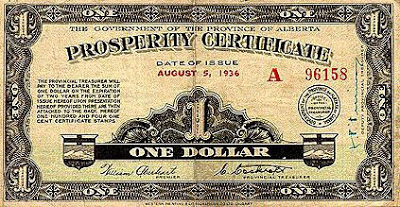
No one in the room who knew better wanted to lose more time that they wanted back on their deathbed explaining why printing money doesn’t make you richer. The “money is wealth” error is the defining affliction of the monetary crank.

The good economist will know that money creation is no short-cut to wealth. Only the production of valued goods and services in a market which reflects the consumer’s willingness to pay can relieve poverty and promote prosperity. A people are prosperous to the extent they possess goods and services, not money. All the money in the world—paper or metallic—will still leave one starving if goods and services are not available.
Obviously, none of them were persuaded by the quantity theory of money: if you increase the supply of money without a matching increase in the rate of real growth in the production of goods and services, you’ll have more money chasing the same amount of goods so prices will go up. It’s called inflation. Printing money creates inflation.

There is a school of thought in economic school, the Austrian school of economics, does get excited about fractional reserve banking. The reason it does is to explain how fractional reserve banking creates inflation and promotes the business cycle.

A cycle of booms and busts is not looked upon as a good thing by the Austrian school of economics.

The Austrian school wants to get rid of fractional reserve banking as a way of reducing inflation and reducing the possibility of a loose monetary policy causing booms and busts in the economy.

These monetary cranks from social credit party honestly believed that printing more money will make you wealthier. Thankfully no one asked them to explain their position.

A few supporters of the monetary cranks in the audience asked other members of their views on the ideas of these monetary cranks. Sensibly, they all gave short answers that did not provoke them further and waste more of their precious life listening to them talk nonsense.

If printing money was a winner, as with any populist policy that has a half a chance of working, the parties of the centre-left and centre right would be all over it like flies to s…
19 Aug 2014 1 Comment
in macroeconomics, Milton Friedman, monetarism, monetary economics Tags: Milton Friedman, monetarism, rules versus discretion

I am not so sure the above would be mimicking Milton Friedman’s monetary policy dashboard as claimed.
Milton Friedman advocated a fixed monetary policy growth where the monetary supply would grow at 4% year in, year out no matter what happened in the economy. Towards the end of his career, he advocated replacing the Fed with a computer.

Celebrating humanity's flourishing through the spread of capitalism and the rule of law
Scholarly commentary on law, economics, and more
Beatrice Cherrier's blog
Celebrating humanity's flourishing through the spread of capitalism and the rule of law
Celebrating humanity's flourishing through the spread of capitalism and the rule of law
Celebrating humanity's flourishing through the spread of capitalism and the rule of law
Why Evolution is True is a blog written by Jerry Coyne, centered on evolution and biology but also dealing with diverse topics like politics, culture, and cats.
Celebrating humanity's flourishing through the spread of capitalism and the rule of law
Celebrating humanity's flourishing through the spread of capitalism and the rule of law
A rural perspective with a blue tint by Ele Ludemann
DPF's Kiwiblog - Fomenting Happy Mischief since 2003
Celebrating humanity's flourishing through the spread of capitalism and the rule of law
The world's most viewed site on global warming and climate change
Tim Harding's writings on rationality, informal logic and skepticism
A window into Doc Freiberger's library
Let's examine hard decisions!
Commentary on monetary policy in the spirit of R. G. Hawtrey
Thoughts on public policy and the media
Celebrating humanity's flourishing through the spread of capitalism and the rule of law
Politics and the economy
A blog (primarily) on Canadian and Commonwealth political history and institutions
Reading between the lines, and underneath the hype.
Economics, and such stuff as dreams are made on
"The British constitution has always been puzzling, and always will be." --Queen Elizabeth II
Celebrating humanity's flourishing through the spread of capitalism and the rule of law
Celebrating humanity's flourishing through the spread of capitalism and the rule of law
WORLD WAR II, MUSIC, HISTORY, HOLOCAUST
Undisciplined scholar, recovering academic
Celebrating humanity's flourishing through the spread of capitalism and the rule of law
Res ipsa loquitur - The thing itself speaks
Celebrating humanity's flourishing through the spread of capitalism and the rule of law
Researching the House of Commons, 1832-1868
Articles and research from the History of Parliament Trust
Reflections on books and art
Posts on the History of Law, Crime, and Justice
Celebrating humanity's flourishing through the spread of capitalism and the rule of law
Exploring the Monarchs of Europe
Cutting edge science you can dice with
Small Steps Toward A Much Better World
“We do not believe any group of men adequate enough or wise enough to operate without scrutiny or without criticism. We know that the only way to avoid error is to detect it, that the only way to detect it is to be free to inquire. We know that in secrecy error undetected will flourish and subvert”. - J Robert Oppenheimer.
The truth about the great wind power fraud - we're not here to debate the wind industry, we're here to destroy it.
Celebrating humanity's flourishing through the spread of capitalism and the rule of law
Celebrating humanity's flourishing through the spread of capitalism and the rule of law
Economics, public policy, monetary policy, financial regulation, with a New Zealand perspective
Celebrating humanity's flourishing through the spread of capitalism and the rule of law
Restraining Government in America and Around the World


 Utopia, you are standing in it!
Recent Comments