In my previous post, I explained how the real-bills doctrine originally espoused by Adam Smith was later misunderstood and misapplied as a policy guide for central banking, not, as Smith understood it, as a guide for individual fractional-reserve banks. In his recent book on the history of the Federal Reserve, Robert Hetzel recounts how the […]
Hetzel Withholds Credit from Hawtrey for his Monetary Explanation of the Great Depression
Hetzel Withholds Credit from Hawtrey for his Monetary Explanation of the Great Depression
14 Dec 2023 Leave a comment
in business cycles, economic growth, economic history, financial economics, great depression, history of economic thought, labour economics, macroeconomics, Milton Friedman, monetarism, monetary economics, unemployment Tags: monetary policy
Reserve Bank of New Zealand (Economic Objective) Amendment Bill
13 Dec 2023 Leave a comment
in business cycles, economic history, history of economic thought, inflation targeting, labour economics, macroeconomics, monetary economics, politics - New Zealand, unemployment Tags: monetary policy

I guess it will be an Act by the end of the day, but for now the short bill giving effect to a return to a single statutory objective for monetary policy is here. Yesterday’s parliamentary debate (first and second reading) is here, here, and here. The heart of the bill is this clause Note […]
Reserve Bank of New Zealand (Economic Objective) Amendment Bill
An Upside-Down Economic History of Argentina
13 Dec 2023 Leave a comment
in budget deficits, business cycles, development economics, economic growth, economic history, economics of bureaucracy, fiscal policy, growth disasters, growth miracles, history of economic thought, income redistribution, labour economics, macroeconomics, Public Choice, public economics, rentseeking, Ronald Coase Tags: Argentina
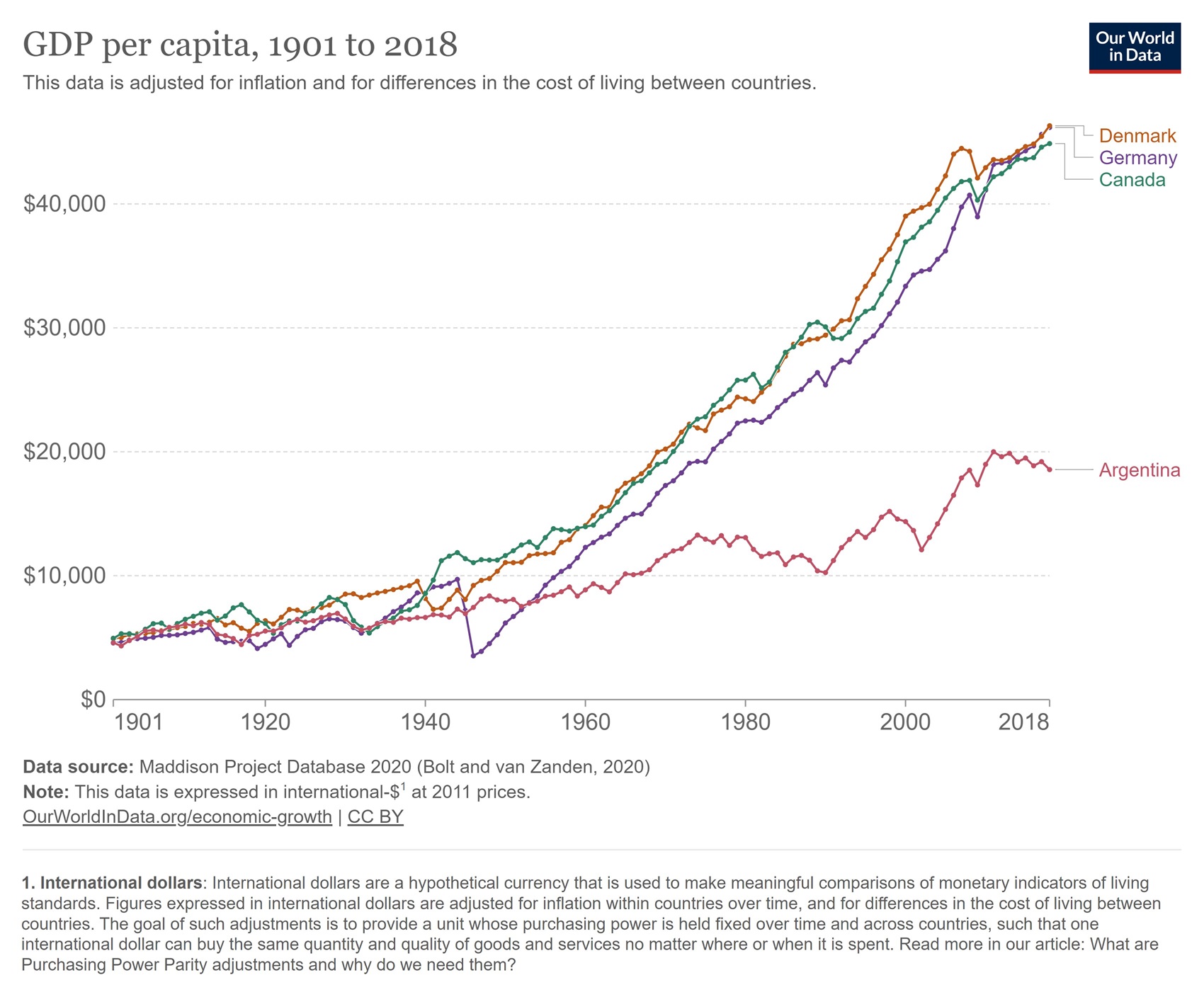
Argentina has a very interesting, but also rather tragic, economic history. During first half of the 20th century, it was one of the world’s richest nations. But thanks to dirigiste economic policies (known locally as Peronism) starting after World War II, Argentina has suffered a dramatic decline in relative living standards. However, something shocking has […]
An Upside-Down Economic History of Argentina
Can Argentina Be Rescued, Part III
12 Dec 2023 Leave a comment
in applied price theory, budget deficits, comparative institutional analysis, development economics, economic growth, economic history, economics of regulation, fiscal policy, growth disasters, income redistribution, international economics, labour economics, liberalism, libertarianism, macroeconomics, Marxist economics, Milton Friedman, monetary economics, Murray Rothbard, Public Choice Tags: Argentina
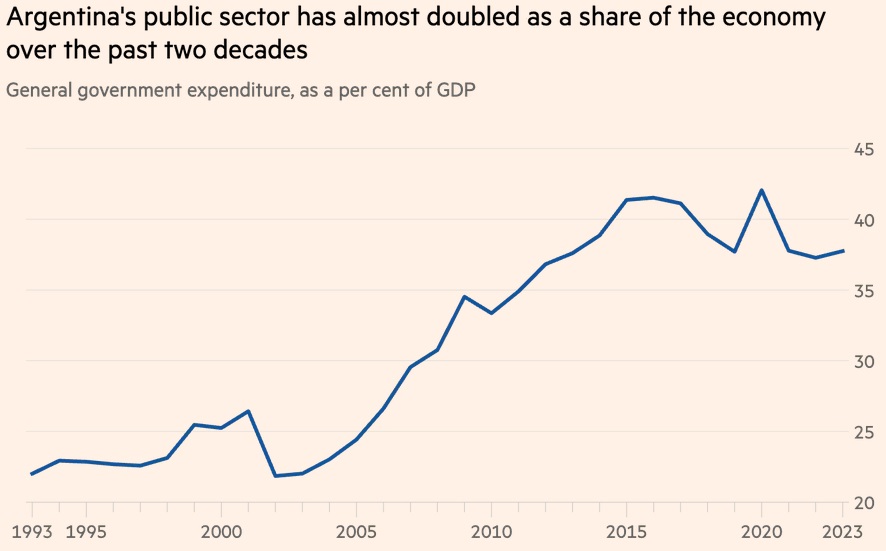
My trip to Argentina last year motivated me to write Part I of this series, which focused on whether things might get better in that tragic country for the simple reason that they couldn’t possibly get any worse. In Part II of this series, I analyzed whether a libertarian candidate’s surprisingly strong performance in Argentina’s […]
Can Argentina Be Rescued, Part III
Lessons from Fighting 100 Inflations Since the 1970s
12 Dec 2023 Leave a comment
in budget deficits, business cycles, development economics, economic growth, economic history, fiscal policy, growth disasters, history of economic thought, inflation targeting, macroeconomics, monetarism, monetary economics, unemployment Tags: monetary policy

Inflation rates have come down since their peak in mid-2022. Does the Federal Reserve need to continue its inflation-fighting ways, keeping interest rates high? Anil Ari, Carlos Mulas-Granados, Victor Mylonas, Lev Ratnovski, and WeiZhao of the IMF look to historical and international experience in “One Hundred Inflation Shocks: Seven Stylized Facts” (September 2023, WP/23/190). As…
Lessons from Fighting 100 Inflations Since the 1970s
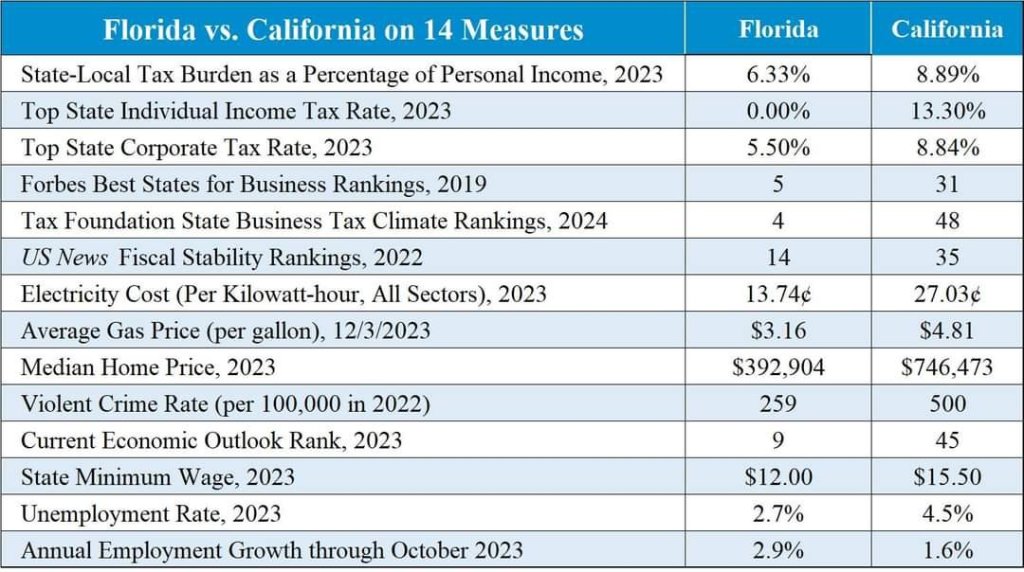
California dreaming no more
11 Dec 2023 Leave a comment
in applied price theory, comparative institutional analysis, economic growth, entrepreneurship, income redistribution, industrial organisation, labour economics, minimum wage, Public Choice, public economics Tags: California, Florida
Argentina projection of the day
08 Dec 2023 Leave a comment
in development economics, economic growth, economics of regulation, entrepreneurship, financial economics, growth disasters, macroeconomics, monetary economics Tags: Argentina
Milei’s November election win — on a pledge to rapidly overhaul Argentina’s dysfunctional economy — has triggered a burst of market exuberance. The local Merval stock index is up 28 per cent, while prices for Argentina’s closely watched sovereign bonds maturing in 2030 — some of the most liquid — have risen 22 per cent…
Argentina projection of the day
Really?
06 Dec 2023 Leave a comment
in budget deficits, business cycles, economic growth, fiscal policy, inflation targeting, labour economics, macroeconomics, monetary economics, politics - New Zealand, unemployment Tags: monetary policy

It doesn’t seem to have been the best week for the Reserve Bank since the release of the latest Monetary Policy Statement last Wednesday. Of course, one could make a pretty compelling case that in the Orr years few weeks have been, and especially not any weeks when Bank figures actually say or do anything. […]
Really?
Government net debt: how does NZ compare?
02 Dec 2023 1 Comment
in budget deficits, fiscal policy, macroeconomics, politics - New Zealand

In my post yesterday on the new OECD Economic Outlook fiscal numbers I included this chart Even if you leave off the last two observations (OECD projections based on current – Labour government – fiscal policy) recent trends have hardly been something to take any comfort in. But at least we were still a bit […]
Government net debt: how does NZ compare?
Comparing EU-to-US Output Per Hour
01 Dec 2023 Leave a comment
in econometerics, economic growth, economic history, labour economics, labour supply, macroeconomics, occupational choice

The per capita GDP for the combined 27 countries of the European Union (EU-27) is about 72% of the US level. On the other side, the average worker in EU countries puts in far fewer hours on the job than do American workers. For example, OECD data says that the average US worker put in…
Comparing EU-to-US Output Per Hour
Why Argentina’s dollarization is likely to come in sudden, messy ways
30 Nov 2023 Leave a comment
in budget deficits, business cycles, currency unions, development economics, fiscal policy, growth disasters, macroeconomics, monetary economics Tags: Argentina, dollarisation
Yes, I do still favor it, but here is part of the problem, as I explain in my latest Bloomberg column: The simplest way for Argentina to dollarize would be to inflate the peso even more. For purposes of argument, imagine a peso inflation rate of one billion percent a year. Pesos would be worthless, […]
Why Argentina’s dollarization is likely to come in sudden, messy ways
Review of “Milton Friedman: The Last Conservative” by Jennifer Burns
29 Nov 2023 Leave a comment
in budget deficits, business cycles, economic growth, fiscal policy, global financial crisis (GFC), great depression, great recession, history of economic thought, macroeconomics, Milton Friedman, monetarism, monetary economics
Milton Friedman: The Last Conservative by Jennifer Burns 592 pages Farrar, Straus and Giroux Published: Nov 2023 Released two weeks ago, Jennifer Burns’s “Milton Friedman: The Last Conservative” is the most significant biography of Friedman ever published. Burns is an associate professor of history at Stanford and a research fellow at the Hoover Institution. She […]
Review of “Milton Friedman: The Last Conservative” by Jennifer Burns
The new government and the Reserve Bank
27 Nov 2023 Leave a comment
in business cycles, inflation targeting, macroeconomics, monetary economics, politics - New Zealand Tags: monetary policy

But first a correction. As I noted on Twitter and very briefly on the post itself on Saturday, it seems that the gist of my post on Friday was wrong. The repeal of Labour’s tobacco de-nicotinisation legislation – whatever motivated the parties that championed the change – will leave the flow of tobacco excise revenue […]
The new government and the Reserve Bank
Pro Dollarization
25 Nov 2023 Leave a comment
in development economics, growth disasters, monetary economics

With President Milei’s election in Argentina, dollarization is suddenly on the table. I’m for it. Here’s why. Why not? A standard of valueStart with “why not?” Dollarization, not a national currency, is actually a sensible default. The dollar is the US standard of value. We measure length in feet, weight in pounds, and the value of…
Pro Dollarization
Understanding Fiscal Inflation — Keynote Speech by Eric Leeper
22 Nov 2023 Leave a comment
in budget deficits, business cycles, economic growth, economic history, fiscal policy, global financial crisis (GFC), great depression, great recession, history of economic thought, inflation targeting, macroeconomics, monetary economics Tags: monetary policy


Recent Comments