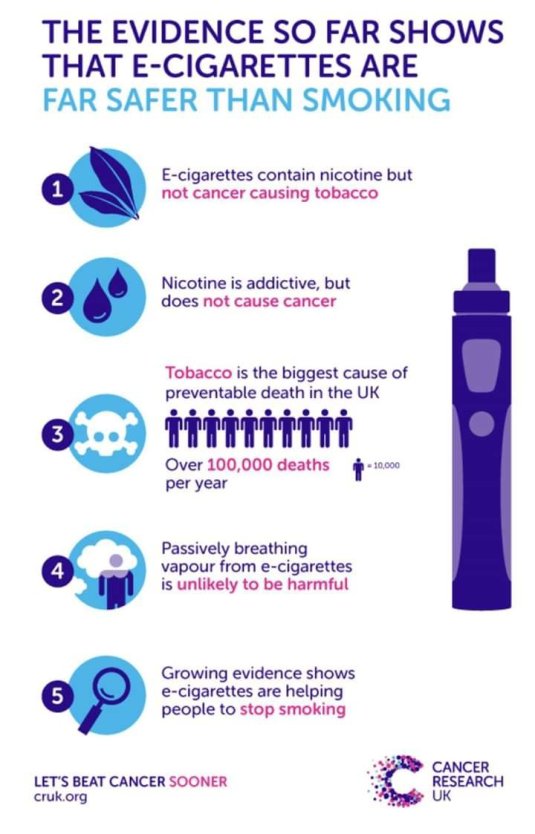
Nanny state to take note
20 Oct 2019 Leave a comment
in economics of regulation, health economics Tags: economics of smoking
This date in History. Death of King John of England, Lord of Ireland and Duke of Aquitaine: October 19, 1216.
20 Oct 2019 Leave a comment

I cannot possibly cover the entirety of King John’s reign in this one post, therefore I will cover more personal issues along with issues regarding the succession.
John (December 24, 1166 – October 19, 1216) was King of England from 1199 until his death in 1216. He lost the Duchy of Normandy and most of his other French lands to King Philippe II of France, resulting in the collapse of the Angevin Empire and contributing to the subsequent growth in power of the French Capetian dynasty during the 13th century. The baronial revolt at the end of John’s reign led to the sealing of Magna Carta, a document sometimes considered an early step in the evolution of the constitution of the United Kingdom.
King Henry II of England and Duchess Eleanor of Aquitaine had five sons: William IX, Count of Poitiers, who died before John’s birth; Henry the Young King; Richard…
View original post 2,199 more words
A flaw common to many conspiracy theories
20 Oct 2019 Leave a comment
in defence economics, economics of education, economics of information, economics of media and culture, politics - USA, war and peace Tags: 9/11, conspiracy theories, conspiracy theorists, Iraq war

Shame on @greenpeace
20 Oct 2019 Leave a comment
in development economics, economics of information, environmental economics, growth disasters, health economics Tags: regressive left, The Great Escape

On the ethics of the randomisters
20 Oct 2019 Leave a comment
in applied price theory, applied welfare economics, development economics, econometerics, economics of bureaucracy, economics of education, health economics, Public Choice Tags: The fatal conceit

Would a “Wealth Tax” Help Combat Inequality? A Debate with Saez, Summers, and Mankiw
20 Oct 2019 Leave a comment
in applied price theory, applied welfare economics, comparative institutional analysis, economics of education, entrepreneurship, financial economics, human capital, income redistribution, industrial organisation, labour economics, labour supply, Marxist economics, occupational choice, politics - USA, poverty and inequality, Public Choice, public economics, rentseeking, survivor principle Tags: envy, superstar wages, superstars, taxation and entrepreneurship, taxation and investment, taxation and labour supply, top 1%, wealth taxes
Is Climate Change an Existential Threat?
20 Oct 2019 Leave a comment
in economics of information, energy economics, environmental economics, global warming Tags: climate alarmism

Napoleon (Part 1) – Birth of an Emperor (1768 – 1804)
20 Oct 2019 Leave a comment
in defence economics, economic history, war and peace
Greenpeace’s Sea of Red
20 Oct 2019 Leave a comment

We are experiencing a new age of protest, a different type of activist and an intriguing role for media. The issues are evolving and the speed of the activist outreach (via fear and outrage) is accelerating. As the game changes, what will happen to the old generation of game changers?
Greenpeace had always been the game changer but over the decades it has run its business like an empire. In the halcyon days of the 1990s and 2000s, the global NGO could afford to take on governments, buy ships and bully companies. But Greenpeace could not adapt to the shift to social media tribal communities. As the activist game changed, Greenpeace had grown too fat while much more nimble activist upstarts and social media gurus were eating their lunch. It seems now the old lady of environmental NGOs is starting to starve to death.
I looked at the last five…
View original post 1,479 more words
Gibbeting (Horrible Punishments in History)
19 Oct 2019 Leave a comment
in economic history, economics of crime, law and economics Tags: death penalty
Colossus: The Rise and Fall of the American Empire by Niall Ferguson (2004)
19 Oct 2019 Leave a comment

The United States invaded Afghanistan in October 2001 as a result of the 9/11 attacks. It invaded Iraq in March 2003 in response to the alleged threat of Saddam Hussein’s weapons of mass destruction.
These acts prompted an unprecedented flood of articles in newspapers and magazines, TV documentaries, conferences, seminars, papers and hundreds of books speculating whether America was now, finally, at last revealed to be an ’empire’ with nakedly ‘imperial’ ambitions.
British economic historian Niall Ferguson entered the debate with a Channel 4 TV series and book on the subject – which also neatly complemented the C4 TV series and book he had published in 2003 about the British Empire.
When I bought it I thought, from its subtitle (‘The rise and fall of the American empire’), that it would be a history, maybe a chronological account of the growth of American power.
But it isn’t. Even more so than…
View original post 3,017 more words
Civilization: The West and the Rest by Niall Ferguson (2011)
19 Oct 2019 Leave a comment
The problem of why civilisations fall is too important to be left to the purveyors of scissors-and-paste history. It is truly a practical problem of our time, and this book is intended to be a woodsman’s guide to it. (Preface p.xxii)
Ferguson doesn’t shy away from the big subjects, in fact he enjoys storming the big subjects – the Origins of the Great War, why the British Empire was a Good Thing, the Future of America, a Complete History of Money, a Complete History of the 20th Century. It is no coincidence that the last four of these books were written to accompany four blockbusting TV series, TV being a medium which favours striking stories and bold statements, contrarian points of view and press release-friendly controversy.
This is Ferguson’s fifth book-of-the-TV-series, created after the crash of 2008 revealed the weakness at the heart of the western financial system and events…
View original post 4,772 more words
Women compared to boys?
19 Oct 2019 Leave a comment
in discrimination, gender, law and economics, sports economics Tags: political correctness, regressive left

A chinese millionaire went broke after he got religion. Business partners, suppliers and customers didn’t trust him anymore.
19 Oct 2019 Leave a comment
in applied price theory, development economics, economics of bureaucracy, economics of crime, entrepreneurship, financial economics, growth disasters, growth miracles, industrial organisation, law and economics, managerial economics, organisational economics, personnel economics, property rights, Public Choice, survivor principle Tags: bribery and corruption


Recent Comments