Exploring Liberty: Simple Rules for a Complex World
23 Jun 2019 Leave a comment
in applied price theory, comparative institutional analysis, constitutional political economy, economic history, economics of information, economics of regulation, entrepreneurship, financial economics, industrial organisation, law and economics, property rights, Public Choice, Richard Epstein
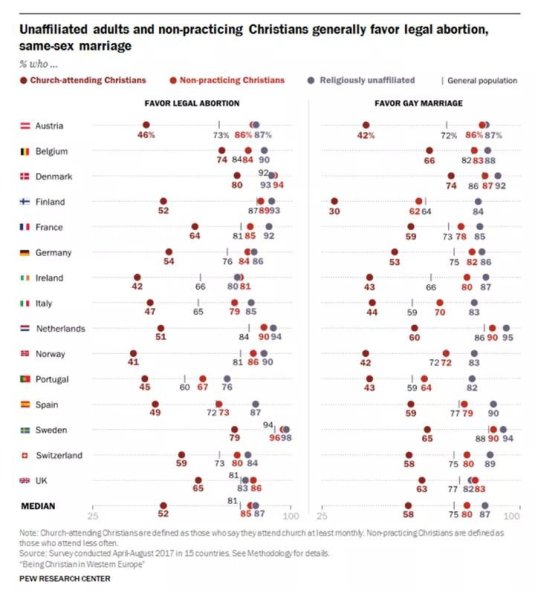
Many on the left are genuinely surprised to learn that the spiritually certain are more socially conservative
23 Jun 2019 Leave a comment
Crunched: is capitalism really ending poverty?
23 Jun 2019 Leave a comment
in development economics, economic history, growth disasters, growth miracles, poverty and inequality Tags: The Great Enrichment, The Great Escape
Gong Farmer (Worst Jobs in History)
23 Jun 2019 Leave a comment
in economic history, labour economics, labour supply, occupational choice Tags: The Great Enrichment
Ceteris Paribus: Public v. Private University
23 Jun 2019 Leave a comment
in econometerics, economics of education, economics of information Tags: selection bias
Are There Parts of German WW1 Warships in Space?
23 Jun 2019 Leave a comment
in economics of media and culture
Should you defend the free speech rights of neo-Nazis? | Nadine Strossen
23 Jun 2019 Leave a comment
in comparative institutional analysis, constitutional political economy, economics of crime, law and economics, politics - New Zealand, politics - USA Tags: free speech, The Holocaust
Steven N. S. Cheung’s original insight on common property rights is unfortunately overlooked (re 2009 Nobel Prize in Economic Sciences)
23 Jun 2019 Leave a comment

I have been reading the ideas of Steven N. S. Cheung for many years and have even written a few blog entries about him and his ideas. So it is my pleasure to repost my professional economist friend Zhaofeng Xue‘s English comment here in my blog. If you read Chinese, also read Zhaofeng’s longer posting “今年诺奖忽视了张五常的原创贡献” (evidences are the same).
*******
Repost from Zhaofeng Xue‘s English comment (Oct 13th, 1:56pm)
*******
I think Steven N. S. Cheung’s original insight on common property rights is unfortunately overlooked. The idea Nobel committee awarded on the basis of Ostrom’s 1990 publication can be clearly seen in Cheung’s earlier publication in 1974 and 1987. See the following four piece of evidence. (Zhaofeng Xue, Ph.D. from Mason)
Evidence 1:
Scientific Background on the Sveriges Riksbank Prize in Economic Sciences in Memory of Alfred Nobel 2009
http://nobelprize.org/nobel_prizes/economics/laureates/2009/ecoadv09.pdf
Elinor Ostrom (1990) has challenged the…
View original post 500 more words
The Economic System of China – Coase & Cheung
23 Jun 2019 Leave a comment
June 20, 2008 Update: Here are my initial random thoughts of the first two installments of Prof. Cheung’s “The Economic System of China”.
July 22, 2008 Update: Here is a link to various coverage of the 2008 Chicago Conference on China’s Economic Transformation including an indirect link to Prof. Ronald Coase’s Introduction at the conference. Enjoy.
Oct 7th, 2008 Update: I have blogged and referenced extensively about The Economic System of China, you can search for these blog entries by clicking here.
*******
Economics Nobel Prize winner Professor Ronald Coase (the Coase in Coase Theorem) is 96 years old and Professor Steven N S Cheung is younger at 71 years old. Both are well passed the retirement age but still are hard at work!
Coase is organizing a 2008 Chinese Economics Reform Symposium (my translation from “中 國 經 改 研 討 會 議”) and has personally…
View original post 702 more words
Riots versus protest
22 Jun 2019 Leave a comment
in defence economics, war and peace Tags: Gaza Strip, Israel, war against terror

College gender gap is so bad that girls have to buy their own drinks at the bar
22 Jun 2019 Leave a comment
in economics of education, economics of love and marriage

A run on the bank (well, building society)
22 Jun 2019 Leave a comment

Being a bit early for an appointment yesterday, I ducked into a secondhand bookshop and emerged with a history of Countrywide Bank (by Tony Farrington, published in 1997), to add to my pile of histories of New Zealand financial institutions and major corporates. For younger readers, perhaps unfamiliar with the name, Countrywide grew up from the building society movement, became a bank in the late 1980s after deregulation, and was taken over by the National Bank (itself later taken over by ANZ) in the late 1990s.
As I idly flicked through the book, I came across the account of one of those little episodes in financial history that (as far as I know) are not that well documented: the run on the building society, in April 1985. Literal physical retail bank runs – people queuing in bank branches and out onto the street – just aren’t that common. …
View original post 1,727 more words
The latest #plasticbagfascism from @euginesage at the fish counter now
22 Jun 2019 Leave a comment
in environmental economics, global warming Tags: Green fascism, recycling, The fatal conceit




Recent Comments