
“A Life Cycle Model of Trans-Atlantic Employment Experiences” by Thomas J. Sargent
15 May 2019 Leave a comment
in business cycles, economic growth, economic history, economics of education, history of economic thought, human capital, labour economics, labour supply, macroeconomics, occupational choice, politics - USA, Public Choice, unemployment Tags: European unemployment, Thomas Sargent
Electromagnetic Railguns – The U.S Military’s future Superguns – 200 mile range Mach 7 projectiles
14 May 2019 Leave a comment
The Story Of The SMS Emden I THE GREAT WAR – Special
14 May 2019 Leave a comment
in defence economics, war and peace Tags: World War I
Nice summary of the drivers of poverty
14 May 2019 Leave a comment
in behavioural economics, economics of education, human capital, labour economics, labour supply, occupational choice, poverty and inequality, unemployment, welfare reform Tags: child poverty, family poverty

“A Life Cycle Model of Trans-Atlantic Employment Experiences” by Thomas J. Sargent
14 May 2019 Leave a comment
in economics of education, human capital, industrial organisation, labour economics, labour supply, macroeconomics, minimum wage, unemployment Tags: Eurosclerosis, Thomas Sargent
Bank capital again
14 May 2019 Leave a comment

Just a quick post today, as submissions close soon on the Reserve Bank Governor’s plans to require banks to fund much more of their balance sheets with equity capital, and I still need to write mine. The Governor stated last week that the Bank has already received 50 or so submissions. I hope that, in the spirit of open government and genuine consultation, the Bank will put those submissions up on their website pretty promptly – and not, as is more usually the case with them (but not, say, with parliamentary select committees), only when the Governor has made his final decision.
I’ve seen a few submissions, none of which seemed very positive on what the Governor was proposing. It remains striking that, five months on from the release of the initial consultative document there has still been no serious attempt at a cost-benefit analysis, and only the promise…
View original post 1,677 more words
Civil Rights in Song (1): Eyes on the Prize
14 May 2019 Leave a comment


Given that one of the most important roots of the civil rights movement was in the black churches, and given the importance of gospel music to those churches, it’s hardly surprising that music provided a vibrant and very important sound track to that struggle. So, time for some civil rights songs: here, from the time itself, in the years leading up to the passing of the Civil Rights Act and the Voting Rights Act.
On that famous day, in 1963, when Martin Luther King spoke to the crowd in Washington, it was the gospel singer and civil rights campaigner, Mahalia Jackson, who shouted to to King to ‘tell them about the dream’. King listened, and so did the world.
Music played a major role that day, as this New Yorker article explains: https://www.newyorker.com/culture/culture-desk/dream-songs-the-music-of-the-march-on-washington
Here she is, in the later ’60s, singing the civil rights anthem:
Among the star turns was…
View original post 744 more words
FRIEDMAN FRIDAY Milton Friedman’s FREE TO CHOOSE “How to cure inflation” Transcript and Video (60 Minutes)
14 May 2019 Leave a comment

Milton Friedman’s FREE TO CHOOSE “How to cure inflation” Transcript and Video (60 Minutes)
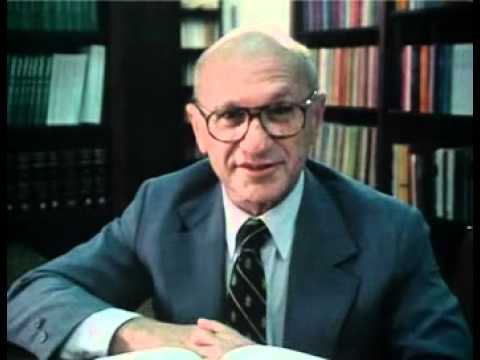
In 1980 I read the book FREE TO CHOOSE by Milton Friedman and it really enlightened me a tremendous amount. I suggest checking out these episodes and transcripts of Milton Friedman’s film series FREE TO CHOOSE: “The Failure of Socialism” and “What is wrong with our schools?” and “Created Equal” and From Cradle to Grave, and – Power of the Market.“If we could just stop the printing presses, we would stop inflation,” Milton Friedman says in “How to Cure Inflation” from the Free To Choose series. Now as then, there is only one cause of inflation, and that is when governments print too much money. Milton explains why it is that politicians like inflation, and why wage and price controls are not solutions to the problem.
View original post 11,630 more words
Weed is not more dangerous than alcohol
14 May 2019 Leave a comment
in economics of crime, economics of regulation, health economics, law and economics, politics - USA Tags: marijuana decriminalisation
Harry Anslinger | The Man Responsible for Marijuana’s Prohibition
14 May 2019 Leave a comment
in economics of crime, economics of information, economics of regulation, health economics, law and economics Tags: economics of prohibition, marijuana decriminalisation
Why Free Speech (even Hate Speech) is the best friend of the Oppressed – Jonathan Rauch
14 May 2019 Leave a comment
in comparative institutional analysis, constitutional political economy, economics of bureaucracy, economics of crime, law and economics, liberalism, libertarianism, politics - USA, Public Choice Tags: free speech
George Stigler Economically Speaking: Government Regulation 1978
14 May 2019 Leave a comment
in economic history, economics of information, economics of regulation, entrepreneurship, environmental economics, George Stigler, industrial organisation, law and economics


Recent Comments