
Spot the job with the fast rate of skill depreciation during career interruptions
01 Mar 2019 Leave a comment
in discrimination, economics of education, gender, human capital, occupational choice
Ban the box, no questions on criminal records, increased statistical discrimination against young black male job applicants
01 Mar 2019 Leave a comment
in applied price theory, discrimination, economics of crime, economics of information, labour economics, labour supply, law and economics, politics - USA Tags: asymmetric information, racial discrimination, statistical discrimination

The Oxford comma wins in court
01 Mar 2019 Leave a comment

The Oxford comma is a comma before the final item in a list. For example, it’s the one after “toast” in this sentence: “We had eggs, toast, and oatmeal for breakfast.” If you left out the Oxford comma, it would read “We had eggs, toast and oatmeal for breakfast.”
It’s also called the “serial comma,” and there’s a big article about it on Wikipedia. Why? Because there’s an ongoing squabble among writers and grammarians about whether one should use it. A summary of the issues at hand is in the Wikipedia article, to wit:
Common arguments for consistent use of the serial comma:
- Use of the comma is consistent with conventional practice.
- It matches the spoken cadence of sentences better.
- It can resolve ambiguity (see examples below).
- Its use is consistent with other means of separating items in a list (for example, when semicolons are used to separate items, a semicolon is consistently included…
View original post 713 more words
3 Compelling Reasons We Haven’t Found Aliens yet
01 Mar 2019 Leave a comment
in economics of media and culture Tags: space
Why A Gay, Black Civil Rights Hero Opposed Affirmative Action |@nytimes
01 Mar 2019 Leave a comment
in discrimination, economics of education, human capital, labour economics, labour supply, law and economics, occupational choice, politics - USA, poverty and inequality, unemployment Tags: affirmative action, racial discrimination
Gurkha (World War II)
01 Mar 2019 Leave a comment
in defence economics, war and peace Tags: World War II
Milton Friedman Redistribution of Wealth and the Death Tax
01 Mar 2019 Leave a comment
in applied price theory, Milton Friedman, Public Choice, public economics
The Massive Flood That Triggered an Ice Age (w/ PBS Eons!)
28 Feb 2019 Leave a comment
in environmental economics, global warming
Europe’s Fossil-Fuelled Future: Winter Wind & Solar Collapse Means Coal & Gas Here to Stay
28 Feb 2019 Leave a comment

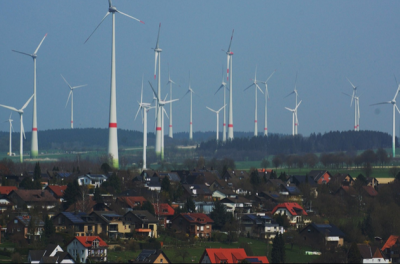 Just don’t expect power as and when you need it.
The zealots that pump up the future for wind and solar power are programed to ignore the present and bound to ignore the past.
For a few centuries in human history, windmills were the only game in town.
Then, in the 18th Century, the captains of British scientific and engineering endeavour harnessed thermal power, the Industrial Revolution followed, and the rest, as they say, is history.
Except that a deluded band of halfwits are determined to take us back to an age the developed world was happy to see the back of. One entirely dependent upon the weather.
Among their more fanciful claims, wind and sun worshippers assert that nature’s wonder fuels are already making an outstanding contribution to satisfying the world’s energy demands; and go further by gushing that a world run entirely on sunshine and breezes is not…
View original post 340 more words
Why Hat Making was Lethal
28 Feb 2019 Leave a comment
in economic history, health and safety, labour economics, labour supply, occupational choice

Gangs in Control of American Prisons: “The Social Order of the Underworld”
28 Feb 2019 Leave a comment
in applied price theory, comparative institutional analysis, constitutional political economy, economics of bureaucracy, economics of crime, law and economics, property rights, Public Choice Tags: crime and punishment, law and order
How Dangerous is Deep Space Travel to Mars and Beyond?
28 Feb 2019 Leave a comment
in transport economics Tags: Mars


Recent Comments