
Well said on the wall between church and state
27 Feb 2019 Leave a comment
in economics of religion, politics - USA Tags: Freedom of religion
The BBC ‘expert’ contributor and the UK Hizballah designation
27 Feb 2019 Leave a comment

Here are some tweets from a person obviously not pleased by the British Home Secretary’s decision to classify Hizballah as a terrorist group.



 If the name of the writer of those Tweets sounds familiar, that may be because Sharmine Narwani – formerly of Oxford University’s St Anthony’s College – has appeared in BBC content in the past and some of her contributions are still available online.
As was noted here in 2013:
“In addition to some aggressive anti-Americanism, Narwani peddles anti-Israel, pro Assad, pro-Iranian regime and pro-Hizballah rhetoric. As well as having blogged at the Huffington Post – until her pro-Assad stance apparently became too much – Narwani has written for the Guardian and the pro-Hizballah/pro-Assad Lebanese outlet Al Akhbar English.
She also appears to have something of an affinity with antisemitic conspiracy theorists, writing for the ‘Veterans Today‘ website – which has links, via its editor, to Iran’s Press TV – and its sister site ‘Veterans News Now’ as well as – according to her Twitter account –…
View original post 44 more words
Neighbourhood Theft: Why Your Neighbour’s Solar Panels Are Costing You a Fortune
27 Feb 2019 4 Comments


Electricity generation started off as an extension of science. These days, it’s all about vanity and virtue signalling. Not least those millions of shiny solar panels, which we’ve all helped subsidise – to allow our neighbours to bask in their own virtuous glow.
At the theoretical level – when the sun is up and the sky is cloud free – solar panels are generating electricity around 6.5 hours a day (on average). During their most virtuous cycle, they’re dispatching power back into the grid, and reducing their owner’s power bills (attracting feed in tariffs multiples greater than the value of the electricity itself – initially some states were paying figures in the order of $540 per MWh – coal-fired power costs less than $40).
Those without panels pick up the tab for the subsidies gifted to their neighbours (whether in the form of feed in tariffs or renewable energy certificates)…
View original post 1,654 more words
Spot the feminists
27 Feb 2019 Leave a comment
in discrimination, gender Tags: political correctness, regressive left

Chorus of transgender protest greets decision to follow democratic process – but how big is the choir?
27 Feb 2019 Leave a comment
good post.

In a press statement headed Shock at Minister decision to defer birth certificate change, trans community organisations have expressed shock at Internal Affairs Minister Tracey Martin’s decision to defer legislative proposals to introduce an administrative process for changing gender markers on birth certificates.
Ahi Wi-Hongi, National Coordinator of the transgender organisation Gender Minorities Aotearoa, said this issue is not new.
“It is over 11 years since the Human Rights Commission’s Transgender Inquiry called for a simpler process.”
It might surprise Wi-Hongi to learn there was shock in the general community when the public learned what MPs on a select committee had done. They had endorsed proposals not only to allow public records to be changed at the behest of an individual who wanted the change, but to allow these changes to be made without any check on the validity of or justification for an applicant’s request for change.
View original post 1,100 more words
Spies: The Rise and Fall of the KGB in America
27 Feb 2019 Leave a comment
in defence economics, economics of crime, law and economics, politics - USA Tags: Cold War
You Won’t Believe How the First Spy Satellites Worked
27 Feb 2019 Leave a comment
in defence economics Tags: space


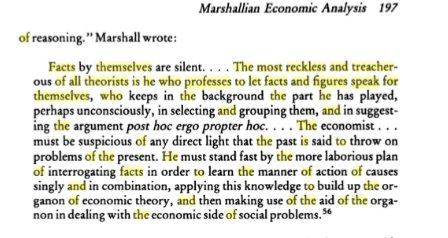
Marshall on evidenced based policy
27 Feb 2019 Leave a comment
in Alfred Marshall, applied price theory, applied welfare economics, economics of regulation, history of economic thought, Public Choice, public economics Tags: methodology of economics
Robert Craig: Could the Government Advise the Queen to Refuse Royal Assent to a Backbench Bill?
27 Feb 2019 Leave a comment

 Introduction
As is well known, the Government’s Withdrawal Agreement was voted down in Parliament last week by 230 votes in a ‘meaningful vote’ mandated under s 13(1) of European Withdrawal Act 2018 (‘EUWA’). This led to the Opposition tabling a formal vote of no confidence in the Government under the Fixed-term Parliament Act 2011 (‘FTPA’). This is the first formal no confidence motion tabled for a quarter of a century. The motion was defeated by 325 votes to 306 votes. The survival of the Government despite the rejection of the central plank of its programme has led one leading commentator to describe the Government as ‘in office without being in power’.
For some MPs, notably the ERG group of backbench Conservative MPs, the rejection of the Withdrawal Agreement is unproblematic. This is because, as a matter of law, Parliament gave its approval to Brexit when it passed the European…
View original post 2,802 more words
Robert Craig: Why Royal Consent Is Required for the Proposed Article 50 Extension Bill
27 Feb 2019 Leave a comment
 I wrote recently on this blog about the issue of Royal Assent. This post concerns the wholly separate issue of Royal Consent which is a requirement for those rare Bills that would affect the royal prerogative.
The possibility of a no deal exit has led Yvette Cooper MP to propose a Bill, the European Union (Withdrawal) (No. 4) Bill (‘EUWA2019’) to mandate the government to delay exit day if no deal is agreed by Parliament. The latest iteration of the Bill can be found here. Previous iterations of EUWA2019 have either been dropped or Cooper’s proposal has been rejected by the House of Commons in a vote. Three Cabinet ministers have now publicly threatened to support the Bill.
Technically, Cooper’s Bill would be a Private Member’s Bill. As is well known, such Bills normally have no chance of passing without executive sanction because the Government controls the business of…
View original post 1,958 more words
Not worth the insurance premium
26 Feb 2019 Leave a comment

At lunchtime I went to hear Reserve Bank Deputy Governor Geoff Bascand make the case for his boss’s proposal to require the locally incorporated banks operating in New Zealand to fund a much larger proportion of their balance sheets with equity capital. I will write tomorrow about a range of other points that were, and weren’t, made. But for now I wanted to pick up just one number he used in making the case.
In the course of his presentation, Bascand used a slide which reported the Bank’s view that these changes in capital requirements will lower the long-run level of GDP by a bit less than 0.3 per cent. I hadn’t seen the number before (maybe it was in the documents, in which case I missed it), but what struck me was Bascand’s suggestion that this is “not a very big number”.
Looked at quickly, perhaps that is true. …
View original post 1,099 more words


Recent Comments