Jordan Peterson: Equal representation in bricklayer job
26 Feb 2019 Leave a comment
in discrimination, economics of education, gender, health and safety, human capital, labour economics, labour supply, occupational choice, poverty and inequality Tags: political correctness
Why STEM is an inferior career choice for many talented girls
26 Feb 2019 Leave a comment
in discrimination, economics of education, gender, human capital, labour economics, labour supply, occupational choice Tags: gender wage gap


Brexit: what would a second referendum look like? | The Economist
26 Feb 2019 Leave a comment
in international economic law, international economics, International law Tags: Brexit
Book Trailer: The Social Order of the Underworld
26 Feb 2019 Leave a comment
in applied price theory, comparative institutional analysis, constitutional political economy, economics of crime, labour economics, law and economics, occupational choice, Public Choice Tags: anarchocapitalism
Labor’s 50% RET: Rocketing Power Prices Bring Guaranteed Economic Destruction
25 Feb 2019 5 Comments
Wind doesn’t supply any power. Backup grid required to be built for when the wind isn’t blowing hard enough.

 Bill Shorten: ready to swing 50% RET wrecking ball.
Australia’s renewable energy policy is already a disaster. But Labor’s Bill Shorten promises total catastrophe with his National 50% RET.
In yesterday’s post, STT picked up on economic analysis put forward by Dr Brian Fisher, which provided a wake-up call to Australians.
The economic cost of current so-called ‘climate and energy policy’ is in the tens of billions, in terms of reduced growth, lower incomes and higher unemployment.
Should Bill Shorten snatch government come May, his Labour/Green Alliance will introduce a giant carbon tax (aka a mandated cap on carbon dioxide emissions) along with a 50% RET – ie the same policy that throttled South Australia and turned it into an international laughingstock.
On that scenario, the economic cost will be in the hundreds of $billions and the results from blue-collar workers (once championed by the ALP) will be an unmitigated…
View original post 1,473 more words
Why did Milton Friedman win the Nobel Prize?
25 Feb 2019 Leave a comment

The Committee awarded Milton Friedman the prize for his work on:
“fields of consumption analysis, monetary history and theory and for his demonstration of the complexity of stabilization policy.”
Profs. James Forder and Hugo Monnery of University of Oxford (Balliol College) in this paper review the prize to Friedman. They say his work on consumption analysis and monetary history are well known. It is third one on stabilization policy which needs explanation:
The citation for Milton Friedman’s Nobel Prize of 1976 points to three contributions. In two cases, the principal works the Committee must have had in mind are easy to identify. The question of what was intended by the third – ‘his demonstration of the complexity of stabilization policy’ – is considered. It is argued that, contrary to what might be suspected, this does not refer to any work on the Phillips curve; but the work to which it does…
View original post 21 more words
Why are GMOs Bad? @SciShow
25 Feb 2019 Leave a comment
in development economics, economics of education, economics of information, economics of regulation, environmental economics, fisheries economics, health economics, law and economics, politics - Australia, politics - New Zealand, politics - USA, property rights, Public Choice, rentseeking Tags: anti-GMO movement, Anti-Science left, pessimism bias
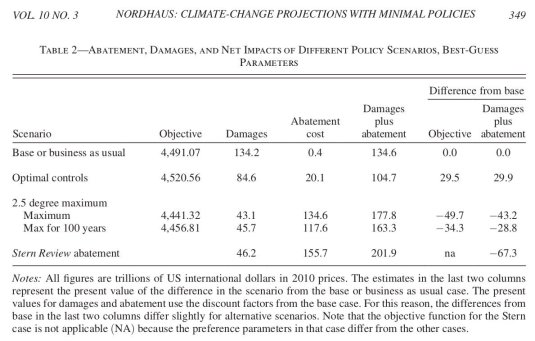
The payoff from fighting #globalwarming
25 Feb 2019 Leave a comment
in applied price theory, applied welfare economics, energy economics, environmental economics, global warming Tags: climate alarmism


Recent Comments