
Day 31 of @EugenieSage’s #plasticbagfascism: 14th bag
31 Jan 2019 Leave a comment
in economics of regulation, environmental economics, politics - New Zealand Tags: recycling
‘The House divided’: the creation of a second division lobby for the Commons in 1836
31 Jan 2019 Leave a comment

The huge publicity given to recent parliamentary votes on Brexit has put the over-crowded division lobbies of the House of Commons in the spotlight as never before and prompted the introduction of proxy voting on a trial basis. While MPs now vote in two division lobbies, this has only been the case since 1836, as Dr. Kathryn Rix, Assistant Editor of our House of Commons, 1832-1945 project, explains.

On 22 February 1836 an historic vote took place in the House
of Commons, when the second reading of the London and Brighton Railway Bill was
defeated by 281 votes to 75. What made this division so significant was not the
legislation involved, but the manner in which the vote took place. As the Commons Journal recorded, ‘The House
divided: The Yeas to the old Lobby; The Noes to the new Lobby’. That new…
View original post 1,002 more words
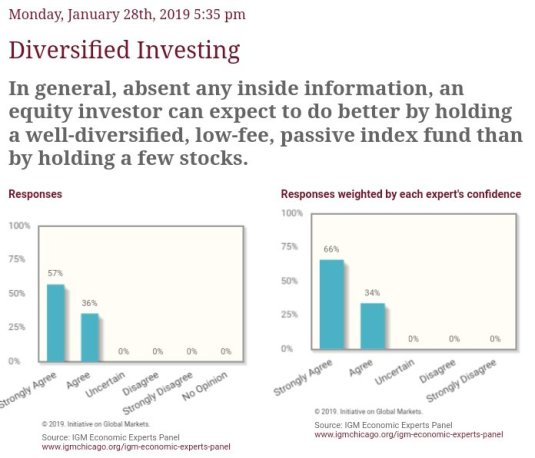
Top economists unanimous in opposition to @NZsuperfund’s beat the market strategy @TaxpayersUnion @EricCrampton
31 Jan 2019 Leave a comment
in entrepreneurship, financial economics, politics - New Zealand, Public Choice, public economics Tags: active investing, efficient markets hypothesis, passive investing
Good theories are prohibitions; what does a theory strictly forbid
31 Jan 2019 Leave a comment
in environmental economics, global warming Tags: climate alarmism

from Microeconomic Insights: ‘The economics of density: evidence from the Berlin Wall’
30 Jan 2019 Leave a comment

by Gabriel Ahlfeldt (London School of Economics, LSE), Stephen Redding (Princeton University), Daniel Sturm (LSE) and Nikolaus Wolf (Humboldt University Berlin)
The full post and online access to the full article is available on the Microeconomics website
Economic activity is highly unevenly distributed across geographical space. This is reflected in the existence of cities as well as the concentration of economic functions in specific locations within cities, such as Manhattan in New York and the Square Mile in London. Understanding the strength of the forces of agglomeration that underlie these concentrations of economic activity is central to a range of policy questions.
What makes cities thrive? Is it proximity to natural resources – such as rivers, oceans, and energy sources – that make places attractive for firms to locate production? Is it shared amenities – such as leafy streets and scenic views – that make them attractive places for people…
View original post 389 more words
The “Overheated” Costs of Climate Change
30 Jan 2019 Leave a comment
in energy economics, environmental economics, global warming, politics - USA Tags: climate alarmism
A response from Steve Pinker to Salon’s hit piece on “Enlightenment Now”
30 Jan 2019 Leave a comment

Phil Torres is a “riskologist” who studies existential risk, and seems to have it in for the New Atheists (Salon, of course, is always willing to provide him with a platform for that). Torres’s latest Salon piece is an attack on Steve Pinker and his last book (Enlightenment Now, or EN), a piece called “Steven Pinker’s fake Enlightenment: His book is full of misleading claims and false assertions.” Torres’s piece is pugnacious, ending with a suggestion that Pinker may actually be hiding stuff that he knows is wrong:
Let me end with a call for action: Don’t assume that Pinker’s scholarship is reliable. Comb through particular sentences and citations for other hidden — or perhaps intentionally concealed — errors in “Enlightenment Now.” Doing so could be, well, enlightening.
When I read Torres’s piece, I wasn’t impressed, as Pinker’s “errors and false assertions” seemed to…
View original post 1,241 more words
The Australian approach to “consumer protection” policy is a threat to consumer welfare and free speech
30 Jan 2019 Leave a comment
The Inequality of the Equality Act: Concerns from the Left
30 Jan 2019 Leave a comment
in economics of crime, gender, law and economics, politics - USA Tags: political correctness
Creative destruction in legacy media
30 Jan 2019 Leave a comment
in industrial organisation, survivor principle Tags: creative destruction

The #1 reason people die early, in each country
30 Jan 2019 Leave a comment
in development economics, growth disasters, growth miracles, health economics Tags: The Great Escape
Price Theory David D Friedman
30 Jan 2019 Leave a comment
in applied price theory, comparative institutional analysis, constitutional political economy, David Friedman, economics of regulation, law and economics
Prohibition club in Chicago
30 Jan 2019 Leave a comment
This is the first time I’ve seen actual footage of a “speakeasy”—an illegal alcohol-dispensing joint that operated during Prohibition in America (between 1920 and 1933). Sent by reader Michael, the video even has sound, and shows dancing girls, a band, and an oily top-hatted master of ceremonies. And, as Michael pointed out, the booze is clearly visible on the tables.
The YouTube notes say this,
Old film of Mack’s Club (12 East Pearson Street) in Chicago, Il on February 13, 1931. The troupe leader is Harry Glen. These scenes were taken with early Movietone sound cameras.
This club was in downtown Chicago, and I can’t find any other information about it, nor any about Harry Glen. Perhaps ambitious readers may find other information. I’m just showing this because movies of speakeasies during Prohibition, which were illegal, are rare, and those with sound even rarer.
I don’t know how America survived…
View original post 13 more words
Stephen Laws: Why a Money Resolution with Queen’s Recommendation Is Required for a Bill for the Postponing or Cancelling of “Exit Day”
29 Jan 2019 Leave a comment

 In a post on this blog yesterday, Andrew Denny argued that I was wrong to suggest that a money resolution, with Crown recommendation, would be needed under the Standing Orders of the House of Commons for a provision of a Bill for the purpose of securing the postponement of the expiry of the UK’s Article 50 notification or the revocation of that notification (“a postponing or revoking provision”).
He accurately sets out the standing orders and my argument from the paper, written for Policy Exchange, in which I made the suggestion. That argument is that any postponing or cancelling provision would involve (as the published Bills for securing a postponement do) a provision for the postponement or cancellation of “exit day” (within the meaning of the European Union (Withdrawal) Act 2018). That, in turn, would mean the postponement or cancellation of the repeal of section 2(3) of the European…
View original post 1,386 more words


Recent Comments