Yossi Nehushtan and Stella Coyle: Ashers Baking (Part 2): Do Homophobes and Racists have a Right Not to Manifest Liberal Messages?
06 Nov 2018 Leave a comment

 At the heart of the recent Supreme Court’s decision in Ashers Baking lies the ruling that nobody should be forced to express a view in which they do not believe. The unfortunate implications of this content-neutral reasoning go far beyond the circumstances of this case. This reasoning will result in vindicating behaviours that are founded on anti-liberal values, thus undermining core liberal values.
If courts follow this reasoning they will have to rule that a bakery, for example, does not have to provide customers cakes with icing that says either ‘homosexuality is a sin’ or ‘support gay marriage’ if these views run against the deeply held belief of the bakery’s owners.
In many aspects, the statement ‘homosexuality is a sin’ is not different from ‘support gay marriage’. Both statements are legal; both contradict deeply held beliefs of others; and both reflect deeply held beliefs – religious or others. And yet…
View original post 1,372 more words
From the good old days
06 Nov 2018 Leave a comment
in economic history, industrial organisation, survivor principle Tags: creative destruction

Nucky & the Boardwalk Empire
06 Nov 2018 Leave a comment
in economic history, economics of bureaucracy, economics of crime, economics of regulation, health economics, law and economics, politics - USA, Public Choice, rentseeking, television Tags: economics of prohibition, organized crime
is the democratic party the graveyard of social movements?
06 Nov 2018 Leave a comment

The main theoretical argument of Party in the Street is that when movements and parties overlap, the movement will collapse if the party moves on to other issues. We saw it in the antiwar movement and now we might see it again post-2018.
After Trump’s election, we saw the rise of two movements tied with the Democratic party. One is the broadly titled “#Resistance” movement and then you have more focused ones like the March on Science or the Women’s March. What do they have in common? An overwhelming majority of participants are Democrats. What about March for Science? Dana Fisher’s work shows a very high proportion of Democrats. The March for Science people aren’t just Democrats, they are overwhelmingly Clinton Democrat (e.g., 84% had voted for Hillary Clinton).
So we now have a test. If the Democrats win the House in 2018 and the Presidency in 2020…
View original post 240 more words
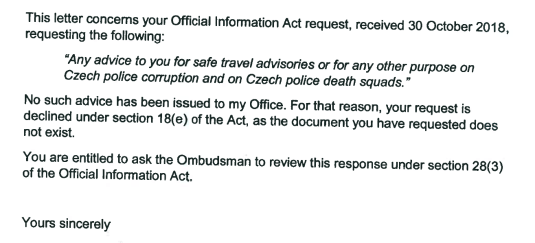
.@WinstonPeters knows nothing of Czech police corruption or Czech police death squads
06 Nov 2018 Leave a comment
in economics of crime, politics - New Zealand
.
Chess Opening: Urusov Gambit
06 Nov 2018 Leave a comment
in economics of media and culture Tags: chess
George Patton & Douglas MacArthur In World War 1 I WHO DID WHAT IN WW1?
06 Nov 2018 Leave a comment
in defence economics, war and peace Tags: World War I, World War II
Edward Prescott on real business cycle theory as a genuine surprise
06 Nov 2018 Leave a comment
in business cycles, economic growth, Edward Prescott, macroeconomics, monetary economics Tags: real business cycle theory

The fascinating history of cemeteries – Keith Eggener
06 Nov 2018 Leave a comment
in economic history, economics of media and culture
Catholic peers and the Gunpowder Plot
06 Nov 2018 Leave a comment

Remember, remember the fifth of November… Today we hear from Dr Ben Coates of the House of Lords 1604-29 Section about the warning of Catholic Peers before the Gunpowder Plot…
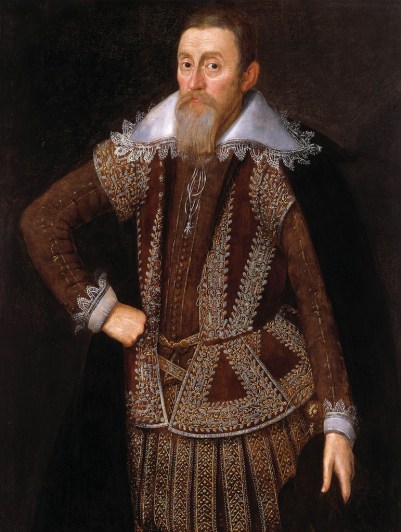 Lord Monteagle by John De Critz
On 26 October 1605 the Catholic nobleman William Parker, 5th Lord Monteagle, received an anonymous letter urging him to absent himself from the forthcoming session of Parliament, due to open on 5th November. This missive, the first significant hint of the Gunpowder Plot, warned mysteriously that those attending ‘shall receive a terrible blow … and yet they shall not see who hurts them’. Monteagle took the letter to Court, where he showed it to the secretary of state, Robert Cecil, 1st earl of Salisbury. The earl was initially sceptical of the letter, in part because he thought it ‘very improbable that only one nobleman should be warned and no more’ (Winwood’s Memorials ed…
View original post 752 more words


Recent Comments