Churchill was ahead of his time
17 May 2022 Leave a comment
in applied price theory, applied welfare economics, defence economics, economic history, history of economic thought, income redistribution, international economics Tags: free trade, racial discrimination

Willie Jackson ridiculed Shane Reti on Maori longevity gains – but guess whose numbers were right (and show great progress)?
17 May 2022 Leave a comment
If Dr Shane Reti happened to insist the world is not flat, would RNZ see much merit in reporting he had come under fire from flat earthers?
We ask because a recent RNZ report was headed Shane Reti stands firm in face of criticism of Māori health comments
Oh dear. What did he say?
The opening paragraphs inform us:
National’s Health spokesperson Dr Shane Reti is under fire for comments he made comparing Māori life expectancy to the 1840s.
It follows his appearance on The Hui where he said the life expectancy for Māori was 30 years in the 1840s but today it is around 73.4 years.
Was Reti really obliged to defend himself, saying he was trying to argue how the life span of Māori has increased over time?
View original post 648 more words
Baby Formula and Big Government
17 May 2022 Leave a comment
While I definitely criticized the Food and Drug Administration for its manymistakes during the pandemic, I only made passing reference to that bureaucracy when referencing the shortage of baby formula during the concluding portion of a recent program.
And even that mention was not negative.
I was vaguely aware that the FDA had temporarily shut down a factory in Michigan because of concerns about bacteria in formula. And even a curmudgeonly libertarian like me did not view that as being a bad thing.
So I basically assumed that the severe shortages depicted in this map were mostly the result of bad luck.
But I should have known that bad government policy also played a big role.
The above map comes from an article for Reason by Jonathan Alder. Here’s some of what he wrote.
…if you’re having a hard time finding infant formula, you can thank Uncle Sam…
View original post 728 more words
War in Ukraine: why is Russia’s army so weak? | The Economist
17 May 2022 Leave a comment
in defence economics, laws of war, war and peace
France Turns The Tide At Verdun I THE GREAT WAR Week 118
17 May 2022 Leave a comment
in defence economics, war and peace Tags: World War I
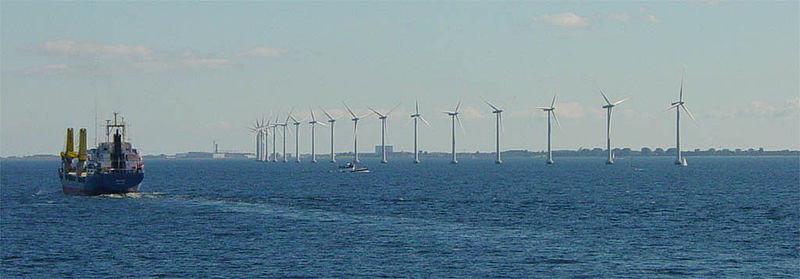
Inconvenient Truths: Sunset & Calm Weather Mean Wind & Solar Can Never Power Us
16 May 2022 Leave a comment
No country has ever powered itself entirely on wind and solar; no country ever will. And the reason is very simple: sunset and calm weather.
Pressed on the inherent intermittency of wind and solar, the acolyte starts muttering about “storage” as if it were a thing. It isn’t and, for reasons of physics and economics, will never be. As Francis Menton spells out below.
No Amount Of Incremental Wind And Solar Power Can Ever Provide Energy Independence
Manhattan Contrarian
Francis Menton
15 March 2022
Here’s the single most important function of this blog: Saying the things that are patently obvious but that just can’t be said these days in polite society. Yes, it’s The Emperor’s New Clothes every day here at Manhattan Contrarian.
With war raging in Ukraine following Russia’s invasion, there is a renewed concern in many quarters for “energy independence.” Until recently, the sophisticated countries of Europe had…
View original post 1,157 more words
The Big ‘Green’ Lie: Why We’ll Never, Ever Be 100% Powered By Wind & Solar Power
16 May 2022 Leave a comment
The wind and solar acolyte in their more delusional moments readily proclaims that an all-wind and sun-powered future is upon us. Never mind sunset; never mind dead calm weather; and never mind the fact that the idea that giant lithium-ion batteries economically storing wind and solar power at grid-scale is pure hokum – for the dreamer, the only thing in our path is a bunch of fossil-fuel loving ‘dinosaurs’.
The renewable energy rent-seeker preys on the naïve and ignorant, with a marketing mantra that, for a few dollars more, we can all enjoy electrons exclusively harvested from sunshine and breezes. Never again will our consciences be troubled by the notion that our lights and fridges are running on coal-fired electricity. Perish the thought.
Or, so the story goes.
Karsten Neumeister – quite apparently a subsidised solar worshipper – takes a look at the methods used by power retailers to dupe…
View original post 822 more words
Jacob Eisler: The Elections Act in Uncertain Times: Democracy, Partisanship, and the Uncodified Constitution
16 May 2022 Leave a comment
UK Constitutional Law Association

The Elections Act 2022 – finally law after a long and contentious development in the Commons and the Lords – implements a number of controversial measures. The IDprovision requires that persons present a photographic identification at the polls. This has raised concerns of suppressing the vote of economically and socially vulnerable groups who may be less likely to possess such ID. The lack of evidence of widespread voter deception in the UK undermines its justification as an anti-fraud measure. A separate provision places the Electoral Commission under greater governmentcontrol, politicising the previously independent watchdog of campaign financing and electoral integrity. While advocates for the provision argued for it on the grounds of political accountability, it has raised concerns that the neutrality desirable of an electoral regulator is being needlessly sacrificed.
The legislative unfolding of the Act casts light on a deeper political crisis facing democratic self-rule in…
View original post 1,575 more words
Caucus neophytes may be keeping the govt from knowing what Kiwis in their electorates are wanting
16 May 2022 Leave a comment
Labour backbenchers, conscious that recent polling shows their political futures could be cut short, will be looking to this week’s budget to replenish their party’s popularity with handouts to swing votes.
They could be disappointed, if the Budget’s programme does not tackle voters’ concerns.
BNZ economists last week warned that the chances of a recession are “increasing by the day”. Economist Cameron Bagrie says controlling government spending to tamp down the factors causing high inflation should be a priority for the government, but a big-spending budget is already locked in.
Meanwhile investors in the local sharemarket, taking a gloomy view of NZ’s economic prospects, are already reeling from the downward trend in the local indices. Similarly the NZ dollar has dipped sharply against both the greenback and the Australian dollar, as New Zealand’s main export market in China suffers from a severe Covid lockdown.
This then could be the moment…
View original post 382 more words
The World’s Most Inefficient Healthcare System, Part I: Created by Government, Financed by Government
16 May 2022 Leave a comment
I shared last year a matrix to illustrate Milton Friedman’s great insight about the superior results achieved by markets compared to government.
Incentives explain why markets work best. When you spend your own money on yourself (box 1), you try to maximize quality while minimizing cost. And that drives the businesses that are competing for your money to constantly seek more efficient ways of producing better products at better prices.
This system generates creative destruction, which sometimes can be painful, but the long-term result is that we are vastly richer.
Governments, by contrast, don’t worry about efficiency or cost (box 4).
Today, though, let’s use Friedman’s matrix to understand the shortcomings of the US healthcare system. Way back in 2009,
I opined that the most important chart in healthcare was the one showing that American consumers directly paid for less than 12 percent of health expenditures.
For all…
View original post 645 more words


Recent Comments