Ferdinand Porsche – A Man ahead of His Time
27 Jul 2022 Leave a comment
in economic history, entrepreneurship, transport economics
Power Shock: Renewables Meltdown Leaves Australians With Power Shortages & Crippling Power Bills
26 Jul 2022 Leave a comment


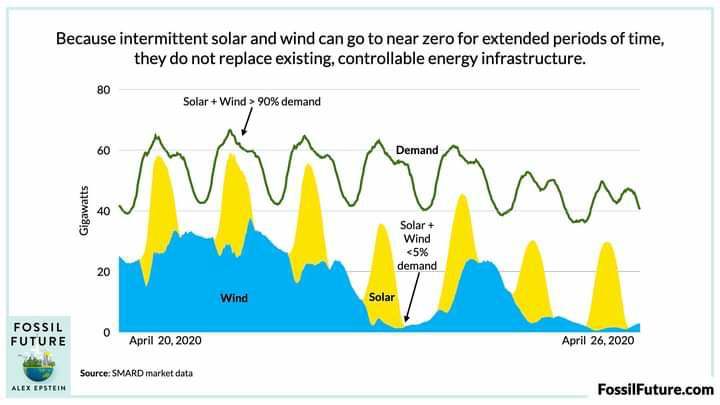
The erratic and occasional delivery of wind and solar has sent wholesale power prices into orbit and major energy users are simply being chopped from the grid when wind and/or solar output hits the floor. Consumers have just been hit with retail power bills which are between 20 and 30% higher than the same time last year. And this is just the beginning.
Australia’s power pricing and supply calamity is the product of policies deliberately designed to wreck reliable and affordable power supplies. Massive and seemingly endless subsidies to chaotically intermittent wind and solar have done what they were designed to do: drive the owners of reliable coal-fired power generators to the wall, by allowing wind and solar generators to occasionally deliver power to the market ahead of the cheap and reliable stuff.
It’s a calamity to be sure, but you wouldn’t know it if you believed…
View original post 1,224 more words
A voice from the past
26 Jul 2022 Leave a comment

Various media this morning have given quite a lot of coverage to the new paper released by the NZ Initiative, headed How Central Bank Mistakes After 2019 Led to Inflation. The authors are Bryce Wilkinson of the Initiative and former Reserve Bank Governor (2012-17) Graeme Wheeler – the coverage probably mostly because of the trenchant words from the former Governor, I think the first we have heard from him since he moved back to corporate board land in late 2017.
I’m not one of those who has any particular problem with former Governors and Deputy Governors commenting on what is going on with monetary policy. If it isn’t always common, well we have a fairly thin pool of commentators in New Zealand, and these are hardly ordinary times. The quality of the debate is only likely to be improved by hearing, and challenging/scrutinising, alternative perspectives. We can only hope…
View original post 2,406 more words
Wind Turbine Collapses: ‘Leaking Oil Everywhere!’
26 Jul 2022 Leave a comment

 Example of product type used by the wind industry
So much for ‘keeping it in the ground’, as climate obsessives like to intone to anyone who will listen to their anti-oil rants.
– – –
On Sunday, puzzled Swedish journalist and political commentator Peter Imanuelsen tweeted the news: “A wind power turbine just collapsed in Sweden”, says CNS News.
“People are being warned to keep their distance because…it is now leaking oil everywhere! “Wait, these “green” wind turbines use oil???”
View original post 236 more words
PBS – American Experience: Eyes On The Prize – #13/14 – The Keys to the Kingdom 1974 – 1980
26 Jul 2022 Leave a comment

In the 1970s, anti-discrimination rights are put to the test. Boston whites violently resist federal school desegregation order. Atlanta’s mayor Jackson proves affirmative action can work, but Bakke decision challenges that policy.
About this series
Eyes on the Prize is an American television series and 14-part documentary about the Civil Rights Movement in the United States. The documentary originally aired on the PBS network and also aired in the United Kingdom on BBC2. Created and executive produced by Henry Hampton at the film production company Blackside and narrated by Julian Bond, the series uses archival footage, stills and interviews of participants and opponents of the movement. The title of the series is derived from the folk song “Keep Your Eyes on the Prize,” which is used in each episode as the opening theme music.
A total of 14…
View original post 149 more words
The Great Enrichment
26 Jul 2022 Leave a comment
in economic history, labour economics, poverty and inequality Tags: The Great Enrichment, The Great Fact

Imperium by Robert Harris (2006)
25 Jul 2022 Leave a comment

‘Politics is history on the wing! What other sphere of human activity calls forth all that is most noble in men’s souls, and all that is most base? Or has such excitement? Or more vividly exposes our strengths and weaknesses?’
(Cicero defending his fascination with politics to his secretary, Tiro, in Imperium, page 263)
What you notice first about this book are a) its length (480 pages) and b) the blank flatness of its style. Here’s how it opens:
My name is Tiro. For thirty-six years I was the confidential secretary of the Roman statesman Cicero. At first this was exciting, then astonishing, then arduous, and finally extremely dangerous. During those years I believe he spent more hours with me than with any other person, including his own family. I witnessed his private meetings and carried his secret messages. I took down his speeches, his letters and his literary…
View original post 6,207 more words
PBS – American Experience: Eyes On The Prize – #12/14 – A Nation of Law 1968–1971
25 Jul 2022 Leave a comment
Black activism is increasingly met with violent and unethical response from local and federal law enforcement. A five-day inmate takeover at Attica Prison calls the public’s attention to conditions there leaves 43 dead: 39 killed by police.
About this series
Eyes on the Prize is an American television series and 14-part documentary about the Civil Rights Movement in the United States. The documentary originally aired on the PBS network and also aired in the United Kingdom on BBC2. Created and executive produced by Henry Hampton at the film production company Blackside and narrated by Julian Bond, the series uses archival footage, stills and interviews of participants and opponents of the movement. The title of the series is derived from the folk song “Keep Your Eyes on the Prize,” which is used in each episode as the opening theme…
View original post 154 more words
Humour in the Morning – Yes, Prime Minister – 5 Lessons from Sir Humphrey
25 Jul 2022 Leave a comment
Iain Jamieson: The Lord Advocate’s Role in Vetting Bills in the Scottish Parliament for Legislative Competence: A Reply to Chris McCorkindale
25 Jul 2022 Leave a comment


A Scottish Minister, when introducing a Bill into the Scottish Parliament, is required by section 31(1) of the Scotland Act 1998 to state that, in his or her view, the Bill would be within the legislative competence of the Parliament. Such a statement is required, by paragraph 3.4 of the Scottish Ministerial Code, to be “cleared” with the Scottish Law Officers (in practice the Lord Advocate).
It was because the Lord Advocate did “not have the necessary degree of confidence” to clear such a statement in relation to the draft Scottish Independence Referendum Bill that she was requested by the First Minister to refer the question whether the Bill would be within the legislative competence of the Parliament to the Supreme Court in terms of paragraph 34 of Schedule 6 to the Scotland Act.
To date, the Supreme Court has not accepted the reference but has told both the…
View original post 1,211 more words
Skyrocketing Power Prices & Power Rationing: Germany First To Hit The Wind & Solar Wall
24 Jul 2022 Leave a comment
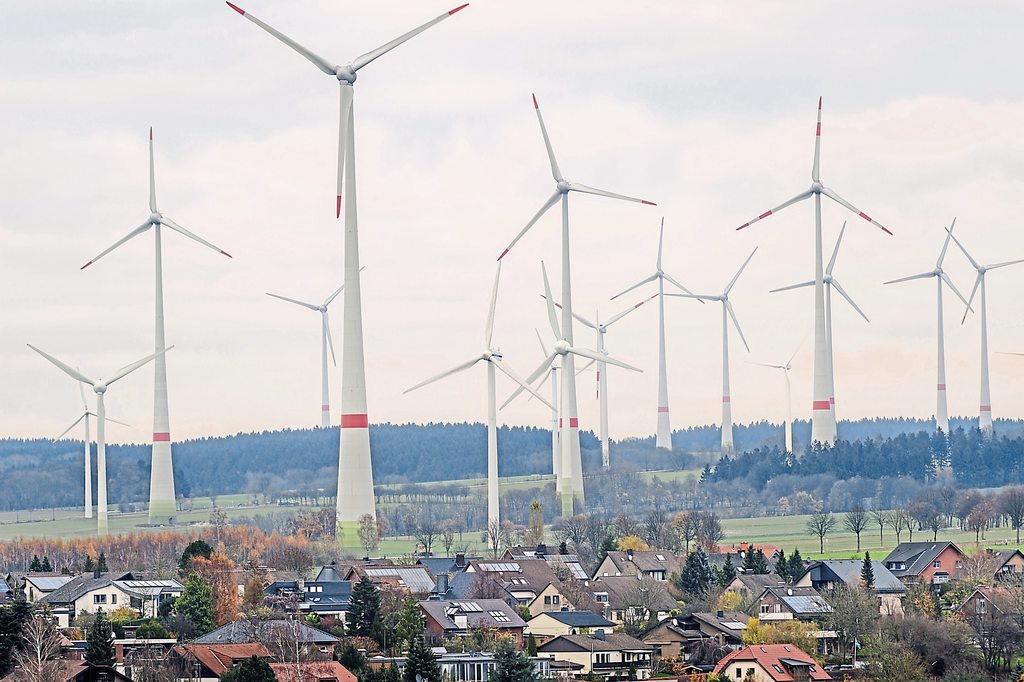
Germans are in the midst of a power pricing and supply disaster thanks to the world’s most idiotic energy policy, centred on an unhinged obsession with chaotically intermittent wind and solar.
Already suffering Europe’s highest power prices, consumers are bracing for even worse to come.
Vladimir Putin’s Ukrainian adventure has merely brought things to a head; heavily reliant upon Russian gas – used to shore up its grid in response to total collapses in wind and solar output (think calm weather and sunset) – now that Vlad’s gas is in short supply, Germany has slammed into reality with a vengeance.
Francis Menton takes a ‘don’t say we didn’t warn you’ delight in detailing the root cause of a perfectly predictable and perfectly avoidable calamity.
And The Winner Is, Germany!
Manhattan Contrarian
Francis Menton
29 June 2022
Just over six months ago, in December 2021, I asked the question that was…
View original post 1,518 more words


Recent Comments