SPQR: A History of Ancient Rome by Mary Beard (2015) 8. Assimilation
15 Feb 2022 Leave a comment

The key learning from the entire book is that the secret of Rome’s success can be summed up in one word: assimilation. Already, by the 300s BC, Romans had perfected a system which was unprecedented in the ancient world and was to give them unparalleled power and success. It was that they did not conquer and destroy their enemies then retire to their core territory: they assimilated both the people and the territories they defeated into the Roman state. They extended Roman-ness to the conquered peoples, thus extending Roman territory and Roman population, eventually to a vast and unparalleled extent (page 67).
1. An endless supply of soldiers
Instead of setting Roman administrators over a defeated tribe, the only tribute the Romans asked for was for the defeated to provide soldiers for the Roman army, to be funded by local taxation. These soldiers, regardless of tribal affiliation or…
View original post 1,485 more words
Aradhya Sethiya: The party has just begun: The Party Leader and the UK constitution
15 Feb 2022 Leave a comment

 The looming uncertainty around Johnson’s term in office is not just a perfect setting for political intrigue, but may also have something to offer to students of constitutional law. It should draw our attention to one of the fundamental questions of the UK constitutional process – how should we choose or remove a Prime Minister between general elections? The constitutional theory is straightforward. To become a Prime Minister, an MP must enjoy the confidence of the majority of the members of the House of Commons. Constitutionally, therefore, Parliament, not the electorate, selects the PM for appointment by the Queen. Hence, the House of Commons as a whole should remove and select the PM. According to this theory, then, Johnson would be removed if he loses a vote of confidence on the floor of the House of Commons. The classical formulation is neat but incomplete. Most importantly, it does not take…
View original post 1,957 more words
Reverse causation fallacy
14 Feb 2022 Leave a comment

Recently on the Australian “Sunrise” TV program co-presenter David Koch said: “There have only been 3000 deaths from COVID, far less than that from influenza in the same period, so we should oppose the lockdowns”. This statement ignored the fact that prior to and during the vaccination rollout, lockdowns are likely to have prevented many thousands more deaths.
Similarly, some people argue against counter-terrorism measures on the grounds that there have been relatively few successful terrorist attacks in Australia, ignoring the fact that counter-terrorism has deterred and disrupted many more terrorist plots than those that have been carried out.
Several years ago, I was working as a regulatory consultant helping to remake sunsetting Victorian water regulations. Amongst other things, these regulations require the installation of backflow prevention devices on the customer’s water service pipe, just after the water meter. Backflow can result in contaminants being drawn into the drinking water…
View original post 163 more words
Why Wind Power Output Collapses Are Causing Europe’s Power Prices to Rocket
14 Feb 2022 Leave a comment

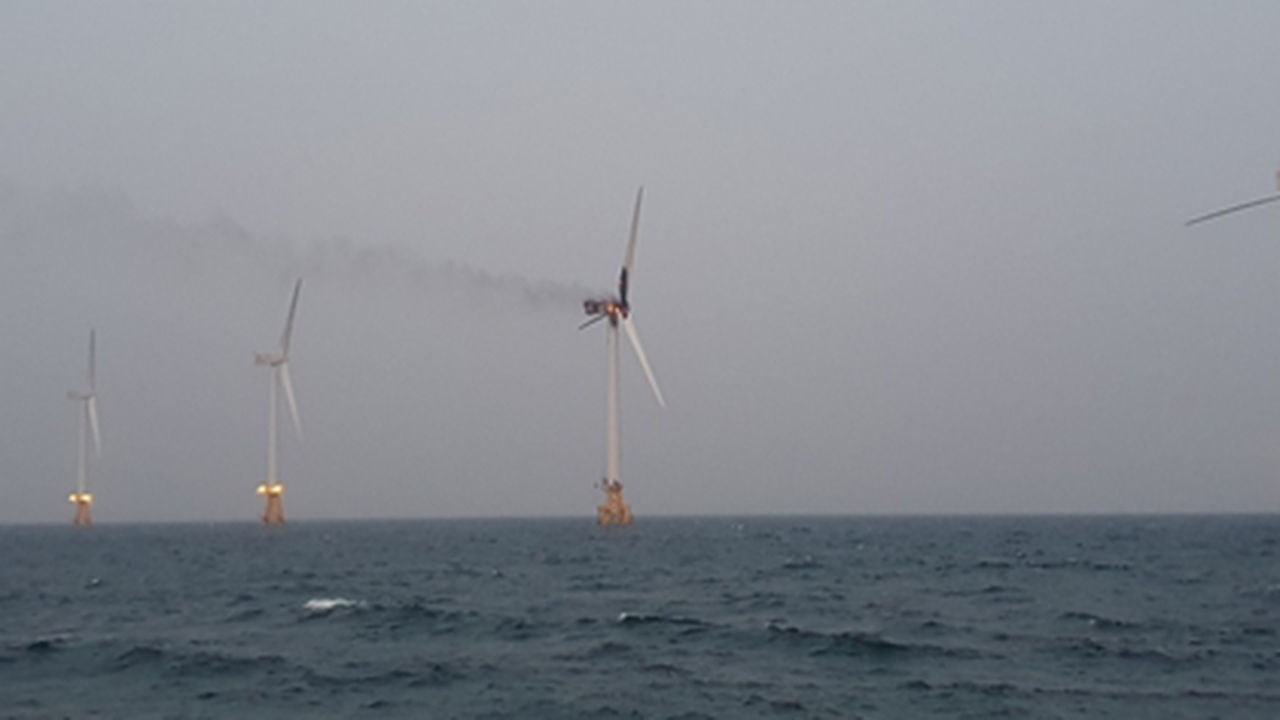
Rocketing power prices were inevitable once Europe decided to put all its energy eggs in the wind power basket. Europe has squandered billions on subsidies to construct tens of thousands of turbines both onshore and off – the Germans managed to spear more than 30,000 across their homeland and are paying a hefty price.
By giving grid preference to the erratic and occasional delivery of wind and solar, the owners of reliable on-demand generators are pushed to the back of the queue, rendering many operators uneconomic, which is all part of the plan.
The Germans, however, went further by effectively banning nuclear power generation (the plan is to shut down all of their nuclear plants) and sought to shut down their coal-fired power plants too, only to restart them in a dreadful hurry when wind power output collapsed for weeks last winter.
But it’s the chaos in the power market…
View original post 685 more words
Setting up the COVID-19 inquiry: an expert view
14 Feb 2022 Leave a comment


The inquiry into the COVID-19 pandemic is due to start work in the spring, chaired by Baroness (Heather) Hallett, a former Court of Appeal judge. It will be one of the most complex inquiries in legal history, and highly charged politically, with over 150,000 deaths so far, and the pandemic far from over. In January, the UCL Political Science Department hosted an expert panel discussion to pool advice on how best to set up a complex inquiry to ensure that it works speedily and efficiently, victims feel they have been heard, and the findings are accepted as legitimate. Ioana Măxineanu summarises their contributions.
On January 13th, the UCL Political Science Department hosted an online seminar entitled Setting Up the Covid Inquiry. The event was chaired by Robert Hazell, and brought together three distinguished panellists previously involved in high profile inquiries: Lord (Nicholas) Phillips, chair of the BSE Inquiry
View original post 1,449 more words
Vaccine persuasion is cheaper
14 Feb 2022 Leave a comment

Canadians are blocking a bridge. For Americans who like to engage in stereotypes about Canadians, this is inexplicable (even though the practice of blocking things in Canada is not new by any means). However, for me as an economist, it is entirely explicable.
Consider what vaccine mandates/passports (which is what initiated the current mayhem) do in pure economics terms: they raise costs for the unvaccinated. They do not alter the benefit of being vaccinated. All they do is raise costs. People could be more or less inelastic to this cost, but the fact that many are willing to spend time and resources (fuel, wear and tear of trucks etc.) to prevent such policies from continuing suggest that their behavior is not perfectly inelastic.
How elastic is it then? Well, we can see that by looking at what happens when we alter the benefit of being vaccinated. This is…
View original post 305 more words
The OECD’s Narrow (and Warped) Perspective on Taxation
14 Feb 2022 Leave a comment

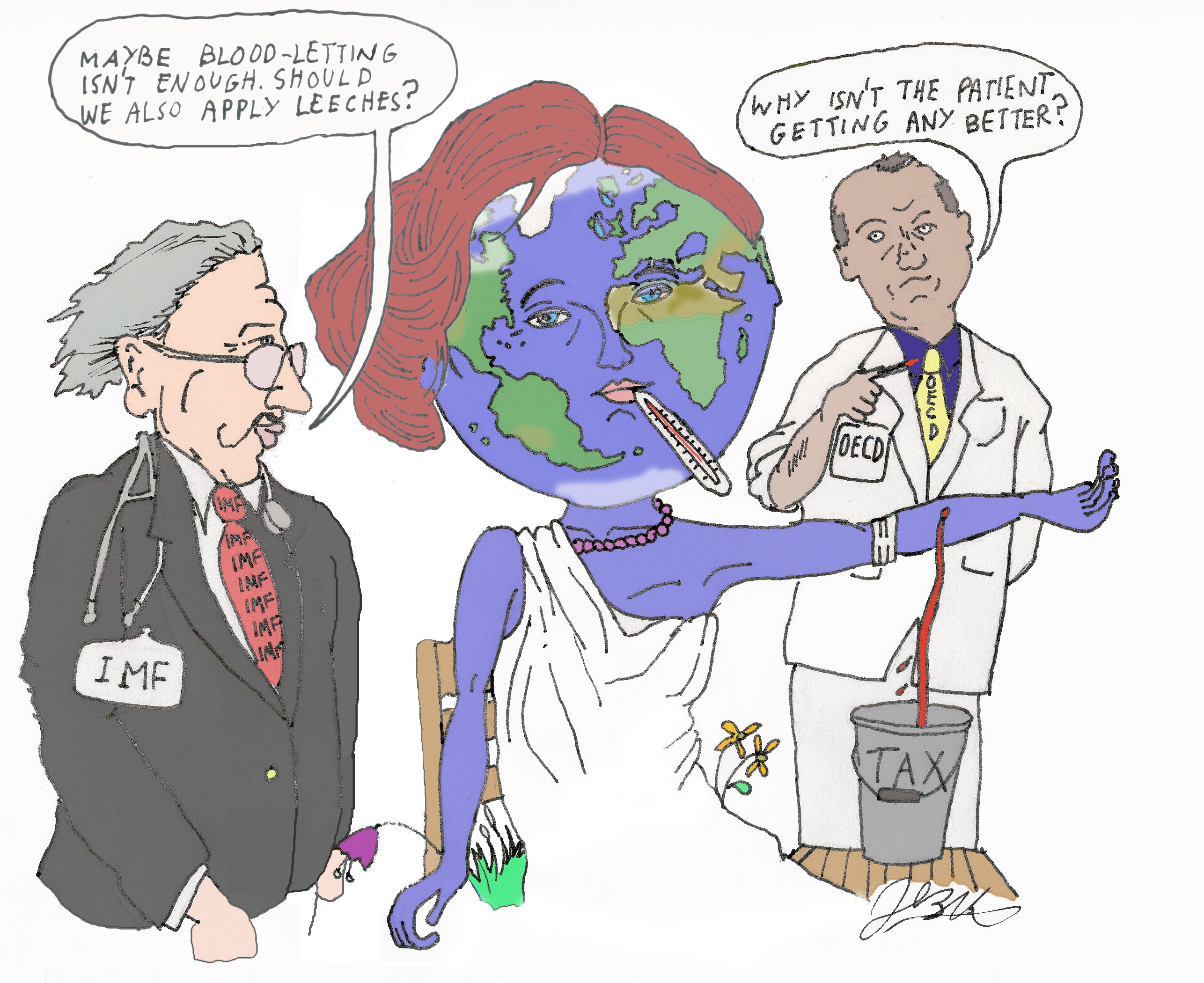
More than 11 years ago, the Center for Freedom and Prosperity released this video about the OECD, a Paris-based bureaucracy subsidized by American taxpayers.
As outlined in the video, there are many reasons to dislike the Organization for Economic Cooperation and Development.
As a fan of tax competition, I don’t like the OECD because the bureaucrats persecute jurisdictions with low tax burdens.
But the bureaucracy’s pro-tax harmonization campaign is a symptom of a broader problem, which is that the OECD relentlessly advocates for higher taxes.
Consider the recent publication entitled “Fighting Tax Crime – The Ten Global Principles.” As you can see, nine of those ten principles involve more power and authority for government.
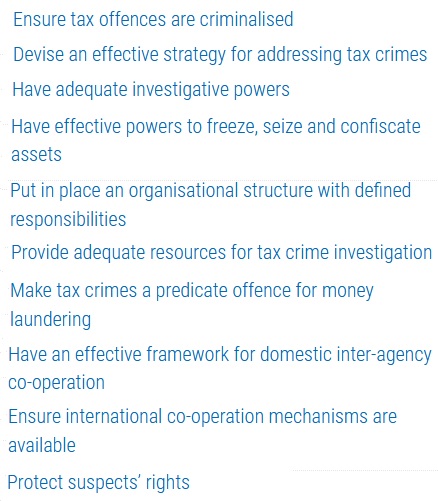
Since I’m not an anarcho-capitalist, I realize some taxation is necessary (ideally only the amount needed to finance genuine public goods).
As such, I don’t necessarily condemn enforcement policies.
 But…
But…
View original post 171 more words
Aliens or coincidence
14 Feb 2022 Leave a comment
in economic history, economics of education, economics of media and culture Tags: conjecture and refutation, conspiracy theories, philosophy of science

Atomic Attraction: Wind Power’s Abject Failure Forces Europe to Embrace Nuclear Power
13 Feb 2022 Leave a comment
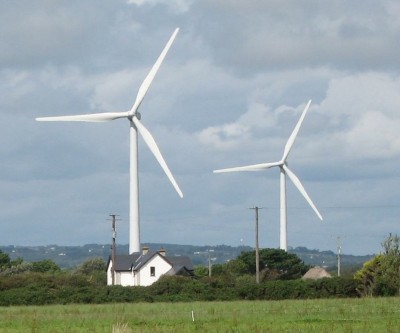
To call Europe’s rapid embrace of nuclear power ‘passionate’ is not overstatement. Much to the horror of wind and solar acolytes, a growing number of EU members are ready to declare nuclear power is not only clean and green, but wholly sustainable.
Wind and solar-obsessed Germans and Brits are watching power prices go into orbit and the pro-renewables camp has been forced to grapple with months-long wind droughts when so-called ‘green’ energy couldn’t be bought at any price.
Necessity may well be the mother of invention, but the stark realisation that wind power output can collapse for days and weeks on end is certainly the mother of a renewed attraction to nuclear power.
After months of watching wind power output barely register across Europe, the French President announced a wholesale reversal of their anti-nuclear power plant policy, no doubt driven by the need to ensure that they will never…
View original post 1,072 more words
Retiring Covid Dashboards
13 Feb 2022 Leave a comment

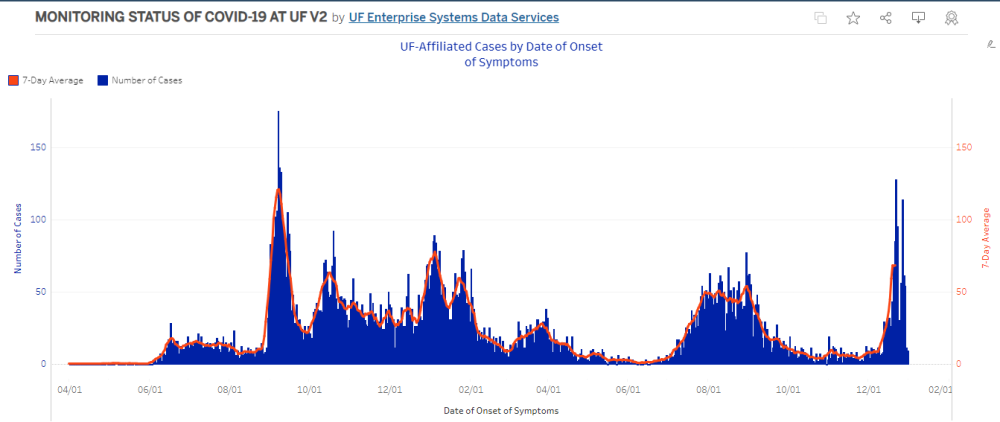 UF dashboard to end of 2021. Now retired.
Michael Lauzardo wrote at Washington Post We stopped tracking coronavirus cases at the University of Florida. Here’s why. Excerpts in italics with my bolds and added images.
Our covid ‘dashboard’ had reported more cases than any other university in the country.
But the data was increasingly unreliable.
For nearly two years, I oversaw the coronavirus “dashboard” at the University of Florida. On that site, we posted the number of tests performed at the university each day, the percentage that were positive and the total number of cases. We also relayed how many students and faculty members were in isolation or quarantine. The dashboard was a tool that people on our campus referred to, and that the national media monitored (along with similar dashboards at hundreds of other schools) as they tracked the coronavirus situation at colleges and universities. In a typical…
View original post 1,272 more words
Congo: The Epic History of a People by David Van Reybrouck (2010) – 2
13 Feb 2022 Leave a comment
One reason van Reybrouck describes his history of the modern Congo as ‘epic’ is because so much happens that it becomes quite bewildering. Possibly you can break it down into two main parts:
Part one – pre-independence
Pre-history
The slow spread of Bantu tribes from central west Africa about 1,000 BC. The slow arrival of limited agriculture but without the pack animals or variety of farmed animals found in Eurasia resulting in subsistence farming. The permanent toll of fierce diseases carried by the tsetse fly killing humans and animals. The rise of the relatively small kingdom of Kongo around the mouth of the Congo River from the 14th to 19th centuries. It was this kingdom that the first Portuguese explorers encountered around 1500 and whose name came to be applied to the river and then the larger region.
European exploration 1850 to 1885
The tentative probing of David Livingstone into…
View original post 6,718 more words
Deconstructing the Laffer Curve(s)
13 Feb 2022 Leave a comment
The Laffer Curve is a method for illustrating the relationship between tax rates, taxable income, and tax revenue.
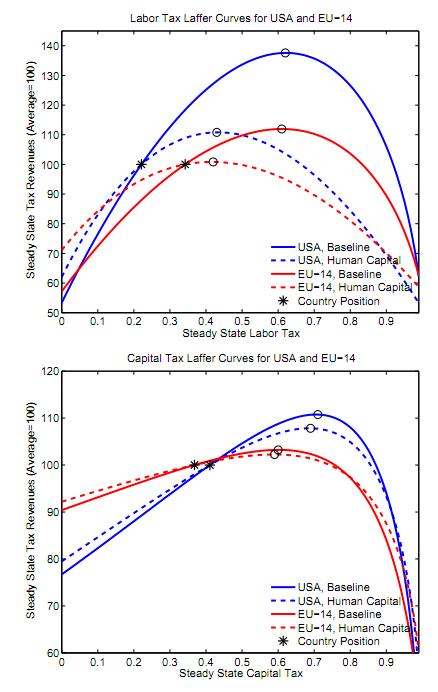 But it’s important to realize that there are actually lots of varieties.
The Laffer Curve for capital gains taxes, for instance, will look different than the Laffer Curve for payroll taxes. Or corporate taxes. Or marijuana taxes.
In every case, the shape of the curve will depend on what’s being taxed and the ability of affected taxpayers to alter their behavior.
And the shape of the Laffer Curve also will depend on whether one is measuring the short-run revenue impact of tax changes or the long-run impact of tax changes.
Given all these varieties, no wonder so many people, both right and left, sometimes misstate its meaning.
Let’s try to expand our understanding of the Lafffer Curve by looking at some new research.
Professor Aaron Hedlund of…
View original post 567 more words
Emails Cast Further Light on the Plot to Re-educate Boris About Climate Change
13 Feb 2022 Leave a comment

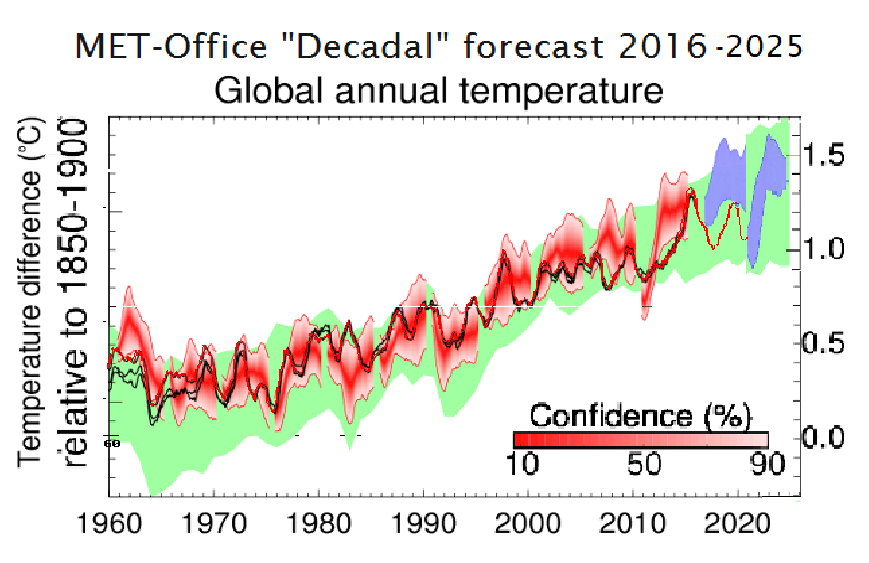 Caution – alarmist brainwashers at work. Never mind the ‘unrealistic’ climate models.
– – –
Thirty-eight emails released under a recent FOI request provide an interesting insight into the way Government science advisers plotted to change Boris Johnson’s mind over the causes of climate change, ahead of a Cabinet Office presentation, says The Daily Sceptic.
The event on January 28th 2020 was led by the Government’s Chief Scientific Officer Sir Patrick Vallance and presented, using 11 slides, by the Chief Scientist of the Met Office, Professor Stephen Belcher.
According to Belcher, the stated goal of the presentation was to “stabilise climate which requires net zero emissions”.
View original post 530 more words
Lies, damned lies, and G7 league tables
12 Feb 2022 Leave a comment

The publication of the first official GDP data for the whole of 2021 have revived a highly politicised debate about how well the UK is doing, compared to our peers in the G7. Part of me doesn’t really care, but there are some important points here.
First, the claim that the UK was the fastest growing G7 economy in 2021 is factually correct, as is the claim that independent forecasters (including the IMF) expect the UK to repeat this performance in 2022. We can argue about the significance of these claims, but both are true.
The issues here are therefore different from those raised by other recent statements. In particular, the Prime Minister has rightly been told off by the statistics regulator for repeatedly claiming that there are more people in work than before the pandemic, which ignores the fall in the numbers of self-employed. This feels like a…
View original post 613 more words


Recent Comments