Is Market Failure an argument against government? – David Friedman
28 Jan 2022 Leave a comment
in applied price theory, applied welfare economics, comparative institutional analysis, David Friedman, economic history, economics of crime, economics of information, economics of regulation, energy economics, environmental economics, history of economic thought, industrial organisation, labour economics, labour supply, law and economics, liberalism, libertarianism, property rights Tags: market failure
Robert Lucas: Labor Reform and Crisis Recovery
28 Jan 2022 Leave a comment
in applied price theory, applied welfare economics, business cycles, comparative institutional analysis, econometerics, economic growth, economic history, economics of regulation, labour economics, labour supply, macroeconomics, Robert E. Lucas Tags: employment law
The Era of Cheap Renewables Grinds To A Halt
27 Jan 2022 Leave a comment

 Digging for cobalt [image credit: mining.com]
When was that, you may ask. Anyway, whoever thinks there was such a time is about to find out it’s becoming a memory only, according to this article. For one thing, the required mining has been exposed as lacking investor appeal due to its environmental footprint, so to speak. Also, demand is likely to accelerate and the mining industry could well struggle to keep pace.
– – –
Supply chain disruptions, rising raw materials costs, and geopolitical tensions have jolted the price of solar panels, wind turbines, and EV batteries, and some analysts now think that the era of cheap renewable energy is over, says OilPrice.com.
The continual decline in production cost for wind, solar, and EV batteries was touted as the driver of their growing adoption and ultimate takeover of the global grid.
Up until two years ago, there was no other…
View original post 378 more words
Mercedes owner ‘horrified’ new battery will cost him £15,000 – more than the car is worth
27 Jan 2022 Leave a comment
Is the Labor Market Back?
27 Jan 2022 Leave a comment

Last month I asked if travel was back. Air travel has recovered a lot from the depths of the pandemic, but it was still only about 80-85% of pre-pandemic levels.
Labor markets also plummeted during the worst of the pandemic, and have slowly (and sometimes quickly) clawing their way back. But are we back to pre-pandemic levels?
The national unemployment rate is now under 4%, a level which is rarely reached even in the best of times. But there is considerable variation across states.
The latest BLS release of state unemployment data shows that some states are at their historic lows, with one state standing out: Nebraska currently has the lowest unemployment rate a state has ever recorded at 1.7% in December 2021 (the data go back to 1976). Utah is also just below 2% in December — at 1.9% it’s the 2nd lowest in history (after Nebraska, of…
View original post 412 more words
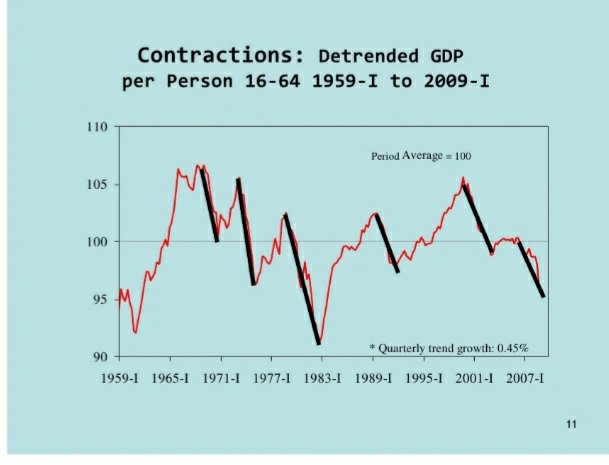
Prescott shows a lot of contracting since the end of the tech bubble
27 Jan 2022 Leave a comment
in business cycles, economic growth, economic history, Edward Prescott, great recession, history of economic thought, macroeconomics, monetarism, monetary economics Tags: real business cycles
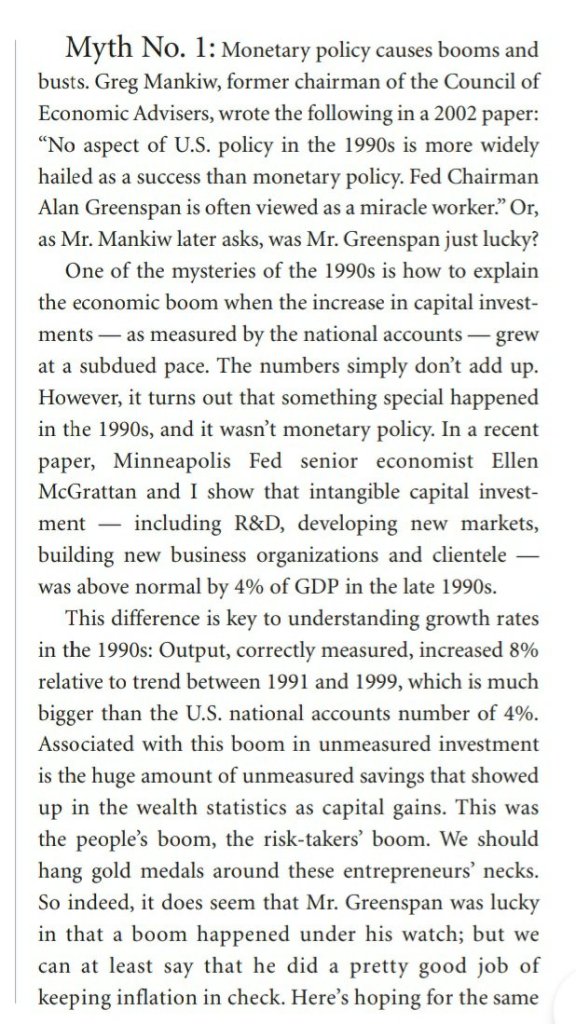
Prescott on monetary booms
27 Jan 2022 Leave a comment
in business cycles, economic growth, economic history, Edward Prescott, history of economic thought, macroeconomics, monetary economics
The List of School Choice Hypocrites Is Getting Longer
26 Jan 2022 Leave a comment

When contemplating the issue of school choice, it’s most important to focus on how we can improve educational outcomes, particularly for children from low-income communities.
But, as a fiscal economist, I can’t help thinking about how school choice is also good news for taxpayers.
And I also can’t help but notice that opponents are often very hypocritical.
- Such as Senator Elizabeth Warren of Massachusetts, who utilized private education for her offspring but endlessly fights against school choice for less-affluent families.
- Such as the high-level education bureaucrat from Alexandria, Virginia who sent his kids to private school while opposing educational options for less-affluent families.
 Such as the Democratic congressional candidate whose kids were enrolled in an elite private school, yet attacked his opponent for supporting choice for less-affluent families.
- Such as the head of a teacher union in California who had his daughter in a private school…
View original post 1,331 more words
European Energy Crisis, Updated: Germans Shut Down Perfectly Good Nuclear Plants, Utilities Send Socks to Shivering Customers and Advise Eating Porridge
26 Jan 2022 Leave a comment

As we noted in September, natural gas prices are sky-high in Europe. Coal-burning power plants have been shut down and the windmills have not spun as fast as expected, which led to a drawdown of European natural gas stocks for electric power generation. The Russians are not sending as much gas as hoped through their pipelines, so Europe is scratching around for (very, very expensive) liquified natural gas to be shipped by ship from the U.S. and the Middle East.
As noted, this hurts European economies in various ways. Fertilizer plants and aluminum smelters have shut down because of too-costly natural gas feedstock, consumers are paying much more in utility bills, and some governments are going deeper into deficit by paying subsidies to partially cushion consumers. This energy shortage also makes Europe very vulnerable to Russia, at a time when Putin is menacing Ukraine with invasion.
France derives about
View original post 497 more words
Pessimism bias
26 Jan 2022 Leave a comment
in health economics Tags: economics of pandemics, pessimism bias

North Korea’s Counterfeiting Operation Funded Its Nuclear Program
26 Jan 2022 Leave a comment
in defence economics, economics of crime, law and economics, monetary economics, war and peace Tags: North Korea
Why Berlin’s 15 Year-Old Airport has Never Had a Flight
26 Jan 2022 Leave a comment
in transport economics Tags: Berlin
Subsidised Suicide: 2021 Revealed Wind & Solar To Be Unreliable & Utterly Useless
25 Jan 2022 Leave a comment

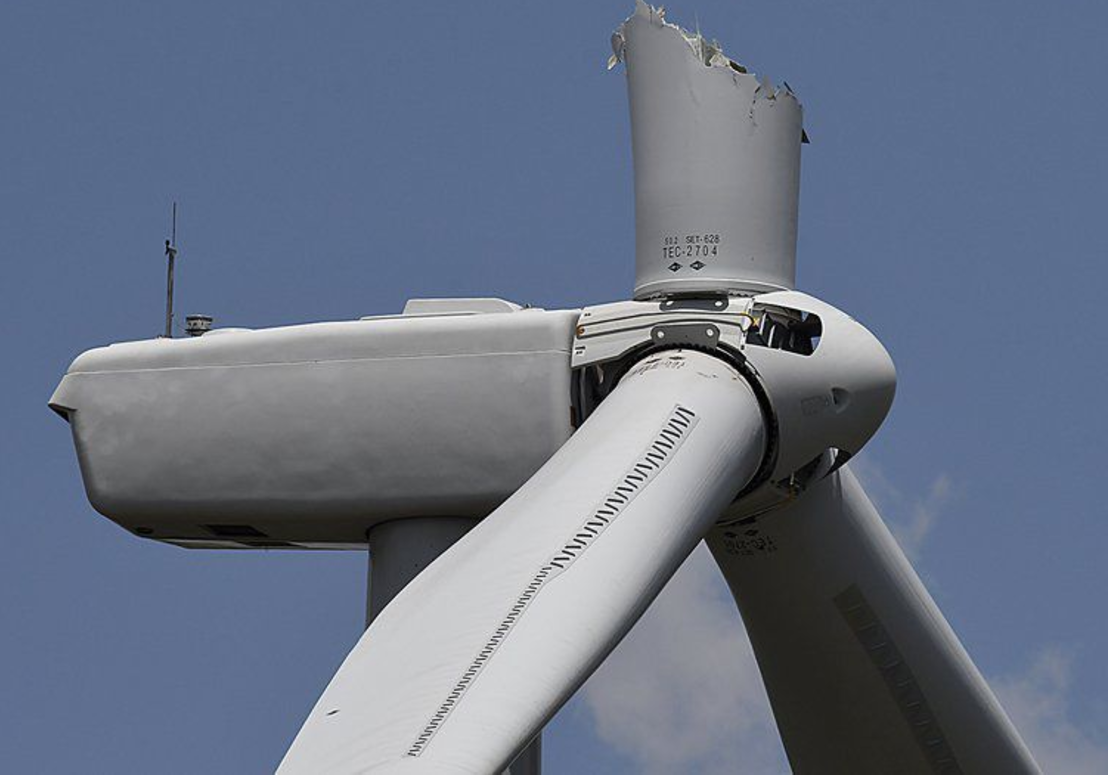
Wind and solar are said to be ‘cheap’, but then so’s talk. 2021 was the year when wind and solar were revealed to be thoroughly useless, thanks to their inherent intermittency and general lack of reliability.
Starting in September last year, for months on end, Europe’s wind power fleet struggle to produce any consistent power of any value, at all. Week after week, wind power output barely registered in Germany and the UK.
Unable to deliver even occasional bursts of power, Europe’s wind industry was relegated to the status of a laughingstock, while Germans and British fired up their old coal-fired power plants, the only thing preventing a wholesale grid collapse.
The renewable energy debacle wasn’t confined to Europe, as Robert Bryce details below.
Seven Top Energy Stories of 2021
Forbes
Robert Bryce
31 December 2021
It has been a chaotic year in the energy sector. And with just a…
View original post 2,146 more words


Recent Comments