IMF Bailouts and Moral Hazard
25 Jan 2022 Leave a comment

One of the (many) unfortunate tendencies of politicians is that they focus on the short run (i.e., their upcoming reelection battles).
Why is this unfortunate? Because there are some policy changes that may be costly in the short run, but they are nonetheless very worthwhile because they generate big long-run benefits.
- Shifting to a system of personal retirement accounts means trillions of dollars of near-term “transition costs” in order to protect current retirees and older workers, but reform will solve the program’s long-term $40 trillion-plus unfunded liability.
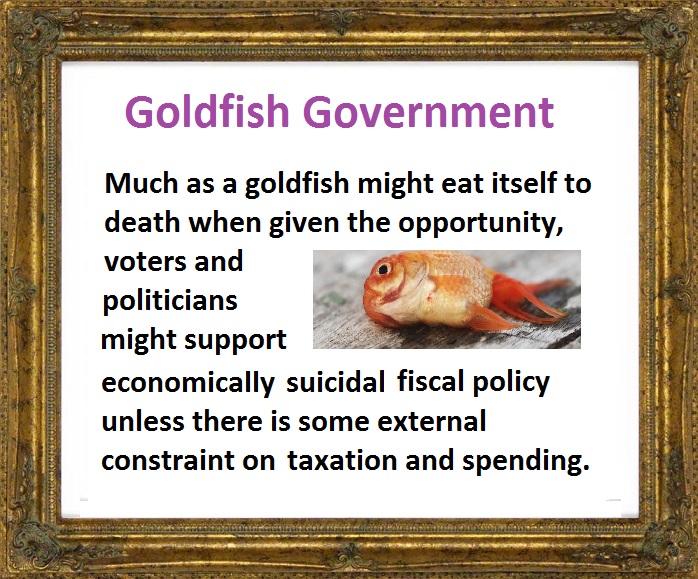
- Messy fights over the debt limit create (almost certainly exaggerated) concerns about potential default, but that potential cost would be trivial compared to the long-run benefits of figuring out how to limit the growing burden of federal spending.
- When bad monetary policy causes a financial bubble or housing bubble, shifting to good monetary policy presumably will…
View original post 637 more words

Carthage Must Be Destroyed by Richard Miles (2010)
24 Jan 2022 Leave a comment

According to legend Carthage was founded in 814 BC. Its history came to an end in 146 BC, the year in which Rome defeated and utterly destroyed it. Richard Miles is a young historian whose book, Carthage Must Be Destroyed, sets out to record everything we know about Carthage, from the legends of its founding, through its umpteen wars, up to the final catastrophe.
Carthage Must Be Destroyed is long, 373 pages of text, 77 pages of notes, 34 page bibliography and a 66-page index = 521 pages.
It is not a social or political history. There is hardly anything about Carthage’s form of government, a reasonable amount about its economy (trade and some agriculture), a surprising amount about the evolving design and metallurgy of its coinage (in the absence of other evidence, coins are a good indicator of cultural changes and economic success), and quite a lot about…
View original post 6,225 more words
Human History is Simple – Jordan B Peterson
24 Jan 2022 Leave a comment
in economic history Tags: capitalism and freedom, The Great Enrichment
Energy High Treason: The ‘Environmental’ Groups Sabotaging Reliable & Affordable Power Supplies
24 Jan 2022 Leave a comment


Outfits like the Sierra Club ought to be charged with High Treason, for trying to destroy reliable and affordable power supplies – supplies critical to peace, prosperity and the survival of Western civilisation.
As to defence, in a high-tech world of internet surveillance, satellite reconnaissance and remotely controlled drones, try protecting the Realm without electricity available around-the-clock.
Over the last 20 years, so-called ‘green’ groups have given up on saving the environment and have directed their hate towards reliable and affordable power.
Openly committed to the destruction of power sources generated with fossil fuel and fervently dedicated to resisting the CO2 emissions-free nuclear power that ought to placate their doom and gloom forecasts about the climate, it’s as if these characters are intent on destroying their own societies, from within.
With the hapless Joe Biden in the White House, and Bernie Sanders and his Squad intent on directing energy policy…
View original post 866 more words
Guest Post: Was Henry IV A Usurper? By Michele Morrical
24 Jan 2022 Leave a comment

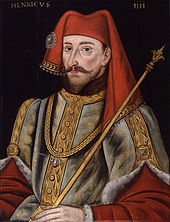 Some medieval English kings have unfairly gotten a bad rap. Others are deservedly vilified (Richard III, I’m talking to you).
Our modern-day perception of English kings is largely constructed from only a few sources. Of course, we have the writings of Shakespeare which were generally based on the real events of English monarchs but had lots of extra drama added in to spice things up. We also have the writings of chroniclers who actually lived in the middle ages, but they aren’t always reliable. Just imagine if you were hired by Henry VIII to write the history of his reign. You would definitely write it in a way that reflected very well on the king. And we have modern-day historians who try to bring the past to life with new interpretations of English monarchs and their new explanations of their controversial actions.
One of the English kings who has received very…
View original post 2,375 more words
Australian graduate premium
24 Jan 2022 Leave a comment
in economics of education, economics of information, human capital, labour economics, labour supply, occupational choice, poverty and inequality Tags: Australia, graduate premium
To what end?
24 Jan 2022 Leave a comment

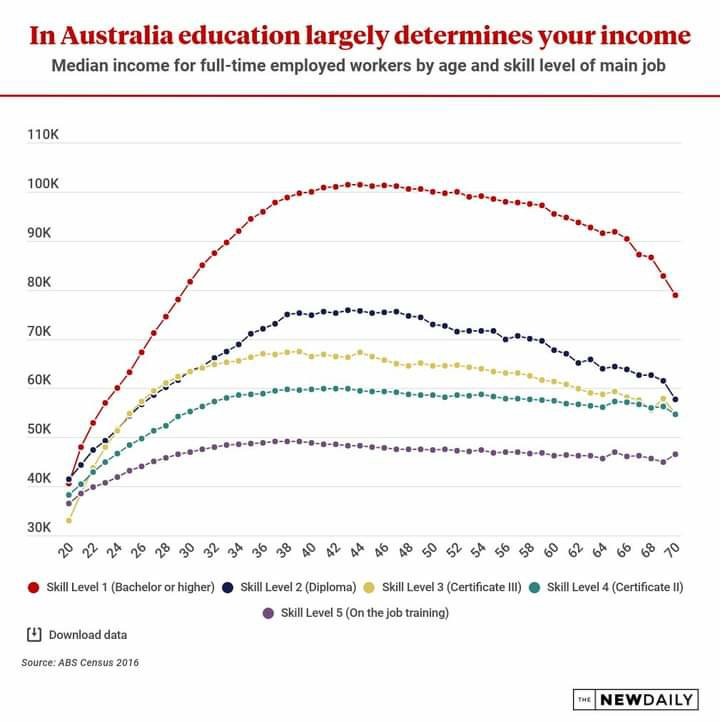
It is two years today since my first post about pandemics (and the economy). Rereading it, and another the following week, over the weekend and it was interesting to reflect on what issues had (and hadn’t) sprung to mind. But back then, however fearful people might or might not have been initially, few would have supposed that two years on we’d be labouring under new, and even more onerous, restrictions, and that for the best part of two years few of us would have been able to travel.
I was quite supportive of the need for restrictions, especially at the border, for quite a long time. Even last year, when the government was so slow to roll out the vaccine, doing everything possible to keep the virus out would have seemed appropriate (ie more than the government actually did). As for domestic restrictions, in both 2020 and 2021 the…
View original post 1,766 more words
Did Hitler Delay the Me 262?
24 Jan 2022 Leave a comment
in defence economics, war and peace Tags: World War II
January 22, 1901: Death of Queen Victoria of the United Kingdom, Empress of India
24 Jan 2022 Leave a comment

Victoria (Alexandrina Victoria; May 24, 1819 – January 22, 1901) was Queen of the United Kingdom of Great Britain and Ireland from June 20, 1837 until her death. On May 1, 1876, she adopted the additional title of Empress of India. Known as the Victorian era, her reign of 63 years and seven months was longer than that of any of her predecessors. It was a period of industrial, cultural, political, scientific, and military change within the United Kingdom, and was marked by a great expansion of the British Empire.
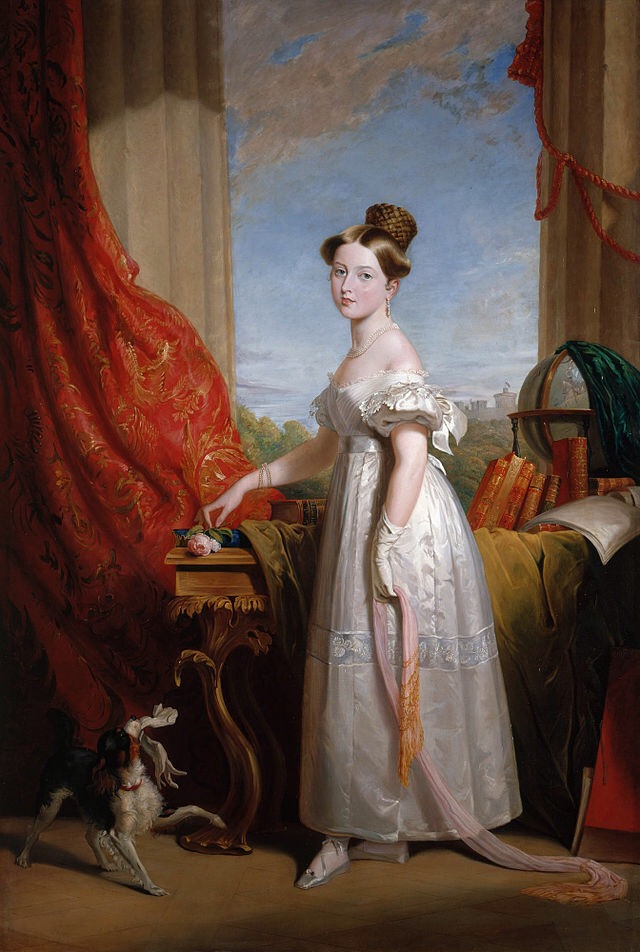 Victoria was the daughter of Prince Edward, Duke of Kent and Strathearn (the fourth son of King George III and Duchess Charlotte of Mecklenburg-Strelitz), and Princess Victoria of Saxe-Coburg-Saalfeld, the fourth daughter and seventh child of Franz Friedrich, Duke of Saxe-Coburg-Saalfeld, and Countess Augusta of Reuss-Ebersdorf.
After both her father the Duke of Kent and his father, King George III…
View original post 589 more words
Getting Away With ‘Green’ Murder: Wind Industry Destroying Vast Tracts of Australian Wilderness
23 Jan 2022 Leave a comment
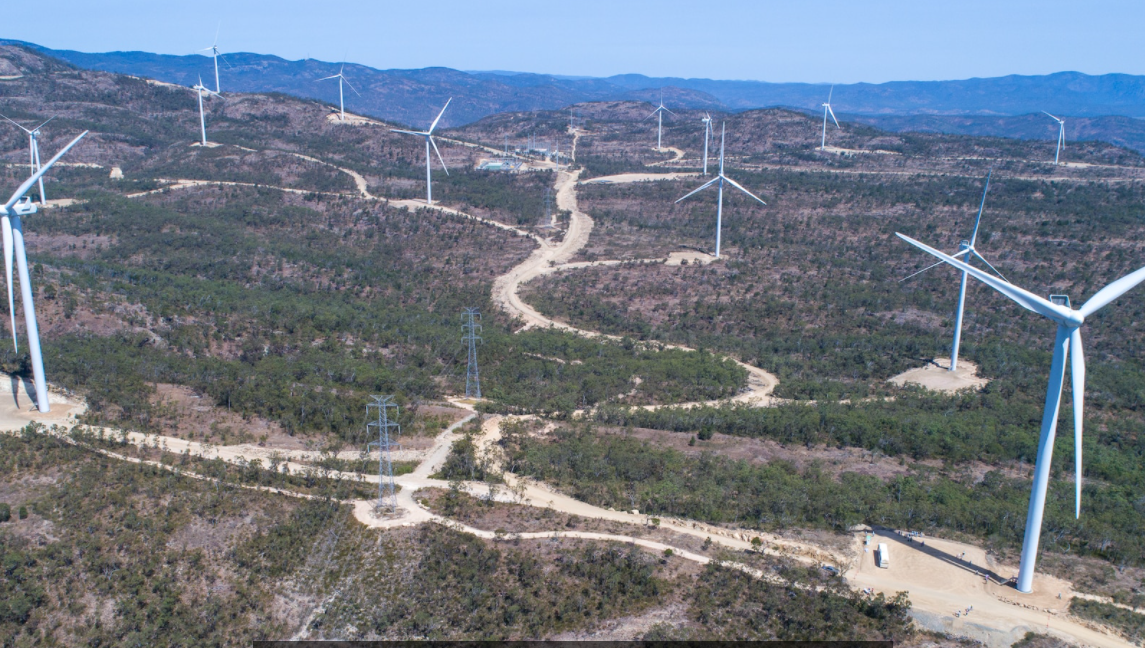
Vast tracts of Australia’s tropical and sub-tropical forests are being destroyed to make way for giant industrial wind turbines. Running like a spine down the east coast of Australia, the Great Dividing Range is prime real estate for renewable energy rent-seekers, keen on spearing 260m high monsters into territory that tree huggers used to hold in sacred reverence.
But that was before saving the planet meant clear-felling and bulldozing every ridgeline exposed to occasional stiff breezes and then, having literally moved mountains, turning newly denuded peaks into 6 lane highways.
Over time, however, the gullible environmentalists who were sucked in by claims about this wind farm powering tens of thousands of homes, with energy lovingly caressed from mother nature, began to wake up that all wasn’t well. Indeed, some of them have reacted with the kind of ‘we’ve been had’ fury expected of unwitting dupes.
The warm inner glow they…
View original post 2,739 more words
January 22, 1689: Convention Parliament convenes to decide Fate of James II-VII
23 Jan 2022 Leave a comment
The English Convention (1689) was an assembly of the Parliament of England which met between January 22 and February 12, 1689 and transferred the crowns of England and Ireland from James II-VII to William III and Mary II.
A parallel Scottish Convention met in March 1689 and confirmed that the throne of Scotland was also to be awarded to William II and Mary II.
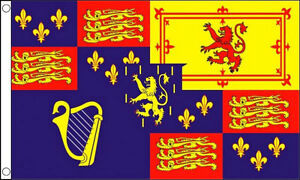 Royal Standard of William III-II and Mary II
Assemblies of 1688
Immediately following the Glorious Revolution, with King James II-VII of England, Scotland and Ireland in flight and Prince William III of Orange nearing London, the Earl of Rochester summoned the Lords Temporal and Lords Spiritual to assemble, and they were joined by the privy councillors on December 12, 1688 to form a provisional government for England. It is referred to as a Convention Parliament due to the fact it was not summoned by the King.
View original post 549 more words


Recent Comments