
Missed question on budgie smugglers
19 Jan 2022 Leave a comment
in economics of media and culture Tags: Australia
HITLER’S AMERICAN GAMBLE: PEARL HARBOR AND GERMANY’S MARCH TO WAR by Brendan Simms and Charlie Laderman
19 Jan 2022 Leave a comment

The dates December 5 through the 7th, 1941 mark the parameters of the most consequential week of the 20th century or perhaps any other time in history. It was during that week that the Soviet Union began a major counter offensive against the Nazis who were threatening Moscow, the Japanese bombed Pearl Harbor, and Hitler declared war on the United States. It was a perilous time for the British who had endured Dunkirk, the Luftwaffe’s blitz over London and other cities, fears of Japanese attacks against British held territories in Asia, and Churchill’s fear that the only thing that could save his island empire – the entrance of the United States into the war against Germany would not occur as Washington would now focus on Japan after Pearl Harbor. The event that saved the British was the Nazi dictator’s declaration of war against the United States, an…
View original post 1,288 more words
Tristan da Cunha: Building the Most Remote Settlement on Earth
19 Jan 2022 Leave a comment
in economics of media and culture
BDS Movement Debate | Oxford Union
18 Jan 2022 Leave a comment
in comparative institutional analysis, constitutional political economy, defence economics, International law, law and economics, laws of war, property rights, war and peace Tags: Gaza Strip, Israel, war against terror, West Bank
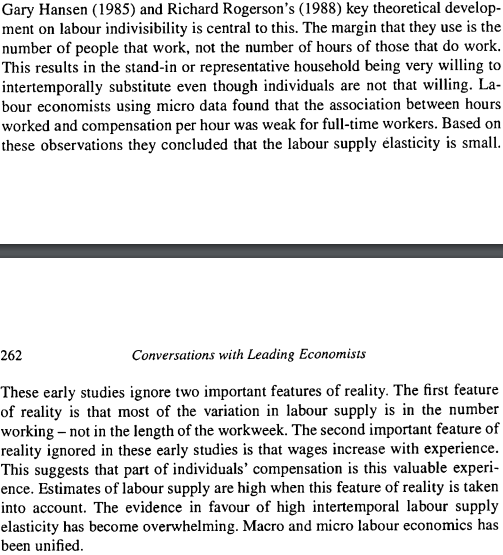
How does Prescott react to the criticism that there is a lack of available supporting evidence of strong intertemporal labour substitution effects?
18 Jan 2022 Leave a comment
Bryan Caplan – Poverty: Who Is To Blame
18 Jan 2022 Leave a comment
in applied price theory, applied welfare economics, development economics, economic history, economics of education, growth disasters, growth miracles, history of economic thought, human capital, income redistribution, labour economics, labour supply, poverty and inequality, Public Choice Tags: child poverty, family poverty, The Great Enrichment
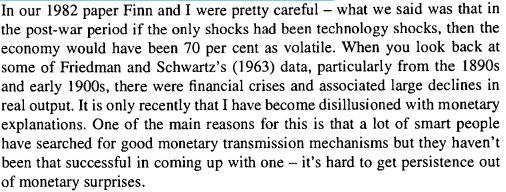
The new classical monetary-surprise style of models developed in the 1970sby Lucas, Sargent, Wallace and others were very influential. When did Prescott first begin to lose faith in that particular approach?
18 Jan 2022 Leave a comment
Cheap Energy Deficit: Climate Industrial Complex Conspires to Impoverish World’s Poorest
17 Jan 2022 1 Comment


Western Nations are determined to prevent the World’s poorest from having cheap and reliable energy, a fact laid plain at the Glasgow gabfest, where the Climate Industrial Complex did its best to ensure that the likes of India will never have any hope of dragging themselves out of agrarian misery and grinding poverty.
The wind and solar obsessed in the first world are quite prepared to ensure that it stays that way. With economic development agencies peddling ridiculously expensive solar panels – seen as ‘fake electricity’ by those lumbered with it – and forcing tinpot governments to sign up to costly and pointless wind and/or solar power schemes, the ratio of haves to have-nots is likely to stay that way for the foreseeable future.
More than a billion humans struggle through daily life without access to power at all, and two billion more are limited to a meagre trickle…
View original post 770 more words
Daniella Lock and Tanzil Chowdhury: Expansions of Executive Power and Weakening of Democratic Safeguards in 2021
17 Jan 2022 1 Comment


 The United Kingdom Constitution Monitoring Group published itsfirst annual reportin 2021. It described the UK Government as ‘set upon legislating over a range of substantial matters with a constitutional dimension’, with its overall programme being ‘notable for its scale, the speed with which it is being implemented’ and this being ‘far from a model of good practice in constitutional change’ (p5).
A significant aspect of the ‘constitutional dimension’ of such changes is that they expand executive power in a number of different ways. This post presents a brief summary of key expansions of executive power via legislation introduced to or passed in the Westminster Parliament in 2021. It then assesses the substance of these expansions, arguing that two key themes emerge. First, that there is an increase in the executive’s capacity to use coercive force, and, second, there is a reduction in the accountability of the executive to…
View original post 2,946 more words
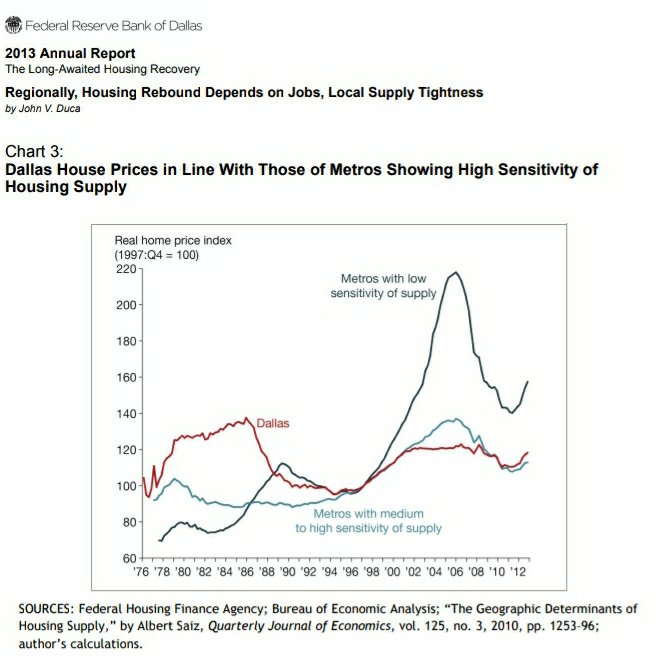
Land supply is everything to housing affordability
17 Jan 2022 Leave a comment
in applied price theory, comparative institutional analysis, law and economics, libertarianism, politics - New Zealand, politics - USA, property rights, public economics, urban economics Tags: housing affordability, land supply, zoning
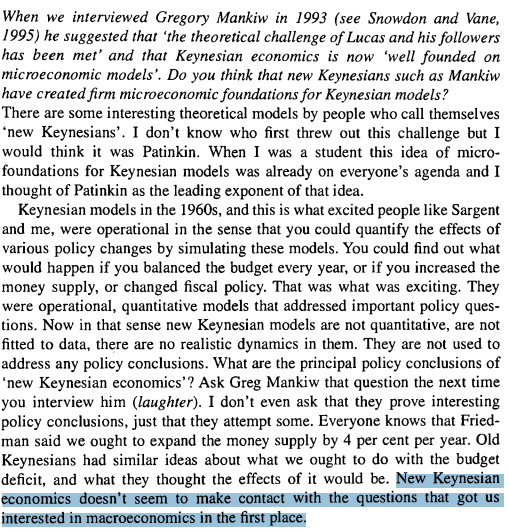
Lucas: New Keynesian economics doesn’t seem to make contact with the questions that got us interested in macroeconomics in the first place.
17 Jan 2022 Leave a comment
WaPo review indulges in myth, claims Bernstein’s ‘work brought down a president’
17 Jan 2022 Leave a comment

You’d think editors at the Washington Postmight have turned to statements by its Watergate-era principals before allowing a mythical claim about the scandal to appear in a book review that was published today.
The claim appears in a predictably favorable critique of Carl Bernstein’s ChasingHistory, a memoir about his early days in journalism.
The book, the Post’s review notes, “doesn’t mention Watergate. The occasional references to [President] Richard Nixon have nothing to do with the scandal that Bernstein” reported on with Bob Woodward for the Post in the early 1970s.
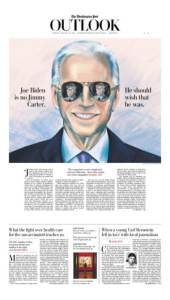
“Bernstein has no interest in retelling an already well-known tale,” the review assures us. “Instead of the staccato just-the-facts brag you might expect from an investigative reporter whosework brought down a president, ‘Chasing History’ is a lovingly detailed memoir composed in a humble register.”
Media Myth Alert is only faintly interested in a memoir by
View original post 800 more words
Life in Alsace Lorraine
17 Jan 2022 Leave a comment
in defence economics, economic history, International law, war and peace Tags: France, Germany
Your work on the US found that productivity shocks explain most of the cyclical fluctuations the economy has experienced. Does this finding have any bearing on the nature of public policy?
17 Jan 2022 Leave a comment
in business cycles, economic history, economics of regulation, Edward Prescott, growth miracles, labour economics, labour supply, macroeconomics, monetary economics, public economics


Recent Comments