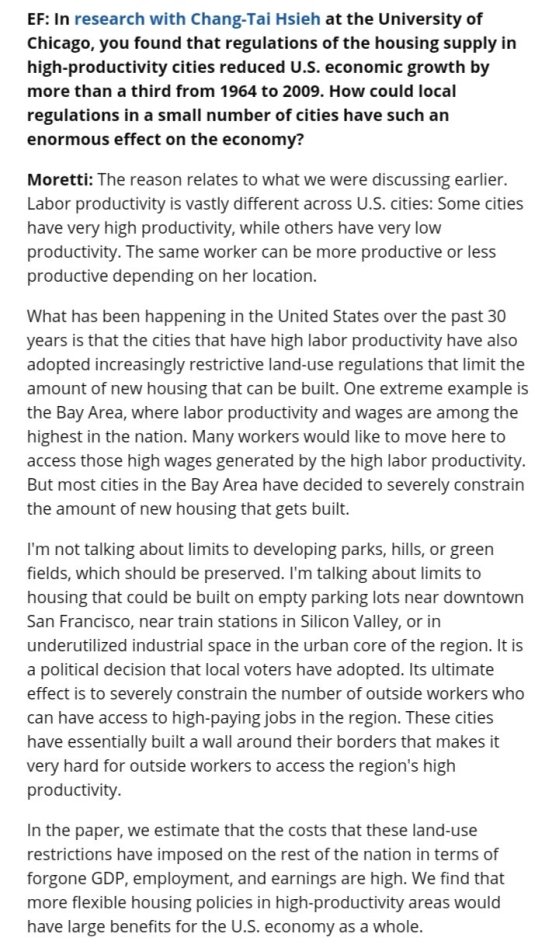
The staggering cost of NIMBYISM
18 May 2020 Leave a comment
in applied price theory, applied welfare economics, economic growth, economic history, economics of regulation, human capital, income redistribution, labour economics, labour supply, law and economics, macroeconomics, politics - USA, property rights, Public Choice, public economics, rentseeking, urban economics Tags: land supply, zoning
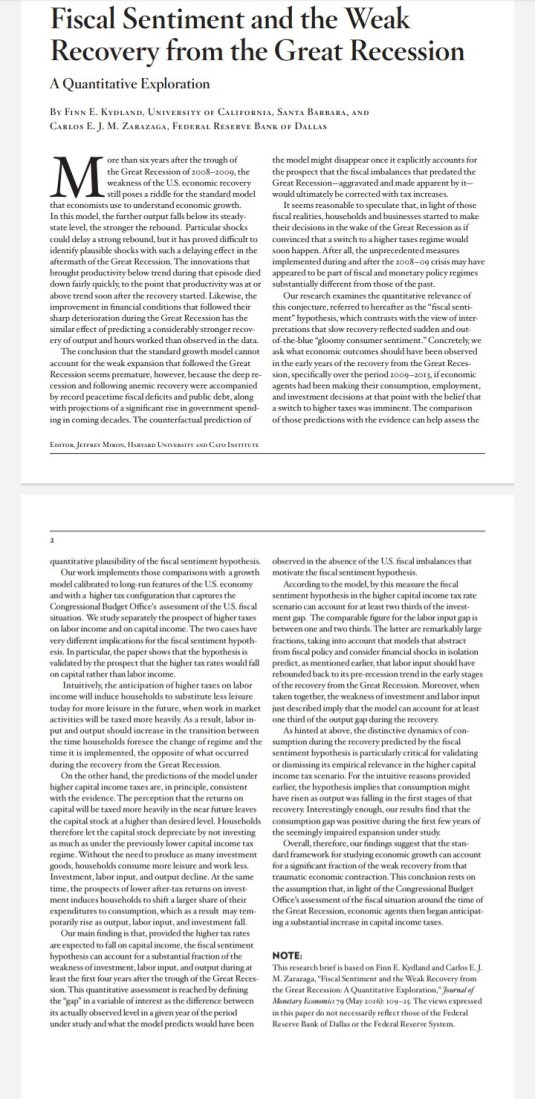
Will taxes stall the #COVID19 recovery?
18 May 2020 Leave a comment
in applied price theory, budget deficits, business cycles, econometerics, economic growth, economic history, fiscal policy, global financial crisis (GFC), great recession, labour economics, labour supply, macroeconomics, Public Choice, public economics Tags: real business cycle theory, taxation and investment
Gordon Tullock explains the Korean economic miricle
18 May 2020 Leave a comment
in comparative institutional analysis, constitutional political economy, defence economics, development economics, economic history, economics of bureaucracy, Gordon Tullock, growth miracles, Public Choice, public economics, rentseeking Tags: South Korea


Doing Bad by Doing Good by Chris Coyne
18 May 2020 Leave a comment
in applied price theory, applied welfare economics, Austrian economics, comparative institutional analysis, constitutional political economy, economics of bureaucracy, economics of information, economics of natural disasters, economics of regulation, entrepreneurship, F.A. Hayek, health economics, history of economic thought, industrial organisation, international economics, labour economics, law and economics, property rights, Public Choice, public economics Tags: offsetting behaviour, The fatal conceit, unintended consequences
Easy Riders, Raging Bulls by Peter Biskind (1998)
18 May 2020 Leave a comment

‘Well, I wouldn’t want to fuck her. And if I don’t want to fuck her, she shouldn’t be in the movie’ (Don Simpson, President of Worldwide Production, Paramount Pictures, after seeing a showreel of Shelley Duvall, quoted on page 370)
Turns out lots of the senior people in Hollywood are know-nothing scumbags. Not, maybe, all that much of a revelation.
Also turns out the movie business is a business i.e. even the most ‘radical’ far-out types were concerned to make a profit – lots and lots of profit – win prizes, gain respect, engaged in extremely serious, dog-eat-dog competition with their peers and rivals. Basically, same old same old.
And it turns out these young New Hollywood types were into awesome amounts of sex, adultery, free love, were ‘pussy addicts’, ‘pussy struck’ (p.212) and ‘pussy hounds’ (p.208), propositioning any girl who walked by, had multiple mistresses, girlfriends, even ordering up…
View original post 10,393 more words
The Russian Sniper who killed 242 Enemy Soldiers
18 May 2020 Leave a comment
in defence economics, laws of war, war and peace Tags: World War II
Michael Bordo – central banking
18 May 2020 Leave a comment
in business cycles, econometerics, economic history, financial economics, inflation targeting, macroeconomics, monetarism, monetary economics Tags: monetary policy
Nazi Nuts Trading Places & Victory for the Commonwealth – WW2 – 090 – May 16, 1941
18 May 2020 Leave a comment
in defence economics, war and peace Tags: World War II
Life Support: Government’s Obsession With Subsidised Wind & Solar Destroyed South Australia’s Economy
17 May 2020 Leave a comment


South Australia has more wind and solar capacity per capita than any other place on the planet. It also suffers the world’s highest retail power prices and has been the butt of international jokes thanks to a run of mass blackouts, including one that plunged parts of the state into Stone Age darkness for more than a fortnight, back in September 2016.
Dozens of energy intensive businesses have been wiped out, such as Stephen Scherer’s Plastic Granulating Services when his electricity bill of about $80,000 a month spiked to $180,000 a month back in June 2017.
And hundreds of others have had their profits squeezed to breaking point: South Australia’s Wind Power Obsession Leads to Highest Power Prices in the World
If South Australians thought that that lunacy would end when they voted out the renewables obsessed Labor government headed up by Jay Weatherill, they must be experiencing…
View original post 1,135 more words


American Civil War Ironclads
17 May 2020 Leave a comment

At the outset both sides were militarily weak. The North did have a clear advantage at sea, although its widely scattered force of 80 warships was totally inadequate for what lay ahead. On 19 April Lincoln proclaimed a blockade of the 3,500 miles of Confederate coastline. Secretary of the Navy Gideon Welles launched a major construction program, which included ironclads. Washington also purchased civilian ships of all types, many of them steamers, for blockade duty.
In April 1861, upon the secession of Virginia, the South gained control of the largest prewar U. S. Navy yard at Gosport (Norfolk) along with 1,200 heavy guns, valuable naval stores, and some vessels. Among the latter was the powerful modern steam frigate Merrimack. Set on fire by retreating Union forces, she burned only to the waterline before sinking. The Confederates raised her and rebuilt her as the ironclad Virginia. Confederate Secretary of the Navy…
View original post 2,239 more words


Recent Comments