
What STEM gap?
13 Feb 2020 Leave a comment
in discrimination, economic history, economics of education, gender, human capital, labour economics, labour supply, occupational choice Tags: reversing gender gap
Masters of Finance: Eugene Fama
13 Feb 2020 Leave a comment
in econometerics, economic history, economics of information, financial economics Tags: efficient markets hypothesis
@Bill Maher on Louis C. K. and the #metoo Movement
13 Feb 2020 Leave a comment
in economics of crime, law and economics, movies, Music, politics - USA, television
When Did Passports Become a Thing?
13 Feb 2020 Leave a comment
in defence economics, economic history, international economic law, international economics, International law, law and economics, public economics Tags: economics of borders
Who pays for employee non-compete clauses?
13 Feb 2020 Leave a comment
in applied price theory, economics of information, labour economics, labour supply, law and economics, managerial economics, occupational choice, organisational economics, personnel economics, property rights Tags: employment law


THE AGE OF ILLUSIONS: HOW AMERICA SQUANDERED ITS COLD WAR VICTORY by Andrew Bacevitch
13 Feb 2020 Leave a comment

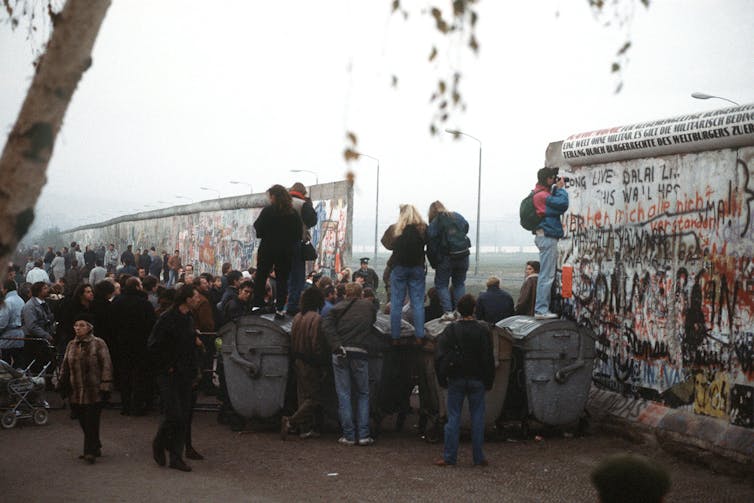
(The Fall of the Berlin Wall, November, 1989)
Growing up in the 1950s and 60s I enjoyed a sense of security knowing where to focus my fears and angst. The Soviet Union was the enemy and policymakers developed the strategy of Mutual Assured Destruction (MAD) that carried us through threats like the Cuban Missile Crisis. Fast forward to 1989 when the Berlin Wall fell and 1991 when the Soviet Union disintegrated, and my security blanket was gone – the Cold War was over. In what President George H.W. Bush referred to as the unipower world, Americans now have to decide who the enemy was, since it was hard to imagine a world without one.
Andrew Bacevitch in his latest book, THE AGE OF ILLUSIONS: HOW AMERICA SQUANDERED ITS COLD WAR VICTORY examines the post-Cold War period as American policymakers struggled with which direction US foreign policy should go. Bacevitch a…
View original post 1,582 more words
AGENTS OF INFLUENCE: A BRITISH CAMPAIGN, A CANADIAN SPY, AND THE SECRET PLOT TO BRING AMERICA INTO WORLD WAR II by Henry Hemming
13 Feb 2020 Leave a comment
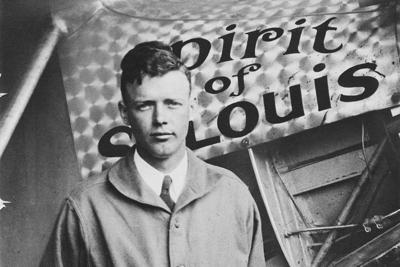
(Charles Lindbergh)
At a time when many Americans fear the impact of foreign interference in our elections, be it what the Russians did in 2016, or what may be in store for 2020 there is an excellent historical example of such a campaign on foreign soil that tried to sway Americans and help make entrance into World War II against Nazi Germany palatable. The example I am alluding to is the subject of Henry Hemming’s new book, AGENTS OF INFLUENCE: A BRITISH CAMPAIGN, A CANADIAN SPY, AND THE SECRET PLOT TO BRING AMERICA INTO WORLD WAR II.
By June 11, 1940 a week after the British evacuation from Dunkirk allied shipping losses in the Atlantic had reached over 1,135,263 tons. At the same time the German army outnumbered the British army 4.3 to 1.6 million. In another month the Germans would launch the Luftwaffe against London in a “blitz” that…
View original post 1,799 more words
Nadine Strossen: Justice Scalia & Free Speech
13 Feb 2020 Leave a comment
in economics of crime, law and economics, politics - USA Tags: constitutional law, free speech

What Happened to the Flying Wing?
13 Feb 2020 Leave a comment
in defence economics, transport economics
The politics of the royal bedchamber: what The Favourite does (and does not) tell us about party, Parliament and the court of Queen Anne
12 Feb 2020 Leave a comment

In this latest blog for the Georgian Lords, Dr Charles Littleton offers some insights into the political background of the world presented in the award-winning movie The Favourite.

The critical reception that has greeted Yorgos Lanthimos’s film provides an excellent opportunity to re-examine the role of politics and the court in the reign of Queen Anne, a critical time in the development of the British state and Parliament. Indeed, it saw the formation of the British state itself, as it was under Anne’s rule that the political union of England and Scotland was effected. The film has provoked much discussion and the often sterile arguments about the accuracy required of a historical drama have risen again, particularly as Anne’s reign is widely acknowledged to be one of the lesser known periods of British history.
The film is accurate in that the figures depicted existed and the general narrative trajectory did…
View original post 1,200 more words


Recent Comments