Should social media platforms censor hate speech? | Nadine Strossen | Big Think
14 Feb 2020 Leave a comment
in economics of crime, economics of education, economics of information, economics of regulation, economics of religion, law and economics, politics - Australia, politics - New Zealand, politics - USA, property rights Tags: free speech

On this date in History: February 13, 1542 Execution of Catherine Howard, 5th wife of King Henry VIII of England and Ireland.
14 Feb 2020 Leave a comment

On this date in History: February 13, 1542 Execution of Catherine Howard, 5th wife of King Henry VIII of England and Ireland.
Catherine Howard (c. 1523 – February 13, 1542) was Queen of England from 1540 until 1541, as the fifth wife of Henry VIII. She (then 16 or 17) married him (then 49) on July 28, 1540, at Oatlands Palace, in Surrey, almost immediately after the annulment of his marriage to Anne of Cleves was arranged.
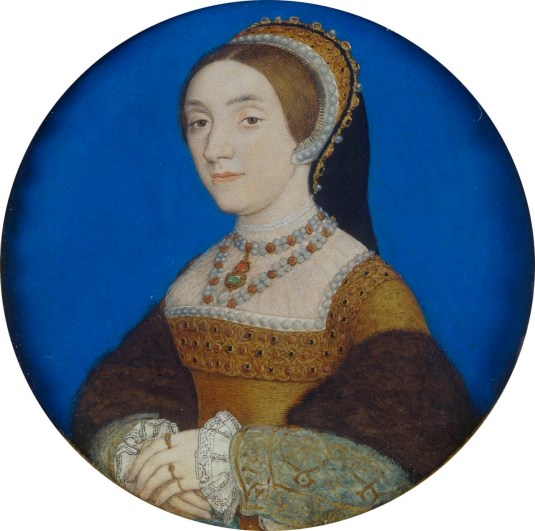
Catherine’s uncle, the Duke of Norfolk, found her a place at Court in the household of the King’s fourth wife, Anne of Cleves. As a young and attractive lady-in-waiting, Catherine quickly caught Henry’s eye. The King had displayed little interest in Anne from the beginning, but on Cromwell’s failure to find a new match for Henry, Norfolk saw an opportunity. The Howards may have sought to recreate the influence gained during Queen Anne’s reign…
View original post 1,443 more words
Plausible scenarios for climate change: 2020-2050
14 Feb 2020 7 Comments

by Judith Curry
A range of scenarios for global mean surface temperature change between 2020 and 2050, derived using a semi-empirical approach. All three modes of natural climate variability – volcanoes, solar and internal variability – are expected to act in the direction of cooling during this period.
View original post 4,140 more words
ACLU continues defending the right of medically untreated men who claim they’re women to compete in women’s sports
14 Feb 2020 Leave a comment

I used to admire the American Civil Liberties Union (ACLU); I used to donate to the ACLU and was a member of the ACLU; the ACLU took my case when I was drafted illegally, and got me (and several thousand COs) out of our alternative service when the courts ruled unequivocally that the government had violated its own rules. Over history, the ACLU has been a fantastic organization for preserving the civil liberties of everyone, particularly those who are oppressed.
But now they’re going woke, and thereby going downhill. Like the Southern Poverty Law Center, they have decided to get into the social-justice arena—which would be okay except that they are taking positions that are neither reasonable nor supportable. In this case, they’re trying to argue that it’s discriminatory to prohibit biological men who claim that they’re women—”transgender” athletes who have undergone neither surgical nor hormone therapy—from competing in…
View original post 1,300 more words
Resolved: The Government Should Cut Off All Funding to Colleges and Universities
14 Feb 2020 Leave a comment
in economics of education, economics of information, human capital, labour economics, labour supply, managerial economics, occupational choice, organisational economics, personnel economics Tags: asymmetric information, signaling
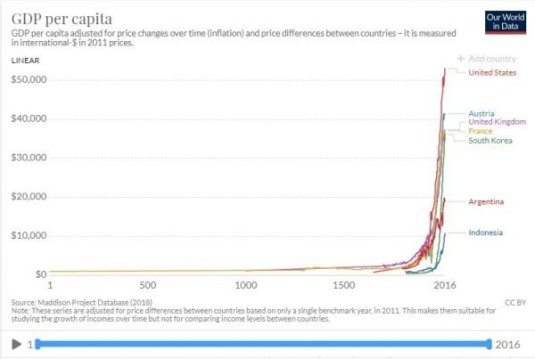
The hockey stick @AOC @BernieSanders
14 Feb 2020 Leave a comment
in development economics, economic history, growth miracles Tags: The Great Enrichment, The Great Escape
The Biggest Rocket ever Designed? – The Sea Dragon
14 Feb 2020 Leave a comment
in transport economics Tags: space
Corruption at elections in Britain in the 19th century
13 Feb 2020 Leave a comment

Following on from Martin Spychal’s blog about the paper he gave at last month’s ‘From “Old Corruption” to the New Corruption?’ conference, organised jointly by Oxford Brookes and Newman Universities, we hear from our assistant editor Kathryn Rix. She gave the conference keynote, looking at parliamentary efforts to tackle the problem of electoral corruption in the nineteenth century.
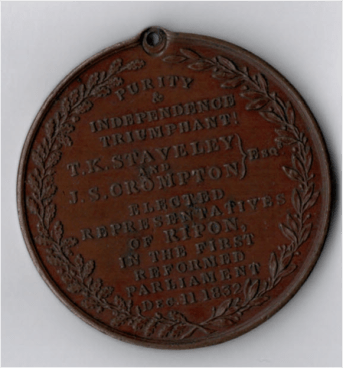 Election medal, Ripon, 1832. Image (c) K. Rix
In December 1832 voters in the Yorkshire borough of Ripon went to the poll for the first time in more than a century. The victory of the Reformers Thomas Staveley and Joshua Crompton over their two Conservative rivals was commemorated with a medal, depicting ‘The genius of patriotism driving corruption from the constitution’ and bearing the inscription ‘Purity and independence triumphant!’ In other constituencies, too, hopes were expressed that the 1832 Reform Act would mark the beginning of a new era of electoral…
View original post 1,054 more words
THE STRUGGLE FOR ISRAEL, 1917-1947 by Bruce Hoffman
13 Feb 2020 Leave a comment


(Future Israeli Prime Minister Menachem as leader of the Irgun. According to the British during and after World War II, Begin led this terrorist organization)
This past week’s news cycle has been dominated by the Iran nuclear talks and the reelection of Benjamin Netanyahu as Israeli Prime Minister, two stories that are interrelated due to the politics of the Middle East. Both situations have been parlayed by politicians to reinforce their own ideological agendas. The results have been extremely negative with Republicans in Congress grand standing about a deal that has not been concluded, and PM Netanyahu’s somewhat racist comments about Arab voting, and his diplomatic dance surrounding his support or non-support of a two state solution in negotiations with the Palestinians. The relationship between President Obama and Netanyahu have never been strong, and now have become even more dysfunctional. The consequences of these events for the region are extremely…
View original post 1,680 more words
MUNICH by Robert Harris
13 Feb 2020 Leave a comment

(Chamberlain and Hitler at Munich, September, 1938)
For those who are familiar with the works of Robert Harris they are aware of how the author develops fictional characters that are integrated into important historical events. He has the knack of developing individuals like Xavier March in FATHERLAND, George Piquart in AN OFFICER AND A SPY, Tom Jericho in ENIGMA, and Fluke Kelso in ARCHANGEL in presenting accurate scenarios that make one feel that these characters are real. Harris is a master of historical fiction, but his new characters Hugh Legat and Paul von Hartmann in his latest novel, MUNICH are somewhat lacking in reaching the standard for fictional historical characters when compared to previous novels.
Whether one is familiar with J.W. Wheeler-Bennett’s MUNICH: PRELUDE TO TRAGEDY, David Faber’s MUNICH: 1938, APPEASEMENT AND WORLD WAR II, Giles MacDonogh’s 1938: HITLER’S GAMBLE, and Telford Taylor’s MUNICH: THE PRICE…
View original post 723 more words
Iain Halliday: Can the Scottish Parliament Legislate for a Second Independence Referendum?
13 Feb 2020 Leave a comment


Following the December 2019 election result, which resulted in the Conservative party winning an overall majority, but losing several of their seats in Scotland to the SNP, there has been renewed calls for a second referendum on Scottish independence.
There is an ongoing debate regarding whether the Scottish Government and Parliament can hold a referendum without the consent of the UK Government and Parliament. The reason this is uncertain is because the Scottish Parliament cannot pass whatever legislation it wishes to pass in the same way the UK Parliament at Westminster can. It can only pass legislation if it does not relate to a “reserved matter”. The Scotland Act 1998 lists the various matters which are reserved. One such matter is “the Union of the Kingdoms of Scotland and England”.
So the question is, would an Act of the Scottish Parliament providing for a second independence referendum “relate to” the…
View original post 1,686 more words
Another Great Escape
13 Feb 2020 Leave a comment
in economic history, health economics Tags: child mortality, infant mortality, The Great Escape



Recent Comments