
What a difference 200 years makes! Nearly half of children used to die before their fifth birthday. It’s now less than 4% https://t.co/JS7ExPYhXk #bnews pic.twitter.com/7tuodc7rie
— Beautiful News Daily (@beautiful__news) December 24, 2019
Celebrating humanity's flourishing through the spread of capitalism and the rule of law
10 Jan 2020 Leave a comment
in economic history, health economics Tags: child mortality, infant mortality, The Great Escape
10 Jan 2020 Leave a comment
in comparative institutional analysis, constitutional political economy, defence economics, economic history, economics of bureaucracy, economics of crime, law and economics, politics - USA, Public Choice Tags: Vietnam war
10 Jan 2020 Leave a comment
Robert Barro, a noted Growth Economist had written an article in WSJ on the fiscal multipliers. His main idea is that tax cuts are better than government spending and a fiscal stimulus should focus on the former. The government spending works but only in war times.
Why tax-cuts are more stimulative?
I don’t think it is really confusing at all, because when you cut taxes there are two different effects. One is that you cut tax rates, and therefore give people incentives to do things like work and produce more and pay more — maybe, depending on what kind of taxes. And then you also maybe give people more income. This income effect is the one that’s related to this Keynesian multiplier argument, where it’s usually argued that government spending should have a bigger effect. So that’s the income effect. But the tax-rate effect, inducing people to do things…
View original post 557 more words
09 Jan 2020 Leave a comment
Eurasians had lived for millennia among the livestock who are vectors for diseases – chickens, pigs and rats – and been decimated by wave after wave of smallpox, plague and the rest until the survivors had built up sturdy resistance. Non-Eurasians had no defences and no medicines, and so died in hundreds of thousands. In the centuries to come far more native peoples died of the scourge of smallpox than any other cause. And – an important point – the diseases spread faster than the conquerors. All it took was one contact on a beach and a native to return to his tribe which included foraging parties or raiders or traders and Old World diseases could travel like wildfire inland – with the result that the conquerors often encountered cultures and societies which were already fatally weakened by disease before they even arrived.
We can rephrase the question about the world’s inequalities as follows: why did human development proceed at such different rates on different continents? (p.16)
The 1990s saw an explosion in popular science books and this one won prizes (the Pulitzer Prize, over a million copies sold) for its skilful interweaving of a wide range of specialisms – biogeography, archaeology, anthropology, molecular genetics, linguistics and more – to answer an apparently ‘simple’ question. In his introduction Diamond calls it ‘Yali’s Question’, after a New Guinea native he knows (Diamond has spent a lifetime studying the birds of New Guinea) and who once asked him: ‘Why did you white people develop so much “cargo” and bring it to New Guinea and we black people have so little “cargo” of our own?’ where ‘cargo’ stands for the full range of marvellous inventions the white man brought with him.
The jokey sub-title of the book…
View original post 2,743 more words
09 Jan 2020 Leave a comment
wherever prehistoric man spread – in North America 8,000 years ago, in Australia 30,000 years ago, in the Pacific islands between 2,000 and 500 years ago – they exterminated all the large animals.
It is a failing of our species that we ignore and even despise the creatures whose lives sustain our own. (p.294)
Edward Osborne Wilson was born in 1929 and pursued a long career in biology, specialising in myrmecology, the study of ants, about which he came to be considered the world’s leading expert, and about which he published a massive textbook as well as countless research papers.
As well as his specialist scientific writing, Wilson has also published a series of (sometimes controversial) books about human nature, on collaborative species of animal (which led him to conceive the controversial theory of sociobiology), and about ecology and the environment.
(They’re controversial because he considers humans as just another complex life form, whose behaviour is dictated almost entirely by genetics and environment, discounting our ability to learn or change: beliefs which are opposed by liberals and progressives who believe humans can…
View original post 2,794 more words
09 Jan 2020 Leave a comment

Call it the ‘luck of the Irish’. Over the last few months locals have racked up a string of victories against wind power outfits for all manner of sins, crimes and misdemeanours.
In November the Irish government was slammed with a €5 million fine for failing to apply its very own environmental standards at a wind farm in County Galway, which turned into an environmental disaster: Irish Government Slammed with €5m Fine Over Wind Farm’s Environmental Disaster
Following that rather embarrassing setback, a wind power outfit in Waterford was brought to heel for pushing the envelope over the size of its turbines: Busted: Irish Wind Project Slammed For Breaching EU Environmental Directives
Now, in an effort to avoid the grinding, thumping cacophony these things generate, a couple of horticulturalists, Klaus Balz and Hanna Heubach have taken a wind power outfit all the way to the Supreme Court. And they’ve won!
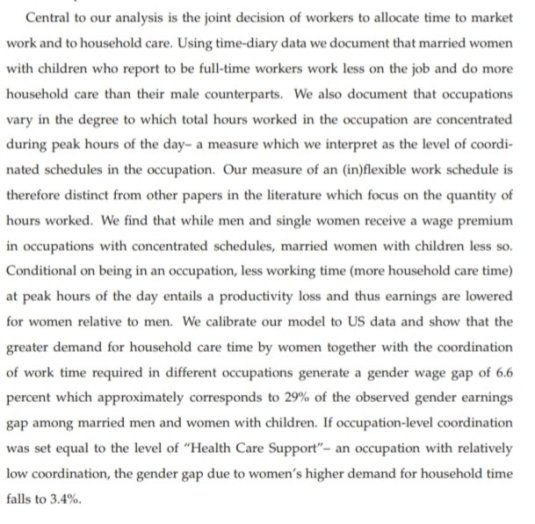
Central to…
View original post 840 more words
09 Jan 2020 Leave a comment
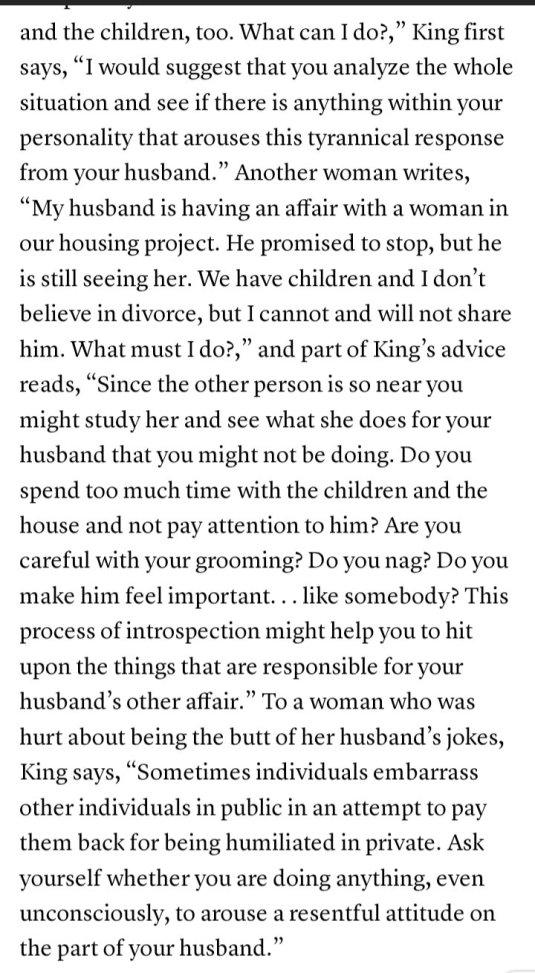
in discrimination, economics of love and marriage Tags: marriage and divorce
09 Jan 2020 Leave a comment
in development economics, economic growth, economics of education, entrepreneurship, fiscal policy, growth disasters, human capital, income redistribution, industrial organisation, labour economics, labour supply, liberalism, macroeconomics, occupational choice, politics - Australia, politics - New Zealand, politics - USA, poverty and inequality, Public Choice, public economics, survivor principle Tags: distributive justice, envy, regressive left, social justice, taxation and entrepreneurship, taxation and investment, taxation and labour supply, top 1%

09 Jan 2020 Leave a comment
in applied price theory, comparative institutional analysis, constitutional political economy, development economics, economic history, growth disasters, Public Choice, public economics Tags: taxation and entrepreneurship, taxation and investment, taxation and labour supply, The fatal conceit

09 Jan 2020 2 Comments
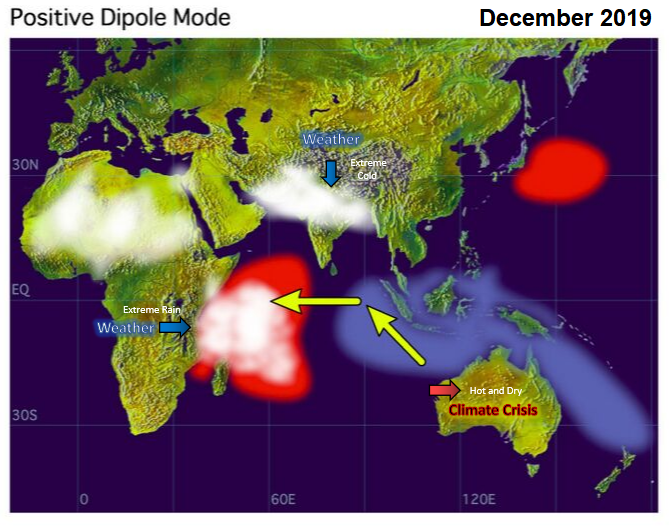 Vijay Jayaraj explains how weather is created around the Indian Ocean in this article Record Heat and Cold Expose Climate Alarmists’ Bias. Excerpts in italics with my bolds and images.
Australia was literally on fire in December. Record heat made headlines in global media. So did the extreme rainfall in east Africa.
You and everybody else on earth can guess what climate alarmists blamed for both: man-made global warming, a.k.a. climate change.
But record cold in northern India at the same time didn’t make headlines in any major media in the United States or the United Kingdom.
Why? Because it didn’t fit expectations.
It’s a perfect example of climate alarmists’ obvious bias that’s seldom brought to light.
In December, east Africa received extremely heavy rainfall, causing widespread floods in Kenya and Djibouti. The floods impacted more than one million people and killed scores already challenged by extreme poverty.
View original post 517 more words
09 Jan 2020 Leave a comment
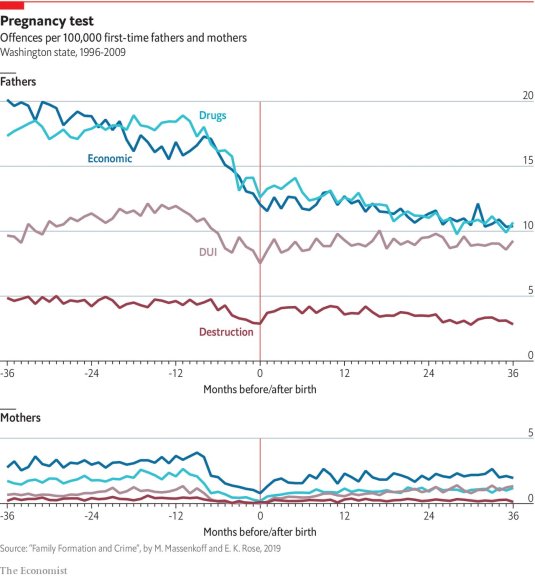
in economics of crime, gender, health economics, labour economics, labour supply, law and economics, occupational choice, politics - Australia, politics - New Zealand, politics - USA, poverty and inequality Tags: crime and punishment, criminal deterrence, economics of fertility, law and order
09 Jan 2020 Leave a comment
in applied price theory, discrimination, econometerics, economics of education, gender, human capital, labour economics, labour supply, occupational choice Tags: gender wage gap
Celebrating humanity's flourishing through the spread of capitalism and the rule of law
Celebrating humanity's flourishing through the spread of capitalism and the rule of law
Celebrating humanity's flourishing through the spread of capitalism and the rule of law
Celebrating humanity's flourishing through the spread of capitalism and the rule of law
Celebrating humanity's flourishing through the spread of capitalism and the rule of law
Celebrating humanity's flourishing through the spread of capitalism and the rule of law
Celebrating humanity's flourishing through the spread of capitalism and the rule of law
Celebrating humanity's flourishing through the spread of capitalism and the rule of law
Celebrating humanity's flourishing through the spread of capitalism and the rule of law
Celebrating humanity's flourishing through the spread of capitalism and the rule of law
Celebrating humanity's flourishing through the spread of capitalism and the rule of law
Celebrating humanity's flourishing through the spread of capitalism and the rule of law
A History of the Alt-Right
Econ Prof at George Mason University, Economic Historian, Québécois
Celebrating humanity's flourishing through the spread of capitalism and the rule of law
Scholarly commentary on law, economics, and more
Beatrice Cherrier's blog
Celebrating humanity's flourishing through the spread of capitalism and the rule of law
Celebrating humanity's flourishing through the spread of capitalism and the rule of law
Celebrating humanity's flourishing through the spread of capitalism and the rule of law
Why Evolution is True is a blog written by Jerry Coyne, centered on evolution and biology but also dealing with diverse topics like politics, culture, and cats.
Celebrating humanity's flourishing through the spread of capitalism and the rule of law
A rural perspective with a blue tint by Ele Ludemann
DPF's Kiwiblog - Fomenting Happy Mischief since 2003
Celebrating humanity's flourishing through the spread of capitalism and the rule of law
The world's most viewed site on global warming and climate change
Tim Harding's writings on rationality, informal logic and skepticism
A window into Doc Freiberger's library
Let's examine hard decisions!
Commentary on monetary policy in the spirit of R. G. Hawtrey
Thoughts on public policy and the media
Celebrating humanity's flourishing through the spread of capitalism and the rule of law
Politics and the economy
A blog (primarily) on Canadian and Commonwealth political history and institutions
Reading between the lines, and underneath the hype.
Economics, and such stuff as dreams are made on
"The British constitution has always been puzzling, and always will be." --Queen Elizabeth II
Celebrating humanity's flourishing through the spread of capitalism and the rule of law
Celebrating humanity's flourishing through the spread of capitalism and the rule of law
WORLD WAR II, MUSIC, HISTORY, HOLOCAUST
Undisciplined scholar, recovering academic
Celebrating humanity's flourishing through the spread of capitalism and the rule of law
Res ipsa loquitur - The thing itself speaks
In Hume’s spirit, I will attempt to serve as an ambassador from my world of economics, and help in “finding topics of conversation fit for the entertainment of rational creatures.”
Researching the House of Commons, 1832-1868
Reflections on books and art






Recent Comments