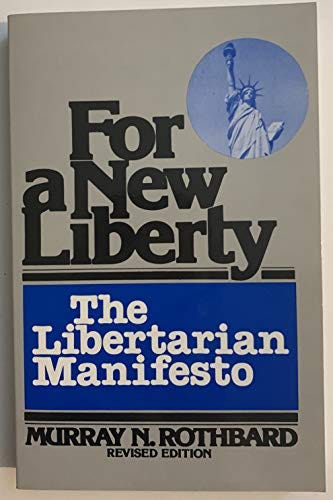
SummaryIn this chapter, Rothbard makes the case for the abolition of public schooling. While he somewhat surprisingly views Friedman’s voucher system as “a great improvement over the present system in permitting a wider range of parental choice and enabling the abolition of the public school system,” Rothbard will settle for nothing less than the separation…
Part I of this series reviewed the horrible economic conditions that plagued Argentina when Javier Milei took office. Part II looked at Milei’s spending restraint and some of the subsequent improvements in fiscal outcomes. For today’s column, let’s focus on what Milei has achieved in areas other than fiscal policy, and it will be based […]
The retirement of Lord Salisbury in 1902 marked the end of the last premiership undertaken from the House of Lords, but in the nineteenth century, more prime ministers led governments from the Lords than the Commons. In this article, Dr Kathryn Rix, of our House of Commons, 1832-1945 project, explores the history and significance of…
Professor Anaru Eketone claims the Māori electorates were a cynical device to suppress Māori political influence.(paywalled) The historical record suggests the opposite: the Māori seats were created to bring Māori into the parliamentary system and guarantee representation, rather than exclude them. By 1867, when the Māori Representation Act 1867(1) passed, Europeans outnumbered Māori roughly four to one. […]
The Taxpayer’s Union has done a report listing 103 ways local government can save money. Some of the more significant ones which I support are: The post 103 ways for local government to save money first appeared on Kiwiblog.
My First Theorem of Government is the simple observation that insiders are the biggest beneficiaries of government. I was motivated to release that theorem because bad news for taxpayers is good news for bureaucrats, consultants, contractors, lobbyists, and politicians. A classic example is the Department of Education in Washington, which has squandered more than $2.6 […]
I frequently make the point that America’s tax system is more progressive than European tax systems. But not because the United States imposes higher tax rates on upper-income households. Instead, the big difference is that lower-income and middle-class households in the United States face much lower tax burdens than their European counterparts. In those columns, […]
The Royal Commission has released their second and final report. Some key aspects: Simeon Brown points out: The post Covid-19 Royal Commission report released first appeared on Kiwiblog.
In our textbook, Modern Principles, Tyler and I write: Imagine how difficult it would be to get a date if every date required marriage? In the same way, it’s more difficult to find a job when every job requires a long-term commitment from the employer. In two new excellent pieces, Brian Albrecht and Pieter Garicano…
Is it time to pack our belongings and head to Argentina, where Javier Milei is dramatically improving economic policy and cultural attitudes? I’m joking, but also not joking. The reason I’m not joking is that there’s a very depressing scenario for America’s near-term economic outlook. It involves these six potential developments. Thanks in part to […]
The tweet above includes this graph: The original tweet has lots of reasoning as to why this is. TLDR is social media. The post The youth gender gap is because young women have moved left first appeared on Kiwiblog.
Law & economics traces its intellectual roots to the University of Chicago. That lineage still shapes how the field is understood. Chicago price theory—especially Gary Becker’s (1976) systematic application of maximization, equilibrium, and stable preferences across social life, and George Stigler’s (1992, p. 459) suggestion that “every durable social institution or practice is efficient, or…
Class-warfare tax policy is always a bad idea. Economists generally don’t like class-warfare policies because it is foolish to impose high marginal tax rates on productive behaviors such as investment and entrepreneurship. Politicians should not like class-warfare policies because of the negative impact on jobs and wages for ordinary people as well as the potential negative […]
Update: I’m doing a Substack Live today on You Have No Right to Your Culture with the Boyd Institute’s Peter Banks. 4 PM ET.SummaryThis is the shortest chapter of the book, just six pages long. Rothbard makes a laundry list of what he calls “the major problem areas of our society” and argues that government…
Why Evolution is True is a blog written by Jerry Coyne, centered on evolution and biology but also dealing with diverse topics like politics, culture, and cats.
“We do not believe any group of men adequate enough or wise enough to operate without scrutiny or without criticism. We know that the only way to avoid error is to detect it, that the only way to detect it is to be free to inquire. We know that in secrecy error undetected will flourish and subvert”. - J Robert Oppenheimer.




 Utopia, you are standing in it!
Recent Comments