Andy Burnham announced today that his constitutional responsibility for advising the Sovereign on ecclesiastical appointments has been transferred to the Lord Chancellor. This was necessary because, as a Roman Catholic, Burnham is barred from tendering this advice by s. 18 of the Roman Catholic Relief Act 1829. S. 4 of the Jews Relief Act 1858 […]
Andy Burnham, the Premiership, and the Roman Catholic Relief Act 1829
Andy Burnham, the Premiership, and the Roman Catholic Relief Act 1829
12 Sep 2026 Leave a comment
in constitutional political economy, economics of bureaucracy, economics of religion, Public Choice Tags: British constitutional law, British politics, Freedom of religion, religious discrimination
They’re anti-immigration, not Nazis
10 Sep 2026 Leave a comment
in income redistribution, labour economics, labour supply, politics, Public Choice Tags: Germany
A lot of media reporting on the election result in Saxony-Arnholt. It has two million people and is in former East Germany. Their Parliament is called a Landtag and they just went to the polls. The results so far are: So a huge swing from CDU to AFD. You need 42 seats to govern. The…
They’re anti-immigration, not Nazis
Saxony-Anhalt 2026
09 Sep 2026 Leave a comment
in comparative institutional analysis, constitutional political economy, Public Choice Tags: Germany

In the German state of Saxony-Anhalt on 6 September, the Alternative for Germany (AfD) won a strong plurality of votes and seats in the state parliament. The outcome is not a surprise, given that polling in advance of the election had been picking up a surge for the AfD and a decline for the Christian […]
Saxony-Anhalt 2026
State Film Subsidies Lose Money. Trump Wants To Try the Idea Nationally.
04 Sep 2026 1 Comment
in applied price theory, movies, politics - USA, Public Choice, rentseeking, television, TV shows Tags: corporate welfare

There’s “no reason to think a federal incentive would work any differently from state incentives,” says one expert.
State Film Subsidies Lose Money. Trump Wants To Try the Idea Nationally.
Audrey on Te Pati Maori’s bottom line
04 Sep 2026 Leave a comment
in constitutional political economy, discrimination, law and economics, liberalism, politics - New Zealand, Public Choice, rentseeking Tags: 2026 general election, constitutional, law, racial discrimination
Audrey Young writes: Te Pāti Māori not only released a radical Treaty of Waitangi policy this week that would upend New Zealand’s democracy as we know it, co-leader Debbie Ngarewa-Packer said the whole policy was a bottom line, meaning it was non-negotiable. That means Te Pāti Māori would not sign up to a centre-left Government unless it…
Audrey on Te Pati Maori’s bottom line
Excellent constitutional ideas from ACT
03 Sep 2026 Leave a comment
in constitutional political economy, law and economics, politics - New Zealand, property rights, Public Choice Tags: 2026 general election, constitutional law
ACT have proposed a number of good constitutional ideas. They are: Add to the Constitution Act 1986: The Constitution Act is not supreme law. So putting these principles in there doesn’t impact any particular court decisions, but it is an important assertion of democratic values. ACT will add property rights to the New Zealand Bill…
Excellent constitutional ideas from ACT
‘The Logic of Political Survival,’ by Bruce Bueno de Mesquita, Alastair Smith, Randolph M. Siverson & James D. Morrow
31 Aug 2026 Leave a comment
in applied price theory, comparative institutional analysis, constitutional political economy, economic history, economics of bureaucracy, income redistribution, Public Choice, rentseeking
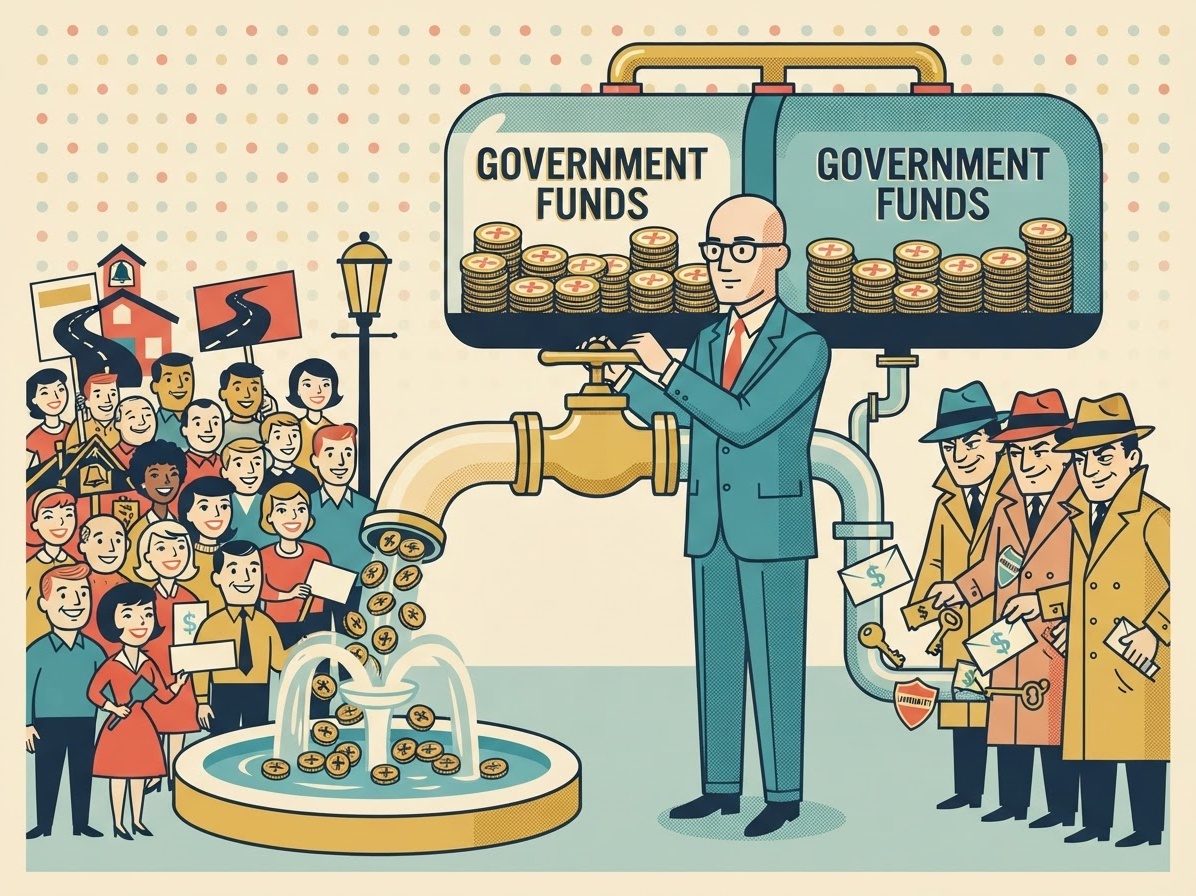
Since the COVID-19 pandemic and the political upheavals that followed, concerns have grown that many Western democracies face authoritarian pressure and are becoming less democratic. This shift has renewed interest in one of political science’s most influential frameworks for understanding democratic and nondemocratic rule: Selectorate Theory, developed by Bruce Bueno de Mesquita, Alastair Smith, Randolph…
‘The Logic of Political Survival,’ by Bruce Bueno de Mesquita, Alastair Smith, Randolph M. Siverson & James D. Morrow
Could Eisenkot form a minority government?
28 Aug 2026 Leave a comment
in constitutional political economy, Public Choice Tags: Israel
From Tal Schneider in the Times of Israel: Gadi Eisenkot lays groundwork for a minority government, if necessary, to oust Netanyahu. The head of Yashar, that party that has been leading most polls in the run-up to Israel’s general election (27 October), is exploring the possibility of forming a government with fewer than 61 affirmative […]
Could Eisenkot form a minority government?
Whiskey taxes, revenue and voting by members of Congress in history
25 Aug 2026 Leave a comment
in applied price theory, econometerics, history of economic thought, Public Choice, public economics
See Revenue over reason: A case for home distilling by Ben Semark of the Competitive Enterprise Institute. After an excerpt from Semark’s article, I discuss how this relates to voting by congressmen on bills during the Federalist period, the subject of my Ph. D. dissertation.Excerpt from Semark:”Creating home-brewed spirits was not a niche or commercial practice…
Whiskey taxes, revenue and voting by members of Congress in history
Fidel Castro: Human Garbage
22 Aug 2026 1 Comment
in development economics, economic history, growth disasters, liberalism, Marxist economics, politics - USA, Public Choice, rentseeking Tags: Cuba, regressive left
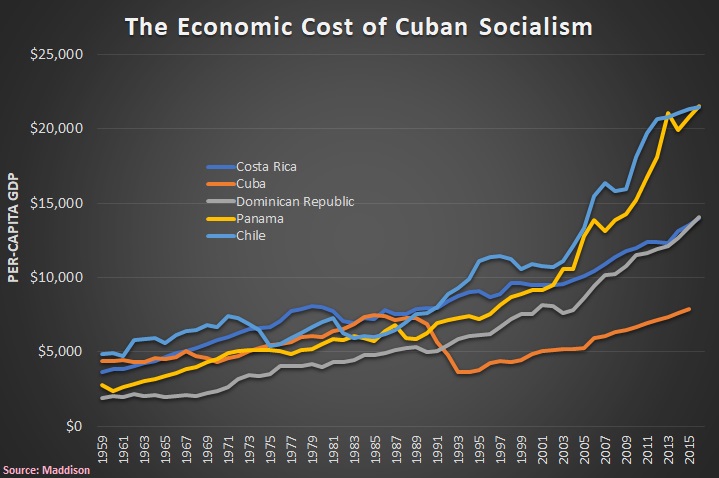
I’ve written many columns documenting Cuba’s economic misery. Probably the most-persuasive evidence that socialism has failed in that country is the chart showing how Cuba has fallen behind other (very similar) countries ever since Fidel Castro took over more than six decades ago. Though I’ve always thought the most-damning visual came from the Economist, which […]
Fidel Castro: Human Garbage
The 1934 German Head of State Referendum: A Pivotal Moment in Nazi Consolidation of Power
19 Aug 2026 Leave a comment
in constitutional political economy, economic history, politics, Public Choice Tags: Nazi Germany

The 1934 German head-of-state referendum, held on August 19, stands as a crucial moment in the Nazi regime’s consolidation of power. Following the death of President Paul von Hindenburg on August 2, 1934, Adolf Hitler sought to solidify his grip on Germany by merging the offices of President and Chancellor, thus assuming the title of […]
The 1934 German Head of State Referendum: A Pivotal Moment in Nazi Consolidation of Power
Dr. Israel M. Kirzner — “Economics and Entrepreneurship”
19 Aug 2026 Leave a comment
in applied price theory, Austrian economics, economic history, economics of regulation, entrepreneurship, history of economic thought, industrial organisation, law and economics, Public Choice, regulation, rentseeking Tags: competition law
Who Pays for Medicare for All?
18 Aug 2026 1 Comment
in health economics, income redistribution, Marxist economics, politics - USA, Public Choice, public economics
Plus: Democrats reckon with the rise of the DSA, Trump scales back America’s military presence abroad, and the case for letting kids play outside
Who Pays for Medicare for All?


Recent Comments