When former Solicitor-General Una Jagose KC told a Law Association breakfast on 2 July 2026 that New Zealand risks “sleepwalking” towards a collapse of the separation of powers, she framed herself as the constitution’s anxious guardian. The framing deserves scrutiny.
The limits Una Jagose KC cannot name
The limits Una Jagose KC cannot name
11 Aug 2026 Leave a comment
in comparative institutional analysis, constitutional political economy, economics of bureaucracy, economics of crime, law and economics, politics - New Zealand, property rights, Public Choice Tags: constitutional law
Some Links
10 Aug 2026 Leave a comment
in applied price theory, economics of regulation, income redistribution, liberalism, libertarianism, Marxist economics, Public Choice, rentseeking, urban economics Tags: rent control
TweetChristine Rosen uncovers evidence of the pathetic appeal of the DSA. Two slices: But one aspect of the DSA’s appeal has been too often overlooked, particularly by conservative critics: its appeal as a form of instant community for a generation that often lacks one. DSA supporters are a highly homogenous group: 85 percent of DSA…
Some Links
Yet more “pretty (il)legal” stuff from the Reserve Bank
05 Aug 2026 1 Comment
in economics of bureaucracy, inflation targeting, macroeconomics, monetary economics, politics - New Zealand, Public Choice Tags: monetary policy

A month or so ago the Reserve Bank announced the appointment of a new Assistant Governor (a deputy chief executive) responsible for its financial stability functions. That must have prompted a Bloomberg journalist to ask what was happening to the vacant position on the Monetary Policy Committee (given that, previously, Geoff Bascand and then Christian […]
Yet more “pretty (il)legal” stuff from the Reserve Bank
Is America ruled by an oligarchy?
31 Jul 2026 1 Comment
in fiscal policy, income redistribution, macroeconomics, politics - New Zealand, Public Choice, public economics, rentseeking
Any time you hear claims about American government, a sanity-inducing response is to ask whether they also are true of state and local governments. Here is an excerpt from my latest piece at The Free Press: First, in people’s daily lives, they typically interact with their state and local governments more than with the feds.…
Is America ruled by an oligarchy?
The Endangered Species Act Reduces Housing
31 Jul 2026 Leave a comment
in applied price theory, econometerics, economics of regulation, environmental economics, environmentalism, law and economics, politics - USA, property rights, Public Choice, urban economics
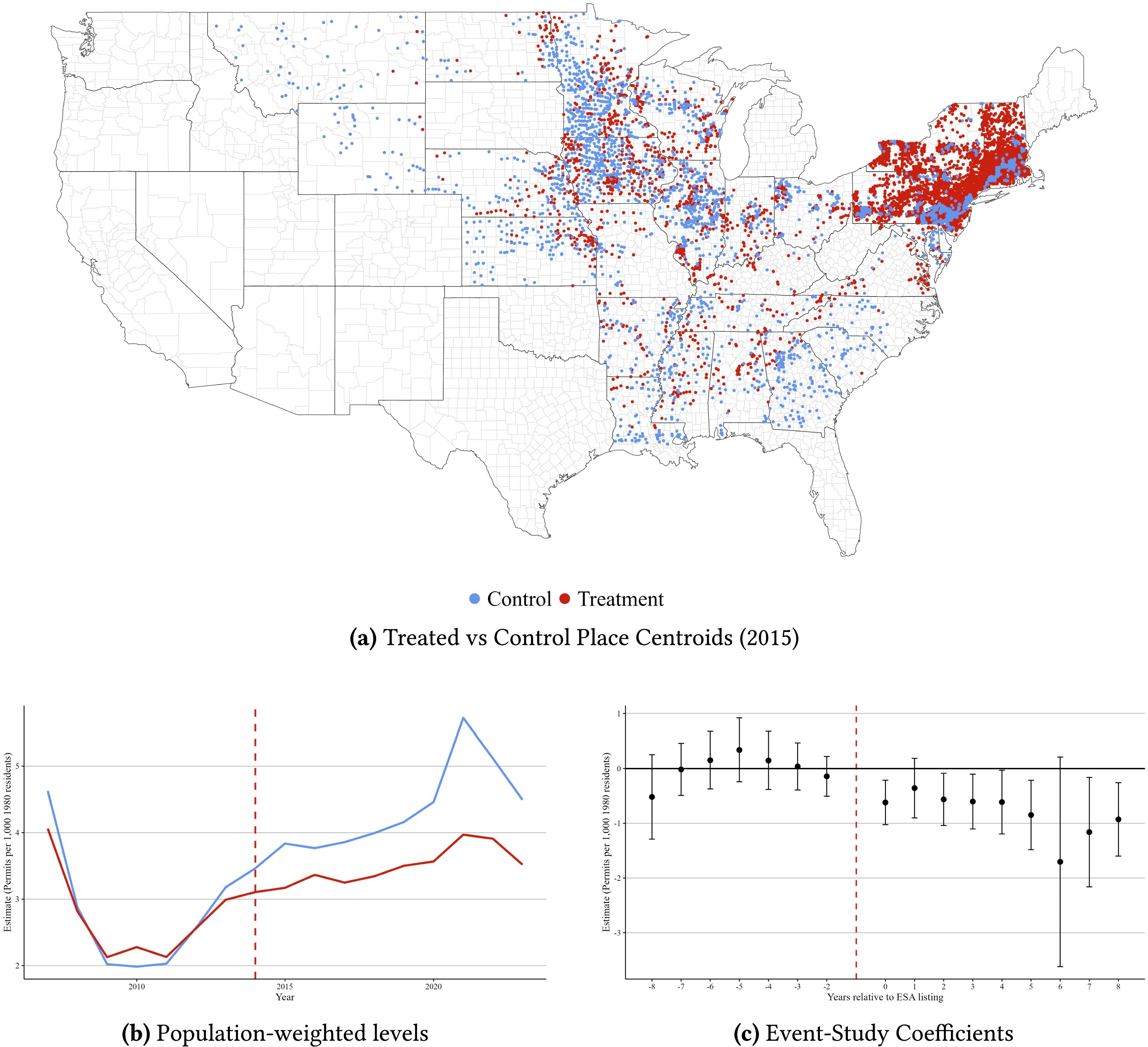
Max Tabarrok’s paper on the Endangered Species Act and housing (WP) has just been published in the Journal of Public Economics! It’s a clever paper: Max observed that the moment an animal is put on the endangered species list, developers face enhanced compliance costs and liability risk. But what’s important for an empirical economist is…
The Endangered Species Act Reduces Housing
New Research Further Confirms Anti-Growth Impact of Wealth Taxation
30 Jul 2026 1 Comment
in applied price theory, economic growth, entrepreneurship, fiscal policy, human capital, income redistribution, labour economics, liberalism, macroeconomics, Marxist economics, poverty and inequality, Public Choice, public economics Tags: taxation and entrepreneurship, taxation and investment, taxation and labour supply

I’ve shared multiple studies about the harmful impact of wealth taxes (see here, here, here, here, and here). Today, let’s add to the body of evidence. I’ll start by calling attention to a column I wrote in 2019 that warned how wealth taxes mean very high – even confiscatory – taxes on saving and investment. […]
New Research Further Confirms Anti-Growth Impact of Wealth Taxation
The Predictable Folly of Government Grocery Stores
30 Jul 2026 1 Comment
in income redistribution, industrial organisation, politics - USA, Public Choice, survivor principle
I don’t like government running post offices, retirement systems, or air traffic control, so you won’t be surprised to learn that today’s column explains why it’s a dumb idea to have government grocery stores. We’ll start with this video from the Foundation for Economic Education. My knee-jerk instinct on this issue is to go to […]
The Predictable Folly of Government Grocery Stores
Will MBIE be held on contempt?
29 Jul 2026 Leave a comment
in economics of bureaucracy, politics - New Zealand, Public Choice
The Herald reports: Ministry officials are denying they deliberately misled a Parliament select committee by not revealing an immigration IT project had been terminated while being questioned about its progress. Appearing before Parliament’s Privileges Committee today, Ministry of Business, Innovation and Employment (MBIE) chief executive Nic Blakeley and former Immigration New Zealand (INZ) head Alison…
Will MBIE be held on contempt?
Trump is Right to Take On the Climate Litigation Complex
29 Jul 2026 1 Comment
in applied welfare economics, development economics, economics of bureaucracy, economics of climate change, economics of education, energy economics, environmental economics, environmentalism, global warming, politics - USA, Public Choice, rentseeking Tags: climate alarmism
Whatever one makes of President Trump’s chosen words, the underlying demand – that a body claiming the authority of disinterested science should actually be disinterested – is one any serious defender of scientific integrity ought to be able to endorse. Surely the most litigated-against President in US history is right in ensuring that judges overseeing…
Trump is Right to Take On the Climate Litigation Complex
Italy is changing its electoral system (again)
28 Jul 2026 1 Comment
in constitutional political economy, politics, Public Choice Tags: Italy
Nicknamed the “Stabilicum” by the right-wing coalition government that introduced it, this would be the fifth major electoral reform in Italy since 1993.
Italy is changing its electoral system (again)
Occupational Licensing: US and International
25 Jul 2026 Leave a comment
in applied price theory, economics of information, economics of regulation, human capital, income redistribution, labour economics, labour supply, occupational choice, occupational regulation, politics - USA, Public Choice, rentseeking

The potential benefit of having the government require that certain jobs require an official license is quality control and protection. Personally, I rather like knowing that my nurse or doctor or dentist has gone through courses and training. The potential cost is that requirement to have a government license can become a way for those…
Occupational Licensing: US and International
The Case Against a Universal Basic Income
23 Jul 2026 1 Comment
in applied price theory, fiscal policy, income redistribution, labour economics, labour supply, macroeconomics, politics - New Zealand, poverty and inequality, Public Choice, welfare reform
A Universal Basic Income, or UBI, is a superficially attractive idea. Under such a scheme, every adult would receive a regular payment from the government, regardless of income, employment or need. Supporters argue that it would reduce poverty, simplify welfare, provide security in an uncertain labour market and give people greater freedom to choose how […]
The Case Against a Universal Basic Income
Why is the PPTA not worried about far-left extremism?
15 Jul 2026 Leave a comment
in economics of bureaucracy, economics of education, Marxist economics, politics - New Zealand, Public Choice
The Press reports: A secondary teachers’ union is hiring an expert to develop guidelines for dealing with the rise in far-right extremism in the classroom. The successful applicant will be paid $10,000 to write “specific advice and guidelines for the membership on dealing with extremism in the classroom”. Do they mean Marxist extremists? I suspect…
Why is the PPTA not worried about far-left extremism?
BREAKING: Trump Admin Hires Skeptic to Run National Climate Assessment…Mann Clutches Pearls
11 Jul 2026 Leave a comment
in economics of bureaucracy, economics of climate change, economics of regulation, energy economics, environmental economics, environmentalism, global warming, politics - USA, Public Choice Tags: climate alarmism
Scrutiny of a government assessment by someone inclined to question it is not a threat to the science. It is a stress test. The post BREAKING: Trump Admin Hires Skeptic to Run National Climate Assessment…Mann Clutches Pearls appeared first on Watts Up With That?.
BREAKING: Trump Admin Hires Skeptic to Run National Climate Assessment…Mann Clutches Pearls
Capital Gains Can Be Labor Income
10 Jul 2026 Leave a comment
in applied price theory, fiscal policy, macroeconomics, Public Choice, public economics Tags: taxation and entrepreneurship, taxation and investment, top 1%
Zwick and Zidar argue that a substantial share of the decline in labor share can be accounted for by changing forms of pay, including pass-throughs and equtiy compensation. In particular, if an employee is paid in stock and that stock increases in value then the tax rules tend to count some of that as capital…
Capital Gains Can Be Labor Income


Recent Comments