Celebrating humanity's flourishing through the spread of capitalism and the rule of law
21 Jul 2016 Leave a comment
in comparative institutional analysis, economics, economics of bureaucracy, economics of media and culture, industrial organisation, international economics, politics - New Zealand, Public Choice, rentseeking, survivor principle, television Tags: corporate welfare, industry policy, New Zealand Greens, picking losers, picking winners, Yes Prime Minister
16 Jul 2016 Leave a comment
in applied price theory, comparative institutional analysis, constitutional political economy, defence economics, economics of bureaucracy, Gordon Tullock, Public Choice, rentseeking Tags: economics of revolutions, fall of communism, military coups, people power, Romania
The obituaries today for Victor Stanculescu, the Romanian army chief at the time of the 1989 revolution, vindicated Gordon Tullock’s view that popular revolutions are in fact military coups.
Tullock argues that any dictator can survive popular revolts as long as he has
Ordinary citizens obey dictators because if they don’t, they are highly unlikely to make any difference in any revolt and could get killed during the uprising even if it succeeds. Worse awaits them if the revolt fails.
Most dictators do not anoint a formal successor while they are in office. Tullock argued that as soon as a likely successor emerges, loyal retainers start to form alliances with that person and may see private advantage in bringing his anointed day forward.
More than a few autocrats were murdered in their sleep. To his very last day, Stalin locked his bedroom door because he did not trust the bodyguards who had been with him since the 1920s.
The role of street protests in the Arab Spring was to throw in the possibility of mutinies and desertions in the army and police. Previous alliances are thrown into doubt especially as the autocrat is old and sick, but had for many years grooming his 39 year-old son to inherit power.
Turning back to the Romanian revolution, Victor Stanculescu was the recently appointed army chief and initially stuck by the regime. He ordered the troops to open fire on protesters and at least 1000 died from in the shootings in the street.
In common with the Arab Spring, a large street protest did led him to reconsider his position:
Sniffing Mr. Ceausescu’s defeat, General Stanculescu quickly returned to Bucharest, where he faked a broken leg to avoid further counterrevolutionary deployment. Promoted to defense minister after the incumbent minister killed himself, he helped Mr. Ceausescu and his wife, Elena, flee by helicopter from the roof of party headquarters.
But fearing that the copter had been spotted by radar and would be shot down, the pilot hastily landed. Mr. Ceausescu hijacked a passing car, but he and his wife were soon surrounded and arrested.
After the couple were captured, General Stanculescu organized their trial by a military court and recruited the firing squad (before the verdict, by some accounts) that executed them on Christmas Day. He then joined the new government.
But for this late switch by the army chief, the popular revolt would never have succeeded. The army was needed to put down the still loyal security police. The army chief’s top priority was to execute Ceausescu as quickly as possible so that he was not a rallying point for a counter coup.
Ceausescu found out that his game was up when who he thought was his still loyal army chief arrived at his hideout with military judges to try and execute him.
About 10 years later, the Romanian government turned against the man who made the revolution and put him in prison for the many deaths in the street when he was on the side of the regime putting down the revolt.
Not so good an idea. A little bit of forgiveness carries a lot of weight encouraging late switching within the ruling elite and army that makes the difference to bringing down the old regime.
08 Jul 2016 Leave a comment
in applied price theory, applied welfare economics, comparative institutional analysis, constitutional political economy, development economics, economics of bureaucracy, entrepreneurship, financial economics, growth disasters, growth miracles, industrial organisation, politics - USA, Public Choice, rentseeking, survivor principle Tags: crony capitalism, superstar wages, superstars, top 1%

…
05 Jul 2016 Leave a comment
in applied price theory, applied welfare economics, comparative institutional analysis, economics of bureaucracy, industrial organisation, politics - New Zealand, Public Choice, rentseeking, survivor principle Tags: creative destruction, endogenous growth theory, industry policy, innovation, picking losers, picking winners, public goods, R&D, water economics
The best the Minister for Economic Development, Steven Joyce, could do in response to my recent report on corporate welfare was nit-picking. Joyce said my definition of corporate welfare was flawed and that spending on R&D will grow the economy. He said
“To brand things like tourism promotion and building cycle-ways as corporate welfare is, I think, creative but not accurate at all.”
Joyce also said my report was
just somebody picking out a whole bunch of government programmes that in many cases don’t involve payments to firms at all…
Those that do involve payments to firms are specifically designed to encourage the development for example of the business R&D industry. Politicians don’t choose them.
Payments in kind are business subsidies. R&D is so important to the economy that the last thing you want is its direction to be biased by funding from government. Bureaucrats have a conservative bias and do not fund oddballs and long shots. The oddballs and hippies in the picture below could only afford the photo because they won a radio competition in Arizona.

The R&D expenditure that was criticised in my report was commercialisation, not basic research, which was specifically praised. Which research to commercialise is for entrepreneurs.
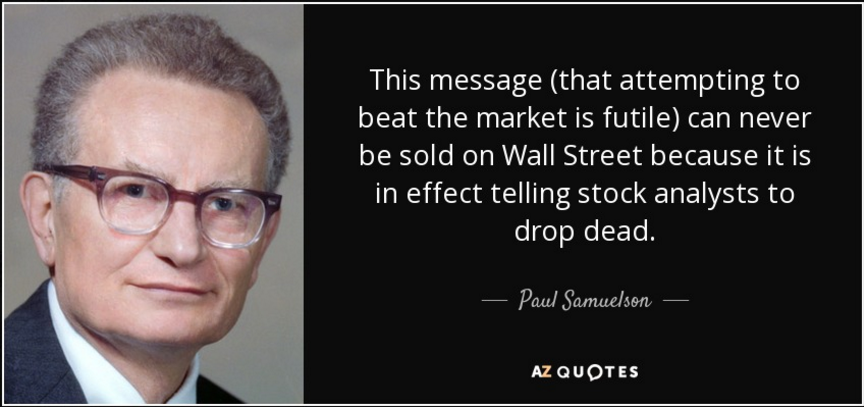
There is no reason whatsoever to think bureaucrats administering R&D subsidy budgets set by politicians are any better than private entrepreneurs at picking the next big thing.
Page 33 of "An Illustrated Guide to Income" more economic #dataviz at: bit.ly/10M7lqR http://t.co/FcmaqZWB32—
Catherine Mulbrandon (@VisualEcon) May 09, 2013
If bureaucrats were any good at picking winners, were any good at beating the market, they would go work for a hedge fund on an astronomically better salary package. The salary package of one top hedge fund manager exceeds the entire payroll budget of most New Zealand government departments including those administering R&D subsidies and other hand-outs.
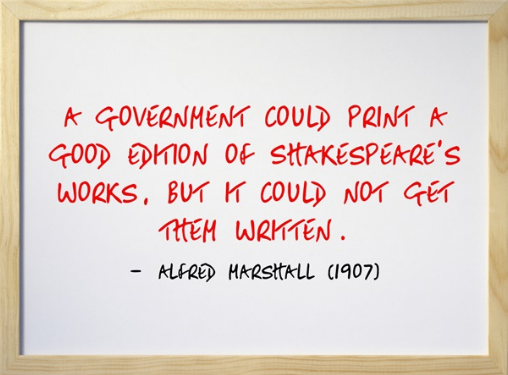
Government expenditure in vital areas such as innovation should be justified on the basis of cost-benefit ratios and a rationale for why bureaucrats have superior access to information about the entrepreneurial prospects of unproven technologies and product prototypes.
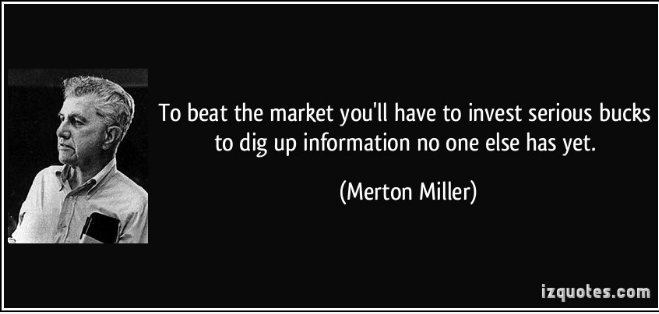
Subsidies should not be defended because of their popularity and sexiness as Mr Joyce did for the film industry, tourism promotion and ultra-fast broadband
If they told New Zealanders that in their view tourism promotion should be cancelled, the film industry should close down, that their shouldn’t be any ultra-fast broadband…I don’t think people would be that enamoured with it.
On irrigation funding, Mr. Joyce cited a report by NZIER that found irrigation contributes $2.2 billion to the economy. Irrigation is a private good which can funded by pricing it properly including the recovery of capital costs. There is no case for a subsidy.

Public goods have spillovers, private goods such as water and irrigation do not. Users can fund the irrigation themselves buying as little or as much water as they are willing to pay out for out their own pockets. The NZIER report noted that it was not about the case for public funding:
… we are not able to quantify the environmental or social impacts if irrigation had never occurred. We also do not attempt to investigate the relative merits of public versus private sector funding of the schemes.

02 Jul 2016 Leave a comment
in applied price theory, economics of bureaucracy, entrepreneurship, industrial organisation, politics - New Zealand, Public Choice, rentseeking, survivor principle Tags: corporate welfare, industry policy, picking losers, picking winners, The pretense to knowledge
My latest corporate welfare report is out at the Taxpayers Union website. The company tax could be 6 percentage points lower but for this generosity of politicians picking winners.

Source: New Zealand Budget Papers, various years.
It is not as bad as you think under the last Labour government budget. $700 million of those hand-outs to business was seed capital for agricultural research institute. That institute to be run out of the investment income on that $700 million one-off injection which the incoming National Party-led government cancelled.
Another $675 million in that last Labour budget was to KiwiRail and OnTrack. Other than that, the Labour Party ran a pretty tight ship on business subsidies. There are no particular record of picking winners. Labour did buy a real loser in KiwiRail. You heard it here first.
11 Jun 2016 Leave a comment
in applied price theory, applied welfare economics, economics of bureaucracy, environmental economics, politics - New Zealand, Public Choice, transport economics, urban economics Tags: cost benefit analysis, KiwiRail, New Zealand Green Party, road pricing
I just wrote an op-ed for National Business Review online (pay-walled) agreeing with an op-ed last week by Green MP Julie Anne Genter on transport investment. My op-ed started
The Taxpayers’ Union welcomes the commitment of the Green Party yesterday to evaluating transport investments without any bias or favouritism to one transport mode over another.
The Taxpayers’ Union could not agree more with Julie Anne Genter when she said that the question ministers should always ask is “what is the best investment we can make?”
This op-ed was my rejoinder to her reply to my op-ed criticising a recent Green Party on national freight policy. That policy called for 25% of all freight by kilometres travelled to each go by rail and road. That would near double their freight market share from 30% currently to 50% when measured by kilometre.
For my troubles I got nothing but criticism and accusations in the comments section in National Business Review Online. A tweet by Genter was far more gracious.
There was no praise in the comment section at the National Business Review online for agreeing with the Green policy. In the first comment I was told I did not understand economics and that
When the policy default is “cut taxes and spending and let me selfishly keep my money” they miss out on the much larger benefit to everyone, including themselves, by nudging or economy to spend more on intrinsically more efficient transport – like rail – and less on alternatives.
No thanks at all for agreeing that transport investments should be the best we can make. After saying that in their recent freight policy, the Greens set targets were specific transport technologies they favour, which are rail and sea freight.

You cannot argue that transport investments should be the best we can make then declare a preference for a particular technology or mode of transport. But let us not quibble over that glaring contradiction.

The broader principle was agreed which is transport investments should be driven by cost benefit analysis and value for money. It should be technology neutral and transport mode neutral. That, of course, means the Greens cannot declare targets for the market shares of particular modes of freight shipment if they want to follow their own policy about value for money.
06 Jun 2016 Leave a comment
in economic history, economics of bureaucracy, Marxist economics, Public Choice Tags: autocracy, Russia, Stalin, USSR
05 Jun 2016 Leave a comment
in development economics, economic history, economics of bureaucracy, poverty and inequality

The World Bank should enquire more as to why particular Latin countries succeeded while others did not and the economic systems employed in each.
03 Jun 2016 Leave a comment
in economics, economics of bureaucracy, economics of regulation, income redistribution, law and economics, property rights, Public Choice, public economics, rentseeking Tags: congestion charges, housing affordability, land supply, NIMBYs, RMA, road pricing, zoning

Morgan Foundation wants the National party-led government to take on NIMBYs not only with more high-rises and urban intensification but congestion charges too! There is only so much courage you can expect in one term of government. Relaxing the Auckland urban limit, which will hopefully cause housing prices to stop rising in Auckland was not enough.
No softly softly catchy monkey here. No concept of winning the battles you can win.
30 May 2016 Leave a comment
in comparative institutional analysis, economic history, economics of bureaucracy, entrepreneurship, industrial organisation, politics - USA, Public Choice, survivor principle Tags: entrepreneurial alertness, industry policy, Internet, picking roses, picking winners
11 May 2016 Leave a comment
in development economics, economics, economics of bureaucracy, economics of crime, growth disasters, growth miracles, law and economics, Public Choice, rentseeking Tags: bribery and corruption
06 May 2016 Leave a comment
in comparative institutional analysis, constitutional political economy, economics of bureaucracy, economics of regulation, financial economics, Public Choice Tags: behavioural public choice, rational irrationality
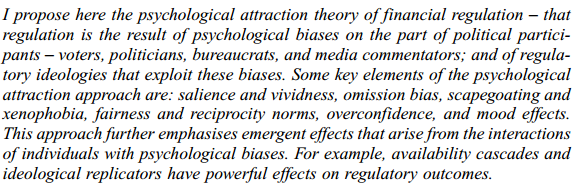
“Psychological Bias as a Driver of Financial Regulation,” David Hirshleifer, European Financial Management, 14(5), November, (2008):856-874.
27 Apr 2016 Leave a comment
in applied price theory, business cycles, economics of bureaucracy, economics of regulation, fiscal policy, macroeconomics, monetary economics Tags: anti-market bias, antiforeign bias, expressive voting, lags on monetary policy, makework bias, rational rationality, tax incidence, The fatal conceit, The pretense to knowledge
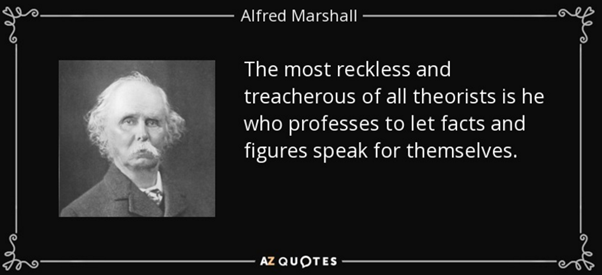
I used to argue that the quality of public policy making would double if public policy analysts remembered the first 6 weeks of microeconomics 101 but on reflection more than that is required.
Could we economists today ever show such self-restraint about our own expert recommendations? https://t.co/2UE12JuIgn—
William Easterly (@bill_easterly) November 24, 2015
I picked up my initial insight out when working as a graduate economist in the Australian Department of Finance. That was a few years ago.
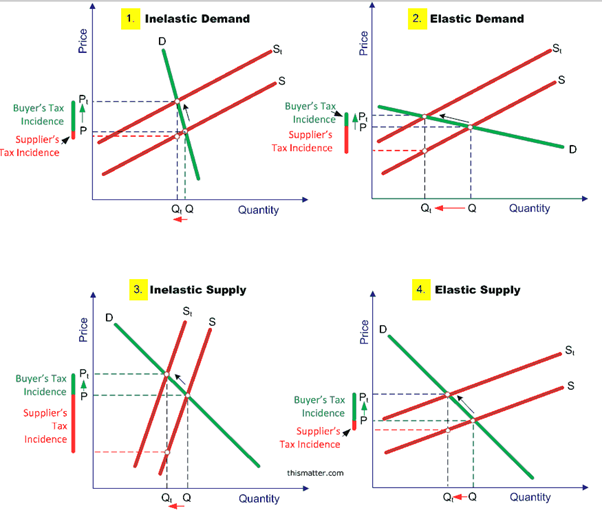
I am now concluded that policy analysts also need to know the basics of the economics of tax incidence. Who pays the tax depends on the elasticities of supply and demand rather than who writes the check to the taxman.
The number of times that I have read media and public policy analysis saying who pays the tax is the writer of the cheque to the taxman is beyond counting.
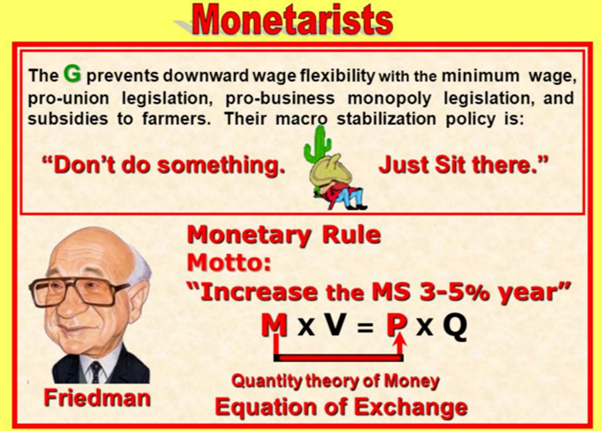
There is also what to do about unemployment and inflation. Do not just do something, sit there might be good advice on most occasions. As Tim Kehoe and Gonzalo Fernandez de Cordoba explain in the context of first do no harm:
Looking at the historical evidence, Kehoe and Prescott conclude that bad government policies are responsible for causing great depressions.
In particular, they hypothesize that, while different sorts of shocks can lead to ordinary business cycle downturns, overreaction by the government can prolong and deepen the downturn, turning it into a depression.
Celebrating humanity's flourishing through the spread of capitalism and the rule of law
Celebrating humanity's flourishing through the spread of capitalism and the rule of law
Celebrating humanity's flourishing through the spread of capitalism and the rule of law
Celebrating humanity's flourishing through the spread of capitalism and the rule of law
Celebrating humanity's flourishing through the spread of capitalism and the rule of law
Celebrating humanity's flourishing through the spread of capitalism and the rule of law
Celebrating humanity's flourishing through the spread of capitalism and the rule of law
Celebrating humanity's flourishing through the spread of capitalism and the rule of law
A History of the Alt-Right
Econ Prof at George Mason University, Economic Historian, Québécois
Celebrating humanity's flourishing through the spread of capitalism and the rule of law
Scholarly commentary on law, economics, and more
Beatrice Cherrier's blog
Celebrating humanity's flourishing through the spread of capitalism and the rule of law
Celebrating humanity's flourishing through the spread of capitalism and the rule of law
Celebrating humanity's flourishing through the spread of capitalism and the rule of law
Why Evolution is True is a blog written by Jerry Coyne, centered on evolution and biology but also dealing with diverse topics like politics, culture, and cats.
Celebrating humanity's flourishing through the spread of capitalism and the rule of law
A rural perspective with a blue tint by Ele Ludemann
DPF's Kiwiblog - Fomenting Happy Mischief since 2003
Celebrating humanity's flourishing through the spread of capitalism and the rule of law
The world's most viewed site on global warming and climate change
Tim Harding's writings on rationality, informal logic and skepticism
A window into Doc Freiberger's library
Let's examine hard decisions!
Commentary on monetary policy in the spirit of R. G. Hawtrey
Thoughts on public policy and the media
Celebrating humanity's flourishing through the spread of capitalism and the rule of law
Politics and the economy
A blog (primarily) on Canadian and Commonwealth political history and institutions
Reading between the lines, and underneath the hype.
Economics, and such stuff as dreams are made on
"The British constitution has always been puzzling, and always will be." --Queen Elizabeth II
Celebrating humanity's flourishing through the spread of capitalism and the rule of law
Celebrating humanity's flourishing through the spread of capitalism and the rule of law
WORLD WAR II, MUSIC, HISTORY, HOLOCAUST
Undisciplined scholar, recovering academic
Celebrating humanity's flourishing through the spread of capitalism and the rule of law
Res ipsa loquitur - The thing itself speaks
In Hume’s spirit, I will attempt to serve as an ambassador from my world of economics, and help in “finding topics of conversation fit for the entertainment of rational creatures.”
Researching the House of Commons, 1832-1868
Articles and research from the History of Parliament Trust
Reflections on books and art
Posts on the History of Law, Crime, and Justice
Celebrating humanity's flourishing through the spread of capitalism and the rule of law
Exploring the Monarchs of Europe



Recent Comments