The policy world and academia offer widely different opportunities for early career researchers

Academia rewards findings that are different and unexpected. In policy it is more important to be right than novel—after all, millions of lives may be impacted by a policy decision. In academia, people argue a lot about the direction of an effect but very little about the magnitude: in policy it’s the reverse…

Via Impact of Social Sciences – The policy world and academia offer widely different opportunities for early career researchers..

Richard Lindzen on back when periods of warming were climate optima

lindzen climate optima

HT: The Political Assault on Climate Skeptics | Cato Institute.

The development economics of Confucius

In a country well governed, poverty is something to be ashamed of. In a country badly governed, wealth is something to be ashamed of.  - Confucius

Image

NZ taxpayers made a $20 million profit on its $30 billion state owned enterprises portfolio!

KiwiRail is such a dog that the Treasury reports on the rate of return to the taxpayer on the state owned enterprises portfolio by excluding KiwiRail from its calculations of rates of return.

The Treasury doesn’t do similar adjustments for state owned enterprises that are performing unusually well, so total shareholder return figures should be reported without this KiwiRail exception. If you buy a dog, you should own up to the fleas it spreads to the rest of your portfolio.

Trying to pretend that KiwiRail is just not there, or survives on the largess of someone other than the one and only New Zealand taxpayer, does no one any favours. This KiwiRail exception will have to apply for at least 10 years to the annual commercial portfolio report of the Treasury. I want to know the total shareholder return, including KiwiRail every year without exception or special pleading.

That total shareholder return of -8.2% in 2012 is worthy of comment too:

The portfolio generated a net loss after tax of $1.8 billion driven by a restructuring of KiwiRail’s balance sheet and reductions in bottom line results for Meridian and Solid Energy, affected by hydrology and coal market deterioration respectively.

It’s time for the government to wash its hands of Solid Energy and let it go bankrupt – updated

Government owned mining company Solid Energy lost $182 million last year. It is already received nearly $200 million in corporate welfare in bailouts from the New Zealand taxpayer. It’s time to call a halt.

The Christchurch-based coalminer is negotiating with banks in a bid to reduce its $320 million debt. In 2013, its annual revenue dropped by a third to $631 million.

Solid Energy invested heavily on a strategy that energy prices were going to go up and up. That investment strategy was against the market sentiment of that time, much less afterwards and the collapse of oil prices.

While Prime Minister John Key said on March 2 that it was not the Government’s preferred option to put more taxpayer cash into Solid Energy, Minister of Finance Bill English flatly ruled out cash, loans or guarantees. I hope Bill English wins that political struggle at the Cabinet table for the sake of the long-suffering New Zealand taxpayer.

What is worse, the government has indemnified the directors of Solid Energy against unspecified liabilities thus giving them an open-ended cheque-book, from what I can see, to trade while insolvent:

State Owned Enterprises Minister Todd McClay confirmed last month that the Crown has offered an indemnity to the board of Solid Energy last year, but would not comment on what it was.

Asked if directors had raised concerns with him that they might be trading while insolvent, English said: “Any director of a company like this has that question uppermost in their mind. They need to be sure all the time that they’re not trading while insolvent.”

Directors’ duties regarding trading while insolvent is the last line of defence against financial irresponsibility. There are both civil liability and criminal penalties for trading while insolvent under company law.

Solid Energy has already been a black hole for nearly $200 million in taxpayers’ money as well as considerable bank write-offs of loans.

The company appeared before the Finance and Expenditure Select Committee of Parliament this morning. It told MPs the company was solvent and marginally cash positive, but looking at another significant loss this year.

It should be a matter of policy that the government, any government, should not indemnify directors of any company, be they government owned or not, for breaches of directors’ duties. It’s a matter of the rule of law and of governments not privileging itself in the marketplace at the expense of the taxpayer.

What is the point of having a State Owned Enterprises Act and setting up these businesses as companies with a duty to be as successful as a company not owned by the government if they don’t have to obey the most fundamental safeguards in company law when push comes to shove?

If these indemnities have indeed been issued by the government for breaches of directors’ duties regarding insolvency, and it seems as though they have been, what is the Crown liability to creditors if Solid Energy is indeed trading while insolvent? These indemnities may allow the creditors to pierce the corporate veil and sue the New Zealand government.

In the revenge of directors duties, the directors of banks and any other creditor will have a director’s duty to sue the New Zealand government for all it can get as a result of these indemnities.

At a minimum, the New Zealand government will have to settle out of court or go all the way to the Supreme Court because hundreds of millions of dollars are involved from the bank write-offs, past and present.

Naturally, the ideological blinkers of the opposition party in New Zealand prevents it from saying the obvious, which is calling for the Solid Energy to be put in receivership. The Labour Party spokesman on state owned enterprise attacked the stewardship of the Minister of Finance as a shareholding Minister, but had nothing to say in terms of solutions, including putting the company into receivership.

The Green Party did a little bit better in 2013 when its spokesman talked about a need for a transition to sustainable jobs – the Green party code for layoffs:

“The National Government need to take responsibility for their mismanagement of Solid Energy and cut their losses,” said Mr Hughes.

“The banks that made risky loans to Solid Energy need to bear the cost of their mistakes”. “Coal is not going to be the fuel of our future if we are to stabilise our climate”.

“New Zealanders and Solid Energy workers need a just transition into more sustainable jobs – jobs that don’t fry the planet.”

“The longer this Government effectively denies climate change, the more taxpayer money will go to subsidising coal and its foreign backers.”

Things are getting desperate when the Greens find a corporate welfare so appalling that they actually oppose it, if only because of support for lower carbon emissions. That is one green hypocrisy too many if it supported a bailout of a coal miner.

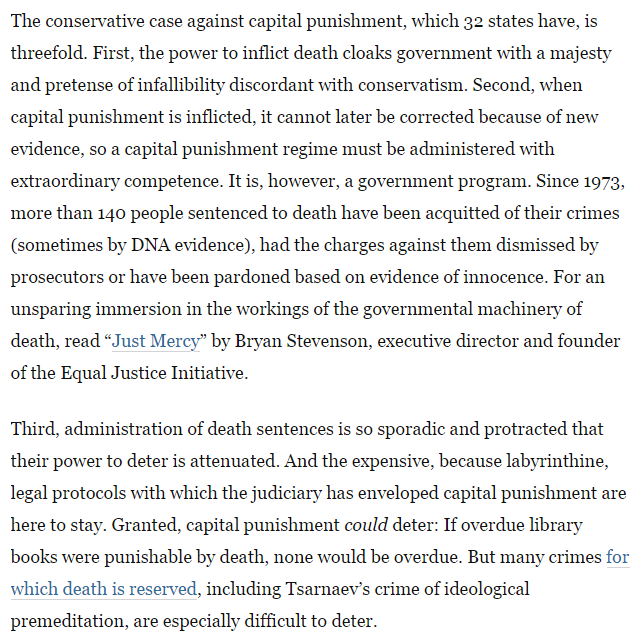
An entire industry depends on denying this chart

Image

Bureaucracy also landed on the Moon too

https://twitter.com/History_Pics/status/570372893588267008

Yet another way to beat the share market

Over the ten trading days following the announcement of Timothy Geithner as Treasury Secretary, financial firms with a connection to Geithner experienced a cumulative abnormal return of about 12% relative to other financial sector firms. This reversed when his nomination ran into trouble due to unexpected tax issues.

That is what Daron Acemoglu, Simon Johnson, Amir Kermani, James Kwak, and Todd Mitton found recently.

Geithner had important social connections from his time as president of the Federal Reserve Bank of New York. He knew some people in finance very well – including those at large and small firms – but some others he did not know at all. This spike in share prices for connections to Tim Geithner was somewhat special as the authors explain:

when Henry (Hank) Paulson became Treasury Secretary in May 2006 – there is no evidence of a positive impact on the stock price of connected firms.

The argument put forward explaining the value of these connections had nothing to do with any suggestions of impropriety whatsoever. What happened was the value of connections spiked in a crisis such as the global financial crisis in 2008:

it was entirely reasonable for market participants to suppose that immediate action with limited oversight would have to be taken, and that officials would rely on a small network of established confidantes for advice and assistance. In fact, this is exactly what happened while Mr Geithner was at Treasury.

When the going gets tough, the tough only have time to ring friends and associates for advice and new staff.

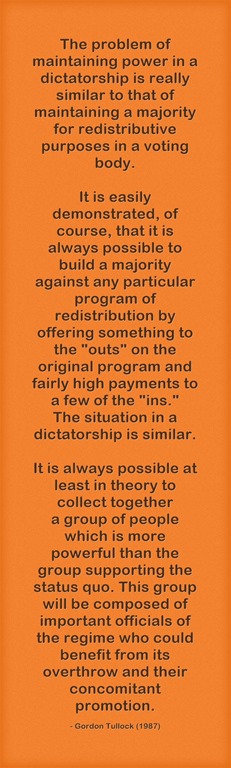
Steven N S Cheung on corruption and economic development

Image

Déjà vu all over again: Sovereign Funds, a History of Bad Timing Version

Shara funds under active and passive management

Josh Lerner analysed about 2,600 sovereign fund investments over the last 25 years, to find that:

these funds are “trend chasers” rather than good market timers — they are likely to invest at home when domestic equity prices are higher, and invest abroad when foreign prices are higher. This tendency to shun assets when their prices are low has taken its toll on the returns at these funds…

sovereign fund investments made in a fund’s home country tend to do worse than foreign investments, at least in the short term. Industry price-to-earnings ratios of domestic investments tend to drop in the first year, while international investments have a positive change in the first year. Moreover, when politicians are involved in sovereign funds’ decision-making, more money is funnelled to poorly performing domestic deals

What were they thinking? NZ government super fund loses the lot on loan to already failing bank in one of the PIGS.

Portuguese bank

A Portuguese bank on the verge of collapse – what were they thinking?

That would have been the response of many newspaper readers this morning upon learning the New Zealand Superannuation Fund has lost nearly $200 million in taxpayers’ cash on a "risk-free" loan it provided to Lisbon-based Banco Espirito Santo (BES) on July 3.

The loan – part of a US$784 million credit package US investment bank Goldman Sachs put together through its Oak Finance vehicle – was made exactly one month before Portugal’s central bank broke up BES and split the country’s biggest lender into two, with one part holding the good assets and the toxic assets placed in the other.

Unfortunately, the Oak Finance loan is now stranded in the so-called "bad bank" following a retrospective law change by the Bank of Portugal.

Christopher Adams: What were they thinking? – Business – NZ Herald News.

Portuguese junk bonds bank of New Zealand super

This is what the 2015 index of Economic Freedom has to say about Portugal on the rule of law:

In 2013, the OECD expressed concern over Portugal’s reluctance to crack down on foreign bribery, particularly in regard to its former colonies Brazil, Angola, and Mozambique.

Since 2001, Portugal had officially acknowledged only 15 bribery allegations, and there had been no prosecutions. The judiciary is constitutionally independent, but staff shortages and inefficiency contribute to a considerable backlog of pending trials.

2014 index of economic Freedom

Alfred Marshall on state owned enterprises

Image

It’s not easy to be green: the cost of fossil fuels divestments to the New Zealand superannuation fund

The Green Party of New Zealand wants the New Zealand superannuation fund to sell its $676 million in fossil fuel investments. For those not in the know, this government investment fund is worth about $25 billion and is funded by present taxes to pay for the universal old age pension in New Zealand. Its current investment strategy seems to rely heavily on index linked funds that minimise management and trading costs.

The Government uses the Fund to save now in order to help pay for the future cost of providing universal superannuation.

In this way the Fund helps smooth the cost of superannuation between today’s taxpayers and future generations.

In common with the endowment funds of the American universities, that $676 million is about 2% of the total New Zealand superannuation portfolio of about NZ$25 billion.

Any portfolio manager risks considerable fees if she must monitor the entire portfolio because 2% is of dubious moral stature.

The main cost of divestiture is compliance costs to prevent fossil fuel investments drifting back into the portfolio through the routine day to day investments of other companies within their portfolios as these other firms expand into new businesses or diversified. The entire portfolio must be monitored for this risk.

American universities found that fossil fuels divestment rules out indexed linked funds as a class, along with their low management and trading fees. Ethical investors must move to actively managed investment funds which are perhaps a third more expensive in management fees.

If a move to a fossil fuel free portfolio rules out  passive indexed linked funds, that is a major risk to future returns of the New Zealand superannuation fund. Would this fossil fuels disinvestment including selling the recently acquired Z petrol station network  by the New Zealand superannuation fund?

Z Energy now owns and manages these businesses, which include:

  • a 15.4 per cent stake in Refining NZ who runs New Zealand’s only oil refinery.
  • a 25 per cent stake in Loyalty New Zealand who run Fly Buys
  • over 200 service stations
  • about 90 truck stops
  • pipelines, terminals and bulk storage

As usual, in the course of argument for disinvestment by the government investment fund, the Green Party makes an excellent argument for the privatisation not only of state owned enterprises but of the New Zealand superannuation fund.

Rather than have one victory at a time, the  Greens want the NZ superannuation fund to use the funds from the disinvestment to reinvest in pet projects of politicians. The green party co-leader said:

Money released from divestment can be reinvested in the rapidly growing renewable energy and energy efficiency sectors, helping to hasten the transition of our economy to a low-carbon future.

This makes government investment funds the playthings of politicians so they can never match the returns of a genuinely privately owned investment fund.

Mises on comparative institutional analysis

Image

The Law of Crappy Managers

dilbert-principle-5-feb-1995

via The Law of Crappy People.

Previous Older Entries Next Newer Entries

Bassett, Brash & Hide

Celebrating humanity's flourishing through the spread of capitalism and the rule of law

Truth on the Market

Scholarly commentary on law, economics, and more

The Undercover Historian

Beatrice Cherrier's blog

Matua Kahurangi

Celebrating humanity's flourishing through the spread of capitalism and the rule of law

Temple of Sociology

Celebrating humanity's flourishing through the spread of capitalism and the rule of law

Velvet Glove, Iron Fist

Celebrating humanity's flourishing through the spread of capitalism and the rule of law

Why Evolution Is True

Why Evolution is True is a blog written by Jerry Coyne, centered on evolution and biology but also dealing with diverse topics like politics, culture, and cats.

Down to Earth Kiwi

Celebrating humanity's flourishing through the spread of capitalism and the rule of law

NoTricksZone

Celebrating humanity's flourishing through the spread of capitalism and the rule of law

Homepaddock

A rural perspective with a blue tint by Ele Ludemann

Kiwiblog

DPF's Kiwiblog - Fomenting Happy Mischief since 2003

The Dangerous Economist

Celebrating humanity's flourishing through the spread of capitalism and the rule of law

Watts Up With That?

The world's most viewed site on global warming and climate change

The Logical Place

Tim Harding's writings on rationality, informal logic and skepticism

Doc's Books

A window into Doc Freiberger's library

The Risk-Monger

Let's examine hard decisions!

Uneasy Money

Commentary on monetary policy in the spirit of R. G. Hawtrey

Barrie Saunders

Thoughts on public policy and the media

Liberty Scott

Celebrating humanity's flourishing through the spread of capitalism and the rule of law

Point of Order

Politics and the economy

James Bowden's Blog

A blog (primarily) on Canadian and Commonwealth political history and institutions

Science Matters

Reading between the lines, and underneath the hype.

Peter Winsley

Economics, and such stuff as dreams are made on

A Venerable Puzzle

"The British constitution has always been puzzling, and always will be." --Queen Elizabeth II

The Antiplanner

Celebrating humanity's flourishing through the spread of capitalism and the rule of law

Bet On It

Celebrating humanity's flourishing through the spread of capitalism and the rule of law

History of Sorts

WORLD WAR II, MUSIC, HISTORY, HOLOCAUST

Roger Pielke Jr.

Undisciplined scholar, recovering academic

Offsetting Behaviour

Celebrating humanity's flourishing through the spread of capitalism and the rule of law

JONATHAN TURLEY

Res ipsa loquitur - The thing itself speaks

Conversable Economist

In Hume’s spirit, I will attempt to serve as an ambassador from my world of economics, and help in “finding topics of conversation fit for the entertainment of rational creatures.”

The Victorian Commons

Researching the House of Commons, 1832-1868

The History of Parliament

Articles and research from the History of Parliament Trust

Books & Boots

Reflections on books and art

Legal History Miscellany

Posts on the History of Law, Crime, and Justice

Sex, Drugs and Economics

Celebrating humanity's flourishing through the spread of capitalism and the rule of law

European Royal History

Exploring the Monarchs of Europe

Tallbloke's Talkshop

Cutting edge science you can dice with

Marginal REVOLUTION

Small Steps Toward A Much Better World

NOT A LOT OF PEOPLE KNOW THAT

“We do not believe any group of men adequate enough or wise enough to operate without scrutiny or without criticism. We know that the only way to avoid error is to detect it, that the only way to detect it is to be free to inquire. We know that in secrecy error undetected will flourish and subvert”. - J Robert Oppenheimer.

STOP THESE THINGS

The truth about the great wind power fraud - we're not here to debate the wind industry, we're here to destroy it.

Lindsay Mitchell

Celebrating humanity's flourishing through the spread of capitalism and the rule of law

Alt-M

Celebrating humanity's flourishing through the spread of capitalism and the rule of law

croaking cassandra

Economics, public policy, monetary policy, financial regulation, with a New Zealand perspective

The Grumpy Economist

Celebrating humanity's flourishing through the spread of capitalism and the rule of law

International Liberty

Restraining Government in America and Around the World