HT: deirdremccloskey via cafehayek
Celebrating humanity's flourishing through the spread of capitalism and the rule of law
20 Aug 2014 Leave a comment
in applied welfare economics, development economics, growth disasters, growth miracles, history of economic thought, income redistribution, liberalism Tags: Deirdre McCloskey, poverty versus inequality, The Great Escape The Age of Enlightenment, The Great Fact

HT: deirdremccloskey via cafehayek
19 Aug 2014 Leave a comment
in applied price theory, economics of regulation, income redistribution, rentseeking, urban economics Tags: do gooders, elitism, land supply, new class, rent seeking, the vision of the annointed, zoning

HT: Michael Warby via The people designing your cities don’t care what you want. They’re planning for hipsters. – The Washington Post .
03 Aug 2014 Leave a comment
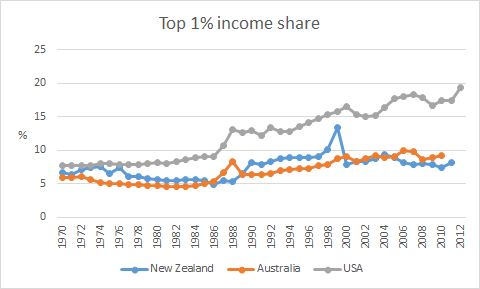
in applied welfare economics, fiscal policy, income redistribution, politics - New Zealand, politics - USA, Public Choice Tags: envy, Stephen Williamson, taxation and entrepreneurship, taxation and human capital, taxation and investment, taxation and labour supply, top 1%
He says a lot. I’ll try to address piece by piece.
Next, some people have shown interest in this paper by Diamond and Saez. A key result that seemed to get these people excited is the calculation of a top optimal marginal tax rate (including all taxes) of 73%, relative to the current rate of 42.5%. There are two key assumptions that Diamond and Saez make to come up with the 73% optimal rate. First, we should not care about the welfare (at the margin) of the rich people. This argument is based solely on the notion that marginal utility of income is low for the top income-earners. Second, Diamond and Saez use a “behavioral elasticity” of tax revenue with respect to the tax rate of 0.25. To see how this matters, if you use their formula and an elasticity of one, you get an optimal top tax rate…
View original post 1,215 more words
30 Jul 2014 Leave a comment
in applied price theory, discrimination, human capital, income redistribution, labour economics, labour supply, politics - New Zealand, population economics, Public Choice, rentseeking Tags: employment discrimination, inequality, Maori economic development, poverty, Simon Chapple, The Great Enrichment, The Great Fact
When Simon Chapple in 2000 wrote “Māori Socio-Economic Disparity”, which showed that disadvantage in New Zealand is more closely tied to age, marital status, education, skills, and geographic location than it is to ethnicity, broadly conceived, such as Māori ethnicity:
Chapple also found that there are important differences in socio economic development by Māori self-identity. Those who identified only as Māori did worse than those that are identified as Māori and another ethnicity. Identifying only as Māori also correlated with living in rural New Zealand.
In terms of employment discrimination, employers would not know whether a Māori job applicant identified as only as Māori or also with another ethnicity, so discrimination is not a good explanation of Māori disadvantage because of this counterfactual. A major driver of Māori disadvantage, which is identifying on the Census form solely as Maori, is simply unknown to discriminating employers as a basis for discrimination in hiring and promotion.
There were editorials in the Dominion Post, which I cannot find online, and in the New Zealand Herald. The latter said:
The Government is being prodded to recognise that Maori deprivation has more to do with socio-economic factors than ethnicity.
This was the conclusion of a report by the Labour Department’s senior research analyst, Simon Chapple. Helen Clark might well have had that finding partly in mind when she referred to a lot of water having gone under the bridge since the Government first formulated legislation.
Mr Chapple said, in essence, that place of residence, age, education and skills had more to do with poverty than race. In areas such as South Auckland, Northland and the central North Island, there were poor Maori, but there were also poor Pākehā and poor Pasifika.
The Minister attacked him and the paper as well for contradicting the Minister’s claim during the election campaign that everything got worse for Maori in the 1990s.
Real equivalised median household income rose 47% from 1994 to 2010; for Māori, this rise was 68%; for Pasifika, 77% (Perry July 2014)
See Karen Baehler’s Ethnicity-based research and politics: snapshots from the United States and New Zealand for more information and a comparison with the similar response to Daniel Patrick Moynihan’s The Negro Family: A Case for National Action in 1965.
About a quarter of Negro families are headed by women. The divorce rate is about 2 1/2 times what it is [compared with whites],” Moynihan said. “The number of fatherless children keeps growing. And all these things keep getting worse, not better, over recent years.”
Moynihan, now retired from the United States Senate, was a senior official in LBJ’s Labor Department in 1965. He wrote his report on a typewriter over a few weeks and had the publications office in the basement of the Labor Department print 100 of them, marked “For Official Use Only.”
see The Moynihan Report Revisited: Lessons and Reflections after Four Decades for a review by the best and the brightest in American economics and sociology on Daniel Patrick Moynihan’s prophetic warnings. Holzer says, for example:
Moynihan was extremely insightful and even prescient in arguing that the employment situation of young black men was a “crisis . . . that would only grow worse.”
He understood that these trends involve both limits on labour market opportunities that these young men face as well as skill deficits of and behavioural responses by the young men themselves.
More children are growing-up without a working father living in the home and glean the awareness that work is a central expectation of adult life (Wilson 1987, 1996).
Single-parent households increased from 13 per cent of all Māori households in 1981 to 24.4 per cent in the 2006 Census. In the 2006 Census, 70 per cent of Māori single parent households were on a low income compared to 15 per cent of other Māori one family households (Kiro, Randow and Sporle 2010).
Most of the skill gaps that are present at the age of 18 – skill gaps which substantially explain gaps in adult earnings and employment in all groups – are also present at the age of five (Cunha and Heckman 2007). There is much evidence to show that disadvantaged children have lower levels of soft skills (non-cognitive skills): motivation, persistence, self-discipline, the ability to work with others, the ability to defer gratification and plan ahead, etc. (Heckman 2008). Most of the skills that are acquired at school build on these soft skills that are moulded and reinforced within whānau.
When I started working on labour economics in 2007 I found that the labour economics of Māori was very narrowly written and stayed well clear of the minefield that Simon braved about how ethnicity does not matter that much to Māori social disadvantage.
14 Jul 2014 Leave a comment
in income redistribution, politics - New Zealand Tags: The Great Enrichment
the increases were 55% for Pakeha, 57% for Pasifika, and 64% for Māori since 1994.
13 Jul 2014 1 Comment
in applied price theory, gender, income redistribution, Public Choice Tags: John Lott, The growth in government, voter demographics

The gender gap in voting dates back 2 generations or more and may now be in double digits.
A large share of all social spending is for the care of dependents – everything from children to non-working mothers and old age pensioners. Women support this spending because they benefit more from the social insurance it offers. Women both earn less and are more likely to be out of the workforce caring for children. Women also change their voting patterns more often than men as they marry and divorce or as they become single mothers.
John Lott pondered on why the government started growing precisely when it did. The federal government, aside from periods of wartime, consumed 2 to 3% of GDP up until World War I. In the 1920s, non-military federal spending began steadily climbing. FDR’s New Deal continued an earlier trend.
Lott explains the growth of government with women’s suffrage. For decades, polls have shown that women as a group vote differently than men. Without the women’s vote, Republicans would have swept every U.S. presidential race but one between 1968 and 2004.
A major gender gap issue is smaller government and lower taxes, which is a much higher priority for men. Women were more opposed to the 1996 federal welfare reforms, which mandated time limits for receiving welfare and imposed work requirements on welfare recipients.
Women are also supporters of Medicare, Social Security and educational expenditures more than men. Studies show that women are generally more risk-averse than men so they support government programs to ensure against certain risks in life.
Marriage also provides an economic explanation for why men and women prefer different policies.
Single women who believe they may marry as well as married women who most fear divorce, look for protection against possible divorce: a more progressive tax system and other government transfers of wealth from rich to poor.
Lott considers that A good way to analyse the direct effect of women’s suffrage on the growth of government is to study how each of the 48 state governments expanded after women obtained the right to vote.
The impact of granting of women’s suffrage was startling: state governments started expanding the first year after women voted and continued growing until real per capita spending more than doubled. The increase in government spending and revenue started immediately after women started voting.
There were 19 states that had not passed women’s suffrage before the approval of the 19th Amendment, nine approved the amendment, while the other 12 had suffrage imposed on them.
If some unknown third factor caused a desire for larger government and women’s suffrage, government should have only grown in states that voluntarily adopted suffrage. After approving women’s suffrage, government grew at a similar pace in both groups of states.
As more women voted and eventually voted in similar numbers as men, the size of state and federal governments expanded as women became an increasingly important part of the electorate. It took up to 30 years for women’s voting participation rate to equal that of men.
Lott also found that women’s political views on average vary more than those of men:
Not surprisingly, political parties pitch their platforms to women because they are more likely to change their vote over identifiable issues that are within the scope for government to change or influence
Celebrating humanity's flourishing through the spread of capitalism and the rule of law
A History of the Alt-Right
Econ Prof at George Mason University, Economic Historian, Québécois
Celebrating humanity's flourishing through the spread of capitalism and the rule of law
Scholarly commentary on law, economics, and more
Beatrice Cherrier's blog
Celebrating humanity's flourishing through the spread of capitalism and the rule of law
Why Evolution is True is a blog written by Jerry Coyne, centered on evolution and biology but also dealing with diverse topics like politics, culture, and cats.
Celebrating humanity's flourishing through the spread of capitalism and the rule of law
A rural perspective with a blue tint by Ele Ludemann
DPF's Kiwiblog - Fomenting Happy Mischief since 2003
Celebrating humanity's flourishing through the spread of capitalism and the rule of law
The world's most viewed site on global warming and climate change
Tim Harding's writings on rationality, informal logic and skepticism
A window into Doc Freiberger's library
Let's examine hard decisions!
Commentary on monetary policy in the spirit of R. G. Hawtrey
Thoughts on public policy and the media
Celebrating humanity's flourishing through the spread of capitalism and the rule of law
Politics and the economy
A blog (primarily) on Canadian and Commonwealth political history and institutions
Reading between the lines, and underneath the hype.
Economics, and such stuff as dreams are made on
"The British constitution has always been puzzling, and always will be." --Queen Elizabeth II
Celebrating humanity's flourishing through the spread of capitalism and the rule of law
WORLD WAR II, MUSIC, HISTORY, HOLOCAUST
Undisciplined scholar, recovering academic
Celebrating humanity's flourishing through the spread of capitalism and the rule of law
Res ipsa loquitur - The thing itself speaks
In Hume’s spirit, I will attempt to serve as an ambassador from my world of economics, and help in “finding topics of conversation fit for the entertainment of rational creatures.”
Researching the House of Commons, 1832-1868
Articles and research from the History of Parliament Trust
Reflections on books and art
Posts on the History of Law, Crime, and Justice
Celebrating humanity's flourishing through the spread of capitalism and the rule of law
Exploring the Monarchs of Europe
Cutting edge science you can dice with
Small Steps Toward A Much Better World
“We do not believe any group of men adequate enough or wise enough to operate without scrutiny or without criticism. We know that the only way to avoid error is to detect it, that the only way to detect it is to be free to inquire. We know that in secrecy error undetected will flourish and subvert”. - J Robert Oppenheimer.
The truth about the great wind power fraud - we're not here to debate the wind industry, we're here to destroy it.
Celebrating humanity's flourishing through the spread of capitalism and the rule of law
Recent Comments