Nearly 3/4s of teens have or have access to a smartphone & 30% have a basic phone http://t.co/PT39Owjwi3 pic.twitter.com/TMY1KbKQUy
— Pew Research Center (@pewresearch) April 9, 2015
Low incomes don’t matter much to cell phone and smart phone access for teens
11 Apr 2015 Leave a comment

Capitalism and freedom is noticeably missing from this survey of UN effectiveness
09 Apr 2015 Leave a comment
in comparative institutional analysis, constitutional political economy, development economics, growth disasters, growth miracles, Public Choice, rentseeking Tags: capitalism and freedom, overseas development assistance, UN
perceptions of the UN's impact from the development community http://t.co/k8XYisxGaK—
Laurence Chandy (@laurencechandy) October 07, 2014
People forget California is pretty much a desert, yet it is a major producer of fruit and vegetables
08 Apr 2015 Leave a comment
in applied price theory, Public Choice, rentseeking Tags: California, drought, water pricing
Why California's drought is a disaster for your favorite fruits and vegetables bit.ly/1c11TGf #WorldWaterDay http://t.co/1GoecvI1WH—
Mother Jones (@MotherJones) March 22, 2015

19 incumbent African leaders have been defeated at the polls
06 Apr 2015 Leave a comment
in constitutional political economy, development economics, growth disasters, growth miracles, Public Choice Tags: Africa, capitalism and freedom, free elections, second turnover
After Nigeria, 19 incumbent African leaders have been defeated at the polls. Ever. (ht @calestous) http://t.co/nRdeFYS122—
ian bremmer (@ianbremmer) April 02, 2015

Symposium on Bryan Caplan’s The Myth of the Rational Voter
03 Apr 2015 Leave a comment
in Public Choice Tags: Bryan Caplan, expressive voting, Geoffrey Brennan, Mike Munger, rational ignorance, rational irrationality
https://youtu.be/k1pZHPIS8og?t=10
Recorded at Public Choice Society Meeting, March 7, 2008, San Antonio, TX.
- Chair: Randall Holcombe (Florida State University)
- Participants: Michael C Munger (Duke University)
- Art Carden (Rhodes College)
- Geoffrey Brennan (Australia National University)
- Bryan Caplan (George Mason University)
Who has the smallest Anglo-Saxon welfare state of them all?
02 Apr 2015 1 Comment
in income redistribution, labour economics, politics - Australia, politics - New Zealand, politics - USA, welfare reform Tags: social insurance, social safety nets, welfare reform, welfare state
I have reanalysed data published by the Peterson Institute on the true levels of social expenditure across the industrialised countries for the Anglo-Saxon countries.
Figure 1: gross public social expenditures in OECD countries, 2011
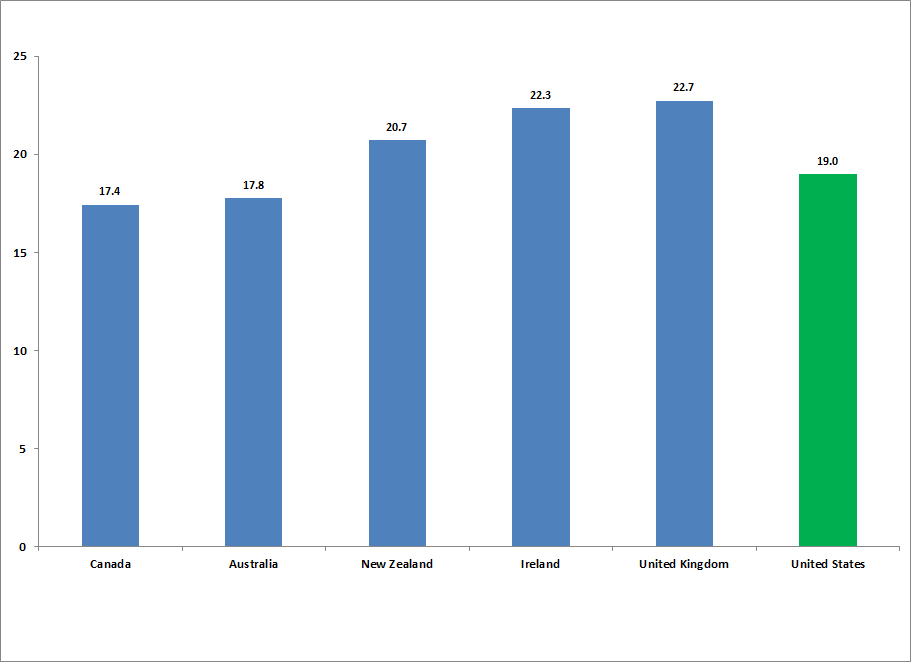
Source: POLICY BRIEF 15-4: The True Levels of Government and Social Expenditures in Advanced Economies.
When you just look at gross public social expenditure, New Zealand is in the middle of the pack with the United Kingdom having the largest spending. There are not particularly large differences across social spending in the Anglo-Saxon welfare states.
Figure 2: Gross public social expenditure and the effects of taxation in OECD countries, 2011
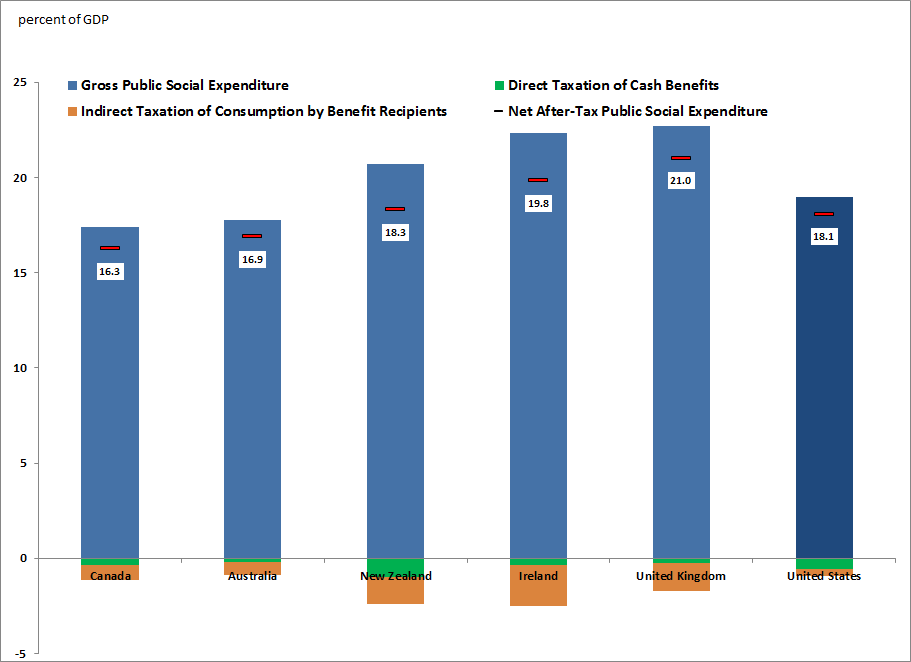
Source: POLICY BRIEF 15-4: The True Levels of Government and Social Expenditures in Advanced Economies.
There is not much change when you include the effects of taxation on consumption by benefit recipients.
Figure 3: Net after-tax public and private social expenditure in OECD countries, 2011
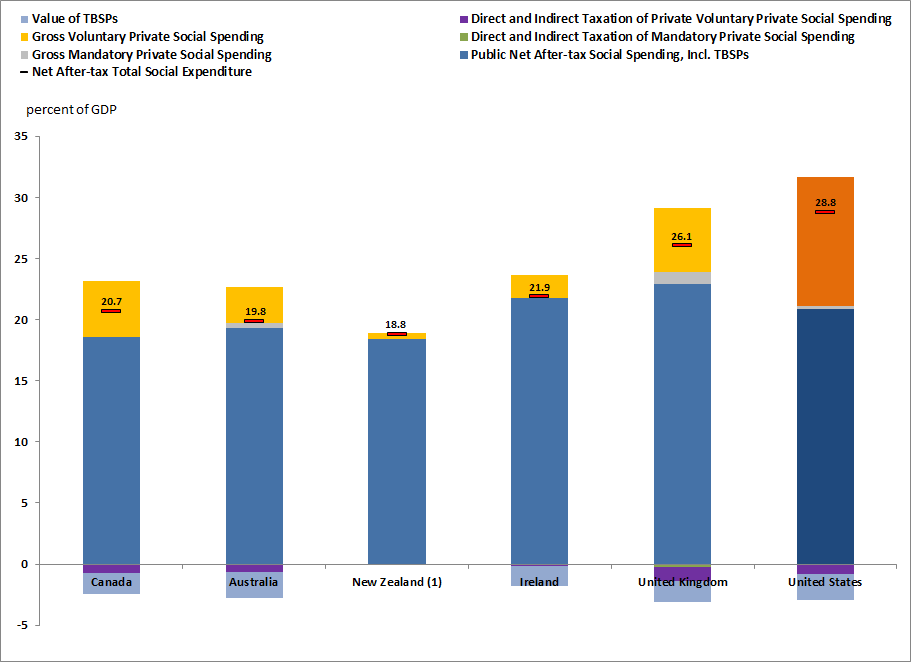
Source: POLICY BRIEF 15-4: The True Levels of Government and Social Expenditures in Advanced Economies.
When private mandatory social spending is included, such as employer sponsored health cover, there is considerable change with United States leaping to the front and New Zealand dropping to the bottom. The USA has the largest and most expensive is health sector in the world so they are leaping of the front, either because healthcare is expensive in United States or people in the United States are not constrained by government rationing to spend less than they would prefer on their own healthcare. Let’s leave that war of ideas for another day.
Figure 4: Net after-tax total social expenditures in OECD countries, 2011
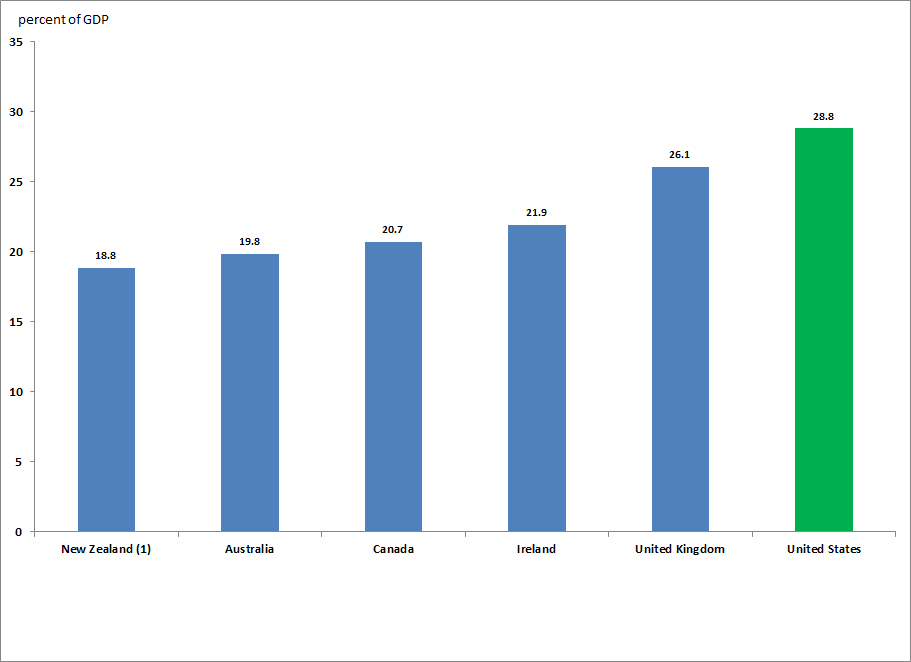
Source: POLICY BRIEF 15-4: The True Levels of Government and Social Expenditures in Advanced Economies.
On the face of it, New Zealand has the smallest Anglo-Saxon welfare state while the United States has the largest. A more accurate measure of the relative sizes of these Anglo-Saxon welfare states would require the wisdom of Solomon in measuring waste and underfunding in the respective systems and more trust than you should have in services sector in purchasing power parity adjustments.
For those that are interested, the OECD-wide gross social spending and net after-tax total social spending are reproduced below in figures 5 and 6.
Figure 5: Net after-tax total social expenditures in OECD countries, 2011
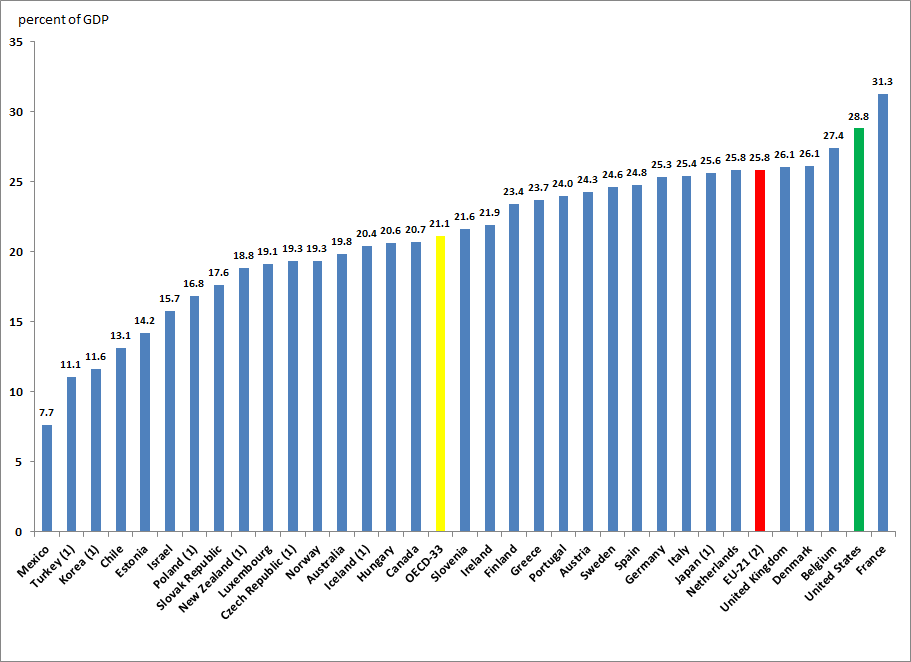
Source: POLICY BRIEF 15-4: The True Levels of Government and Social Expenditures in Advanced Economies.
The Figure 5 data on the OECD wide welfare state sizes shows that when you add private spending, including social spending mandated by law, the US has the second largest OECD social safety net as Kirkegaard said in his Peterson Institute paper:
Taking the full effects of tax systems and social spending from both private and public sources into account, the United States is seen to be devoting more resources toward social purposes than is generally acknowledged. In fact, only the French spend more than Americans, while the alleged welfare-addicted Scandinavians and Europeans spend less on average.
Figure 6: Gross public social expenditures in OECD countries, 2011
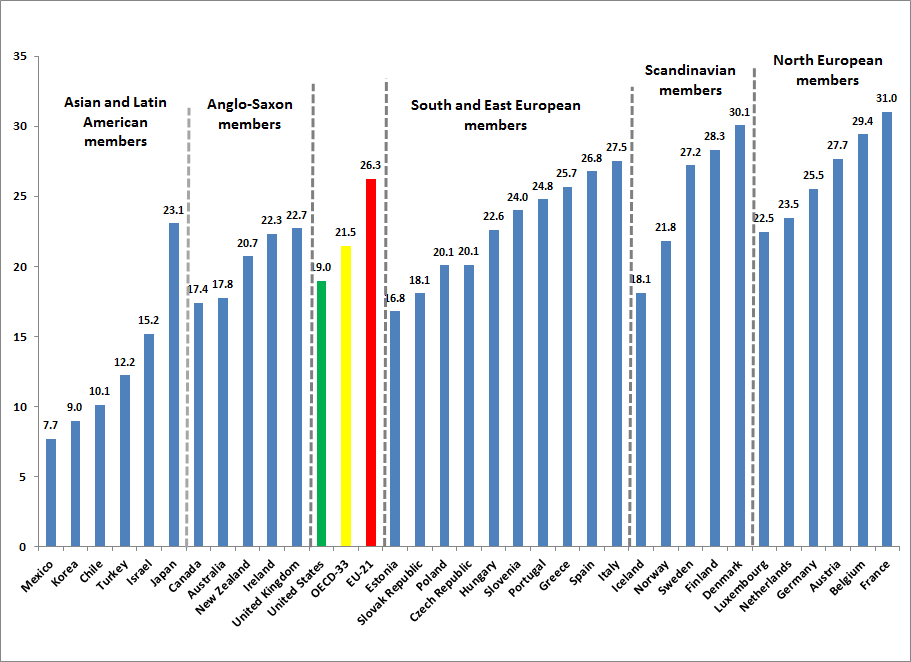
Source: POLICY BRIEF 15-4: The True Levels of Government and Social Expenditures in Advanced Economies.
Via The US welfare state and safety net are bigger than you think. But who are they helping? – AEI | Pethokoukis Blog » AEIdeas and POLICY BRIEF 15-4: The True Levels of Government and Social Expenditures in Advanced Economies
Gordon Tullock explains his theory of popular revolutions and palace coups
01 Apr 2015 Leave a comment
in economics of bureaucracy, Gordon Tullock, income redistribution, Public Choice, rentseeking Tags: Arab Spring, autocracy, military coups, palace coups, popular revolutions
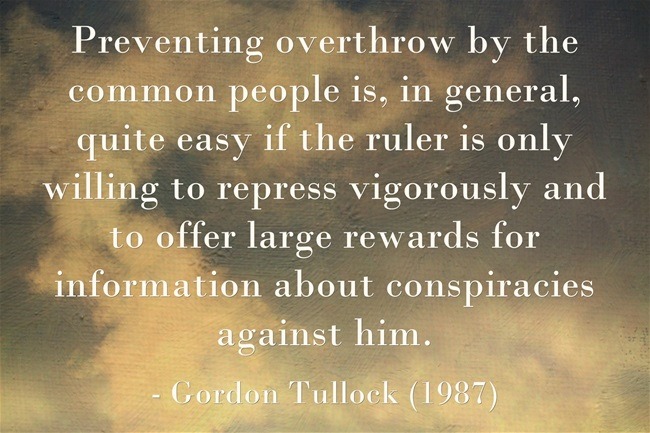
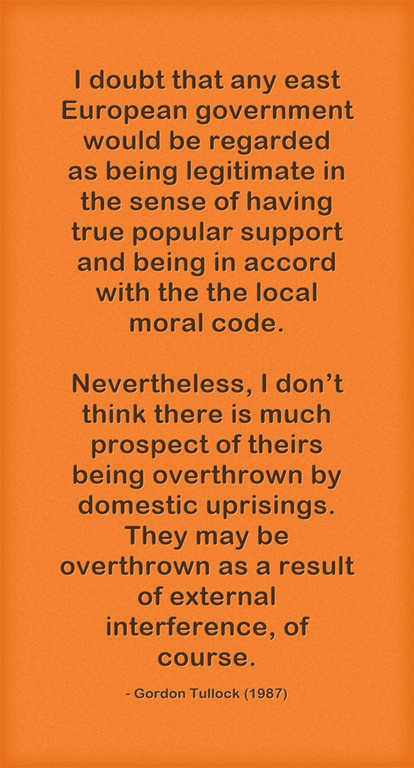
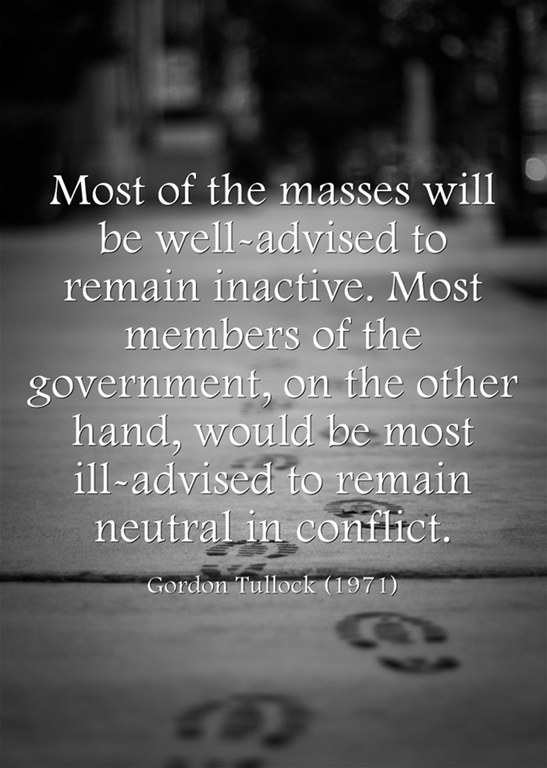
[I]n most revolutions, the people who overthrow the existing government were high officials in that government before the revolution.
If they were deeply depressed by the nature of the previous government’s policies, it seems unlikely that they could have given enough cooperation in those policies to have risen to high rank. People who hold high, but not supreme, rank in a despotism are less likely to be unhappy with the policy of that despotism than are people who are outside the government.
Thus, if we believed in the public good motivation of revolutions, we would anticipate that these high officials would be less likely than outsiders to attempt to overthrow the government.
From the private benefit theory of revolutions, however, the contrary deduction would be drawn. The largest profits from revolution are apt to come to those people who are (a) most likely to end up at the head of the government, and (b) most likely to be successful in overthrow of the existing government. They have the highest present discounted gain from the revolution and lowest present discounted cost.
Thus, from the private goods theory of revolution, we would anticipate senior officials who have a particularly good chance of success in overthrowing the government and a fair certainty of being at high rank in the new government, if they are successful, to be the most common type of revolutionaries.

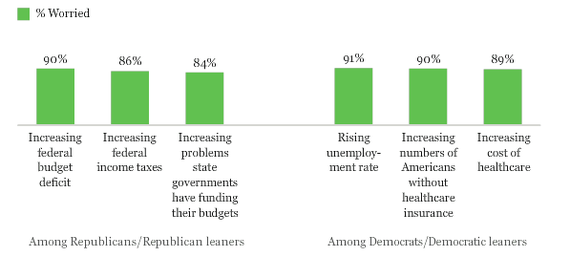
Partisan Politics and the Inequality Gap — Atlantic Mobile
01 Apr 2015 Leave a comment
in applied price theory, applied welfare economics, income redistribution, Public Choice, rentseeking Tags: top 1%
Tax reform leads to higher taxes – the evidence on the GST
31 Mar 2015 Leave a comment
in constitutional political economy, politics - Australia, politics - New Zealand, Public Choice, public economics, taxation Tags: Geoffrey Brennan, James Buchanan, tax reform
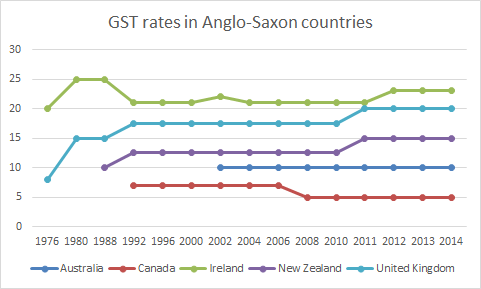
The GST increased from 10 to 15% in New Zealand; more than doubled in the UK; but GST rates were stable or went up and down in the remaining Anglo-Saxon countries.
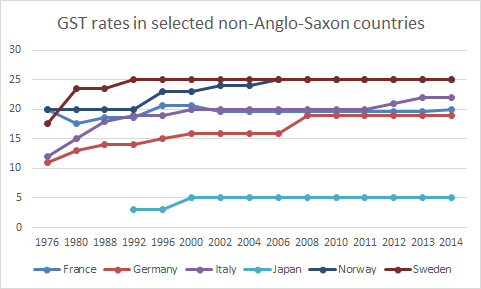
As for a selection of other non-Anglo-Saxon countries , Brennan and Buchanan were right. Tax reforms such as a broad-based consumption tax leads to higher taxes through time.
ICYMI: How does Australia's GST compare with other nations? ab.co/1eBsdrS #factcheck http://t.co/QFP05xonEB—
ABC Fact Check (@ABCFactCheck) July 31, 2015
The GST (goods and services tax) in Europe is known as the value added tax (VAT).
Source: OECD Tax Database – OECD.


Recent Comments