On tax policy, our friends on the left are motivated by envy and hatred. As shown in this Stossel video, Robert Reich is a sad example of this mindset. John Stossel understates his argument. It’s not that Reich is wrong. He’s wildly wrong. There are four points in the video that deserve attention. It is […]
Debunking Hate-and-Envy Tax Policy
Debunking Hate-and-Envy Tax Policy
27 Sep 2024 Leave a comment
in applied price theory, economic growth, economic history, entrepreneurship, financial economics, fiscal policy, health and safety, income redistribution, labour economics, labour supply, law and economics, macroeconomics, occupational choice, politics - USA, poverty and inequality, property rights, Public Choice, public economics Tags: envy, regressive left, taxation and entrepreneurship, taxation and investment
After 30 years, there is hope
27 Sep 2024 Leave a comment
in applied price theory, economics of bureaucracy, economics of regulation, environmental economics, environmentalism, income redistribution, law and economics, politics - New Zealand, property rights, Public Choice, rentseeking, transport economics, urban economics Tags: housing affordability, land supply, zoning
Chris Bishop and Simon Court announced: Two new laws will be developed to replace the Resource Management Act (RMA), with the enjoyment of property rights as their guiding principle, RMA Reform Minister Chris Bishop and Parliamentary Under-Secretary Simon Court say. “The RMA was passed with good intentions in 1991 but has proved a failure in […]
After 30 years, there is hope
Should we keep the wealthy non-diversified? (from my email)
27 Sep 2024 Leave a comment
in applied price theory, economic history, entrepreneurship, history of economic thought, human capital, income redistribution, industrial organisation, labour economics, labour supply, liberalism, Marxist economics, occupational choice, poverty and inequality, Public Choice Tags: top 1%
Byrne Hobart writes to me: One of the purposes of inheritance taxes is to avoid compounding intergenerational wealth. But The Missing Billionaires points out that if all of America’s millionaires had put their money in broad market indices in 1900, their heirs would number 16,000 billionaires, even accounting for taxes, splitting estates among multiple children, etc. So […]
Should we keep the wealthy non-diversified? (from my email)
The high cost of free insurance
24 Sep 2024 Leave a comment
in applied price theory, economics of bureaucracy, economics of information, economics of regulation, environmental economics, politics - New Zealand, Public Choice, public economics, urban economics Tags: unintended consequences
Eric Crampton writes – Government sometimes cannot stop itself from providing bailouts when risk-taking goes wrong. This kind of ‘free’ insurance policy leads to no end of bad outcomes.
The high cost of free insurance
Facts about Britain
22 Sep 2024 Leave a comment
in applied price theory, economic growth, economics of bureaucracy, economics of regulation, energy economics, environmental economics, industrial organisation, labour economics, law and economics, macroeconomics, Public Choice, resource economics, transport economics, urban economics Tags: British politics
Between 2004 and 2021, before Russia’s invasion of Ukraine, the industrial price of energy tripled in nominal terms, or doubled relative to consumer prices. With almost identical population sizes, the UK has under 30 million homes, while France has around 37 million. 800,000 British families have second homes compared to 3.4 million French families. Per capita electricity generation in the UK […]
Facts about Britain
The Affordable Rent Act
22 Sep 2024 Leave a comment
in applied price theory, economics of regulation, income redistribution, law and economics, property rights, Public Choice, rentseeking, urban economics Tags: rent control
Bloomberg: Moraal is among the growing number of Dutch people struggling to find a rental property after a new law designed to make homes more affordable ended up aggravating a housing shortage. Aiming to protect low-income tenants, the government in July imposed rent controls on thousands of homes, introducing a system of rating properties based on […]
The Affordable Rent Act
Treaty of Waitangi legal “experts” have misunderstood its economic rationale – and endangered national prosperity
20 Sep 2024 Leave a comment
in comparative institutional analysis, constitutional political economy, development economics, economic history, history of economic thought, liberalism, politics - New Zealand, Public Choice Tags: constitutional law
Rob MacCulloch writes – The underlying aim of the Treaty of Waitangi, at least in economic terms, was to promote a higher standard of living for Māori and non-Māori alike. This article’s purpose is to argue how its words were unambiguously designed to achieve that purpose, but have since been hijacked by political operatives and NZ’s legal […]
Treaty of Waitangi legal “experts” have misunderstood its economic rationale – and endangered national prosperity
“A Symbol of Imperial Violence and Colonialism”: Activists at UPenn Deface Statue of Benjamin Franklin
19 Sep 2024 Leave a comment
in comparative institutional analysis, constitutional political economy, economic history, law and economics, liberalism, Marxist economics, politics - USA, Public Choice Tags: age of empires, economics of colonialism, free speech, political correctness, regressive left
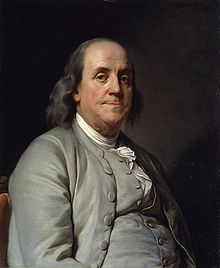
Benjamin Franklin once wrote “Love your Enemies, for they tell you your Faults.” Yet, Franklin might be a bit confused by his critics at the University of Pennsylvania. Anti-Israel activists vandalized his statue as a symbol of colonialism. The man who was instrumental in the Declaration of Independence against the British Empire is being denounced […]
“A Symbol of Imperial Violence and Colonialism”: Activists at UPenn Deface Statue of Benjamin Franklin
The Economic Consequences of the French Wealth Tax
17 Sep 2024 Leave a comment
in applied price theory, econometerics, economic history, entrepreneurship, fiscal policy, human capital, income redistribution, labour economics, labour supply, macroeconomics, occupational choice, poverty and inequality, Public Choice, public economics Tags: taxation and entrepreneurship, taxation and investment, taxation and labour supply
By Eric Pichet, here is the abstract: Despite attempts to ‘unwind’ the Impôt de Solidarité sur la Fortune (‘Solidarity Wealth Tax,’ the French wealth tax) during the last legislature (2002-2007), ISF yields had soared by 2006, jumping from €2.5 billion in 2002 to €3.6 billion. Analysis of the economic consequences of this ISF wealth tax […]
The Economic Consequences of the French Wealth Tax
Tax-Motivated Domestic Migration
17 Sep 2024 Leave a comment
in applied price theory, economic growth, entrepreneurship, Federalism, fiscal policy, human capital, income redistribution, labour economics, labour supply, macroeconomics, occupational choice, politics - USA, poverty and inequality, Public Choice, public economics Tags: capital gains tax, taxation and investment taxation and entrepreneurship, taxation and labour supply

I’m a big fan of tax competition. I cheer when jobs, investment, and people (or even booze) move from high-tax jurisdictions to low-tax jurisdictions. This increases the rewards for good policy and also increases the punishment for bad policy. Given my interest in the topic, I obviously can’t resist sharing this chart, which shows the […]
Tax-Motivated Domestic Migration
It Happened Again! The New York Times Writes about Venezuela’s Collapse and Fails to Mention Socialism
16 Sep 2024 Leave a comment
in development economics, economic growth, economic history, growth disasters, history of economic thought, income redistribution, liberalism, macroeconomics, Marxist economics, politics - USA, Public Choice Tags: regressive left, useful idiot, Venezuela
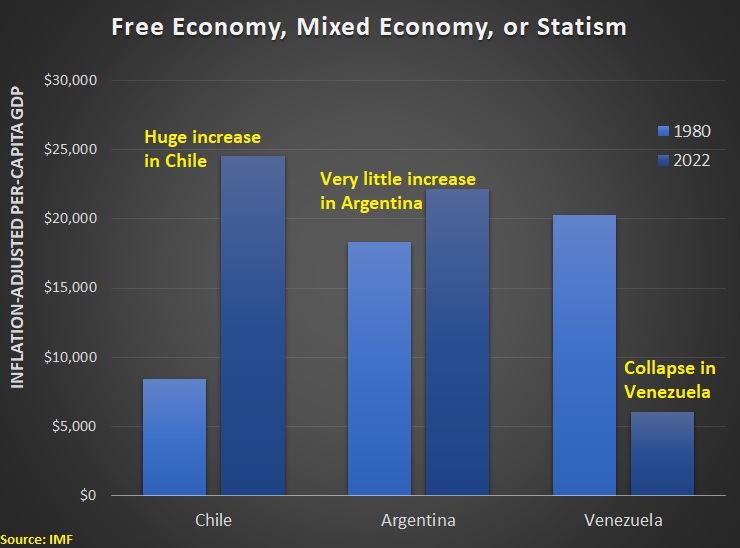
I sometimes make the theoretical case against socialism. Usually, this means exposing the flaws of the core components of the socialist ideology. Government ownership of the means of production is a recipe for resource misallocation. Central planning has a miserable track record of failure because consumer preferences are ignored. Price controls distort incentives to make […]
It Happened Again! The New York Times Writes about Venezuela’s Collapse and Fails to Mention Socialism
Monkeypox and Medsafe
15 Sep 2024 Leave a comment
in applied price theory, applied welfare economics, comparative institutional analysis, economics of bureaucracy, economics of information, economics of regulation, health economics, politics - New Zealand, Public Choice Tags: drug lags, economics of pandemics
In a sane world, medicines and vaccines already approved by trustworthy overseas regulators would automatically be able to be used in New Zealand as well.New Zealand is not sane. But neither is anywhere else really on that standard. Other places are just faster than NZ in getting things approved, with more practicable pathways for expedited…
Monkeypox and Medsafe
The Santa Claus Election
15 Sep 2024 Leave a comment
in applied price theory, comparative institutional analysis, economic growth, economics of education, entrepreneurship, fiscal policy, health and safety, income redistribution, industrial organisation, labour economics, labour supply, macroeconomics, politics - USA, Public Choice, public economics, unions Tags: 2024 presidential election, taxation and entrepreneurship, taxation and investment, taxation and labour supply

For libertarians, this is a very depressing election (a feeling we tend to have every four years, so a familiar experience). What basically happens is that two politicians try to bribe us with our own money. This year, we have Kamala Harris, who was even worse than Bernie Sanders in the big-spender contest. And we […]
The Santa Claus Election
Managed Democracy: Letting The People Decide, But Only When They Can Be Relied Upon To Give the Right Answer.
14 Sep 2024 Leave a comment
in economic history, law and economics, politics - USA, Public Choice Tags: constitutional law

Uh-uh! Not So Fast, Citizens! The power to initiate systemic change remains where it has always been in New Zealand’s representative democracy – in Parliament. To order a binding referendum, the House of Representatives must first to be persuaded that, on the question proposed, sharing its decision-making power with the people is a good idea. Not…
Managed Democracy: Letting The People Decide, But Only When They Can Be Relied Upon To Give the Right Answer.
Farewell, my (hereditary) lords?
12 Sep 2024 Leave a comment
in law and economics, politics, Public Choice Tags: British politics, constitutional law
Last week, the Government unveiled legislation to remove the remaining hereditary peers from the House of Lords. It’s a fairly straightforward bill that seeks to repeal section 2 of the House of Lords Act 1999, thereby making the exclusion of hereditary peers absolute rather than qualified. It also abolishes the Upper House’s jurisdiction over peerage […]
Farewell, my (hereditary) lords?
 Utopia, you are standing in it!
Recent Comments