That is the topic of my latest Bloomberg column, here is one excerpt: A recent study finds that, of all domestic subsidies, the most effective involve replacing the dirty production of electricity with the cleaner production of electricity. In practice, that means subsidies or tax credits for solar and wind power. Those are more than twice as effective as […]
Which are the most effective subsidies for green energy?
Which are the most effective subsidies for green energy?
26 Jul 2024 Leave a comment
in applied price theory, applied welfare economics, economics of regulation, energy economics, environmental economics, global warming, politics - Australia, politics - New Zealand, politics - USA, Public Choice, public economics, rentseeking Tags: cap and trade, carbon tax, climate alarmism
Cheatling Responsibility
26 Jul 2024 Leave a comment
in economics of bureaucracy, economics of crime, law and economics, politics - USA, Public Choice Tags: 2024 presidential election, crime and punishment, law and order

No sooner does this blog write about shitty government bureaucrats refusing to do the right thing, and even doubling down on the wrong things, than one of them does the right thing. Cheatle Resigns and for Good Cause. That’s Kimberly Cheatle, head of the United States Secret Service (USSS), finally taking responsibility for her outfit […]
Cheatling Responsibility
Māori Party political leader curses and rants on video, calling for overthrow of New Zealand’s government
24 Jul 2024 Leave a comment
in constitutional political economy, economics of crime, law and economics, politics - New Zealand, Public Choice Tags: constitutional law, free speech, Maori economic development, political correctness, regressive left
This video, professionally made and showing Kiri Tamihere-Waititi doing what can only be called ranting about her oppression and that of the Māori people, and then winding up by calling for the overthrow of the New Zealand, has caused a stir in that country. I am told that Tamihere-Waititi is a powerful member of Te […]
Māori Party political leader curses and rants on video, calling for overthrow of New Zealand’s government
Will France Opt for Bernie Sanders-Style Taxation?
23 Jul 2024 Leave a comment
in applied price theory, entrepreneurship, income redistribution, Public Choice, public economics Tags: France, regressive left, taxation and entrepreneurship, taxation and investment

Some folks on the left have a deep-seated resentment of successful investors, entrepreneurs, business owners, and other high-income people. They want to hit them with confiscatory tax rates, even if the tax is so punitive that the government doesn’t wind up with more revenue. Heck, some of them are so consumed by hate and envy […]
Will France Opt for Bernie Sanders-Style Taxation?
MICHAEL BASSETT: DEALING WITH TODAY’S SMALL, RAUCOUS, CRAZY MAORI FRINGE
22 Jul 2024 Leave a comment
in comparative institutional analysis, economic history, income redistribution, International law, law and economics, politics - New Zealand, property rights, Public Choice, rentseeking Tags: constitutional law, Maori economic development
Anyone watching and trying to understand last Sunday’s Q&A where Jack Tame interviewed Debbie Ngarewa-Packer will realise that she seems to be beyond reason. Tame tried to examine bits of her blather and her obvious misuse of words, but she immediately slithered like an eel under a rock and made louder assertions about how Maori “korero”…
MICHAEL BASSETT: DEALING WITH TODAY’S SMALL, RAUCOUS, CRAZY MAORI FRINGE
Lessons from the UK
21 Jul 2024 Leave a comment
in income redistribution, law and economics, liberalism, Marxist economics, politics - New Zealand, Public Choice, rentseeking Tags: British politics
There are many lessons for New Zealand in last week’s British election result, which saw the 14-year reign of the Conservative Party ending in a crushing defeat. While the number of seats won by Labour appeared to indicate a huge swing to the left in support of Sir Keir Starmer’s Party, that isn’t the case […]
Lessons from the UK
Robert Swetlic: For Constitutional Clarity, Should Angela Rayner be Named First Secretary of State?
19 Jul 2024 Leave a comment
in law and economics, politics, Public Choice Tags: British constitutional law, British politics

Barely 24 hours after Labour’s victory at the polls, Prime Minister Keir Starmer’s top team of MPs began to line the path to No. 10 Downing Street, hoping to have their shadow portfolios translated into long-awaited ministerial roles. First among the parade of MPs was Angela Rayner, who was appointed Secretary of State for Housing, […]
Robert Swetlic: For Constitutional Clarity, Should Angela Rayner be Named First Secretary of State?
The Genuine Legal Conflict for School Boards
18 Jul 2024 Leave a comment
in economics of bureaucracy, economics of crime, economics of education, law and economics, politics - New Zealand, Public Choice Tags: crime and punishment, law and order
There is media fuss today around the resistance of schools in terms of excluding students excluded from other schools. The NZ Herald highlights statistics that 100s of schools appear to be reluctant and three remain outright resistant. The article highlights the legal obligation for schools to accept students in their zone. This can be ordered […]
The Genuine Legal Conflict for School Boards
Universities and the Treaty
15 Jul 2024 Leave a comment
in economics of bureaucracy, economics of education, law and economics, liberalism, Marxist economics, politics - New Zealand, Public Choice Tags: Age of Enlightenment, conjecture and refutation, free speech, philosophy of science, political correctness, regressive left
Grant Duncan writes: University management should take note of that, as there have been unrealistic efforts to force poorly defined “Treaty obligations” into teaching and research. For example, one university is now telling its academic staff that all curricula should, as a high priority, be “designed, developed and delivered in authentic partnerships with Māori [and] […]
Universities and the Treaty
BBB in the NYT
15 Jul 2024 Leave a comment
in applied price theory, applied welfare economics, comparative institutional analysis, economic history, economics of bureaucracy, economics of regulation, income redistribution, law and economics, politics - USA, property rights, Public Choice, rentseeking, urban economics Tags: housing affordability, land supply, zoning
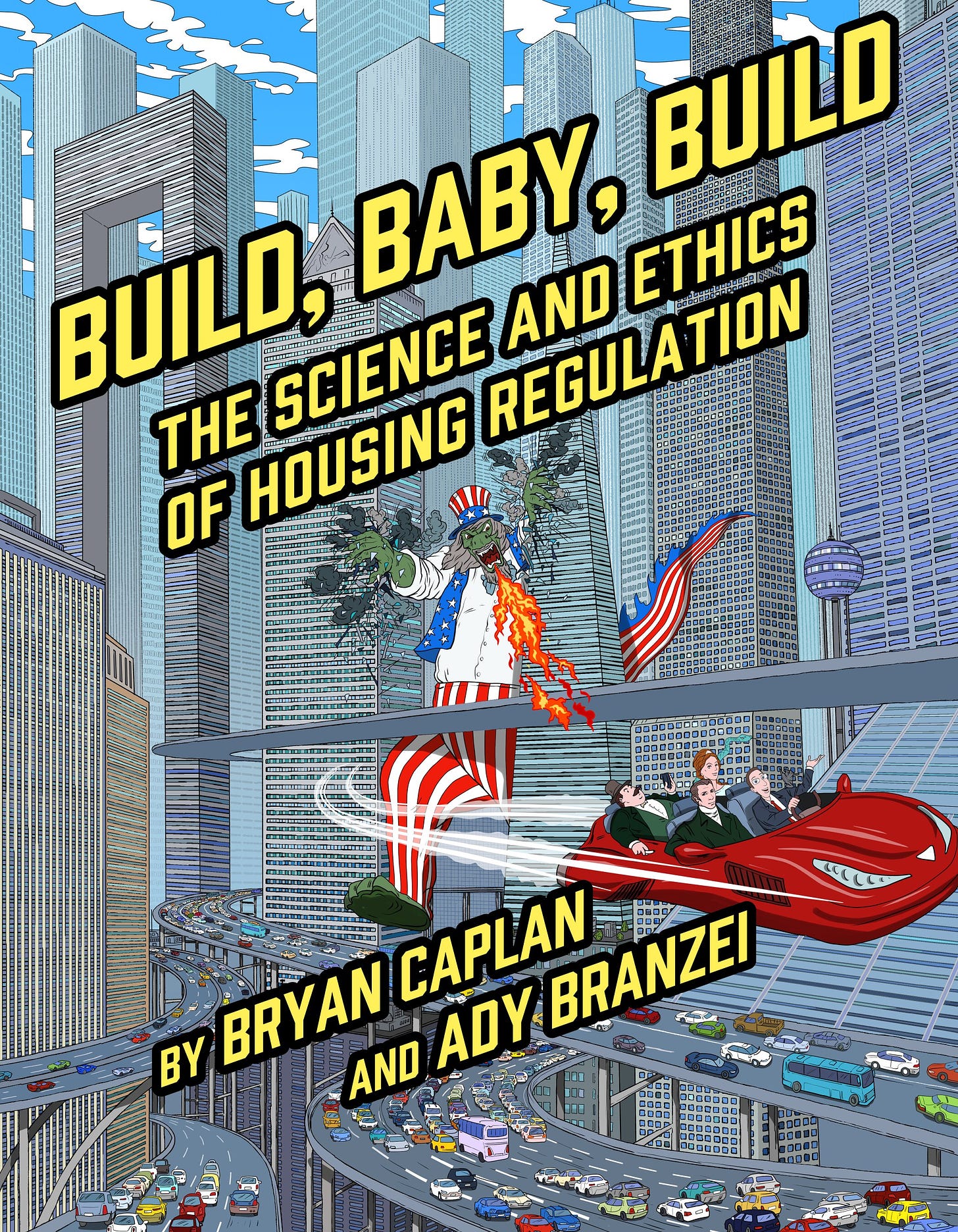
I pitch Build, Baby, Build in today’s New York Times. No illustrations, but a bunch of cool graphs cooked up by Sara Chodosh of the NYT data analytics team. The original title was “The Panacea Policy,” but now it’s “Yes in My Backyard: The Case For Housing Deregulation.” And for you, dear readers, it’s ungated!…
BBB in the NYT
Biden’s Desperate Vote-Buying Proposal for Nationwide Rent Control
15 Jul 2024 Leave a comment
in applied price theory, comparative institutional analysis, economic history, economics of regulation, income redistribution, law and economics, politics - USA, property rights, Public Choice, rentseeking, urban economics Tags: rent control
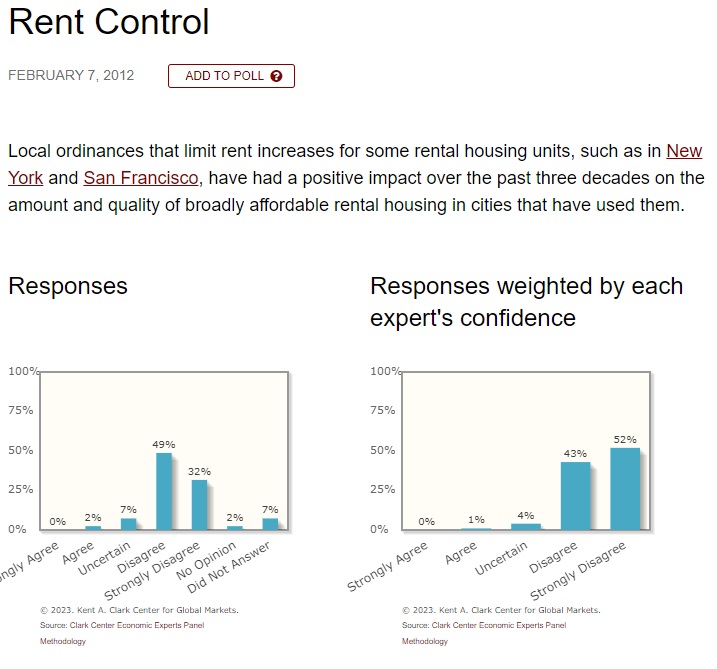
I’m not a political pundit, but I’m guessing that yesterday’s despicable assassination attempt on Donald Trump increases the likelihood that he reclaims the White House. That’s probably not good news for trade policy (though Biden has been just as bad), but it will be very good news for housing policy. Not because of what Trump […]
Biden’s Desperate Vote-Buying Proposal for Nationwide Rent Control
Market Preserving Federalism in the USA
14 Jul 2024 Leave a comment
in applied price theory, comparative institutional analysis, economics of bureaucracy, income redistribution, Public Choice, rentseeking
One of my favorite economic journal articles is by Barry Weingast and has the short title “Market Preserving Federalism” (MPF). In this paper, Weingast lays out the conditions necessary for two tenuous equilibria: A) Federalism & B) Federalism that preserves a market economy. Given that we just celebrated Independence Day in the USA, it seems […]
Market Preserving Federalism in the USA
DON BRASH: ANOTHER OUTSTANDING SPEECH FROM CHRIS BISHOP
13 Jul 2024 Leave a comment
in applied price theory, economics of regulation, income redistribution, law and economics, politics - New Zealand, property rights, Public Choice, rentseeking, urban economics Tags: housing affordability, land supply, zoning
Four months ago, I described a speech by Chris Bishop in his capacity as Minister of Housing as perhaps the most important speech given by any Government minister since the election last year. He’s just given another, arguably even more important, laying out in words of one syllable what the Government plans to do…
DON BRASH: ANOTHER OUTSTANDING SPEECH FROM CHRIS BISHOP
“The First Amendment is Out of Control”: Academic and Media Figures Rally Against Free Speech
13 Jul 2024 Leave a comment
in economic history, economics of crime, law and economics, liberalism, libertarianism, Marxist economics, politics - USA, Public Choice Tags: free speech, political correctness, regressive left

Below is my column in Fox.com on renewed attacks on free speech and the apologists for this anti-free speech movement, including most recently comedian Jon Stewart. From moves to amend the First Amendment to mocking those being targeted, the left is pushing back at polls and efforts to restore free speech values. Here is the […]
“The First Amendment is Out of Control”: Academic and Media Figures Rally Against Free Speech
Bryan Caplan on YIMBY in the NYT
12 Jul 2024 Leave a comment
in applied price theory, applied welfare economics, comparative institutional analysis, economic history, economics of regulation, income redistribution, law and economics, politics - USA, property rights, Public Choice, regulation, rentseeking, urban economics Tags: housing affordability, land supply, zoning
Here is one excerpt: What few appreciate is that the overregulation of housing has blocked a classic American path: moving to a higher-wage part of the country to secure a better life. A paper by the economists Peter Ganong and Daniel Shoag shows that housing costs now routinely outweigh wage gains: While janitors and waiters do indeed […]
Bryan Caplan on YIMBY in the NYT
 Utopia, you are standing in it!
Recent Comments