Up to $41 billion of the funds distributed to climate causes by the World Bank between 2017 and 2023 are unaccounted for due to poor accounting standards, according to an audit from Oxfam International published Thursday.
‘Gaps And Inconsistencies’: Up To $41 Billion In World Bank Climate Handouts Unaccounted For, New Report Finds
‘Gaps And Inconsistencies’: Up To $41 Billion In World Bank Climate Handouts Unaccounted For, New Report Finds
21 Oct 2024 Leave a comment
in development economics, economics of bureaucracy, energy economics, environmental economics, global warming, Public Choice
GARY JUDD KC: A student should not be forced to learn about tikanga to be a lawyer
19 Oct 2024 Leave a comment
in comparative institutional analysis, constitutional political economy, economics of bureaucracy, economics of crime, law and economics, liberalism, Marxist economics, politics - New Zealand, property rights, Public Choice Tags: constitutional law
My oral submission to the Regulation Review Committee. Yesterday [Oct 16], Parliament’s Regulation Review Committee heard oral submissions concerning my complaint to the Committee asking that a member of the committee move a resolution asking the House of Representatives to disallow the regulations promulgated by the New Zealand Council of Legal Education. If the regulations…
GARY JUDD KC: A student should not be forced to learn about tikanga to be a lawyer
Judd on Tikanga
18 Oct 2024 Leave a comment
in discrimination, economic history, economics of bureaucracy, law and economics, liberalism, Marxist economics, politics - New Zealand, property rights, Public Choice, rentseeking Tags: constitutional law
Liz Cheney Under Fire for Allegedly Improper Contacts with Cassidy Hutchinson
16 Oct 2024 Leave a comment
in economics of bureaucracy, economics of crime, law and economics, politics - USA, Public Choice Tags: 2020 presidential election, 2024 presidential election

Former J6 Committee Co-Chair and Rep. Liz Cheney has long been criticized for her role in creating a one-sided and at times erroneous record of what occurred on January 6th. That includes editing out Trump’s call for supporters to protest “peacefully,” burying evidence on Trump’s offer to supply National Guard support for that day, and […]
Liz Cheney Under Fire for Allegedly Improper Contacts with Cassidy Hutchinson
UK Labour in real trouble
16 Oct 2024 Leave a comment
in politics, Public Choice Tags: British politics
It was only a few months ago UK Labour won in a landslide (helped by FPP). The next election is many years away, but they have a problem that their brand has turned negative so quickly, that it could be hard to change in future. The latest More in Common poll has the following:
UK Labour in real trouble
Reflections on India
16 Oct 2024 1 Comment
in applied price theory, comparative institutional analysis, constitutional political economy, development economics, economic growth, economic history, economics of bureaucracy, growth disasters, growth miracles, history of economic thought, income redistribution, law and economics, macroeconomics, Marxist economics, property rights, Public Choice, public economics, regulation, rentseeking Tags: economics of colonialism, India

I’m back from my first trip to India, where I visited Mumbai, Delhi, Agra, and Amritsar. I enjoyed fine company in all four cities. In Mumbai, my new friend Sachin Aggarwal, head of the local EconTalk Club, rolled out the red carpet — and ACX Mumbai joined the festivities. (Thank you, Scott Alexander, for creating…
Reflections on India
Acemoglu, Johnson and Robinson Win Nobel Prize for Institutions and Prosperity
15 Oct 2024 Leave a comment
in applied price theory, comparative institutional analysis, constitutional political economy, development economics, economic growth, economic history, economics of bureaucracy, economics of regulation, growth disasters, growth miracles, history of economic thought, income redistribution, macroeconomics, Public Choice, public economics, rentseeking
The Nobel prize goes to Daron Acemoglu, Simon Johnson and James Robinson for their work on institutions, prosperity, and economic growth. Here is a key piece summarizing their work: Institutions as a Fundamental Cause of Long-Run Growth. This paper develops the empirical and theoretical case that differences in economic institutions are the fundamental cause of […]
Acemoglu, Johnson and Robinson Win Nobel Prize for Institutions and Prosperity
‘Taxpayer Talk’ | Simon Court joins Jordan Williams to talk RMA reform
14 Oct 2024 Leave a comment
in applied price theory, comparative institutional analysis, constitutional political economy, economics of bureaucracy, economics of regulation, environmental economics, income redistribution, law and economics, politics - New Zealand, property rights, Public Choice, public economics, rentseeking, resource economics, transport economics, urban economics Tags: zoning
Industrial Policy: The Triumph of Hope over Experience
13 Oct 2024 Leave a comment
in applied price theory, income redistribution, industrial organisation, Public Choice, public economics, rentseeking, survivor principle
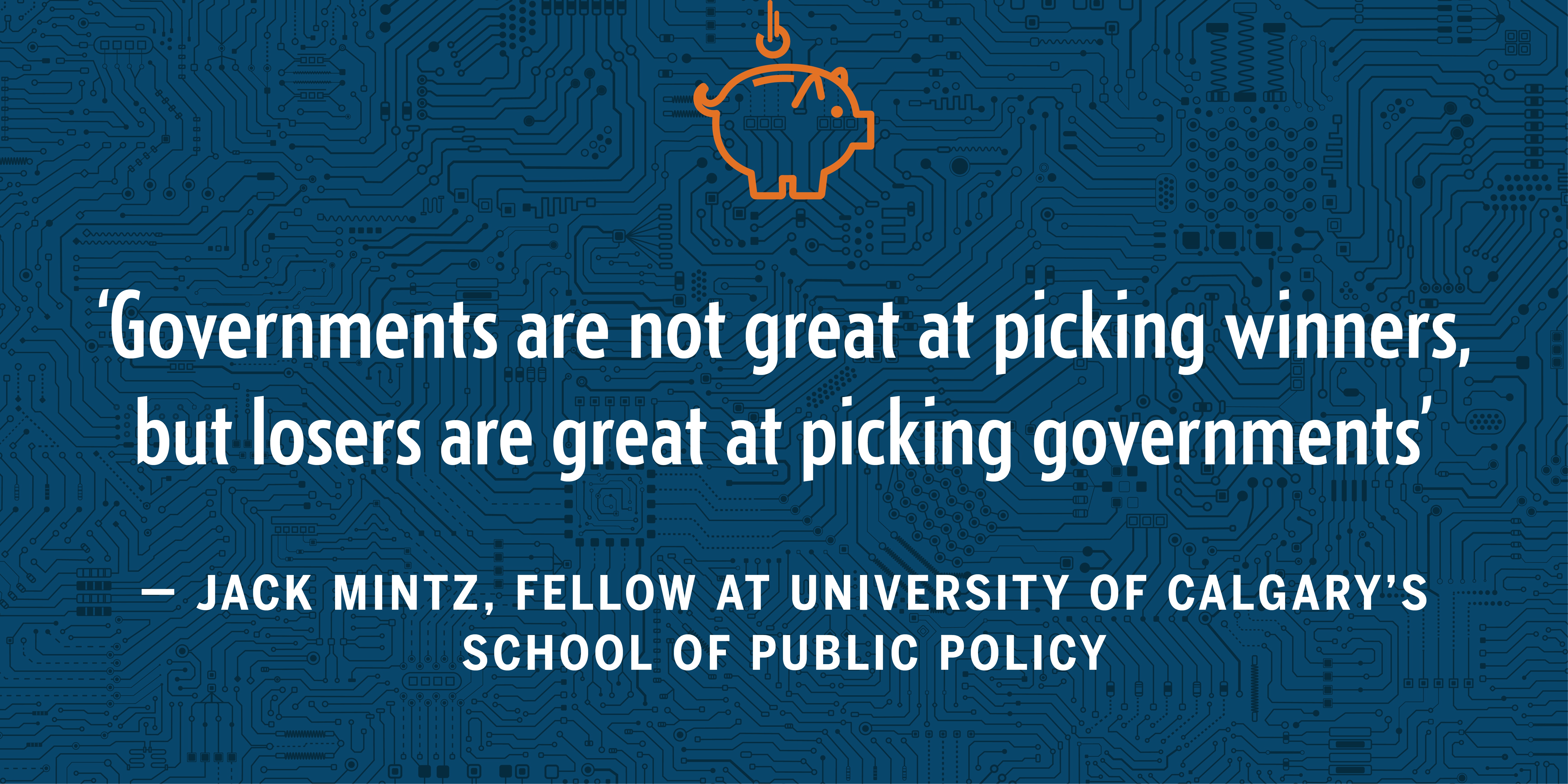
Industrial policy is when politicians and bureaucrats use various combinations of tax, spending, and regulatory policies to steer the economy. In other words, they are putting their thumbs on the scale to pick winners and losers. It means replacing the “invisible hand” of the market with the “grabbing hand” of politics. I’m motivated to write […]
Industrial Policy: The Triumph of Hope over Experience
DON BRASH: WAS SOVEREIGNTY CEDED IN 1840?
11 Oct 2024 Leave a comment
in comparative institutional analysis, constitutional political economy, economic history, law and economics, politics - New Zealand, property rights, Public Choice Tags: constitutional law
I watched Tuesday night’s debate between David Seymour, Leader of the ACT Party, and Helmut Modlik, an iwi leader, with dismay. On the one hand, David Seymour argued with compelling logic the need to resolve once and for all whether New Zealanders enjoy equal political rights or whether, as Helmut Modlik argued, those with…
DON BRASH: WAS SOVEREIGNTY CEDED IN 1840?
Socialism in the 21st Century: A Regressive Ideology in Modern Times
10 Oct 2024 1 Comment
in applied price theory, comparative institutional analysis, constitutional political economy, economics of bureaucracy, economics of regulation, income redistribution, law and economics, Marxist economics, property rights, Public Choice, public economics, rentseeking
Socialism, once hailed as a visionary and revolutionary alternative to capitalism, has deep roots in the progressive movements of the 19th and early 20th centuries. Advocating for state control of the means of production and a more equitable distribution of wealth, socialism aimed to correct the injustices of industrial capitalism. However, as we navigate the […]
Socialism in the 21st Century: A Regressive Ideology in Modern Times
Addressing the Housing Crisis
10 Oct 2024 Leave a comment
in applied price theory, economics of bureaucracy, economics of regulation, income redistribution, law and economics, politics - New Zealand, politics - USA, property rights, Public Choice, rentseeking, urban economics Tags: affordable housing, land supply, regressive left
Japan’s population is roughly equal to the five most-populous states of the U.S. — California, Florida, New York, Pennsylvania, and Texas — concentrated in a nation that has approximately the land area of Montana, which is only about a fourth as large as those five most-populous states. Moreover, well over … Continue reading →
Addressing the Housing Crisis
Labour’s Climate Sleaze
09 Oct 2024 Leave a comment
in economics of bureaucracy, economics of climate change, energy economics, environmental economics, environmentalism, global warming, Public Choice Tags: British politics, climate activists

By Paul Homewood LONDON/NEW YORK (Reuters) -Britain on Thursday named Oxford University professor Rachel Kyte as its new climate envoy and announced a new investment facility, the latest steps in the new government’s efforts to bolster Britain’s role in international climate politics. The appointment of Kyte, a climate policy professor, as the UK’s […]
Labour’s Climate Sleaze
Enhancing democracy – the case for a second chamber in New Zealand’s Parliament
04 Oct 2024 Leave a comment
in comparative institutional analysis, constitutional political economy, politics - New Zealand, Public Choice, public economics
New Zealand did once have an upper house known as the Legislative Council. Is there are argument that it should be re-introduced? Philip Crump writes – New Zealand’s parliamentary system has long been admired for its democratic principles and progressive governance although it has increasingly come under strain and criticism over recent years. In […]
Enhancing democracy – the case for a second chamber in New Zealand’s Parliament
The collapse of Maori nationalism
03 Oct 2024 Leave a comment
in comparative institutional analysis, constitutional political economy, economic history, economics of bureaucracy, income redistribution, law and economics, politics - New Zealand, property rights, Public Choice, rentseeking
As with unionism, overreach will end iwi power push Graham Adams writes – One of former Labour Prime Minister Jacinda Ardern’s most singular achievements during her tenure as premier was to push a majority of voters to the point of revulsion regarding race-based policy. Now the coalition government is orchestrating a swift counter-revolution, with […]
The collapse of Maori nationalism


Recent Comments