Enough is enough. Former PMs Helen Clark and Jacinda Ardern should come clean about how they were the Chief Architects of the omni-shambles that has become our health system. They should take responsibility for the folks who suffered from long waiting lists and declining health-care quality, some of whom didn’t make it. The person who…
Former Labour PM’s Clark and Ardern wrecked NZ’s Health System: they should be held accountable for the lives that have been lost
Former Labour PM’s Clark and Ardern wrecked NZ’s Health System: they should be held accountable for the lives that have been lost
28 Aug 2024 1 Comment
in economic history, economics of bureaucracy, health economics, industrial organisation, Marxist economics, politics - New Zealand, Public Choice, theory of the firm Tags: health insurance
Meanwhile at the Democratic National Convention. . .
23 Aug 2024 Leave a comment
in economic history, income redistribution, law and economics, liberalism, Marxist economics, politics - USA, property rights, Public Choice Tags: 2024 presidential election
I’m off to the Blyde River Canyon today and most of tomorrow, so posts will be nonexistent or thin for a few days—save for Matthew’s postings of the Hili Dialogues. I’ve largely avoided reading the news, as I find it depressing and not conducive to a relaxing vacation, but two readers sent me stuff about […]
Meanwhile at the Democratic National Convention. . .
Guest Post: Criticising Cuba
23 Aug 2024 Leave a comment
in comparative institutional analysis, constitutional political economy, development economics, economic history, economics of crime, growth disasters, history of economic thought, law and economics, liberalism, Marxist economics, politics - New Zealand, Public Choice Tags: Cuba
A guest post by Lucy Rogers: Today (as of the time of writing) I saw Associate Professor Michael Mawson of the theology faculty at Auckland University advertise on Facebook an event hosting Professor Miguel De La Torre, a Cuban academic specialising in liberation theology. The event is to be held at the Maclaurin Chapel at […]
Guest Post: Criticising Cuba
Promised debate at Auckland University on indigenous ways of knowing vs. science fails to materialize
22 Aug 2024 Leave a comment
in economics of bureaucracy, economics of education, law and economics, liberalism, Marxist economics, politics - New Zealand, Public Choice Tags: Age of Enlightenment, conjecture and refutation, free speech, philosophy of science, political correctness, regressive left
In 2021, the Listener Letter fracas erupted in New Zealand when seven professors at Auckland University argued that the indigenous “way of knowing,” Mātauranga Māori (MM), while valuable in anthropology and sociology classes, should not be taught, as the government planned, as coequal with modern science. The seven signers were right: while MM does contain […]
Promised debate at Auckland University on indigenous ways of knowing vs. science fails to materialize
How Chlöe Swarbrick struggled to accept the PM’s position on sovereignty
21 Aug 2024 Leave a comment
in comparative institutional analysis, constitutional political economy, economic history, law and economics, liberalism, Marxist economics, politics - New Zealand, property rights, Public Choice Tags: constitutional law
Bob Edlin writes – Historian and former Labour Government cabinet minister Michael Bassett, in an article posted here earlier today, said those who spend time on the web examining the Treaty of Waitangi will find claims there are four or even five articles when officially there have never been more than three. Bassett went on […]
How Chlöe Swarbrick struggled to accept the PM’s position on sovereignty
Kamala’s Proposed Increase in the Corporate Tax Rate: The Good News and Bad News
21 Aug 2024 Leave a comment
in applied price theory, entrepreneurship, Public Choice, public economics Tags: taxation and entrepreneurship, taxation and investment
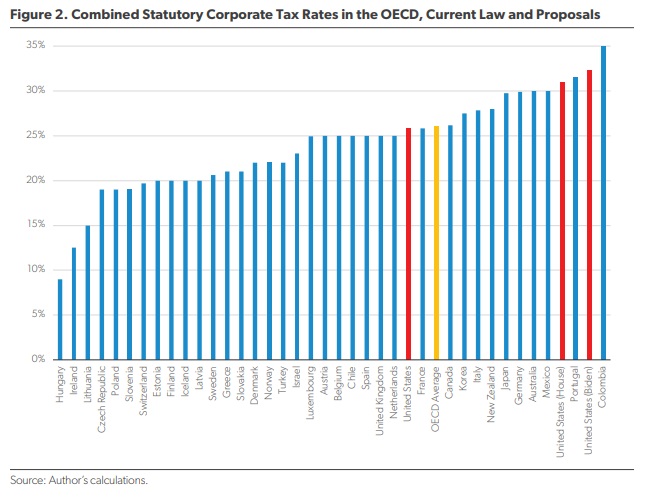
As part of her tax-and-spend agenda, Kamala Harris says she wants to increase the federal corporate tax rate from 21 percent to 28 percent. While it doesn’t seem possible, there is a tiny sliver of good news in her proposal. I’m happy that she isn’t proposing to push the rate to 35 percent, which is […]
Kamala’s Proposed Increase in the Corporate Tax Rate: The Good News and Bad News
Kamala Harris, Price Controls, and the Contest for the Dumbest Policy Proposal of 2024
17 Aug 2024 Leave a comment
in applied price theory, comparative institutional analysis, economic history, economics of bureaucracy, economics of regulation, energy economics, health economics, history of economic thought, income redistribution, industrial organisation, international economics, liberalism, Marxist economics, politics - USA, Public Choice, rentseeking Tags: 2024 presidential election, price controls, tariffs

As a Senator, Kamala Harris embraced all sorts of terrible ideas, such as the Green New Deal and Medicare for All. But she’s now disavowed those proposals in an attempt to make herself seem more reasonable. Trump, by contrast, is consistent. For better or worse, he’s pushing in 2024 the same agenda that he ran […]
Kamala Harris, Price Controls, and the Contest for the Dumbest Policy Proposal of 2024
DON BRASH: WHO IS MISLEADING THE PUBLIC?
16 Aug 2024 Leave a comment
in income redistribution, law and economics, liberalism, Marxist economics, politics - New Zealand, property rights, Public Choice, rentseeking, resource economics Tags: constitutional law, native title
A letter signed by more than 170 legal “experts” has been circulated around the media in the last few days and quoted extensively. Unfortunately, I have not been able to locate the letter in its entirety but have gathered some quotes. The letter claims to fact check Hobson’s Pledge’s ad which was published on…
DON BRASH: WHO IS MISLEADING THE PUBLIC?
Friedman vs Stiglitz, Chile vs Venezuela
16 Aug 2024 Leave a comment
in development economics, economic growth, economic history, economics of regulation, entrepreneurship, growth disasters, growth miracles, history of economic thought, income redistribution, labour economics, law and economics, liberalism, macroeconomics, Marxist economics, Milton Friedman, politics - USA, poverty and inequality, property rights, Public Choice, public economics, rentseeking Tags: Chile, free speech, political correctness, regressive left, The Great Enrichment, Venezuela
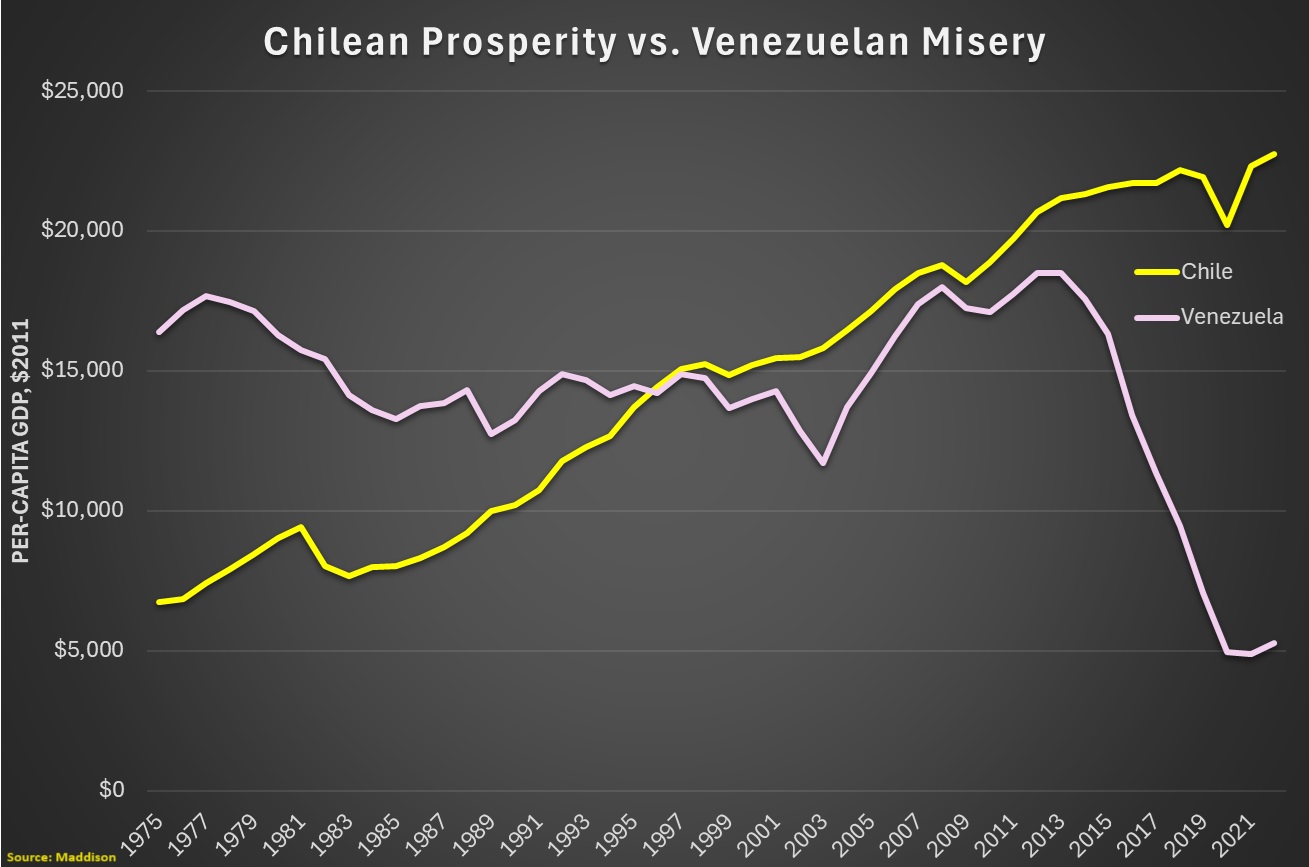
I’ve repeatedly praised Chile’s pro-market reforms (see here, here, and here) and I’ve repeatedly condemned Venezuela’s shift to socialism (see here, here, and here). But if you don’t have time to read all those columns, this chart from the Maddison database tells you everything you need to know. Simply stated, Chile’s reforms have delivered huge […]
Friedman vs Stiglitz, Chile vs Venezuela
“An America Issue”: Washington Post Reporter Calls on White House to Censor Trump for America
14 Aug 2024 Leave a comment
in law and economics, liberalism, Marxist economics, politics - USA, Public Choice Tags: 2024 presidential election, free speech, political correctness, regressive left

In my new book on free speech, I discuss at length how the mainstream media has joined an alliance with the government and corporations in favor of censorship and blacklisting. The Washington Post, however, appears to taking its anti-free speech campaign to a new level with open calls for a crackdown. The newspaper offered no objection […]
“An America Issue”: Washington Post Reporter Calls on White House to Censor Trump for America
The (Non) Mystery of Economic Growth
13 Aug 2024 Leave a comment
in applied price theory, comparative institutional analysis, constitutional political economy, development economics, economic growth, economic history, economics of bureaucracy, growth disasters, growth miracles, income redistribution, law and economics, macroeconomics, property rights, Public Choice, rentseeking Tags: The Great Enrichment
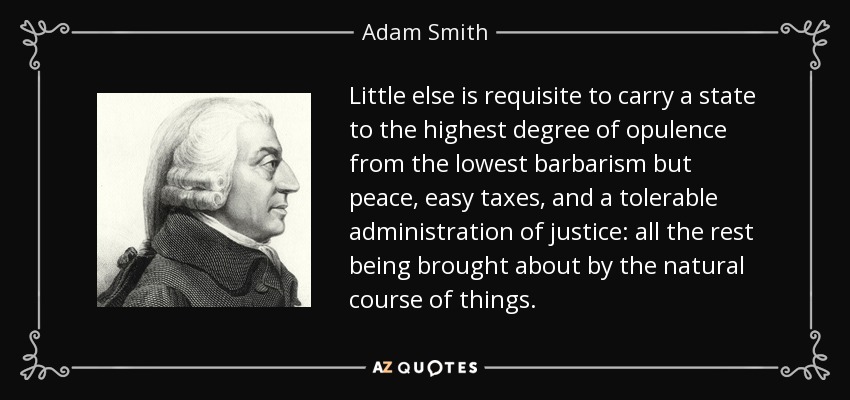
The recipe for economic growth is not complicated. You can put it in very simple terms, as Adam Smith did a few hundred years ago. Or you can develop and utilize data-heavy indexes like the ones published by the Fraser Institute and Heritage Foundation. In either case, the result will be the same. If you […]
The (Non) Mystery of Economic Growth
Don’t Invest in a Light-Rail Boondoggle
12 Aug 2024 Leave a comment
in comparative institutional analysis, politics - USA, Public Choice, transport economics, urban economics
Last week, I observed that “Transit’s failure to recover from the pandemic is due largely to its downtown-centric orientation in most urban areas.” An op-ed in yesterday’s Baltimore Sun makes a similar point about the planned Red Line light-rail project for that city. “The problem with Baltimore transit is not … Continue reading →
Don’t Invest in a Light-Rail Boondoggle
Minnesota’s Failed Class-Warfare Tax Policy
11 Aug 2024 Leave a comment
in applied price theory, applied welfare economics, economic growth, fiscal policy, labour economics, labour supply, macroeconomics, Public Choice, public economics Tags: taxation and entrepreneurship, taxation and investment, taxation and labour supply
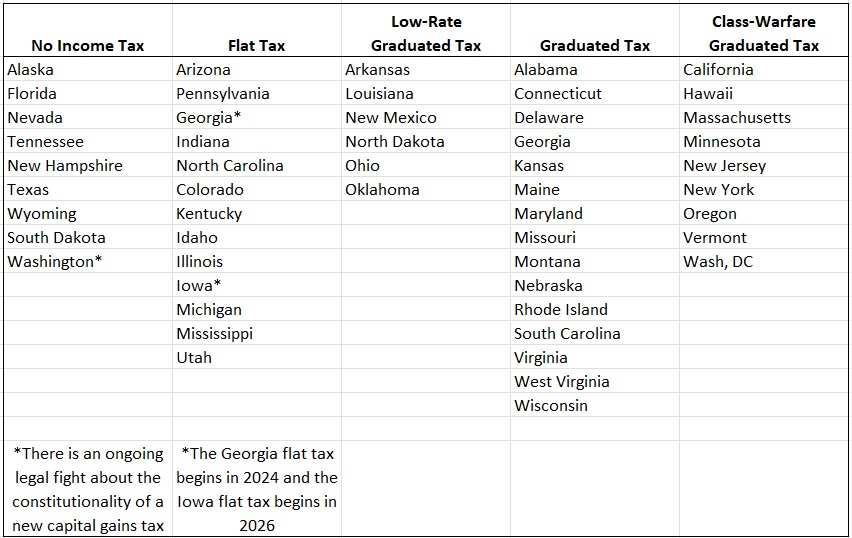
Writing about Mitt Romney’s selection of Paul Ryan in 2012, I opined that, “…it probably means nothing. I don’t think there’s been an election in my lifetime that was impacted by the second person on a presidential ticket.” I feel the same way about Tim Walz, who is Kamala Harris’ pick for Vice President. But […]
Minnesota’s Failed Class-Warfare Tax Policy
Gary Moller on Wellington cycleways
10 Aug 2024 Leave a comment
in politics - New Zealand, Public Choice, public economics, rentseeking, transport economics, urban economics
Garry Moller writes: If I had it my way, I would scrap many of Wellington’s cycleways, and do it better. Allow me to elaborate. … For Wellington to thrive, ample on-street parking is essential. Despite the influx of more public service employees and contractors in recent years, central Wellington is struggling. Many long-term Wellington residents, […]
Gary Moller on Wellington cycleways
The Creation of Ride-sharing and the Creativity of Markets
10 Aug 2024 Leave a comment
in applied price theory, econometerics, economic history, economics of regulation, income redistribution, industrial organisation, labour economics, labour supply, law and economics, occupational choice, politics - USA, property rights, Public Choice, public economics, regulation, rentseeking, survivor principle, theory of the firm Tags: barriers to entry, creative destruction, taxi regulation

The idea behind Uber first arose, the story goes, on a snowy evening in Paris back around 2008, when Travis Kalanick and Garrett Camp found themselves stuck in Paris on a snowy evening, unable to find a taxi. They wondered “What if you could request a ride simply by tapping your phone?” They co-founded Uber based…
The Creation of Ride-sharing and the Creativity of Markets


Recent Comments