Noah Smith via Marginal Revolution, and Kim Mai Cutler. The CA insurance regulator is elected, and is reluctant to allow higher rates for fire insurance, despite the big risks, lest she be voted out of office. As a consequence, expected profits are low, so a majority of top insurers have stopped issuing fire insurance in CA.…
Price controls destroy wealth: California Fire Insurance
Price controls destroy wealth: California Fire Insurance
11 Jan 2025 Leave a comment
in economics of natural disasters, economics of regulation, environmentalism, financial economics, income redistribution, law and economics, politics - USA, property rights, Public Choice, regulation, rentseeking, urban economics Tags: price controls
Left-Wing Economists Were Wildly Wrong about Javier Milei and his Libertarian Agenda for Argentina
10 Jan 2025 Leave a comment
in applied price theory, Austrian economics, budget deficits, business cycles, comparative institutional analysis, constitutional political economy, development economics, economic growth, economics of regulation, financial economics, fiscal policy, growth disasters, growth miracles, history of economic thought, income redistribution, international economics, labour economics, law and economics, liberalism, libertarianism, macroeconomics, Marxist economics, monetarism, monetary economics, political change, politics - USA, property rights, Public Choice, public economics, rentseeking, unemployment Tags: Argentina
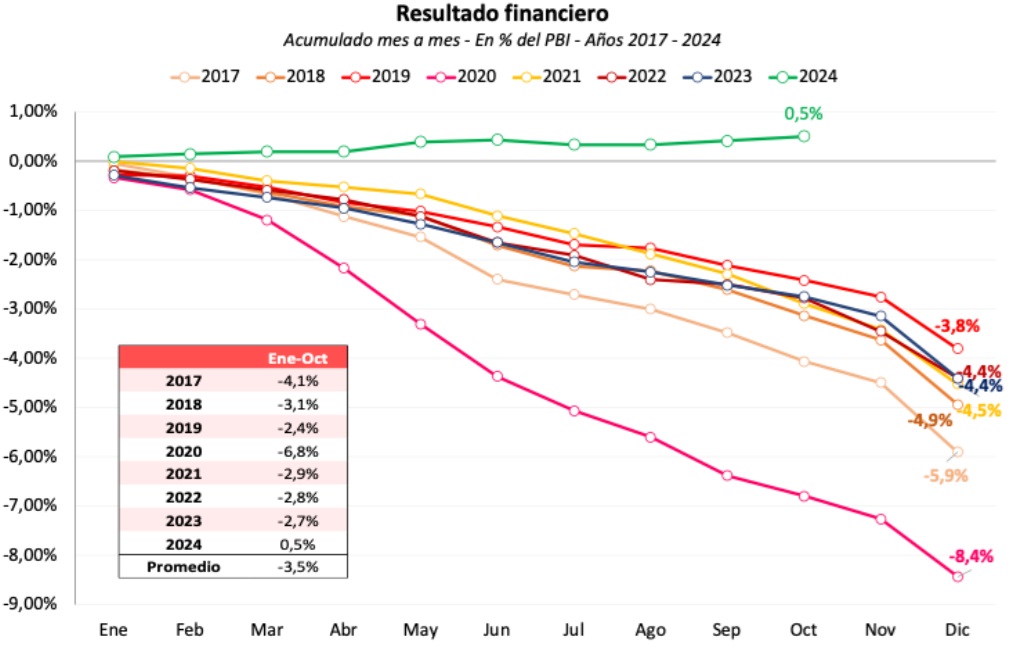
It’s easy to mock economists. Consider the supposedly prestigious left-leaning academics who asserted in 2021 that Biden’s agenda was not inflationary. At the risk of understatement, they wound up with egg on their faces.* Today, we’re going to look at another example of leftist economists making fools of themselves. It involves Argentina, where President Javier […]
Left-Wing Economists Were Wildly Wrong about Javier Milei and his Libertarian Agenda for Argentina
Claims about fires?
09 Jan 2025 Leave a comment
in applied price theory, economics of natural disasters, economics of regulation, environmental economics, environmentalism, law and economics, politics - USA, property rights, Public Choice, rentseeking
From Isaiah Taylor: In 2007 the Sierra Club successfully sued the Forest Service to prevent them from creating a Categorical Exclusion (CE) to NEPA for controlled burns (the technical term is “fuel reduction”). The CE would have allowed the forest service to conduct burns without having to perform a full EIS (the median time for […]
Claims about fires?
A Reading deal that doesn’t cost ratepayers
08 Jan 2025 Leave a comment
in economics of bureaucracy, entrepreneurship, industrial organisation, law and economics, politics - New Zealand, property rights, Public Choice, rentseeking, survivor principle
NewstalkZb reports: The derelict Reading Cinema complex on Wellington’s Courtenay Place has finally been sold, with a local developer snapping up the 1.5-hectare plot. The property was at the centre of a controversial deal between Wellington City Council and Reading International last year, after the council tried to buy the land under the quake-prone building […]
A Reading deal that doesn’t cost ratepayers
JOHN MENDZELA: Submission on the Treaty Principles Bill
07 Jan 2025 1 Comment
in comparative institutional analysis, constitutional political economy, development economics, discrimination, economic history, income redistribution, law and economics, liberalism, Marxist economics, politics - New Zealand, Public Choice, rentseeking Tags: constitutional law, racial discrimination

4 January, 2025 Justice Committee Parliament of New Zealand Dear Committee Members, I wish to make a submission on the Principles of the Treaty of Waitangi Bill that you will be considering in the near future. As the map below demonstrates, I have independently consulted on governance and management in dozens of diverse nations. Many…
JOHN MENDZELA: Submission on the Treaty Principles Bill
Ruth Richardson on the Treaty Principles Bill
07 Jan 2025 Leave a comment
in comparative institutional analysis, constitutional political economy, discrimination, economic history, income redistribution, law and economics, politics - New Zealand, property rights, Public Choice, rentseeking Tags: constitutional law
Ruth Richardson’s submission on the Treaty Principles Bill is excellent. I’ve copied it below.
Ruth Richardson on the Treaty Principles Bill
Some Links
06 Jan 2025 Leave a comment
in applied price theory, economics of bureaucracy, economics of regulation, entrepreneurship, income redistribution, industrial organisation, politics - USA, Public Choice, rentseeking, survivor principle
TweetScott Lincicome decries Biden’s abuse of national security to block Nippon Steel’s acquisition of U.S. Steel. Two slices: Today, President Joe Biden blocked Nippon Steel’s proposed acquisition of US Steel on the grounds that “there is credible evidence” the Japanese steelmaker “might take action that threatens to impair the national security of the United States.” What…
Some Links
DON BRASH: TIME TO SUBMIT ON THE TREATY PRINCIPLES BILL FAST RUNNING OUT
03 Jan 2025 Leave a comment
in economic history, income redistribution, law and economics, liberalism, Marxist economics, politics - New Zealand, property rights, Public Choice, rentseeking Tags: constitutional law
This Parliament is being asked to pass a significant number of important Bills during the course of its three-year life – Bills related to resource management planning, to infrastructure, to education and to health. But few Bills are of greater significance than the Treaty Principles Bill which David Seymour has sponsored. Why? Because it goes…
DON BRASH: TIME TO SUBMIT ON THE TREATY PRINCIPLES BILL FAST RUNNING OUT
Argentina facts of the day
29 Dec 2024 Leave a comment
in budget deficits, comparative institutional analysis, development economics, economic growth, economics of bureaucracy, economics of regulation, F.A. Hayek, financial economics, fiscal policy, growth disasters, income redistribution, international economics, labour economics, law and economics, liberalism, libertarianism, macroeconomics, Milton Friedman, monetarism, monetary economics, property rights, Public Choice, rentseeking, unemployment Tags: Argentina
Argentina’s bonds have already rallied dramatically. One gauge of the nation’s hard-currency debt, the ICE BofA US Dollar Argentina Sovereign Index, has generated a total return of about 90% this year. Meanwhile, the S&P Merval Index has risen more than 160% this year through Monday, far outpacing stock benchmarks in developed, emerging and frontier markets […]
Argentina facts of the day
The NZ Green Investment Fund should be Liquidated for Losing Money that could’ve gone into alleviating Poverty.
13 Dec 2024 Leave a comment
in economics of bureaucracy, economics of climate change, energy economics, entrepreneurship, environmental economics, environmentalism, financial economics, global warming, politics - New Zealand, Public Choice, rentseeking

Only a few months ago, the Chair of the NZ Green Investment Fund (NZGIF) and Chancellor of the University of Auckland, Cecilia Tarrant, visited my “Law and Economics” class. Why? She’s a lawyer who worked in “structured products” and “real estate finance” at Morgan Stanley in New York – and knows a Kiwi friend of…
The NZ Green Investment Fund should be Liquidated for Losing Money that could’ve gone into alleviating Poverty.
More on Business Dynamism
11 Dec 2024 Leave a comment
in applied price theory, economic history, economics of bureaucracy, economics of regulation, entrepreneurship, financial economics, income redistribution, industrial organisation, labour economics, labour supply, managerial economics, organisational economics, personnel economics, Public Choice, rentseeking, survivor principle, theory of the firm Tags: creative destruction, employment law
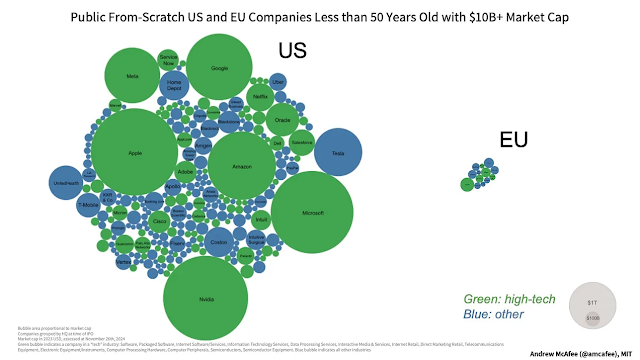
Over at the Geek Way, Andrew McAfee has created a startling visualization related to entrepreneurship in the US and EU. The Draghi Report on EU competitiveness is generating a small buzz among economists. One startling claim is thatthere is no EU company with a market capitalisation over EUR 100 billion that has been set up…
More on Business Dynamism
What is the price of production at nighttime?
05 Dec 2024 Leave a comment
in economics of climate change, energy economics, entrepreneurship, environmental economics, environmentalism, global warming, Public Choice, rentseeking Tags: solar power
Misuse of land use planning
05 Dec 2024 Leave a comment
in economics of bureaucracy, economics of regulation, health economics, industrial organisation, law and economics, politics - New Zealand, property rights, Public Choice, rentseeking Tags: nanny state, zoning
If you thought McDonald’s was some kind of public health hazard, using processes under the Resource Management Act to try to block one from opening in Wanaka would be among the stupidest possible ways of dealing with it. The country already has food safety regulations. If you thought that (in fact delicious and fine) McDonald’s food…
Misuse of land use planning
The end of oil?
05 Dec 2024 Leave a comment
in applied price theory, econometerics, economics of climate change, energy economics, environmental economics, environmentalism, global warming, law and economics, politics - USA, property rights, Public Choice, rentseeking, resource economics Tags: peak oil
It is now plausible to envision scenarios in which global demand for crude oil falls to essentially zero by the end of this century, driven by improvements in clean energy technologies, adoption of stringent climate policies, or both. This paper asks what such a demand decline, when anticipated, might mean for global oil supply. One […]
The end of oil?
The Missing Myths
04 Dec 2024 Leave a comment
in applied price theory, comparative institutional analysis, constitutional political economy, discrimination, economic history, economics of climate change, economics of information, economics of media and culture, economics of regulation, energy economics, entrepreneurship, environmental economics, environmentalism, financial economics, gender, global warming, health economics, human capital, income redistribution, labour economics, labour supply, law and economics, liberalism, libertarianism, Marxist economics, occupational choice, politics - USA, poverty and inequality, property rights, Public Choice, rentseeking Tags: Age of Enlightenment, crime and punishment, criminal deterrence, free speech, gender wage gap, law and order, political correctness, racial discrimination, regressive left, sex discrimination
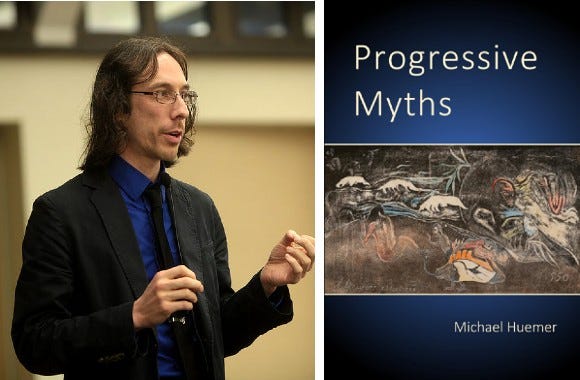
Michael Huemer’s Progressive Myths is the best book on wokeness. One of its many strengths is its focus on basic facts. As the author explains:I have selected beliefs that can be debunked fairly quickly and forcefully. Many other progressive beliefs require long argumentation and subjective judgment calls to assess. About these more difficult issues, I…
The Missing Myths


Recent Comments