Eric Crampton writes – This week’s budget projected no return to balanced books. It is difficult to see how recent budgets from National and Labour comply with the Public Finance Act’s fiscal responsibility provisions. It is a problem.
Deficits forever?
Deficits forever?
24 May 2025 Leave a comment
in budget deficits, fiscal policy, macroeconomics, politics - New Zealand, Public Choice, public economics
The (deeply underwhelming) Budget
23 May 2025 Leave a comment
in applied price theory, budget deficits, economic growth, economics of regulation, entrepreneurship, fiscal policy, macroeconomics, politics - New Zealand, Public Choice, public economics

Michael Reddell writes – There were good things in the Budget. There may be few/no votes in better macroeconomic statistics and, specifically, a monthly CPI but – years late (for which the current government can’t really be blamed) – it is finally going to happen.
The (deeply underwhelming) Budget
Excusing the Government
22 May 2025 Leave a comment
in applied price theory, applied welfare economics, comparative institutional analysis, constitutional political economy, economics of bureaucracy, economics of regulation, history of economic thought, income redistribution, international economics, labour economics, law and economics, property rights, Public Choice, public economics, rentseeking, urban economics
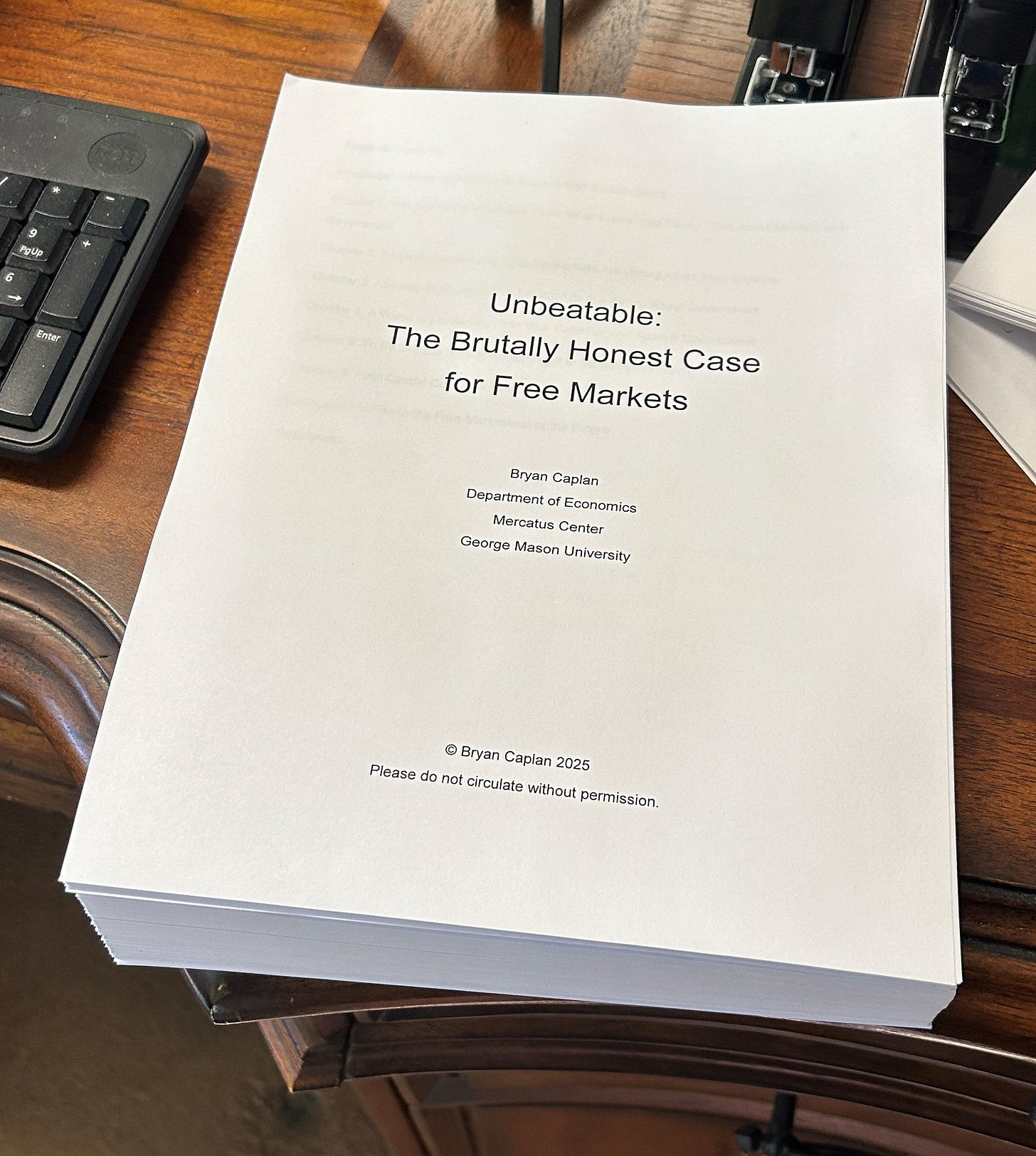
An excerpt from Chapter 3 of *Unbeatable*
Excusing the Government
Tax Privacy
16 Apr 2025 Leave a comment
in economics of bureaucracy, Public Choice, public economics Tags: tax privacy
In an era where many people are highly sensitive to what personal information is being collected about them, and how that information is being used, one sometimes hear the question: Why should the government have any power to know your income? In a US context, the question is often asked around April 15, when income…
Tax Privacy
Public-Private-Partnerships?
02 Apr 2025 Leave a comment
in applied price theory, economic history, economics of bureaucracy, history of economic thought, industrial organisation, law and economics, managerial economics, organisational economics, politics - New Zealand, privatisation, property rights, Public Choice, public economics
New Zealand’s economic development has always been a partnership between the public and private sectors. Brian Easton writes – Public-Private-Partnerships (PPPs) have become fashionable again, partly because of the government’s ambitions to accelerate infrastructural development. There is, of course, an ideological element too, while some of the opposition to them is also ideological. PPPs […]
Public-Private-Partnerships?
Working paper: Why nationalize the production of public goods?
09 Mar 2025 Leave a comment
in applied price theory, comparative institutional analysis, constitutional political economy, economic history, economics of bureaucracy, entrepreneurship, health economics, history of economic thought, Public Choice, public economics, rentseeking
I have a new working paper out. It proposes a price theory-based explanation of why states nationalize the production of “public goods” (i.e., non-excludable and non-rivalrous). This is different than existing explanations as the theory ignores whether private provision is efficient or superior to public provision. I call it the “redistributive engine” theory whereby the […]
Working paper: Why nationalize the production of public goods?
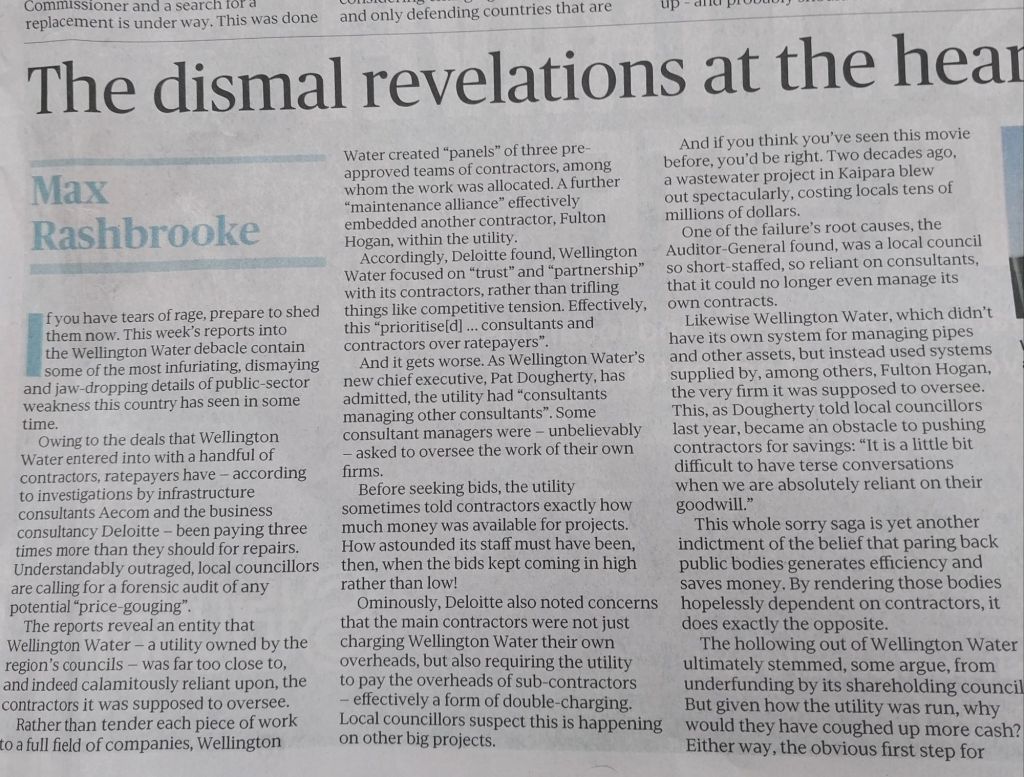
Max Rashbrooke has been kidnapped again to be replaced by a neoliberal doppelganger
08 Mar 2025 Leave a comment
in applied price theory, comparative institutional analysis, economics of bureaucracy, industrial organisation, managerial economics, market efficiency, organisational economics, politics - New Zealand, Public Choice, public economics Tags: privatisation
$50 million of taxpayer money on a ski field
01 Mar 2025 Leave a comment
in applied price theory, fiscal policy, industrial organisation, macroeconomics, politics - New Zealand, Public Choice, public economics, rentseeking, survivor principle Tags: corporate welfare
Newsroom has a summary of taxpayer money spent on Mt Ruapehu: How often have we been told this is the final assistance. We are now deep into the sunk cost fallacy.
$50 million of taxpayer money on a ski field
Guest Post: NEW ZEALAND’s RETIREMENT PENSION
17 Feb 2025 Leave a comment
in budget deficits, fiscal policy, income redistribution, labour economics, labour supply, macroeconomics, politics - New Zealand, Public Choice, public economics, welfare reform Tags: ageing society
A guest post by Sir Roger Douglas: Michael Littlewood’s ‘Guest Post’ for David Farrar on pensions, and his belief that our social welfare system is fit for purpose and doesn’t need change, reminded me of why New Zealand is currently well on the way to bankruptcy, and why our brightest young people are leaving the […]
Guest Post: NEW ZEALAND’s RETIREMENT PENSION
LIVE from Parliament: 2025 Jonesie Awards
13 Feb 2025 Leave a comment
in budget deficits, economics of bureaucracy, fiscal policy, macroeconomics, politics - New Zealand, Public Choice, public economics
Ireland: Good Corporate Tax Policy vs. Bad Government Spending Policy
11 Feb 2025 Leave a comment
in budget deficits, business cycles, economic growth, economic history, Euro crisis, fiscal policy, global financial crisis (GFC), great recession, labour economics, labour supply, law and economics, macroeconomics, monetary economics, public economics Tags: Ireland, taxation and investment
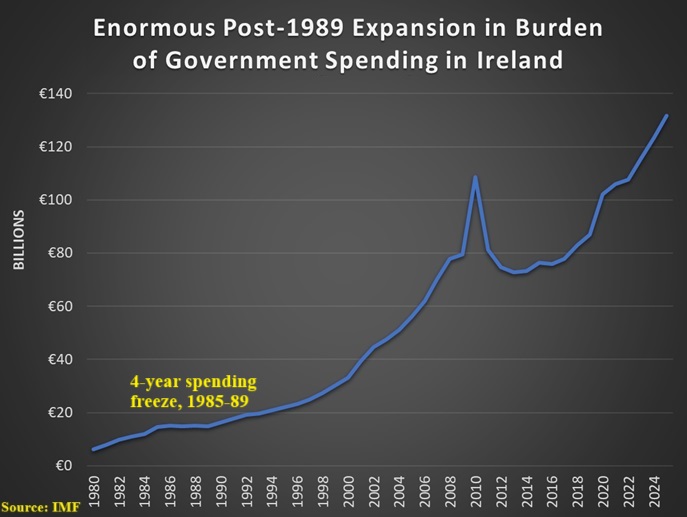
I’m a big fan of Ireland’s low corporate tax rate for three reasons. First, it shows that good tax policy generates positive economic outcomes as per-capita GDP in Ireland has grown by record amounts. Second, it shows that lower tax rates can in some cases lead to more revenue. Sort of a turbo-charged version of […]
Ireland: Good Corporate Tax Policy vs. Bad Government Spending Policy
Goldilocks and the Laffer Curve
09 Feb 2025 Leave a comment
in applied price theory, budget deficits, economic growth, entrepreneurship, fiscal policy, labour economics, labour supply, macroeconomics, politics - USA, public economics Tags: taxation and entrepreneurship, taxation and investment, taxation and labour supply

Other than Art Laffer, I think of myself as the world’s biggest advocate of the Laffer Curve. I’ve literally written hundreds of columns explaining and promoting the concept. My goal is to help people understand that there is not a linear relationship between tax rates and tax revenue. Why is this the case? Because when […]
Goldilocks and the Laffer Curve
Identity-based hiring goes wild in New Zealand
05 Feb 2025 Leave a comment
in discrimination, economic history, economics of education, human capital, labour economics, labour supply, law and economics, liberalism, Marxist economics, occupational choice, politics - New Zealand, property rights, Public Choice, public economics, rentseeking Tags: affirmative action, Age of Enlightenment, constitutional law, free speech, political correctness, racial discrimination, regressive left

Just to show you how, in the hiring process, New Zealand gives much more weight to identity than to merit, I enclose part of the job description for the position of Chief Operating Officer of Wellington Water, the water utility for the Greater Wellington region (Wellington, a lovely city, is the capital of New Zealand). […]
Identity-based hiring goes wild in New Zealand
Mocking European Statism
04 Feb 2025 1 Comment
in applied price theory, Austrian economics, comparative institutional analysis, economic growth, economics of bureaucracy, economics of regulation, entrepreneurship, environmental economics, financial economics, industrial organisation, international economics, labour economics, labour supply, law and economics, liberalism, macroeconomics, Marxist economics, property rights, Public Choice, public economics, rentseeking, survivor principle, theory of the firm Tags: employment law, European Union

I have a special page for humor involving Europe, but I have not added to it since sharing some Brexit humor in 2016. Let’s being the process of catching up with some amusing cartoons and memes mocking our government-loving cousins on the other side of the Atlantic Ocean. I’ve made the serious point that bureaucrats […]
Mocking European Statism


Recent Comments