https://twitter.com/RetroPhotoPics/status/566332474058608640
The dangers of texting while driving
19 Feb 2015 Leave a comment
in economics of media and culture, transport economics
HT: Tomáš Kříha
Voter demographics alert: the politics of road rage
19 Feb 2015 Leave a comment
in economics of crime, Public Choice, transport economics Tags: road rage, voter demographics
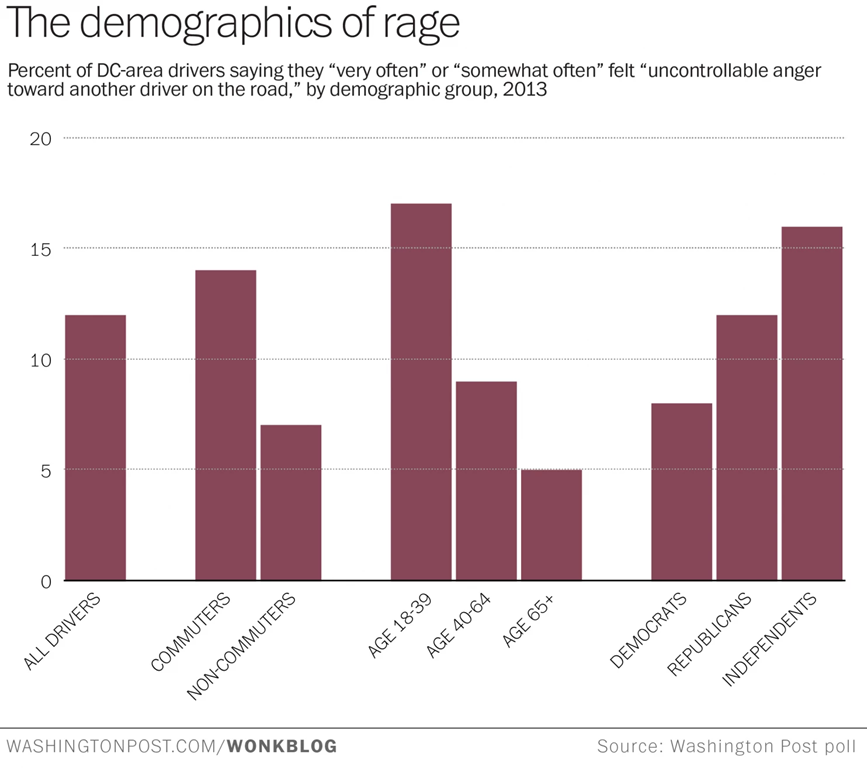
.
Follies of Infrastructure: Why the Worst Projects Get Built, and How to Avoid It – Bent Flyvbjerg
16 Feb 2015 Leave a comment
in managerial economics, organisational economics, theory of the firm, transport economics Tags: Bent Flyvbjerg, cost overruns, mega-events, mega-projects
We are about to board a plane, so when is the plane going to crash?
06 Feb 2015 Leave a comment
in transport economics Tags: air crashes

Why Can’t Public Transit Be Free? – The Atlantic
01 Feb 2015 Leave a comment
in applied price theory, politics - Australia, politics - New Zealand, politics - USA, transport economics Tags: activists, do gooders, free public transport, The fatal conceit, The pretence to knowledge

The earliest urban experiment in free public transit took place in Rome in the early 1970s. The city, plagued by unbearable traffic congestion, tried making its public buses free.
At first, many passengers were confused: “There must be a trick,” a 62-year-old Roman carpenter told The New York Times as he boarded one bus. Then riders grew irritable. One “woman commuter” predicted that “swarms of kids and mixed-up people will ride around all day just because it doesn’t cost anything.”
Romans couldn’t be bothered to ditch their cars—the buses were only half-full during the mid-day rush hour, “when hundreds of thousands battle their way home for a plate of spaghetti.” Six months after the failed, costly experiment, a cash-strapped Rome reinstated its fare system.
Three similar experiments in the U.S.—in Denver, Colorado, and Trenton, New Jersey, in the late 70s, and in Austin, Texas, around 1990—also proved unfruitful and shaped the way American policy makers viewed the question of free public transit.
All three were attempts to coax commuters out of their cars and onto subway platforms and buses. While they succeeded in increasing ridership, the new riders they brought in were people who were already walking or biking to work. For that reason, they were seen as failures.
A 2002 report released by the National Center for Transportation Research indicated that the lack of fares attracted hordes of young people, who brought with them a culture of vandalism, graffiti, and bad behavior—which all necessitated costly maintenance. The lure of “free,” the report implied, attracted the “wrong” crowd—the “right” crowd, of course, being wealthier people with cars, who aren’t very sensitive to price changes.

HT: http://m.theatlantic.com/business/archive/2015/01/why-cant-public-transit-be-free/384929/
Darwin awards: Two daredevils playing tennis on a flying airplane
31 Jan 2015 Leave a comment
in economics of media and culture, transport economics Tags: Darwin awards
Is surge pricing by Uber another name for overtime and weekend pay
28 Jan 2015 Leave a comment
in applied price theory, economics of media and culture, economics of regulation, Public Choice, rentseeking, transport economics Tags: barriers to entry, compensating differentials, peakload pricing, taxi regulation, Uber

Uber is in strife of late for charging more at peak times - Uber calls it surge pricing. We don’t object paying more for a meal at a restaurant at dinner time rather than at lunchtime but the same people object to paying more for the taxi late at night where the driver must risk the dangers of solitary night-time work and picking up strangers who might have had a few too many.

Under Uber’s now-national policy, price surging is capped during disasters and states of emergency at the fourth-highest nonemergency surge seen in the previous two months.

We all expect to pay more for air tickets at peak times, such as school holidays and Christmas. Indeed, one reason we are able to delay booking is we know seats will be available because they are selling at a premium for those who booked late. Others who make their plans early quite enjoy getting the cheaper for early bird bookings.

Is surge pricing another name for over time and night and weekend pay? Union contracts provide for overtime pay, if you work more than the specified 8 hours a day.
The Holidays Act in New Zealand provides that if an employee works at the weekends, they are paid at 150% of the normal rate; and double party on public holidays. Not many employees object of this wage premium for work in it inconvenient times. Cafes and restaurants routinely charge of 10-15% price premium on public holidays to cover this overtime pay.

As would be expected under the theory of compensating differentials, there are wage premiums for jobs where the worker must work at inconvenient or unsocial times, in jobs with a greater risk of injury, or otherwise work more unpleasant than the average.

Viscusi estimated the wage premium for hazardous jobs to be rather large in the United States:
The extra pay for job hazards, in effect, establishes the price employers must pay for an unsafe workplace.
Wage premiums paid to U.S. workers for risking injury are huge; they amount to about $245 billion annually (in 2004 dollars), more than 2 percent of the gross domestic product and 5 percent of total wages paid. These wage premiums give firms an incentive to invest in job safety because an employer who makes the workplace safer can reduce the wages he pays.
Those who don’t like Uber’s surge pricing can always hail a cab. As I remember from American TV programmes, at peak times, prospective customers on the side of the road hail cabs at peak times with several fingers raised to indicate how much more than the standard fare, they are willing to pay.

There is nothing new under the sun. Uber’s app allows you to do the price bidding for a taxi on your cellphone rather than out in the cold
Faith In Humanity Restored
22 Jan 2015 Leave a comment
A rather effective safety notice
10 Jan 2015 Leave a comment
in economics of information, transport economics
😂😂😂😂😂😂😂😂😂😂😂 http://t.co/X4bG3BBoSU—
OnlyOneWeez (@Cryspp_) January 09, 2015
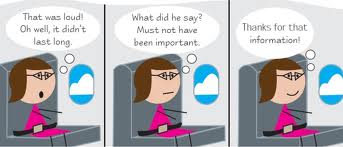
Travelling today: Economy class ain’t what it used to be
26 Dec 2014 Leave a comment
in economic history, transport economics

‘What were you thinking?’: Police shocked at tourist driver – National News | TVNZ
16 Dec 2014 Leave a comment
in economics of regulation, health and safety, transport economics Tags: health and safety

A tourist caught driving with a kayak tied cross-ways across his car roof told shocked police that he was just trying to preserve his vehicle.
via ‘What were you thinking?’: Police shocked at tourist driver – National News | TVNZ.
 Utopia, you are standing in it!
Recent Comments