
US, Australian and NZ real house prices, March 1975 to June 2016
08 Nov 2016 Leave a comment
in economic history, politics - Australia, politics - New Zealand, politics - USA, urban economics Tags: Australia, housing affordability
The #fatalconceit of #daylightsaving in #Australia
05 Nov 2016 Leave a comment
in economics of media and culture, economics of religion, politics - Australia
Queensland refused to follow the southern states of Australia in adopt daylight saving. Conceited Southerners attributed that to the backward nature of those further north.
Daylight savings is not such a good idea if summer and winter day length does not vary that much and there is not much of a twilight.
The closer you get to the tropics, such as Queensland is, day length does not vary through the year and there is next to no twilight. In the tropics, you can look forward to the night because it is cooler.
Arrogant Southerners pretended to know what was good for Queensland despite knowing nothing of why daylight savings was introduced in the first place. It was to take advantage of large variations in the length of the day over the seasons. There are no such large variations in the length of the day in tropical Queensland, particularly in North Queensland.
Gareth Morgan has fallen for the oldest populist delusion
05 Nov 2016 Leave a comment
in constitutional political economy, politics - New Zealand, Public Choice Tags: 2017 New Zealand election, Gareth Morgan
In founding his own political party, Gareth Morgan has fallen to the populist delusion that all that is needed is for a great leader to get in who is one of us rather than one of them and she will be alright.
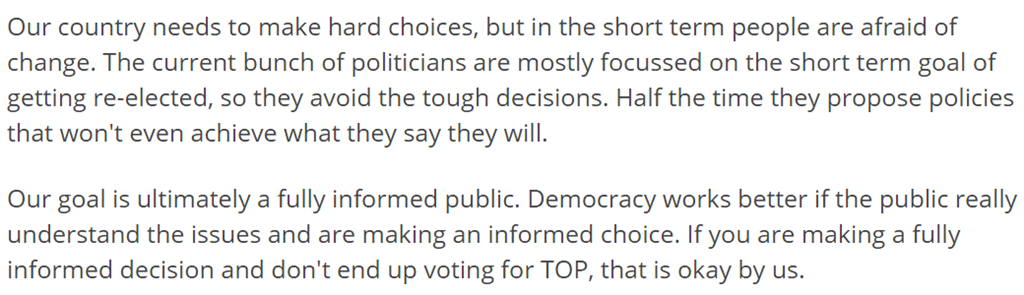
Source: About – The Opportunities Party.
In common with all populists, Morgan believes there is one will of the people frustrated by a conniving elite rather than many clashing visions of the good life that politicians must balance. Judis explains
Leftwing populists champion the people against an elite or an establishment. Theirs is a vertical politics of the bottom and middle, arrayed against the top.
Rightwing populists champion the people against an elite that they accuse of favouring a third group, which can consist, for instance, of immigrants, Islamists, or African American militants. Rightwing populism is triadic: it looks upward, but also down upon an out group.
Leftwing populism is historically different to socialist or social democratic movements. It is not a politics of class conflict, and it does not necessarily seek the abolition of capitalism. It is also different to a progressive or liberal politics that seeks to reconcile the interests of opposing classes and groups. It assumes a basic antagonism between the people and an elite at the heart of its politics.
John Rawls talked about the need for reasonable pluralism because so many people have different ideas of the way to go forward. Political institutions must be designed with that diversity in mind as David Gordon explained in a book review
The situation that drives Rawls to his theory is that of people in a large society like the United States who are divided by conflicting conceptions of the good. Some of these conceptions may be better than others, and one may in fact be the correct one: Rawls does not commit himself on this question. But none of these conceptions can be shown to be true in the strong sense that it would be unreasonable for anyone to reject it. This state of affairs Rawls terms “the fact of reasonable pluralism.”
Given reasonable pluralism, it would be wrong for the holders of one conception to impose their views on others; respect for others requires that we defend our political views with reasons others could acknowledge.
Our aim, Rawls holds, should not be a mere modus vivendi with those who profess other conceptions of the good. Rather, we should seek a stable society in which people decide disputed questions by democratic discussion.
The idea is to have a political system with sufficient checks and balances that whoever is in power does not do too much harm nor gets seriously out of alignment with the wishes of the electorate. That was the idea behind MMP: divide power between more parties and make all elections close.
It goes back to James Madison’s idea that governments are not populated by angels and so the powers of government and how they are distributed should take account of that. The idea is politicians behave in line with public interest because of the institutions that constrain and shape their choices.
It is wise to design constitutional safeguards to minimise the damage done when those crazies to the right or left of you get their chance in office, as they will sooner or later rather than focus on the powers you and those that currently agree with you should have in your few days in which you fleetingly have a majority.
Too many policies and ideas of the one political party or another assume that they are the face of the future, rather than just another political party that will hold power as often as not and always for an uncertain time. Too many policies and ideas of the Left assume that they are the face of the future, rather than just another political party that will hold power as often as not.
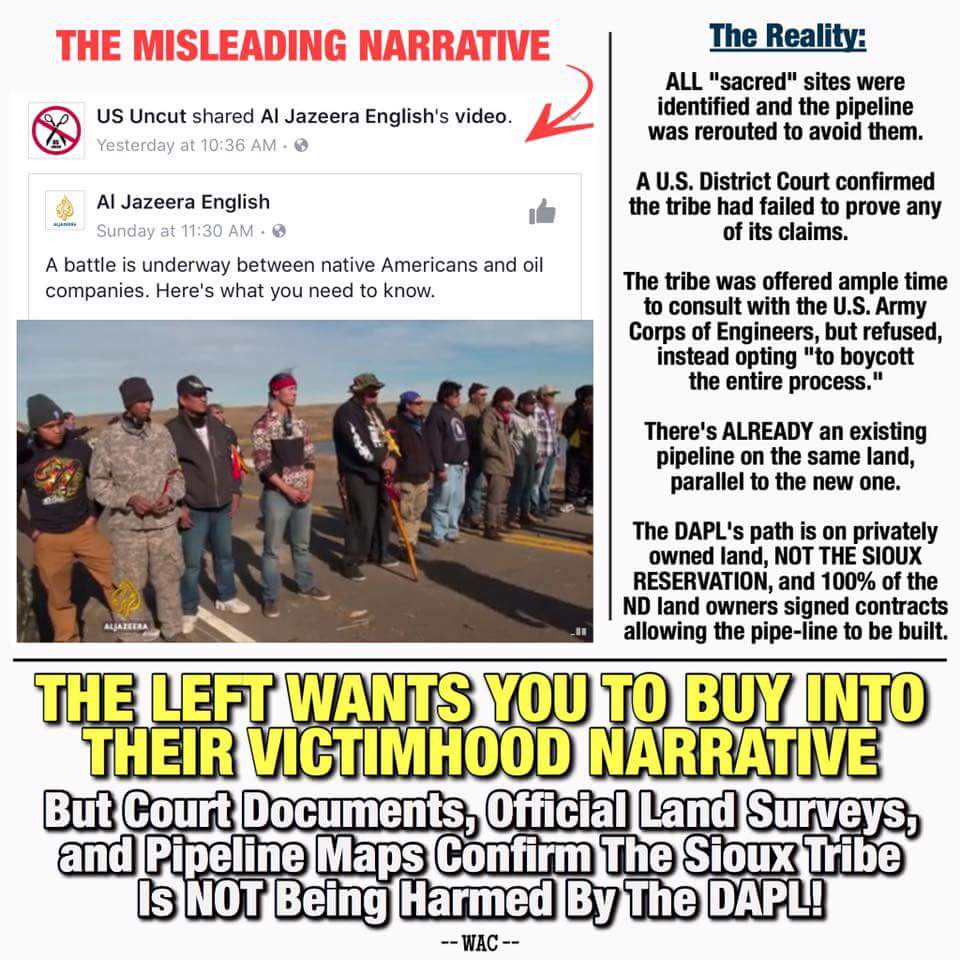
Ronald Reagan’s Impromptu Remarks at the Republican National Convention in Kansas City, Missouri — 8/19/76
29 Oct 2016 Leave a comment
in politics - USA Tags: Ronald Reagan
The mass kidnappings of principled antiwar activists now in its 9th year
28 Oct 2016 Leave a comment
in defence economics, laws of war, politics - USA, war and peace Tags: anti-war movement, Left-wing hypocrisy, Leftover Left
Trade-offs in an high-gun arms race equilibrium
28 Oct 2016 Leave a comment
in economics of crime, economics of regulation, law and economics, politics - USA Tags: game theory, gun control
The man who save the world, this day 1962
27 Oct 2016 Leave a comment
in politics - USA, war and peace Tags: Cuban missile crisis
.@4corners @amnestynz evidence standards hit new low on #Nauru refugee reporting
18 Oct 2016 Leave a comment
in Economics of international refugee law, international economics, politics - Australia Tags: economics of immigration, Nauru, refugees
The ABCs journalistic standards have dropped so low that they continued to regard as credible a witness who compared Nauru with Syria. Neistat wrote the report for Amnesty which Four Corners then built on.

Syria is a war zone. Nauru is not. This is the Australian Government’s travel advice for Syria
We strongly advise Australians not to travel to Syria because of the extremely dangerous security situation, highlighted by ongoing military conflict including aerial bombardment, kidnappings and terrorist attacks…
Australians are also warned not to travel to the northern Caucasus included Chechnya for any reason because of the threat of terrorism and kidnappings.
The Department of Foreign Affairs and Trade does not issue travel advice for Nauru at this time.
I doubt that the state of law and order in Syria or Chechnya in peacetime is any different from Nauru at its worst. Refugees seek asylum from persecution. That does not guarantee them asylum in a country that is materially wealthier than the one they fled.
Many people engage in considerable hubris to avoid making difficult decisions about immigration and refugees. Tullock talked about how people avoid difficult decisions. They do not want to face up to the fact resources are scarce and they face limits on their powers.
To reduce the personal distress of making these tragic choices, Tullock observed that people often allocate and distribute resources in a different way so as to better conceal from themselves the unhappy choices they had to make. This even if this means the recipients of these choices are worse off and more lives are lost than if more open and honest choices were made up about there only being so much that can be done.
The Australian Greens, for example, call for a doubling of the refugee quota. A drop in the ocean when there is 59 million refugees out there. This allows them to feel righteous when they go to sleep at night
When it is pointed out that their policies will encourage more people to get on a boat, some of whom will drown, the Greens suggest people should be free to fly to Australia without documentation and then be released after a short security check.
#LetThemStay https://t.co/n1hA7W3q3Q—
Sarah Hanson-Young (@sarahinthesen8) February 04, 2016
Naturally, no government will ever adopt this suggestion. It shows that the Greens are not serious participants in managing refugee flows across borders. They prefer to feel righteous rather than actually systematically help people to the maximum available.
Arriving by boat in Australia does not increase the size of the refugee quota. It just changes who gets to the head of the queue and how many died trying to get to the head of the queue.
Joe Exotic for President! 2016
18 Oct 2016 Leave a comment
in politics - USA Tags: 2016 presidential election
Third Parties: Last Week Tonight with John Oliver (HBO)
18 Oct 2016 Leave a comment
in politics - USA Tags: 2016 presidential election
.@DrJillStein wants Assad win #SyrianCivilWar #usefulidiots #peaceoffensive
17 Oct 2016 Leave a comment
in defence economics, politics - USA, war and peace Tags: 2016 presidential election, Leftover Left, Middle-East politics, Syrian Civil War

Source: Stein Opposes Obama’s Troops on the Ground in Syria – Jill2016 via The Strange Sympathy of the Far Left for Putin
Further evidence that @NZGreens are pretty sane compared to @DrJillStein
15 Oct 2016 Leave a comment
in defence economics, politics - USA

Fact checking @leerhiannon on John Howard and @PaulineHansonOz
15 Oct 2016 Leave a comment
in discrimination, politics - Australia
Leading up to the 1996 election, Hanson advocated the abolition of special government assistance for Aborigines, and she was disendorsed by the Liberal Party. Ballot papers had already been printed listing Hanson as the Liberal candidate, and the Australian Electoral Commission had closed nominations for the seat.
Hanson was still listed as the Liberal candidate when votes were cast, even though Liberal leader John Howard had declared she would not be allowed to sit with the Liberals if elected.
On election night, Hanson took a large lead on the first count and picked up enough Democrat preferences to defeat Scott on the sixth count. She won 54 percent of the two-candidate preferred vote. Had she still been running as a Liberal, the 19.3 percent swing would have been the largest two-party swing of the election. Hanson won the safest Labour Party seat in Queensland.
.@JudithCollinsMP showed that @JacindaArdern does not know when to stop digging
13 Oct 2016 Leave a comment
in economics of crime, law and economics, politics - New Zealand, poverty and inequality, welfare reform Tags: crime and punishment, family poverty, law and order, New Zealand Labour Party
Judith Collins today in Question Time showed that Jacinda Ardern does not know when to stop digging. Ardern quoted a snippet of the question put to the police minister at the recent police conference.
That selectivity allowed Collins to right to quote the conference question in full and her full answer, which was not just about money poverty but also about
“… a poverty of ideas, a poverty of parental responsibility, a poverty of love, a poverty of caring …”.
Later Collins said she does not agree with Labour saying today that poverty causes crime.
The Labour Party showed that it is no longer rooted in working class values when it argues that poverty is not linked to a poverty of responsibility and of parental love.
There are plenty of poor people who do not resort to crime and who despise those that do, in part because they often make them the victims of their crimes including burglary.


Recent Comments