Sam Peltzman on Teacher’s Unions
15 Feb 2015 Leave a comment
in economics of education, politics - New Zealand, politics - USA, unions Tags: School choice, teachers unions, union power, union wage premium

The working class is missing from US political discourse
14 Feb 2015 Leave a comment
in income redistribution, politics - USA, Public Choice Tags: 2008 presidential election, Director's Law, expressive voting, median voter theorem, voter demographics, Withering away of the proletariat
One of the things I noticed in the 2008 US presidential campaign was everyone was appealing for the middle class vote. Presidential primary and general election debates were about how things were getting harder for the middle-class and the Republican or Democratic candidate who happen to be pitching for votes would stand up for the middle-class better than their competition in the presidential primary or general election at hand.
Another big feature in the 2008 presidential campaign was Joe the plumber. This was the small businessman who asked then candidate Obama at a rope line three days before the final presidential debate about his plans to put up taxes. Obama replied he wanted to spread the wealth around. Obama’s response was
It’s not that I want to punish your success. I just want to make sure that everybody who is behind you, that they’ve got a chance at success, too… My attitude is that if the economy’s good for folks from the bottom up, it’s gonna be good for everybody.
If you’ve got a plumbing business, you’re gonna be better off… if you’ve got a whole bunch of customers who can afford to hire you, and right now everybody’s so pinched that business is bad for everybody and I think when you spread the wealth around, it’s good for everybody
Andrew Cherlin did the service counting up references to the working class in State of the Union addresses since President Obama was elected.
In his State of the Union addresses, Obama has used the term middle class 28 times. But he has never said “working class” except in 2011, when he described Vice President Biden, who was seated behind him, as “a working-class kid from Scranton.”
This dearth of references to the working class is no surprise in light of Director’s Law and the median voter theorem. Politicians who do not pitch to the American middle class will not win elections unless there is a lot of expressive voting by the educated middle class. In general social surveys of Americans, 44% identify as working class and 44% identify as middle class.

Republicans consistently win voters making $50,000 or more – the U.S. median income. The margin doesn’t vary much: In 2012, Mitt Romney got 53% of this group’s vote; in 2010, Republican House candidates got 55%.
The margin by which the Republicans win income brackets above 50,000 doesn’t vary much if you just look at those earning above $100,000 or those earning between $50,000 and $75,000. These margins only matter in a close election, a very close election.
Democrats consistently win voters making less than the median but the margin varies. Whether the Democrats win these voters earning less than $50,000 by a 10-point or a 20-point margin tells you who won every national election for the past decade.

The Democrats would also do well among the college educated vote. Obama won this over Romney and 2012 by 10 percentage points. This may explain why the Democrats are slightly conflicting: they must win the working class vote as well as the college educated vote to win.
Andrew Cherlin didn’t give many reasons for the disappearance of working class from modern American political discourse, but he showed some insight into expressive politics when he observed that:
Politicians may prefer to call working-class families by the class position they aspire to rather than the one they hold.

An alternative to the no fault Accident Compensation Scheme in New Zealand
13 Feb 2015 Leave a comment
in health and safety, labour economics, law and economics, politics - Australia, politics - New Zealand, property rights Tags: ACC, accident compensation, right to sue, workers' compenstaion, workplace fatalities
New Zealand has a unique government monopoly since 1974 which provides compensation for personal injuries from accidents wherever they may occur in New Zealand.
The right to sue in court under tort law was abolished. Instead, there is a lower but more certain right to be compensated for loss of income and medical expenses and various other losses. The scheme is funded by a levy of about 1.4% on incomes earned, insurance premiums paid by employers and levies on motor car registrations.
The scheme essentially folds no fault workers compensation and no fault car accident insurance into a scheme that covers you for all other accidents.
What is peculiar is the abolition of the right to sue in court for ordinary damages. I never liked this taking away of the right of vindication in court.

In Australia, they have a much simpler system in some states. You can sue for personal injury under the common-law, but any damages you might win for loss of income, medical expenses and other losses is deducted dollar for dollar from any of damages you might be awarded under the compulsory insurance scheme for either workplace or car accidents. This system allows everyone to be compensated to some degree and protected against judgement proof employers, car owners and other wrongdoers. It also saves on legal costs.
The Australian dual system both gives people the right of vindication and allows those who are poorly compensated by the government monopoly to continue to be compensated for losses. For example, the compensation for lost income under the government monopoly is based on your last 12 months income rather than prospective income. This seriously disadvantages young people and students in particular at the start of their working lives and mothers who are out of the workforce.
Another thing I like about the Australian system and deeply dislike about the New Zealand system is you do not have the right to sue cowboy employers to bankrupt them.
The system of funding in New Zealand is simply a flat rate premium applies the different occupations. Premiums do not increase for high risk employers or employers who repeatedly have accidents because they are careless or negligent. This increases the number of accidents and deaths. The penalties for workplace accidents and deaths under New Zealand workplace safety regulation are rather weak. Reckless employers are fined, no one is bankrupted nor goes to prison.
The government monopoly insurer of personal accidents in New Zealand also doesn’t pay for pain and suffering. Initially it did, but that right of compensation was taken away as a cost-cutting measure about 20 years ago. Prior to that pain and suffering compensation was initially limited to $10,000, then increased to $17,000 before it was abolished.
This lack of a legal remedy for the pain and suffering from a personal injury is a grave injustice. The courts were pretty stingy on pain and suffering, so the government monopoly has taking away what was a pretty limited right anyway, but a very important right nonetheless. That common-law right was to be made whole again after being injured wrongfully.
What is the next best explanation for this dramatic fall in crime rates in Chicago?
13 Feb 2015 Leave a comment

Is the middle-class disappearing?
12 Feb 2015 Leave a comment
in economic growth, human capital, income redistribution, politics - USA, poverty and inequality Tags: middle class stagnation
Further proof of the Only Nixon could go to China (mandatory sentencing reform) Theorem
12 Feb 2015 Leave a comment
in comparative institutional analysis, politics - New Zealand, politics - USA, Public Choice Tags: ACT party, decriminli, medical marijuana, Only Nixon could go to China, right to die, Tyler Cowen
Right-wing politicians can sometimes implement policies that left-wing politicians cannot, and vice versa under Cowen and Sutter’s only Nixon can go to China theorem:
The point is that politicians with a previous record of opposing a policy shift are often the only ones who can bring it about, because their policy support provides a credible signal of policy quality to the relevant interest groups who would otherwise oppose the policy.
Contemporary wisdom has it that only Nixon could go to China and make a deal because his decades of fierce anti-Communist stance gave him credibility with fellow conservatives and shielded him from any domestic attack.
Cowen and Sutter say that a policy could depend on information – on which policies or values everyone could potentially agree, or on which agreement is impossible.
Politicians, who value both re-election and policy outcomes, realise the nature of the issue better through inside and secret information and superior analytical skills (or access to those skills), whereas voters do not have access to such information base or skills.
Only a right-wing president can credibly signal the desirability of a left-wing course of action. A left-wing president’s rapprochement with China would be dismissed as a dovish sell-out. Nixon must be going to China because that is the best possible policy choice and he would never do so otherwise giving his previous record of firm anti-Communism.
Left-wing parties adopt right-wing policies because they are good ideas that will get them re-elected. Bob Hawke, Tony Blair, and Bill Clinton were centre-left economic reformers who can credibly signal the desirability of their economic reforms because of the brand name capital they invested in distributional concerns and protecting the poor.
Only right-wing Republicans such senators Rand Paul and Ted Cruz can introduce mandatory sentencing reform without been accused of being soft on crime. They must be doing it because it is right and just.
The same goes for marijuana decriminalisation, the decriminalisation of medical marijuana and right to die bills in the New Zealand Parliament.
Only a right-wing party, a party perceived as extreme right wing, and tough on crime such as the ACT party can introduce such bills and win a majority.
Although the ACT party is proudly and consistently socially liberal, the voting public does not perceive this and only sees it’s tough on crime image.
Taking advantage of that misperception will allow many National party MPs to vote for such bills introduced by the ACT party MP, David Seymour, without looking like a selling out to the Green Left who just want to smoke dope under the pretext of medical marijuana. Only ACT can win enough votes in the New Zealand Parliament to pass bills to decriminalised medical marijuana and allow the right to die.
Who gets plum ambassadorships? Political donors vs. Foreign Service officers, in a chart.
12 Feb 2015 Leave a comment

The media market works: US media is slightly to the left of centre
12 Feb 2015 Leave a comment
in economics of media and culture, industrial organisation, politics - Australia, politics - New Zealand, politics - USA, survivor principle Tags: demand for social insurance, gender wage gap, media bias

As discussed before, to survive in a competitive market, media outlets must serve that market as best they can.
The reader or viewer that is most likely to turn off or otherwise switch to another activity are women, often mothers. Women tend to be to the left than me because of their greater demand for social insurance.

To keep their most marginal viewers, media outlets pitch their stories slightly left of centre, aimed at women who are most likely to switch off if they are not seeing what they want to see.
Anti-science Left alert: NZ Greens reject scientific consensus on GMOs but not global warming
11 Feb 2015 Leave a comment
in environmental economics, global warming, health economics, politics - USA Tags: antiscience left, argument from authority, climate alarmism, GMOs, green hypocrisy, Green Left, Green Party of New Zealand, Quacks

But I’m not going to focus this speech on the dire consequences of doing nothing on climate change. I’m sure all of us have heard the science; we’ve read about the wicked storms and wildfires and droughts, the risks to agriculture and forestry, the threats posed to our homes and wildlife. We’ve probably even seen some of the changes first hand in our own backyard.
Russel Norman, co-leader, Green Party of New Zealand, 10 February 2015,
But on genetic engineering,the Green Party of New Zealand takes its leave of the scientific consensus, scientific consensus as strong as that on global warming. To quote the policy platform of the Green Party of New Zealand:
GE crops have a huge effect on farmers, scientists and the market, and their development is driven by big agribusiness for big profits.
GE crops and foods have an uncertain effect on our health and the environment.
We have opposed the release of GE into the environment and have worked in parliament to improve legislation covering GE organisms.
The Green Party remains committed to keeping the Aotearoa New Zealand environment free of GE organisms.
GE needs to stay in the lab, releasing it would destroy our clean green image which is so important to our economy
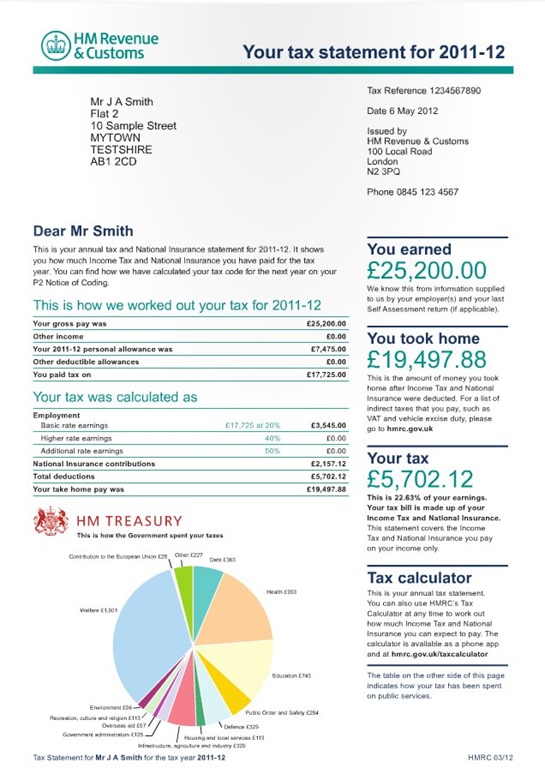
Every national and local government should include this pie chart with tax assessments
11 Feb 2015 Leave a comment
Millennials Don’t Know What “Socialism” Means
11 Feb 2015 Leave a comment
in comparative institutional analysis, constitutional political economy, economics of media and culture, Marxist economics, politics - USA Tags: economics of socialism, rational ignorance, rational irrationality

When did global technological leadership migrate across the Atlantic?
10 Feb 2015 Leave a comment
in economic growth, human capital, politics - USA, technological progress Tags: global technological frontier, growth of knowledge, innovation, Schumpeter, technology diffusion

HT: theatlantic.com/a-short-history-of-american-invention/385279/ via Mikko Packalen and Jay Bhattacharya


Recent Comments