Chinese electricity production is based on fossil fuels
08 Dec 2014 Leave a comment
in development economics, growth disasters, growth miracles, politics - USA, population economics Tags: China
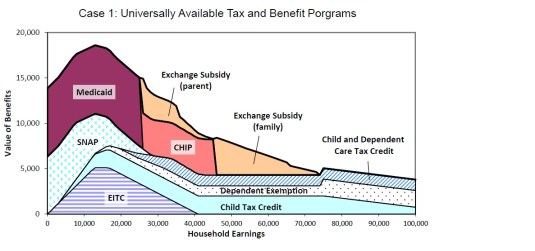
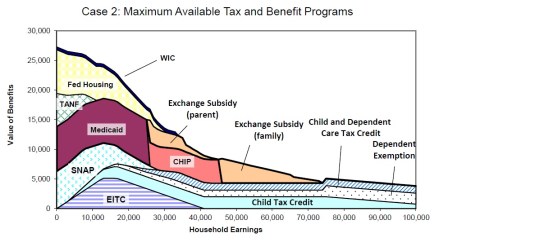
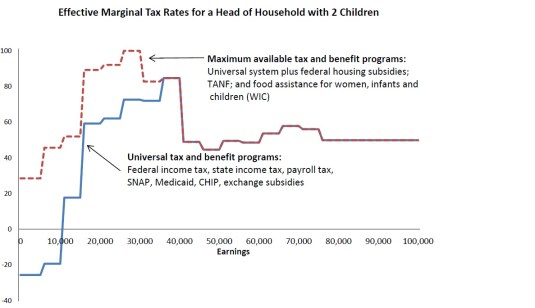
The shape of the welfare state in the USA
08 Dec 2014 Leave a comment
in fiscal policy, income redistribution, labour economics, labour supply, politics - USA, public economics, welfare reform Tags: effective marginal tax rates, Obama care, poverty traps, welfare reform

One in five Americans on Medicaid; this image does not include those on Medicare –those over 65 who get their healthcare paid by the government.



Pearl Harbor on December 7th, 1941
07 Dec 2014 Leave a comment
The Grumpy Economist: What’s wrong with macro?
06 Dec 2014 Leave a comment
in business cycles, fiscal policy, global financial crisis (GFC), great recession, macroeconomics, monetary economics, politics - USA Tags: Macroeconomics

10 Street Drugs That Used To Be Legal
05 Dec 2014 1 Comment
in applied welfare economics, economics of regulation, liberalism, libertarianism, political change, politics - New Zealand, politics - USA Tags: drug decriminalisation, marijuana decriminalisation
Apparently, this is how the Mont Pelerin Society rules the roost!?
05 Dec 2014 Leave a comment
in liberalism, politics - Australia, politics - New Zealand, politics - USA Tags: conspiracy theories, Leftover Left, Mont Pelerin Society, neoliberalism, nutters on the bus, Quacks, vast right-wing conspiracy

Solid lines refer to funding and dashed lines refer to mostly ideological connections
HT: old-rothschild-and-rockefeller-hands-controlled-the-libertarian-communist-dialectic/
Kokoro Scanner monitors your pulse to tell if you’re telling fibs | Daily Mail Online
05 Dec 2014 Leave a comment
in economics of bureaucracy, economics of crime, politics

We’ve got 5 years (now 1 hour left) to save world says Australia’s chief scientist Professor Penny Sackett, 4th December 2009 | Herald Sun
04 Dec 2014 Leave a comment

Is welfare dependence optimal for whom – part 1? The labour-leisure trade-off and the rewards for working
04 Dec 2014 2 Comments
in applied welfare economics, labour economics, labour supply, politics - New Zealand, welfare reform Tags: Labour leisure trade-off, welfare reform
The higher is the welfare benefit, the greater the probability that an individual will choose to go on welfare rather than work. Welfare dependency is the most rewarding leisure-labour trade-off for them.
The higher the wage on offer to a given worker in the labour market, the greater is the probability that they will choose to work rather than go on welfare. Working is the most rewarding leisure-labour trade-off for them.
Both the income and substitution effects of welfare benefits provide a disincentive to work. Higher income levels from generous welfare benefits induce higher consumption of all normal goods, including leisure. Income taxes and a high benefit abatement rate provides little incentive to work (the substitution effect) for lower paid workers and some second earners.
When confronted with the choice of a low-paying job and a generous welfare benefit, some will choose welfare over work. These workers are responding rationally to the (dis)incentives embedded in the labour market and welfare system. For them, welfare dependency is optimal.
This is particularly true for single parents with low labour market skills. One or more children may generate more net income (from increased welfare benefits) than working in the labour market and paying child care. If there is no expiry date for these welfare benefits, some individuals who go on welfare will stay on welfare for a long period of time.
Of course, the economics of crime comes up. A condition of receipt of welfare benefits in just about every welfare state is healthy adults must make themselves available for work and actively look for work.
Most of the essentials of the impact of welfare reform on labour-leisure trade-offs are captured, and most policy dilemmas are clearly defined within the framework in Figure 1. Figure 1 illustrates the position of two workers regarding whether to work (the participation decision) and how many hours to work.
Figure 1: The basic leisure-labour trade-off

The hourly wage rate represented by the symbol W in Figure 1 is traded-off against working fewer or no hours. This additional of leisure time includes: pure leisure; household production such as child care, cooking and cleaning; education and other human capital investments; and personal time such as self-care and sleep.
- Worker 1 in Figure 1 works 40 hours while worker 2 with different circumstances works part-time in Figure 1.
- Worker 1 could be a male with no dependents so not working full-time has a relatively high opportunity cost even if low paid.
- Women who higher qualifications are also more likely to be persistent workers alternating between full-time career and part-time work when there are child care responsibilities.
- Worker 2 in Figure 1 could be a sole parent or a second earner in a married couple with young children. For these workers, working can have a high opportunity cost because of the cost of child care, especially if the sole parent or second earner is low paid.
- For workers with a high opportunity cost of work and low wages from working, for them, welfare dependents can be quite optimal.
- Not so for society because the welfare benefits conditional on people making themselves available for work and taking steps to find it and stay in work.
The next few blogs will explain how various welfare reforms change the labour leisure trade-off for welfare recipients. There are three main parameters in any welfare system:
- the amount of the welfare benefit,
- the threshold for the benefit abatement on earned income, and
- the benefit reduction rate for income exceeding the abetement-free threshold.
This is not to ignore work testing and work requirements, these complications are postponed to later blogs. All of these parameters and the implications of changing them on labour supply will be discussed in future blogs.
The blogs so far
is-welfare-dependency-optimal-for-whom-part-3-abatement-free-income-thresholds-and-labour-supply
is-welfare-dependents-optimal-for-the-whom-part-4-in-work-tax-credits-and-labour-supply
is-welfare-dependence-optimal-for-whom-part-5-higher-abatement-rates-and-labour-supply
is-welfare-dependence-optimal-for-whom-part-6-mandatory-work-requirements-and-labour-supply
is-welfare-dependence-optimal-for-whom-part-7-the-role-of-tagging-in-welfare-benefits-system
Recent trends in oil prices
04 Dec 2014 Leave a comment
in energy economics, politics - USA, technological progress Tags: Oil prices
Why some economists would not oppose minimum wage increases
04 Dec 2014 Leave a comment
In 1965 an editor at Look asked an MIT economist why "liberal" economists hadn't signed an anti-minimum wage letter. http://t.co/ONuQKIWhG7—
Garett Jones (@GarettJones) December 02, 2014
The Economic Case Against Majoring in Fun Things – The Atlantic
03 Dec 2014 Leave a comment
in economics of education, human capital, occupational choice, politics - USA Tags: human capital, Returns to education

Four Distinct Foreign-Policy Orientations
03 Dec 2014 Leave a comment
in International law, liberalism, politics - New Zealand, politics - USA, war and peace Tags: non-interventionist foreign policy
|
Four Distinct Foreign-Policy Orientations |
||
| Internationalist: Willing to intervene in foreign affairs | Isolationist: Reluctant to intervene in foreign affairs | |
| Emphasis on the national interest as primary value in foreign policy | National-interest interventionism | National-interest isolationism |
| Significant emphasis on altruism in foreign policy | Altruistic interventionism | Altruistic isolationism |
|
Source: Reichley 2000. |
||


Recent Comments