
“On an average survey day, 98 percent of people reported not spending any time cycling”
27 Jan 2018 Leave a comment
in politics - New Zealand, transport economics
Our house too big for ultrafast broadband hook-up @stevenljoyce @TaxpayersUnion @EricCrampton
26 Jan 2018 Leave a comment
in economics of bureaucracy, entrepreneurship, industrial organisation, politics - New Zealand, Public Choice
Your picking loses detector is at maximum when governments are retrofitting infrastructure in the suburbs. We just had Chorus in to retrofit ultrafast broadband to our house. Our house is too big and complicated to rewire.

In addition to stringing a wire from the road to a ATC box, as with everybody, we need to rewire from that box to my office for another ultrafast broadband box next to my computer on the other side of the house 2 floors up. I was told I would need an electrician to do that as the house is already built, most of the wires will probably be external, ugly and I would have to pay for it and the drilling through my floors.
Seems like the political genius behind government paying for ultra fast broadband including fitting it into my house assumed everybody had a nice simple one story house where the office was near the ACT box so there would be minimal rewiring. That would involve minimal internal wiring.
If I want to proceed, I need to bring in an electrician and as the house is already been built, he will need to drill holes, string wires and then the chorus team will come back. The alternative was to have my modem just above the ATC box in the spare bedroom and the rest of the house operate including my desktop in my office on Wi-Fi which seems to very must defeat point of ultrafast broadband indeed.
Slippery @jamespeshaw admits he does not know the cost of #globalwarming. Had to go to ombudsman to get him to admit that. Maybe he should ask for those projections and considered ministerial advice on the same
25 Jan 2018 Leave a comment
in applied welfare economics, global warming, politics - New Zealand, Public Choice

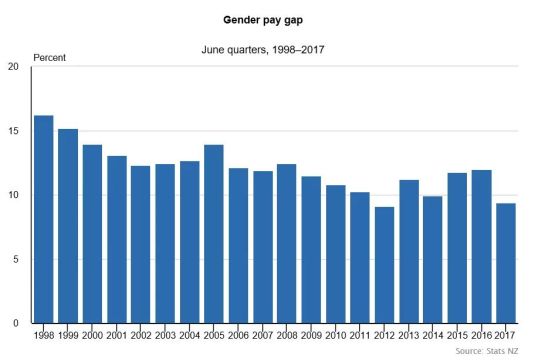
.@jamespeshaw has asked Stats NZ to collect gender pay gap data
14 Jan 2018 Leave a comment
in discrimination, economics, gender, labour economics, politics - New Zealand Tags: gender wage gap
The Sunday Star Times reported today that
The Government has ordered Statistics NZ to begin measuring the country’s gender pay gap… new Statistics Minister James Shaw believed there was an onus on his department to gather the data, so the Government could fix it.
It was too early to know exactly how it was going to be measured, Shaw said in a written statement.
Not sure to what to make of this because extensive data is already collected.
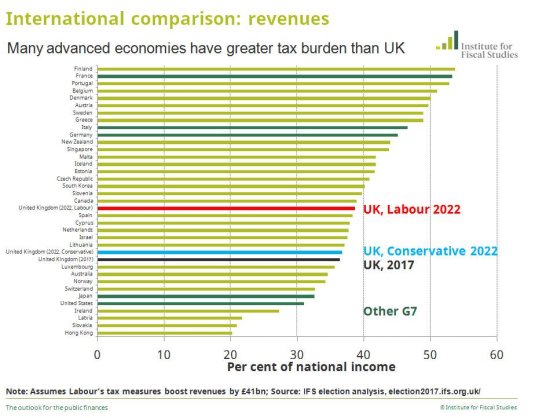
There are no externalities from hosting the America’s Cup because externalities arise from incomplete property rights
23 Dec 2017 Leave a comment
in applied price theory, applied welfare economics, politics - New Zealand, rentseeking, sports economics
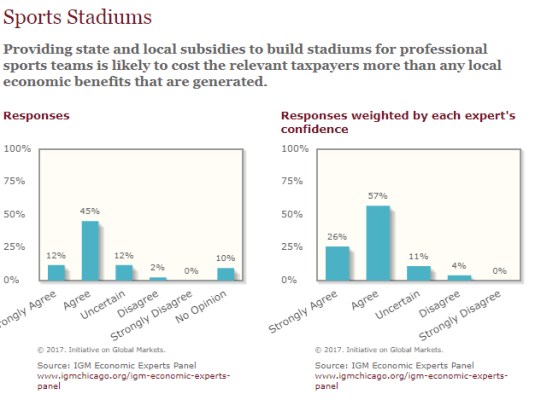
Externalities arise out of incomplete property rights. The only externalities that arise from an airport expansion proposed in Wellington is from noise.
There are no externalities from building sports stadiums or hosting mega sports events because all of the effects are transacted through the market. No inputs are used without the permission of the owner, nothing is produced that is not charged for by the venue or event organisers.
As for the use of benefit cost analysis to strengthen the claim for a government subsidy, you use cost benefit analysis when you are too stupid to charge for the good or service such as a road or you are evaluating regulations because they deal with nonmarket effects, effects that are not mediated through the market process.
Sports stadiums and mega sports events should pass the usual market test. Is it profitable for the entrepreneurs backing the project when they are using their own money.
Bryan Caplan on why the minimum wage increase must kill jobs
22 Dec 2017 Leave a comment
1. The literature on the effect of low-skilled immigration on native wages. A strong consensus finds that large increases in low-skilled immigration have little effect on low-skilled native wages. David Card himself is a major contributor here, most famously for his study of the Mariel boatlift. These results imply a highly elastic demand curve for low-skilled labor, which in turn implies a large disemployment effect of the minimum wage.
This consensus among immigration researchers is so strong that George Borjas titled his dissenting paper “The Labor Demand Curve Is Downward Sloping.” If this were a paper on the minimum wage, readers would assume Borjas was arguing that the labor demand curve is downward-sloping rather than vertical. Since he’s writing about immigration, however, he’s actually claiming the labor demand curve is downward-sloping rather than horizontal!
2. The literature on the effect of European labor market regulation. Most economists who study European labor markets admit that strict labor market regulations are an important cause of high long-term unemployment. When I ask random European economists, they tell me, “The economics is clear; the problem is politics,” meaning that European governments are afraid to embrace the deregulation they know they need to restore full employment. To be fair, high minimum wages are only one facet of European labor market regulation. But if you find that one kind of regulation that raises labor costs reduces employment, the reasonable inference to draw is that any regulation that raises labor costs has similar effects – including, of course, the minimum wage.
3. The literature on the effects of price controls in general. There are vast empirical literatures studying the effects of price controls of housing (rent control), agriculture (price supports), energy (oil and gas price controls), banking (Regulation Q) etc. Each of these literatures bolsters the textbook story about the effect of price controls – and therefore ipso facto bolsters the textbook story about the effect of price controls in the labor market.
If you object, “Evidence on rent control is only relevant for housing markets, not labor markets,” I’ll retort, “In that case, evidence on the minimum wage in New Jersey and Pennsylvania in the 1990s is only relevant for those two states during that decade.” My point: If you can’t generalize empirical results from one market to another, you can’t generalize empirical results from one state to another, or one era to another. And if that’s what you think, empirical work is a waste of time.
4. The literature on Keynesian macroeconomics. If you’re even mildly Keynesian, you know that downward nominal wage rigidity occasionally leads to lots of involuntary unemployment. If, like most Keynesians, you think that your view is backed by overwhelming empirical evidence, I have a challenge for you: Explain why market-driven downward nominal wage rigidity leads to unemployment without implying that a government-imposed minimum wage leads to unemployment. The challenge is tough because the whole point of the minimum wage is to intensify what Keynesians correctly see as the fundamental cause of unemployment: The failure of nominal wages to fall until the market clears.
From http://econlog.econlib.org/archives/2013/03/the_vice_of_sel.html
The new corporate tax landscape
19 Dec 2017 Leave a comment
in fiscal policy, politics - New Zealand, politics - USA, public economics Tags: company tax
Co-op founder expains impact of net neutrality on a small ISP
17 Dec 2017 Leave a comment
in applied price theory, economics of media and culture, economics of regulation, industrial organisation, politics - New Zealand, politics - USA, survivor principle Tags: net neutrality, The fatal conceit, The pretence to knowledge, unintended consequences

New Zealand sexes up the numbers on homelessness
16 Dec 2017 Leave a comment
in politics - New Zealand, poverty and inequality, urban economics
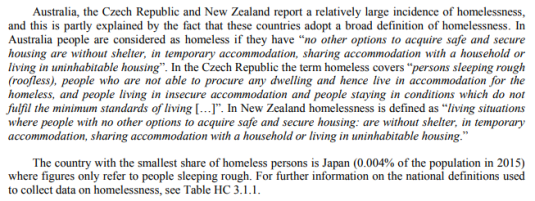
Source: OECD Affordable Housing Database – http://oe.cd/ahd OECD – Social Policy Division – Directorate of Employment, Labour and Social Affairs Last updated on 24/07/2017 HC3.1 HOMELESS POPULATION
How much saved by raising the superannuation eligibility age to 67?@Taxpayersunion
15 Dec 2017 Leave a comment
in fiscal policy, politics - New Zealand
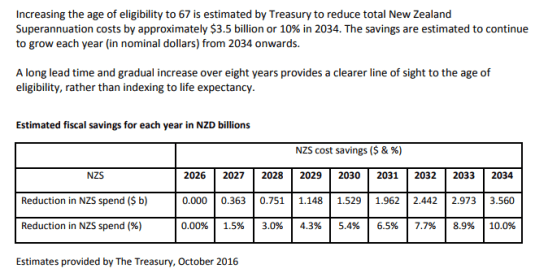
Source: 2016 Review of Retirement Income Policies, Retirement Commissioner.
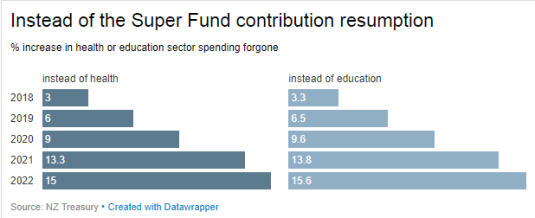
Instead of what? @NZSuperfund contribution resumption @taxpayersunion
14 Dec 2017 Leave a comment
in politics - New Zealand, public economics
Would it have been cheaper just to raise the eligibility age to 67 for New Zealand superannuation? By 2022, either health or education spending could have been 15% higher.
1916 Conscription plebiscite pamphlet is still basis of Australian national security policy. New Zealand’s too. (Keep war at a distance; have a great and powerful friend).
02 Dec 2017 Leave a comment

.@NZSuperFund still struggles to beat reference portfolio @TaxpayersUnion; 1.45% p.a. since inception
26 Nov 2017 Leave a comment
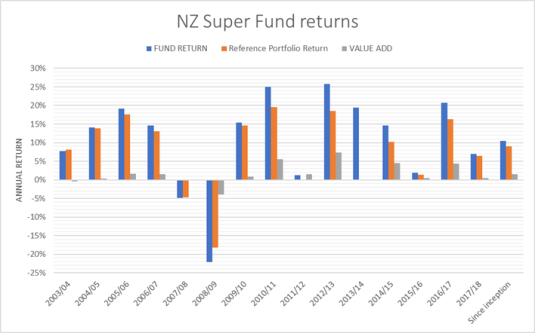
from https://www.nzsuperfund.co.nz/performance-investment/monthly-returns
Little wonder that no hedge fund headhunts from the New Zealand superannuation fund. Their staff turnover ratios are below 10% and often 5% and the CEO is paid a pittance by hedge fund standards.
Page 32 of "An Illustrated Guide to Income" more economic #dataviz at: bit.ly/12SEI9p http://t.co/HYm0II2UNI—
Catherine Mulbrandon (@VisualEcon) May 08, 2013
Page 33 of "An Illustrated Guide to Income" more economic #dataviz at: bit.ly/10M7lqR http://t.co/FcmaqZWB32—
Catherine Mulbrandon (@VisualEcon) May 09, 2013


Recent Comments