Wellywood is in an expensive global subsidy market

The $300 million in film subsidies in the coming budget is riding off the back of Sir Peter Jackson’s phenomenal success. Our politicians will not consider pulling out of this global subsidy market until they have backed a few box office bombs.

The first law of Hollywood economics illustrates how fickle moviemaking is: “Nobody knows anything … Not one person in the entire motion picture field knows for a certainty what’s going to work. Every time out it’s a guess and, if you’re lucky, an educated one (Goldwin 1989).”

Big budgets, star power and large marketing budgets do not reduce ‘the terror of the box office’. Industry profits depend on the rare blockbuster; 78 percent of films are unprofitable (Walls 2005). Taxpayers cannot afford to pick winners in an industry of flops and the occasional blockbuster.

You do not have to be much of a film buff to remember box office flops with big names in them. Every Robert De Niro fan has been asking for a fair time now why did he agree to his latest film? Bruce Willis spent the middle part of his career recovering from a few box office bombs.

Many famous films and TV shows succeeded because the producers made something that audiences did not know they wanted to see until they saw it. Their success surprised everyone, including their producers. Star Wars, Rocky, The Rocky Horror Picture Show, One Flew over the Cuckoo’s Nest, My Big Fat Greek Wedding, The Godfather, Fawlty Towers and Seinfeld are all examples.

We watched the Seinfeld pilot last week. How did it ever get picked up (and initially only for four episodes)? George Clooney appeared in 23 failed pilots before hitting it big. These are the freaky odds taxpayers are playing when selecting which films to subsidise.

The most profitable movies of all time such as National Lampoon’s Animal House often had tiny budgets. Donald Sutherland is still kicking himself for insisting on a $50,000 cash rather than $35,000 plus 15% of the eventual $500 million gross (in present-day dollars). He thought he had made a nifty deal for one day’s work in a $2.5 million film, signing on only as a favour to his old baby sitter John Landis. You just never know when the biggest break in your life is passing you by in show business.

Sir Alec Guinness hated every day on the Star Wars set but made most of the money he ever made in his life from his 2 ¼%. It was supposed to be 2 ½% but did not think it important to get the increase from 2% in writing before the film’s first release in a mere 32 theatres.

George Lucas planned to be out of town to escape some of the backwash of failure at the box office. He was in LA through a mix-up in dates and only realised he was rich when he went out for a hamburger to be caught up in massive traffic jams around a theatre playing Star Wars.

Think of any successful film in the first half of the 1970s, Steve McQueen turn down it down; any successful film in the second half of the 70s including Star Wars, James Caan turned it down. Sean Connery turned down Lord of the Rings.

On Academy Awards night, the audience is full of stars showing surprising grace under pressure in an emotional profession. They show their true acting chops by jumping up, applauding and faking genuine smiles despite their having turned down the Oscar-winning role.

Many classics have modest initial reviews or weak box offices such as Blade Runner and Get Carter. Radical uncertainty about whether you will like what you see is part of the experience sought when going to the movies. My favourite movie is Casablanca the second time I saw it at Uni for $1.

Studios and investors cope with this extreme uncertainty through a portfolio approach. They invest in many films and in both established and new talent and hope to get lucky.

New Zealand taxpayers cannot diversify the risk of frequent flops with a global portfolio approach. We have only enough cash to spare to subsidise a few films. Many of these are now sequels or franchises that sooner or later will tire with their inherently fickle audiences.

Any industry which survives on the grace and favour of the subsidy granter is inherently vulnerable; doubly so when consumer tastes are so unpredictable. With 6000 or so employed in the NZ film industry, the danger is politicians will never turn the subsidy tap off because of job losses.

New Zealand is a bit player in a global subsidy market where national, state and city governments are all pitching big to attract a bit of glamour their way.

The poor returns on film subsidies are well-known. The Treasury estimated taxpayers spent $472 billion in seven years for net economic benefits of just $13.6 million from 2004 to 2011; an annual rate of return of less than one percent. Treasury found only limited evidence of spill-overs to tourism.

The infant industry argument for subsidies does not stand up if only because they never grow up. Perpetually subsidising the film industry as the basic business model makes no sense at all.

Looking past the tinsel town glamour, film subsidies are a race to the bottom for the taxpayer. That does not count for much when there are photo opportunities for politicians with movie stars.

Age distribution of party voters in 2014 NZ election

Source: Sankey charts for swinging voters.

Why so few @NZGreens party votes in South Auckland in 2014?

part vote by electorate of greens 2014

Image

@NZLabour policy only needs to be this single paragraph @PhilTwyford; the rest is populist overkill that will make things worse

Source: Housing – New Zealand Labour Party.

It used to be pretty standard to suggest that religions were backward

7th century

Instead of contributing to the @NZSuperfund? @TaxpayersUnion

Spending on health or education could have been increased by a quarter or the company tax rate cut by up to 10 percentage points but for the Cullen Fund.

nzsuperfund policy alternatives

#OTD V-E day

Image

Home ownership in 2013 was at its lowest rate since the 1950s.

image

Source: A century of censuses – dwellings and households.

Basic Income: Better Than Welfare?

Johan Norberg – Picking Winners or Losers

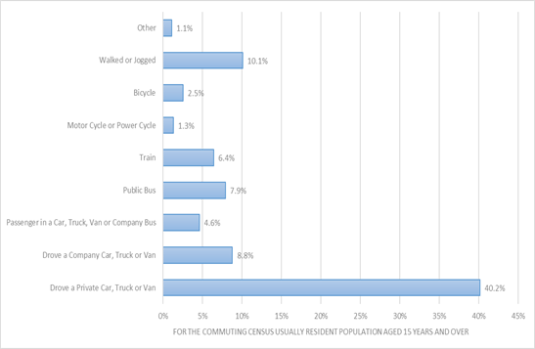
Some people actually use public transport in Wellington

Image

Submission to Select Committee on Employment Relations (Allowing Higher Earners to Contract Out of Personal Grievance Provisions) Amendment Bill

This Bill will increase the wages of employees paid more than the contracting out limit. Currently, these workers share the risk of a job match turning out not as hoped with their employer. Their employers respond by reducing the wages they offer because of this additional risk placed on them if the job match turns out a disappointment. Asking an employee of any pay level to take on more of the risks of an unsuccessful job match will only happen if you offer them more wages.

Employment protection laws make it costlier to fire an employee, employers will be more cautious about hiring and will pay less because they carry the burden if a job match going wrong.

Not all job matches turn out to be as hoped and the further up the management hierarchy you go, the more likely that the Peter principle, that employees are promoted one or two levels beyond the level of maximum competence. Successful employees may simply take that one promotion to many. This increases the risk premium in managerial and executive labour markets. The way in which this risk premium is shared between employer and recruit influences how much they are paid.

Employers who failed to treat workers fairly and pay them the going wage risk an increase in job quit rates. A standard literature review result is businesses spend about one-fifth of an employee’s annual salary to replace that worker. It is costly to replace workers because of the productivity losses when someone leaves a job, the costs of hiring and training a new employee, and the slower productivity until the new employee gets up to speed in their new job. With large fixed costs of recruitment and training, employers cannot afford to behave whimsically if they wish to survive in competition with the rivals with more competitive wage and employment policies.

The Centre for American Progress was good enough to document the very substantial costs of
recruiting and training a replacement employee. Employers have every reason to protect their investments in training and recruitment by minimising job turnover costs.

A policy designed to protect workers from dismissal, over time, will increase the duration of unemployment spells through a chilling effect on job creation. Employment protection laws are a tax on job creation. With fewer vacancies posted, the unemployed will take longer to find jobs. The far longer average duration of unemployment in countries in Europe with strong employment protection is shown that to be true time again. Fewer jobs are created fewer people fired so fewer vacancies open so the unemployed spend longer searching for new jobs.

There are very high outflow rates from unemployment among the Anglo-Saxon and Nordic economies. The economies of Continental Europe stand in stark contrast. Unemployment outflow rates in these economies lie below 10% at a monthly frequency.

Graduate textbooks in labour economics show that a wide range of studies have found the predicted negative effects of employment law protections on employment and wages and on investment and the establishment and growth of businesses:

1. Employment law protections make it costlier to both hire and fire workers.

2. The rigour of employment law has no great effect on the rate of unemployment. That being the case, stronger employment laws do not affect unemployment by much.

3. What is clear is that is more rigourous employment law protections increase the duration of unemployment spells. With fewer people being hired, it takes longer to find a new job.

4. Stronger employment law protections also reduce the number of young people and older workers working age who hold a job.

5. The people who suffer the most from strong employment laws are young people, women and older adults. They are outside looking in on a privileged subsection of insiders in the workforce who have stable, long-term jobs and who change jobs infrequently.

Trial periods are common in OECD countries. There is plenty of evidence that increased job security leads to less employee effort and more absenteeism. Some examples are:

  • Sick leave spiking straight after probation periods ended;
  • Teacher absenteeism increasing after getting tenure after 5-years; and
  • Academic productivity declining after winning tenure.

Jacob (2013) found that the ability to dismiss teachers on probation – those with less than five years’ experience – reduced teacher absences by 10% and reduced frequent absences by 25%.

Studies also show that where workers are recruited on a trial, employers have to pay higher wages. For example, teachers that are employed with less job security, or with longer trial periods are paid more than teachers that quickly secure tenure.

Workers who start on a trial tend to be more productive and quit less often. The reason is that there was a better job match. Workers do not apply for jobs to which they think they will be less suited. By applying for jobs that the worker thinks they will be a better fit, everyone gains in terms of wages, job security and productivity.

The only thing that is special about chief executives and others paid more than $150,000 is they are higher risk recruitments because of the costs of it going wrong. They also pose great costs on the firm if they leave unexpectedly.

Bang Dang Nguyen and Kasper Meisner Nielsen looked at how share prices reacted to 149 cases of the chief executive or another prominent manager dying suddenly in American companies between 1991 and 2008. If the shares rise on an executive’s death, he was overpaid; if they fall, he was not. Only 42% of the bosses studied were overpaid. Those with the bigger pay packages gave the best value for money as measured by the share-price slump when they passed away unexpectedly.

Share prices do speak to the value of the company and the contribution of its CEO. The share price of Apple went up and down by billions on the back of rumours about the health of Steve Jobs.

In terms of splitting of what some call the labour surplus increase from a firm hiring an executive, these employees retain on average about 71% and their employer keeps 29%. Others call this rent sharing. 71% going to the CEO might initially sound high, “but it’s not like he’s taking home more than he produced for the company,” says Nguyen.

In summary, this bill will increase the salaries of those affected by it. It will make it easier for them to find jobs especially if from less conventional backgrounds.

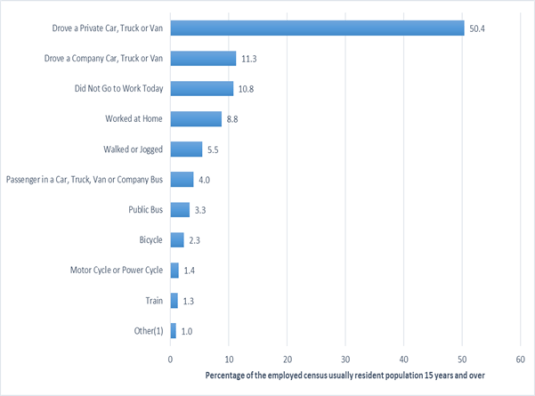
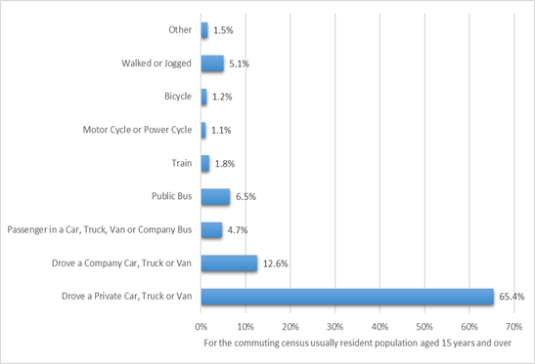
A few people in Auckland take the train or bus to work

Image

Failing firm defence for legacy media mergers

There is a large literature on the failing firm defence to merger law. I wrote an Australian Law Journal article about that defence many years ago.

The essence of the argument is that when a firm is to fail, the choice is between a high cost single plant monopoly and a lower cost multi-plant monopoly that absorbs the asset failed firm. For today’s purposes, that would be newspapers that would otherwise close but for the now blocked Fairfax/NZME media merger

Some think allowing mergers of market leaders with failing firms is good for competition.

To get a merger clearance on the basis of the failing firm defence, the merging companies must provide sufficient, compelling evidence that the failing firm will inevitably leave the market without the merger and there is no less anti-competitive alternative.

The basic rationale behind the doctrine is that since the failing firm would have left the market anyway due to its financial collapse, any harm to competition caused by the loss of an independent market player would arise regardless of the merger. Allowing the merger saves scrapping the assets of the failed firm.

Posner and Easterbrook described the failing firm defence as one of the most pernicious doctrines to ever arise in antitrust law. They did not elaborate much.

Gender pay gap shown to be a myth by @paulabennettmp @women_nz

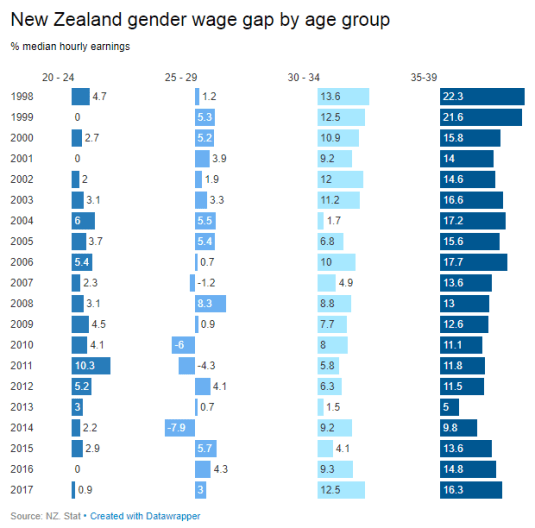
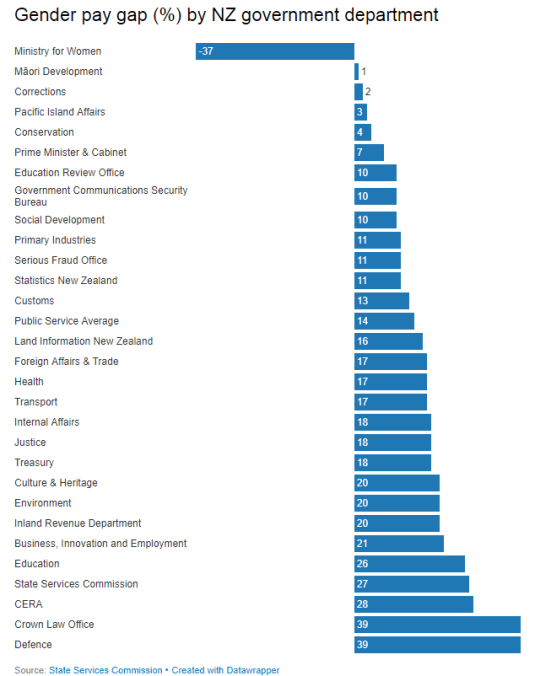
The Minister for Women Paula Bennett and the Ministry of Women published excellent research in February showing there cannot be a gender wage gap driven by unconscious bias. The Minister has blamed a large part of the remaining gender wage gap on unconscious bias.

… up to 84 per cent of the reason for the Pay Gap, that’s right, 84 per cent, is described as ‘unexplained factors.’ That means its bias against women, both conscious and unconscious.

It’s about the attitudes and assumptions of women in the workplace, it’s about employing people who we think will fit in – and when you have a workforce of men, particularly in senior roles then it seems likely you’re going to stick with the status quo – whether they do that intentionally or just because “like attracts like”.

It’s because there is still a belief that women will accept less pay than men – they don’t know their worth and aren’t as good at negotiating.

The reason why this February 2017 research on the motherhood penalty contradicts earlier Ministry of Women research on unconscious bias and the gender wage gap is simple.

There is a large difference in the gender wage gap from mothers and for other women. As the adjacent graphic from Ministry of Women research shows, the gender wage gap for mothers is 17% but it is only 5% from other women.

Source: Effect of motherhood on pay – summary of results Statistics New Zealand and Ministry of Women February 2017.

We men, us dirty dogs all, have no way of knowing whether a female applicant is a mother. Remember we are dealing with unconscious bias, the raised eyebrow, the prolonged pause, the lingering glance, not a conspiracy or a prejudice of which we are self-aware and take overt steps to implement. Unconscious bias is unconscious by definition.

Because the bias against women is implicit and unconscious, we men, dirty dogs all, do not know we are biased, so we do not know we have to make further enquiries to check if the female applicant is a mother so we can discriminate against her more than we do for other women.That is before we consider other drivers of the gender wage gap such as whether there are relatively large spaces between the births of her children. 

Large spaces between the birthdays of children greatly increases the gender wage gap because women spend much more time out of the workforce and part-time if they spread births. This reduces their accumulation of on-the-job human capital and encourages women who plan large families to choose occupations and educational majors that do not depreciate rapidly during career interruptions.

I have no idea how an unconsciously biased employer can discover  if a woman has children with spaced out ages and therefore discriminate against an even more, unconsciously, of course. We men, dirty dogs all, do not know that in order to discriminate against them, especially in shortlisting for initial hiring when we have no information beyond the application about them.

Do women have more unconscious bias against women than men? If not, there should be differences in the gender pay gap in firms with more women managers or owners.

Perhaps there is more unconscious biased in promotions because managers may have accidentally learnt are the ages of the children of  female applicants and unconsciously taken a note to remember that when unconsciously discriminating against them in promotion. This unconscious bias involves a lot of very conscious data collection and retention.

All in all, the unconscious bias hypothesis simply cannot explain such a large difference between the gender wage gaps of parents and non-parents. There is too much evidence whose existence that is strictly forbidden by the hypothesis of unconscious bias against women in the workplace.

Previous Older Entries Next Newer Entries

Thoughts from the North

Celebrating humanity's flourishing through the spread of capitalism and the rule of law

Fardels Bear

A History of the Alt-Right

Vincent Geloso

Econ Prof at George Mason University, Economic Historian, Québécois

Bassett, Brash & Hide

Celebrating humanity's flourishing through the spread of capitalism and the rule of law

Truth on the Market

Scholarly commentary on law, economics, and more

The Undercover Historian

Beatrice Cherrier's blog

Matua Kahurangi

Celebrating humanity's flourishing through the spread of capitalism and the rule of law

Temple of Sociology

Celebrating humanity's flourishing through the spread of capitalism and the rule of law

Velvet Glove, Iron Fist

Celebrating humanity's flourishing through the spread of capitalism and the rule of law

Why Evolution Is True

Why Evolution is True is a blog written by Jerry Coyne, centered on evolution and biology but also dealing with diverse topics like politics, culture, and cats.

NoTricksZone

Celebrating humanity's flourishing through the spread of capitalism and the rule of law

Homepaddock

A rural perspective with a blue tint by Ele Ludemann

Kiwiblog

DPF's Kiwiblog - Fomenting Happy Mischief since 2003

The Dangerous Economist

Celebrating humanity's flourishing through the spread of capitalism and the rule of law

Watts Up With That?

The world's most viewed site on global warming and climate change

The Logical Place

Tim Harding's writings on rationality, informal logic and skepticism

Doc's Books

A window into Doc Freiberger's library

The Risk-Monger

Let's examine hard decisions!

Uneasy Money

Commentary on monetary policy in the spirit of R. G. Hawtrey

Barrie Saunders

Thoughts on public policy and the media

Liberty Scott

Celebrating humanity's flourishing through the spread of capitalism and the rule of law

Point of Order

Politics and the economy

James Bowden's Blog

A blog (primarily) on Canadian and Commonwealth political history and institutions

Science Matters

Reading between the lines, and underneath the hype.

Peter Winsley

Economics, and such stuff as dreams are made on

A Venerable Puzzle

"The British constitution has always been puzzling, and always will be." --Queen Elizabeth II

The Antiplanner

Celebrating humanity's flourishing through the spread of capitalism and the rule of law

Bet On It

Celebrating humanity's flourishing through the spread of capitalism and the rule of law

History of Sorts

WORLD WAR II, MUSIC, HISTORY, HOLOCAUST

Roger Pielke Jr.

Undisciplined scholar, recovering academic

Offsetting Behaviour

Celebrating humanity's flourishing through the spread of capitalism and the rule of law

JONATHAN TURLEY

Res ipsa loquitur - The thing itself speaks

Conversable Economist

In Hume’s spirit, I will attempt to serve as an ambassador from my world of economics, and help in “finding topics of conversation fit for the entertainment of rational creatures.”

The Victorian Commons

Researching the House of Commons, 1832-1868

The History of Parliament

Articles and research from the History of Parliament Trust

Books & Boots

Reflections on books and art

Legal History Miscellany

Posts on the History of Law, Crime, and Justice

Sex, Drugs and Economics

Celebrating humanity's flourishing through the spread of capitalism and the rule of law

European Royal History

Exploring the Monarchs of Europe

Tallbloke's Talkshop

Cutting edge science you can dice with

Marginal REVOLUTION

Small Steps Toward A Much Better World

NOT A LOT OF PEOPLE KNOW THAT

“We do not believe any group of men adequate enough or wise enough to operate without scrutiny or without criticism. We know that the only way to avoid error is to detect it, that the only way to detect it is to be free to inquire. We know that in secrecy error undetected will flourish and subvert”. - J Robert Oppenheimer.
STOP THESE THINGS

The truth about the great wind power fraud - we're not here to debate the wind industry, we're here to destroy it.

Lindsay Mitchell

Celebrating humanity's flourishing through the spread of capitalism and the rule of law

Alt-M

Celebrating humanity's flourishing through the spread of capitalism and the rule of law