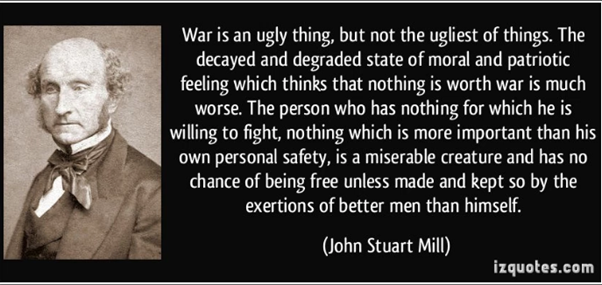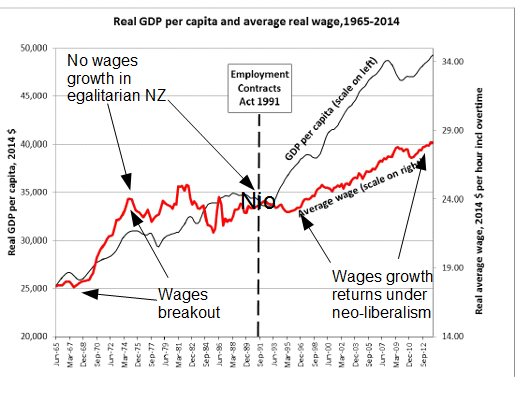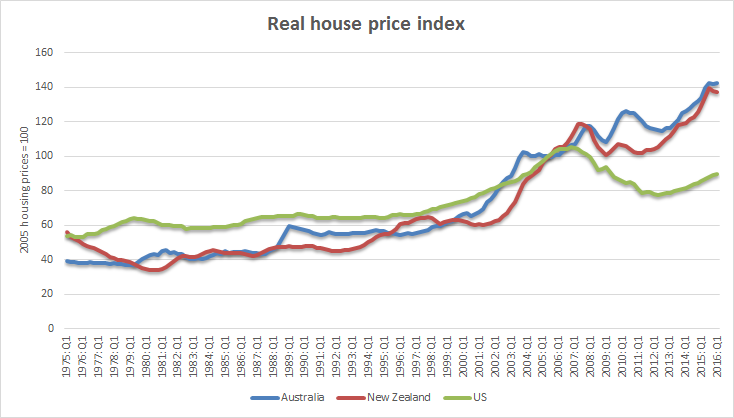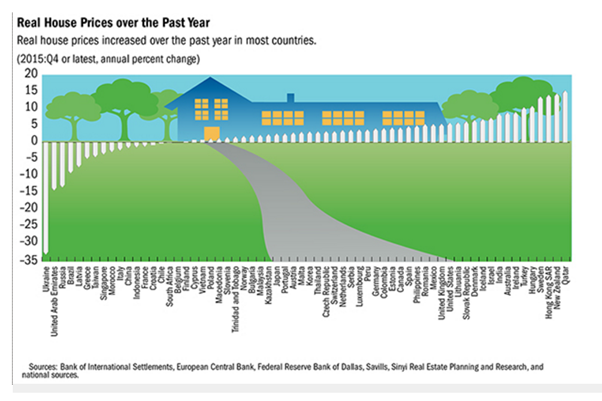
@FairnessNZ NZ leads world in closing the gender pay gap #equalpayday @greencatherine

image

Source: Earnings and wages – Gender wage gap – OECD Data.

   ..

4 Lessons for Morgan Foundation on How to Sell the #UBI @JordNZ

clip_image002[4]

Source: Morgan Foundation (12 April 2016) Four Lessons for Labour on How to Sell the UBI.

I will contract out to Geoff Simmons of the Morgan Foundation my reply to the claim yesterday by the Morgan Foundation’s Susan Guthrie that there are no negatives from a Universal Basic income. Simmons said:

With an unconditional basic income, most beneficiaries would be no better off than they are now (in fact sole parents would almost certainly receive a lower benefit).

Single parents are $150 a week worse off and retirees are $50 worse off per week if their current income support were replaced by a Universal Basic Income of $11,000 per adult.

Both were entitled to much more under the current welfare benefit system and New Zealand Superannuation respectively. Unemployment, sickness and invalid beneficiaries are about 5% better off under a Universal Basic Income.

Labour’s background paper described a Universal Basic Income of $11,000 as not enough. Guthrie is even franker yesterday about how inadequate a Universal Basic Income is for the poor:

A basic income policy would provide everyone aged 18 and over with an unconditional, tax free survival-level of income each and every year.

I will contract out to Gareth Morgan (2011) why a Universal Basic Income that provides a “survival-level of income” is not good enough:

Rather than decreeing a minimum wage and discovering the consequences for jobs and top-up payments, let’s agree on what is a minimum income every adult should have in order to live a dignified life and then see what flows from that.

We begin by specifying the income level below which we are not prepared to see anyone having to live.

A survival-level of income and a minimum income on which every adult can live a dignified life are not the same thing.

Gareth Morgan’s universal basic income of $11,000 for adults makes most better off except those for whom the modern welfare state was established to protect.

Most of the evidence against the Universal Basic Income comes from examining the numbers put forward by its proponents such as the Morgan Foundation and its excellent online tool. Brian Easton (2015) put it well when he said:

Many advocates put the UMI forward without doing the sums.

Those who do, find that the required tax rates are horrendous or the minimum income is so low that it is not a viable means of eliminating poverty. Among the latter are New Zealanders Douglas, Gareth Morgan and Keith Rankin.

How to tell if you are a modern progressive – a two-part test by Scott Sumner

image

Source: How to tell if you are a modern progressive, Scott Sumner | EconLog | Library of Economics and Liberty.

What undergrads and @stevenljoyce need to know about trade @GreenCatherine

Minister for everything Stephen Joyce wrote some nonsense in the paper today about how trade agreements and more exports will mean more jobs:

I would like to make the point that trade access is hugely important for a small country like New Zealand. 

Without fair and equal trade access we can’t sell as much of our goods and we get less for them. And that means fewer jobs.

This make-work bias is as bad as those who oppose trade agreements on the grounds of an anti-foreign bias. Trade affects the composition of employment, not the number of jobs. Paul Krugman spent a good part of the 1990s trying to explain that to the general public and public intellectuals.

image

Source: What Do Undergrads Need To Know About Trade?.

1992 Camille Paglia trashes Gloria Steinem wing of feminism

Is Kiwibank profitable enough to take on the big banks?

if Kiwibank is part of the competitive fringe of an oligopoly made up of the 4 Australian banks, it is not very profitable for a competitive fringe of a cartel as the chart below shows. The other New Zealand owned small banks in that competitive fringe are not that profitable at all. Undercutting an oligopoly and its high prices and above-average cost and above marginal cost pricing is not what it used to be for the competitive fringe in New Zealand banking, if there ever was a cartel.

image

Source: G1 Summary information for locally incorporated banks – Reserve Bank of New Zealand.

Bank customers can choose between four major banks and a competitive fringe. If those major banks are indeed overcharging because of price-fixing by a cartel or an oligopoly, that competitive fringe which includes Kiwibank has a real opportunity to expand profitably and with little risk.

The prospect of expansion by the competitive fringe that includes Kiwibank only increases the incentives on each of the four big banks to cheat on the cartel price. The first bank to cheat on the cartel will profit the most; the other banks who are colluding know this. As George Stigler concluded in his 1964 paper “The Theory of Oligopoly” as Peltzman and Carlton explain:

…once a price is somehow agreed upon, there will be incentives for individual rivals to cheat on the [collusive] agreement. Whether cheating occurs depends on weighing the profits from not cheating against the profits from cheating and then being detected and having competition break out…

any agreement among sellers cannot ignore the incentives to cheat provided by lags in detection. So understanding when a price elevated above the competitive level can be an equilibrium requires an analysis of the dynamic consequences of cheating versus not cheating…

Collusion over retail banking services and prices faces major hurdles that will lead to most attempts at price-fixing having a short life. These barriers to successful collusion include:

  • numerous competitors,
  • expansion by the smaller banks were not part of the cartel or cheat on the cartel
  • the entry and expansion of new banks,
  • the lack of a standard product,  and
  • a rapidly changing business environment.

Implicit understandings among the colluding banks may break down owing to conflicts over the most suitable price, the complexities of co-ordinating pricing across a diverse range of banking products, or the simple presence of a maverick bank.

As time passes, destabilising pressures within a banking cartel or oligopoly will build due to long-run substitution and the threat or actuality of entry by new banks and expansion by banks In the competitive fringe, which includes Kiwibank.

The first firm in any market may charge a high price relative to costs, but the entry of one or two more firms usually results in effective competition. Once there are three to five suppliers in a market, an additional entrant has little impact on prices because pricing is already as competitive as it can be.

When ANZ sought to acquire the National Bank of New Zealand in 2003, the Commerce Commission did not oppose this merger. The Commission did not consider that a substantial lessening of competition would follow this merger. The Commission said:

…the merger is unlikely to increase the likelihood of co-ordinated market power in the supply of transaction accounts because the fringe players are likely to provide some competition, the banks have different strengths and weaknesses and in particular ASB is unlikely to have the incentive to participate in co-ordinated power at the expense of its recent growth and customer satisfaction levels.

This analysis of co-ordinated market power applies to each of the relevant markets. Therefore the Commission concludes that the merger is unlikely to result in a substantial lessening of competition in the supply of transaction accounts.

In the supply of mortgages, savings accounts and credit cards the merger is unlikely to lead to a substantial lessening of competition, as in each of these markets, ASB, Westpac and BNZ are likely to provide sufficient competition to the combined entity.

An important driver of a competition in the mortgage market in 2003 was a high incidence of fixed-rate mortgages and the tendency of these fixed rate mortgagees to reconsider all their options at the end of each fixed rate term.

The Commission Commission noted that there was a large re-mortgaging market in New Zealand. Banks offer to do all the work for customers  wishing to switch over bank accounts and direct debit arrangements.

In a very atypical move for a purported cartel, in 2010 the bank owned Payments New Zealand agreed to change over direct debits over automatically when a customer switched banks, which made switching banks even more easier.

At the time of the ANZ and National Bank merger, the Commerce Commission noted that Kiwibank was offering lower rates on its mortgages as a way of gaining a foothold in the market.

The Commerce Commission could not have been more right about the vigour in competition in retail banking with regard to re-mortgaging and switching between fixed and floating mortgages in New Zealand.

As the chart below  of fixed and floating mortgage shares  a New Zealand bank balance sheets shows, there is a rapid exodus from fixed rate mortgages at the time of the Global Financial Crisis.

image

Source: S8 Banks: Mortgage lending ($m) – Reserve Bank of New Zealand.

I cannot see how any cartel or oligopoly could sustain price-fixing against such dynamic changes in market shares and product switching.

Cartels are is much more difficult to agree when there are many products about which to fix prices and market shares. At a minimum, this rapid movement of customers between mortgage products will sow suspicions that one or more rival banks is stealing customers thereby cheating on the cartel agreement. Not surprisingly, the history of cartels is a history of double-crossing. Banking is no exception.

@GarethMP @jamespeshaw need message discipline on @NZGreens as honest brokers

Yesterday morning, Green MP Gareth Hughes posted a British Greens’ video about how other politicians are a bunch of squabbling children but the Greens are above that. It’s only the Greens who offer a “true alternative to the establishment parties” and their “same childish Punch & Judy politics”.

Later that same day Greens co-leader James Shaw posted a video that shaded the truth about the history of dividends from Kiwibank as a way of scoring points of the National Party led government.

Shaw claimed that the government is extracting more and more dividends from Kiwibank rather than letting it keep those profits as capital on which the government owned bank can be a more aggressive competitor.

image

Source: Kiwibank pays its first dividend of $21 million to Government | Stuff.co.nz.

Shaw is vaguely correct in that it is dividends plural when referring to Kiwibank’s dividends. Kiwibank paid dividends of $21 million last year; and $750,000 the year before. Kiwibank has paid two dividends to New Zealand Post in its entire history since 2002.

It shades the truth to say that the government is extracting more and more dividends from Kiwibank when when it has only paid one dividend worth mentioning, which was last year.

image

Source: New Zealand Treasury – data released under the Official Information Act.

As for James Shaw’s claim that the entry of Kiwibank made banking in New Zealand much more competitive, Michael Reddell disposed of that by linking to a 2013 Treasury assessment of competition in retail banking.

image

image

Source: New Zealand Treasury Official Information Act Releases.

There are no excess profits in the New Zealand banking market for Kiwibank to undercut. Entry barriers are low, banking products are easy substitutes for each other between the competing banks, and the banks compete for market share by advertising  of, for example, special packages to switch banks.

Adding to the analysis of the Treasury, Posner and Easterbrook suggest that these industry behaviours together are suspicious.

  1. Fixed relative market shares among top firms over time.
  2. Declining absolute market shares of the industry leaders.
  3. Persistent price discrimination.
  4. Certain types of exchanges of price information.
  5. Regional price variations.
  6. Identical sealed bids for tenders.
  7. Price, output, and capacity changes at the time of the suspected initiation of collusion.
  8. Industry-wide resale price maintenance or non-price vertical restraints.
  9. Relatively infrequent price changes; smaller price reactions as a result of known cost changes.
  10. Demand is highly responsive to price changes at market price.
  11. Level and pattern of profits relatively favourable to smaller firms.
  12. Particular pricing and marketing strategies.

As the Treasury noted in its analysis, there are several small banks offering competitive rates that would allow them to expand if they offered value for money over the existing offerings. Returns on equity of the big banks are not discernibly higher than for the smaller ones.

To add again to the Treasury analysis, it is not easy to organize a cartel. There are markets to divide, prices to set, and production quotas to assign. The best place to be in a cartel is outside of it undercutting the higher price and selling as much as you can before the cartel inevitably collapses. Brozen and Posner suggest the following pre-conditions to collusion:

  • market concentration on the supply side;
  • no fringe of small sellers;
  • high transport costs from neighbouring markets;
  • small variations in production costs between firms;
  • readily available information on prices;
  • inelastic demand at the competitive price;
  • low pre-collusion industry profits;
  • long lags on new entry;
  • many buyers (otherwise selective discounting to big buyers will be too tempting while monitoring adherence to the agreement will be difficult);
  • no significant product differentiation;
  • large suppliers selling at the same level in the distribution chain;
  • a simple price, credit and distribution structure;
  • price competition is more important than other forms of competition;
  • demand is static or declining over time; and
  • stagnant technological innovation and product redesign.

Stable collusive arrangements are thus likely to be rare because the absence of any of the above conditions will tend to undermine the potential for successful collusion.

Successful cartel operation is even harder than its initial formation. Members of the cartel must continue to believe that they enjoy net profits from participating in the collusion.

The more profitable the collusive price fixing, the greater the incentive for outsiders to seek entry to compete. In cartel theory, these new entrants are known as interlopers.

image

The more numerous the participants in the cartel and the more lucrative the collusion, the greater the temptation for individual members to cheat and the greater the fear of each that some other member will cheat first.

Cartel members that cheat early profit the most from the cartel price before it collapses. That is why the history of cartels is a history of double-crossing. Long-term survival of the cartel has two fundamental requirements:

  1. cheating by a member on the cartel prices, outputs and market shares must be detectable; and

  2. detected cheating must be adequately punishable without breaking-up of the cartel.

If banking was a cartel, you would not see advertising on the TV every night inducing customers to switch but you do. That advertising is cheating on the banking cartel the New Zealand Greens want to break up.

There is an infallible rule in competition law enforcement. It arises mostly crisply in merger law enforcement. If competitors oppose a merger, the merger must be pro-consumer. If the merger is anti-competitive, that merger will increase prices. The competing firms can follow those prices up and profit from the weakening of competition subsequent to the merger.

@BernieSanders @GrantRobertson1 why does anyone bother to work in #Denmark?

image

Image

Do minimum wages stimulate productivity? @BernieSanders @livingwageNZ

image

Source: IZA World of Labor – Do minimum wages stimulate productivity and growth?

Will @JulieAnneGenter’s KiwiBank plan bankrupt KiwiPost? @JordNZ

The Greens are followed up on an earlier suggestion by Julie Anne Genter, the Green’s Shadow Minister of Finance, that KiwiBank should be refocused to keeping interest rates low. To that end, it would not be required to pay dividends to the government to help fund the effort. KiwiBank has only just started paying dividends to its parent, KiwiPost.

If that were to be the case, that KiwiBank was no longer be required to pay dividends, that would blow quite a hole in the balance sheet of its parent company KiwiPost.

KiwiPost owns the share capital of KiwiBank, which must be valued on a commercial basis to pass auditing as a state owned enterprise which is commercially orientated.

image

Source: Historic $21 million dividend paid by state owned bank Kiwibank | interest.co.nz.

That share capital owned by KiwiPost in KiwiBank would be have to be written off if KiwiBank were to pay no further dividends because it is no longer commercially orientated entity. Such a write-off of its investment in KiwiBank would write off most of Kiwi Post’s equity capital.

image

Source: Some 14 years after it launched and nearly NZ$830 mln later, Kiwibank predicted to become a self sustaining dividend payer in 2016 | interest.co.nz.

The reason why state owned enterprises are required to be valued on commercial principles is to ensure that any subsidies or other favours sought by politicians show up in the profit and loss statement or the balance sheet through asset write-offs. Section 7 of the State-Owned Enterprises Act 1986  non-commercial activities states that:

Where the Crown wishes a State enterprise to provide goods or services to any persons, the Crown and the State enterprise shall enter into an agreement under which the State enterprise will provide the goods or services in return for the payment by the Crown of the whole or part of the price thereof.

This statutory safeguard ensures that the cost of any policies proposed by ministers, and the Greens are very keen on transparency and independent costing of political promises, are plain to all.

@NZGreens expand KiwiBank into wrong market to cut mortgage rates @JulieAnneGenter

The Greens want to cut mortgage rates by having KiwiBank expand in business lending. Wrong market.

This expansion into a market that is not the mortgage market is to be underwritten by a capital injection as the Greens explain:

    1. Inject a further $100 million of capital in KiwiBank to speed its expansion into commercial banking;
    2. Allow KiwiBank to keep more of its profits to help it grow faster; and,
    3. Give KiwiBank a clear public purpose to lead the market in passing on interest rate cuts.

Note well that the $100 million capital injection is to expand in to commercial banking. More aggressive passing on of interest rate cuts may jeopardise credit ratings if this lowers the profitability of KiwiBank. KiwiBank has an A- rating

The bigger hole in the policy is the more aggressive mortgage rate setting by KiwiBank will be done by keeping more of its profits and paying fewer dividends to its parent company Kiwi Post and through that to the taxpayer. There are next to no dividends currently to stop distributing to fund a more aggressive mortgage rate setting policy.

image

Source: KiwiBank pays its first dividend of $21 million to Government | Stuff.co.nz.

KiwiBank paid its first dividend last year. Prior to that, the bank kept all profits to allow it to expand its lending base. $20 million in foregone dividends does not go far given the actual size of all  lending markets in New Zealand.

image

Source: G1 Summary information for locally incorporated banks – Reserve Bank of New Zealand.

KiwiBank is minnow in the mortgage market and a pimple in commercial lending. Rapid business expansion is risky in any market, much less in banking.

The government has declined further capital injections so profits were retained to meet capital adequacy ratios. The government in 2010 earmarked NZ$300 million for an uncalled capital facility for NZ Post to help maintain its credit rating and KiwiBank’s growth.

Saving the best for last, KiwiBank last year announced plans to borrow up to $150 million through an issue of BB- perpetual capital notes to be used to bolster the bank’s regulatory capital position.

The Margin for the Perpetual Capital Notes has been set at 3.65% per annum and the interest rate will be 7.25% per annum for the first five years until the first reset date of 27 May 2020. Kiwi Capital Funding Limited is not guaranteed by KiwiBank, New Zealand Post nor the New Zealand Government.

The Perpetual Capital Notes have a BB- credit rating compared to KiwiBank which has an A- rating. These capital notes were issued in addition to prior subordinate debt in the form of CHF175 million (about NZ$233 million) worth of 5-year bonds.

I doubt that KiwiBank can raise capital through subordinated debt under normal commercial conditions if it does not plan to seek profits in the same way as other commercial banks do. The current issue of Perpetual Capital Notes are already rated as junk bonds:

An issue of $150 million of perpetual capital notes from KiwiBank with a speculative, or "junk", credit rating have been priced at the bottom of their indicative margin range.

The closest the prospectus for these Perpetual Capital Notes got to complementing KiwiBank changing from a normal business to being a public good is the following risk statement:

Kiwibank’s banking activities are subject to extensive regulation, mainly relating to capital, liquidity levels, solvency and provisioning.

Its business and earnings are also affected by the fiscal or other policies that are adopted by various regulatory authorities of the New Zealand Government.

The interest rate on this subordinate debt will go up to offset the additional risk  of aggressive lending and aggressive expansion, which will cancel out many of the advantages of not having to pay for dividends and the capital injection.

That discipline is one of the  purposes of subordinate debt in the regulatory capital of banks. This is to provide another pair of eyes and ears to watch the performance of the bank and through rising costs of lending and risk ratings, signal trouble of imprudent lending and lack of cost control.

The proposal to use KiwiBank to lower mortgage rates does not add up. KiwiBank does not pay much in the way of dividends to fund such a foray.  KiwiBank is already far more leveraged than any other New Zealand major bank.

image

Source: NZ trading bank leverage | interest.co.nz

@garethmorgannz’s @grantrobertson1’s #UBI is worse than I thought @JordNZ

The Universal Basic Income of $11,000 per adult proposed by the Morgan Foundation and floated as a idea to consider by the New Zealand Labour Party leaves the poor way below even that the stingy as the poverty line switch is that 50% relative poverty line. Little wonder that the Labour Party said that increasing the Universal Basic Income to avoid leaving current beneficiaries worth off would lead to a very high tax rate.

image

Source: A Universal Basic Income may be a good idea – but we will still need social security that works.

@JordNZ best way to talk yourself out of #UBI is listen to advocate list new taxes required

Core Crown net debt in New Zealand June years, 1997–2015, % of GDP

@garethmorgannz the @TaxpayersUnion #UBI report isn’t bonkers @JordNZ

A clever man can climb out of the hole a wise man would not have fallen into. In responding to my Taxpayers’ Union paper on a Universal Basic Income, Gareth Morgan just kept digging.

image

His first response was to say a Universal Basic Income would not be implemented immediately. This avoids retirees taking home $50 per week less than currently under NZ Superannuation.

Gareth Morgan’s solution is to say that only those currently under 50 will have to rely on a Universal Basic Income.

Only people who are today under the age of 50 could be expected to retire under the UBI policy, the policy would not apply to existing superannuitants.

Generation Rent have to pay higher taxes to keep current retirees in the superannuation style they have become accustomed. Those aged over 50 are also grandfathered in to the existing level of income support from New Zealand Superannuation.

Generation Rent will have to save their Universal Basic Income so they do not live in poverty when they retire in as little as 15 years from the date of introduction. As Gareth Morgan explains when referring to 40-year-olds:

For the 25 years prior to retirement they will receive the UBI on top of their wages. If they save a good portion of it they will have nest egg at retirement which they can use in retirement to supplement the UBI (which is more modest than today’s NZ Super).

At least the Labour Party admitted that a Universal Basic Income of $11,000 per adult was inadequate and will have to be supplemented so that no one is left worse off:

After all, $11,000 is a lower income than what is currently paid out as part of New Zealand Super. If the figure is too low, then the benefits of security and freedom promised by a UBI may not be realised.

On the other hand, if the figure is pushed higher, taxes will have to rise, possibly to an unrealistically high figure. (Morgan’s $11,000 UBI is funded through a flat tax of 30%.) There is, therefore, a real feasibility-sufficiency trade-off.

It may be that a UBI has to be supplemented by other transfers to ensure that the most vulnerable groups have enough income.

As for single parents relying on a welfare benefit, they are $150 a week short under a Universal Basic Income. Where is Sue Bradford when you need her to go on about beneficiary bashing.

Gareth Morgan’s proposed solution to this $150 per week cut in the incomes of the needy is to suggest that the non-custodial parent of the child should give up part or all of their Universal Basic Income to support their child:

Each child has two parents, the UBI is paid to both whether they live together or not.

It is totally feasible that the UBI of both parents could be required to be directed to support the children in the event of separation. In the Kahuna the amount paid per family would be $22,000 after tax – more than is paid to a sole parent family now.

This hard line on child support will make being a non-custodial parent of a child a rather risky venture under a Universal Basic Income. A Universal Basic Income is supposed to make you feel very secure against misfortune as Gareth Morgan explained back in 2011:

…let’s agree on what is a minimum income every adult should have in order to live a dignified life and then see what flows from that. We begin by specifying the income level below which we are not prepared to see anyone having to live.

If you are the non-custodial parent and down on your luck – unemployed, sick or an invalid – you cannot rely on your Universal Basic Income as a backstop because part or all of that is already transferred to support your child.

Paternity suits will take on a new meaning because you can lose your Universal Basic Income. The Universal Basic Income with Gareth Morgan’s ad hoc amendments this week has strings attached on whether you or someone else receives your Universal Basic Income. That make or break decision will be up to the Family Court and the Child Support Agency at IRD.

I am not sure how a Universal Basic Income deals with deadbeat dads at home and living abroad. Central to its funding is abolition of the welfare state bureaucracy to save $2 billion.

Those down on their luck will not have a welfare state bureaucracy to turn to if their child support does not come through or have nothing to live on after their child support is paid.

Now let Gareth Morgan explain why he wanted to get rid of that welfare state bureaucracy and replace it with a Universal Basic Income:

We must finally admit that with all the paternalistic will in the world there is no chance that public servants can adequately identify and monitor eligibility for a needs-based benefit regime.

We should save ourselves the torture of continuously getting it wrong and designing an endless stream of discriminatory “fixes” to cover our mistakes in finding targeted perfection.

The reality is that people’s circumstances are dynamic and that they will change their behaviour to suit the design of the benefit regime making the chicken and egg nature of determining “needs” an exercise in futility.

The important thing is to be fair and to have a consensus on the level of income that we all have an unconditional entitlement to in order to live a dignified life.

Gareth Morgan seems to throw Generation Rent and non-custodial parents under the bus to deliver on his dream. They both have to give up much of their Universal Basic Income either to their children or their KiwiSaver to fill the growing number of gaps in his Big Kahuna. Their unconditional entitlement to be able to live a dignified life through a Universal Basic Income of $11,000 per adult has a lot of strings attached to it and cracks to fall through with no safety net.

Wear a condom, do not divorce and do not be under 50 are the secrets to enjoying a Universal Basic Income. If not, you are on your own. Your Universal Basic income is already spoken for.

Previous Older Entries Next Newer Entries

Bassett, Brash & Hide

Celebrating humanity's flourishing through the spread of capitalism and the rule of law

Truth on the Market

Scholarly commentary on law, economics, and more

The Undercover Historian

Beatrice Cherrier's blog

Matua Kahurangi

Celebrating humanity's flourishing through the spread of capitalism and the rule of law

Temple of Sociology

Celebrating humanity's flourishing through the spread of capitalism and the rule of law

Velvet Glove, Iron Fist

Celebrating humanity's flourishing through the spread of capitalism and the rule of law

Why Evolution Is True

Why Evolution is True is a blog written by Jerry Coyne, centered on evolution and biology but also dealing with diverse topics like politics, culture, and cats.

Down to Earth Kiwi

Celebrating humanity's flourishing through the spread of capitalism and the rule of law

NoTricksZone

Celebrating humanity's flourishing through the spread of capitalism and the rule of law

Homepaddock

A rural perspective with a blue tint by Ele Ludemann

Kiwiblog

DPF's Kiwiblog - Fomenting Happy Mischief since 2003

The Dangerous Economist

Celebrating humanity's flourishing through the spread of capitalism and the rule of law

Watts Up With That?

The world's most viewed site on global warming and climate change

The Logical Place

Tim Harding's writings on rationality, informal logic and skepticism

Doc's Books

A window into Doc Freiberger's library

The Risk-Monger

Let's examine hard decisions!

Uneasy Money

Commentary on monetary policy in the spirit of R. G. Hawtrey

Barrie Saunders

Thoughts on public policy and the media

Liberty Scott

Celebrating humanity's flourishing through the spread of capitalism and the rule of law

Point of Order

Politics and the economy

James Bowden's Blog

A blog (primarily) on Canadian and Commonwealth political history and institutions

Science Matters

Reading between the lines, and underneath the hype.

Peter Winsley

Economics, and such stuff as dreams are made on

A Venerable Puzzle

"The British constitution has always been puzzling, and always will be." --Queen Elizabeth II

The Antiplanner

Celebrating humanity's flourishing through the spread of capitalism and the rule of law

Bet On It

Celebrating humanity's flourishing through the spread of capitalism and the rule of law

History of Sorts

WORLD WAR II, MUSIC, HISTORY, HOLOCAUST

Roger Pielke Jr.

Undisciplined scholar, recovering academic

Offsetting Behaviour

Celebrating humanity's flourishing through the spread of capitalism and the rule of law

JONATHAN TURLEY

Res ipsa loquitur - The thing itself speaks

Conversable Economist

In Hume’s spirit, I will attempt to serve as an ambassador from my world of economics, and help in “finding topics of conversation fit for the entertainment of rational creatures.”

The Victorian Commons

Researching the House of Commons, 1832-1868

The History of Parliament

Articles and research from the History of Parliament Trust

Books & Boots

Reflections on books and art

Legal History Miscellany

Posts on the History of Law, Crime, and Justice

Sex, Drugs and Economics

Celebrating humanity's flourishing through the spread of capitalism and the rule of law

European Royal History

Exploring the Monarchs of Europe

Tallbloke's Talkshop

Cutting edge science you can dice with

Marginal REVOLUTION

Small Steps Toward A Much Better World

NOT A LOT OF PEOPLE KNOW THAT

“We do not believe any group of men adequate enough or wise enough to operate without scrutiny or without criticism. We know that the only way to avoid error is to detect it, that the only way to detect it is to be free to inquire. We know that in secrecy error undetected will flourish and subvert”. - J Robert Oppenheimer.

STOP THESE THINGS

The truth about the great wind power fraud - we're not here to debate the wind industry, we're here to destroy it.

Lindsay Mitchell

Celebrating humanity's flourishing through the spread of capitalism and the rule of law

Alt-M

Celebrating humanity's flourishing through the spread of capitalism and the rule of law

croaking cassandra

Economics, public policy, monetary policy, financial regulation, with a New Zealand perspective

The Grumpy Economist

Celebrating humanity's flourishing through the spread of capitalism and the rule of law

International Liberty

Restraining Government in America and Around the World