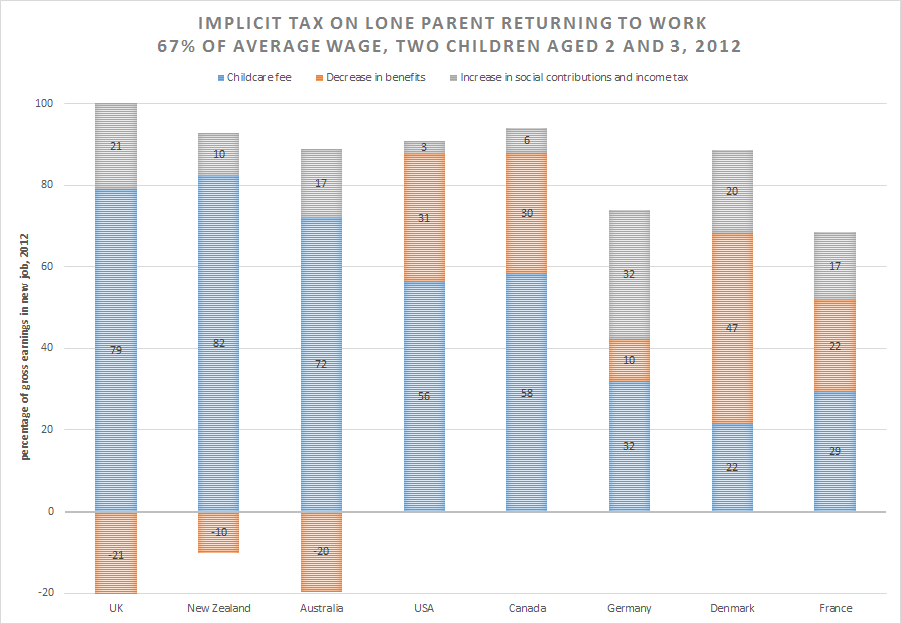
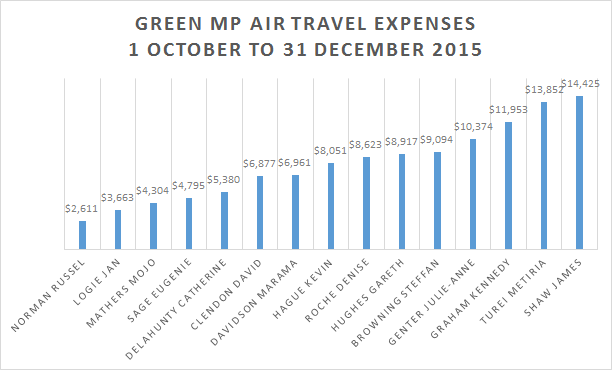
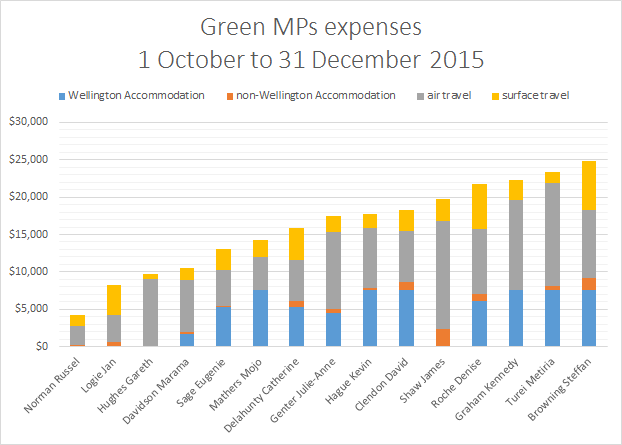
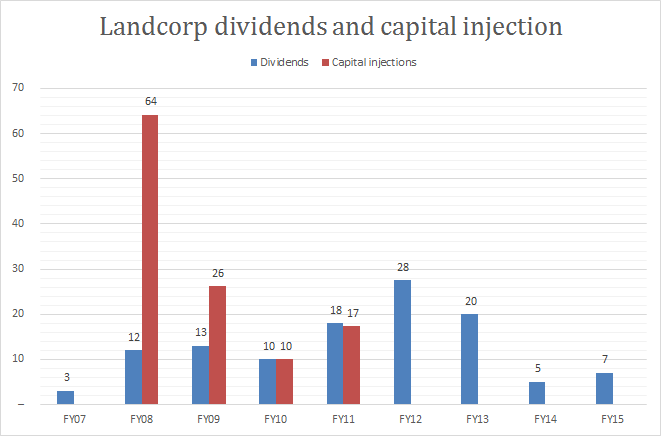
@greencatherine @cjsbishop Logic of #BDS refutes @TPPANoWay

If our friends on the left are to be believed, trade liberalisation is bad unless it involves Cuba, Vietnam, Iraq and other heroes of the anti-west left. The anti-west left is different from the antifascist left and is sometimes known as the renegade left or regressive left.

Access to world markets, and the removal of trade sanctions and travel and investment restrictions are all to the benefit of the Vietnamese, Iraqi and Cuban people in the street and not just their elites in the eyes of the anti-west left. There you have: trade liberalisation is bad because reduced tariffs at home and abroad hurts ordinary people; trade sanctions are bad because they hurt ordinary people by denying them access to import from and exporting into world markets.

Trade sanctions against Iraq were to terrible for the Iraqi people. Removing those trade sanctions and similar sanctions on Cuba and Vietnam, which expanded their ability to export and import was essential to improving the welfare of Iraqis, Cubans and Vietnamese respectively. Two of these three countries are not a democracy with the guarantees elections have in ensuring broad-based benefits but nonetheless greater trade liberalisation was seen as to the advantage of the ordinary people of those dictatorships by the Left.

https://twitter.com/GazaReports/status/686399912485994496

Likewise boycotting, disinvesting and sanctions on Israel will change the Israeli policy because the Israeli people. The logic here is that trade and investment is wealth enhancing, so restricting trade punishes Israelis.

Source: Kennedy, New Zealand Greens: Tipping points – Israel, Palestine, and peace.

A comprehensive study by Kim Elliott, Jeffrey Schott, and Gary Hufbauer looked at whether sanction works. Do they accomplish the goals identified by U.S. policy-makers such as ending apartheid or undermining Libya’s support of terrorism? The study estimated they have succeeded 23 percent of the time. But of course as Kaempfer and Lowenberg say

Sanctions may be imposed not to bring about maximum economic damage to the target, but for expressive or demonstrative purposes. Moreover, the political effects of sanctions on the target nation are sometimes perverse, generating increased levels of political resistance to the sanctioners’ demands.

It is also that case that Kaempfer, Lowenberg and Mertens (2001) found that sanctions generate rents that can be appropriated by a dictator and his cronies and supporters such as those who were close to Saddam. The losses from the sanctions were borne by those who are opposed to the regime. This weakens their capacity to oppose it, leading to the further entrenchment in power of the dictator and his supporters. As Wintrobe explains:

In the public choice approach, sanctions work through their impact on the relative power of interest groups in the target country. An important implication of this approach is that sanctions only work if there is a relatively well organized interest group whose political effectiveness can be enhanced as a consequence of the sanctions.

What is reasonably clear from the literature on the economics of trade sanctions is at ordinary people in both dictatorships and democracies suffer from trade sanctions the most. The political elite can shift the costs of the trade and investment sanctions onto the disenfranchised within their country. Those with political connections have a better chance of minimising the costs and profiting from any windfall rents:

as Galtung (1967) observes, sanctions can be counterproductive by giving rise to a new elite in the target nation that benefits from international isolation. For example, Selden (1999) notes that, in the long run, sanctions often foster the development of domestic industries in the target country, thus reducing the target’s dependence on the outside world and the ability of sanctioners to influence the target’s behaviour through economic coercion…

Damrosch (1993, p. 299) contends that sanctions will almost inevitably benefit an autocratic regime because the regime will always be in a better position than the civilian population to control external transactions and the internal economy. In Damrosch’s view, the creation and enrichment of a criminal class that profiteers from trading bootleg or scarce goods means that even the most skilfully targeted sanctions will serve only to entrench the power of the ruling elite

One of the hopefully unintended consequences of trade and investment sanctions is disinvestment entrenches the position of capitalists in the sanctioned country and raises the rate of return on the capital in the targeted country as Kaempfer and Lowenberg again found:

…disinvestment sanctions can have the perverse effect of enhancing the target country’s ability to pursue its objectionable behaviour. The existing foreign capital stock – the physical plant and capacity previously owned by foreigners – is purchased by domestic capital owners at reduced prices, causing yields to rise and prompting target-country residents to sell foreign assets and substitute into domestic assets with higher rates of return.

The increase in the rate of return due to the acquisition of productive assets at fire-sale prices translates into a windfall gain to domestic capital owners, which increases the tax base available to the government to finance its policies, including those that attracted the sanctions in the first place

So far so good in terms of international economics of the renegade left until we start considering their attitude to trade agreement such as the Trans-Pacific Partnership. The logic of BDS is swept aside as is the rationale for opposing trade sanctions against Iraq, Cuba and Vietnam. Now enhanced opportunities for trade and investment is not in the interests of ordinary people even if they are Vietnamese – the biggest winner from the Trans-Pacific Partnership.

Now increased opportunities to export are a bad thing. Investor state dispute settlement procedures, which were initially proposed by the governments of poor countries such as in South America, which offer a relief to foreign investors against expropriation and discrimination become a bad thing. Safeguards against corrupt and venial developing country politicians, bureaucrats and courts expropriating foreign investors are a bad thing even if you are talking about Vietnam or Cuba.

The Greens are the first to call for trade sanctions as an alternative to military intervention. Trade sanctions on the grounds of human rights violations as far back apartheid in South Africa make no sense unless the reduced access to world markets imposes a cost on a country. In the case of a democracy like Israel, trade sanctions must hurt the man in the street otherwise the sanctions will not shift electoral fortunes.

The last line of defence of the trade sanctions work but trade liberalisation is bad line of thought is most of the profits and losses of both trade sanctions and trade liberalisations fall on the elite. It is a trickle up argument.

The first flow in that argument is the sanctions against apartheid in South Africa and Rhodesia. They were aimed at ordinary people such as those that play and watch cricket, rugby and other sports. The idea is to encourage people to change their political views and votes if they want access to global sport.

Both Rhodesia and South Africa were democracies for whites. White settler politics in Rhodesia was particularly colourful. It was a brave man to make any statement that put him at the risk of being overtaken on his right in white settler politics.

The bigger problem for the trade sanctions are good, trade liberalisation is bad argument comes from the interest group based explanations of industrialisation in Japan and the East Asian Tigers. Economic development often comes to developing countries through export based industrialisation.

The reason that export based industrialisation is a common path to economic development for poor countries is it does not threaten the existing configuration of special interests. It does not involve deregulating any domestic industry. The export industries do not threaten the business interests and profits of existing rent seekers and ruling elites.

Post-war trade liberalisation and tariff cuts gave Korean and the other East Asian Tigers much greater access to major export markets. This allowed export production to expand without limit. This expansion did not threaten local special interests because they kept their privileges and barriers to entry into the domestic markets.

Incumbent suppliers and workers are less likely to be hurt by the adoption of more efficient technologies because output expands greatly through exporting. If a market is small and limited to one country, and output cannot be increased without price cuts, greater production efficiency from a new technology can lead to less employment and business closures. Industry insiders may oppose this. Exporting reduce the incentives for insiders to block more efficient technologies (Parente and Prescott 2005; Holmes and Schmitz 1995; Olson 1982). Distributional coalitions slow down a society’s capacity to adopt new technologies and to reallocate resources in response to changing conditions and thereby reduce the rate of economic growth. 

Many other under-developed nations did not grow because institutional sclerosis locked them into yesterday’s technologies and industries with low growth and major declines in relative incomes (Olson 1982, 1984; Heckelman 2007; Bischoff 2007). A growing accumulation of distributional coalitions – institutional sclerosis – slowed down the capacity of these under-developed countries to adopt new technologies and reallocate resources across firms and industries in response to changing conditions and new opportunities (Olson 1982, 1984; Acemoglu and Robinson 2005).

Mancur Olson argued that over time, stable societies accumulate “distributional coalitions,” narrow special-interest organizations that burden the economy with overregulation and opaque forms of wealth redistribution. 

Latin America is a good example of stagnation after initial prosperity because of the accumulation of barriers to efficient production. Latin America has many more international and domestic barriers to competition than do Western and the successful East Asian countries (Cole et al. 2005).

Institutional reforms and imported new technologies increased employment and incomes through this explosion in exporting in Japan and the newly industrialised countries in East Asia. This allowed the losers from the economic changes to be compensated directly or with new opportunities in the export sectors (Parente and Prescott 1999, 2005; Olson 1982, 1984; Acemoglu and Robinson 2005).

The argument that trade sanctions are good while trade liberalisation is bad simply does not stand up against the economic history of trade sanctions, trade liberalisation and export-led industrialisation. If they did, the economic histories of Latin America and East Asia would swap. Latin America took the path of import substitution and crony capitalism while East Asia chose export led industrialisation, low taxes and the market economy.

@greencatherine @cjsbishop zero US, UK & Swiss gender pay gaps for single women

If victory is a zero gender wage gap, some countries have achieved it already for single female workers and long ago according to the data charted below is from the Luxembourg Income Study.

Source: IZA World of Labor – Equal pay legislation and the gender wage gap from the Luxembourg Income Study.

Discrimination cannot explain why the gender wage gap for single female is tiny relative to the family wage gap. As Solomon Polachek explains:

…the wage gap for married workers is between three and 30 times greater compared with single workers.

Employers cannot be to blame for the large difference between the single female worker gender wage gap and the family wage gap.

Aside from explaining why employers only discriminate against married women, you must explain how employers managed to find out which female applicants are married so they can discriminate against them.

Without that vital information on the marital status of female applicants and the presence and number of children as well is their spacing, the vast male chauvinistic conspiracy responsible for the glass ceiling and the sticky floors against promotion does not get off the ground.

How do employers actually pay married women less? Advertising jobs that pay women less has been unlawful for decades. Yet another hurdle to overcome for the vast male chauvinistic conspiracy.

Women move between the large number of jobs as do men accumulating human capital as they go? Somehow employers, including female owned firms, must sabotage the accumulation of human capital by married women as soon as they have children but without paying them lessen in their current jobs or advertising jobs that pay married women less.

The main drivers of the gender wage gap are unknown to employers such as:

  • whether the would-be female recruit or employee is married,
  • whether their partner is present,
  • how many children they have,
  • how many of children are under 12, and
  • how many years are there between the births of their children.

These are the main drivers of the gender wage gap – all of which are factors totally unknown to employers and of no relevance to them in making a profit.

Most explanations of the gender wage gap centre around human capital. In anticipation of time outside of the workforce for motherhood, women self-selecting to occupations that penalise career interruptions less.

Women invest in human capital that is more general, human capital that is more mobile between jobs and into spells of part-time work. Women anticipate home time after they have children so they invest in human capital that depreciations at a slower rate during career interruptions. Women also invest less overall in new capital because they expect to spend less time in the labour market.

All of these investments are made by women themselves in anticipation of motherboard rather than employers somehow paying them less after they marry and have children.


The solution to closing the family wage gap requires radical biological changes in who has children. There are more radical changes required than this because mothers actually like babies and enjoy spending time with them rather than going to work.

Equally challenging is the required changes in the dating market. There is an average age difference between boyfriends and girlfriends and husbands and wives of 2 to 3 years. As the husband or boyfriend is a few years older, he has usually accumulated more human capital and is more likely to be at a critical career point for promotion.


Because the husband or boyfriend is 2 to 3 years older, it pays off well in terms of the father investing more in market-related human capital and the mother devoting more time to childcare.

Another major driver of the gender pay gap is the dating market as identified by Richard McKenzie. He pointed out that evolutionary psychology has found that in every culture one of the factors of influencing pairing off in the dating market is that the boyfriend or husband must have good prospects although this preference is weakening over this last century.

One of the reasons for the increase in single parents is that low-paid men are not as inviting prospects as long-term boyfriends or husbands is a few generations ago. There are too few good men.


Source: Why Popcorn Costs So Much at the Movies: And Other Pricing Puzzles – Richard B. McKenzie – Google Books.

University educated couples are not called power couples for nothing – their earning power is this stunning compared to going it on your own. The emergence of power couples means that less educated women may prefer to stay single and raise children on their own rather than marry what is left in the marriage pool.

Because of the requirement among women across all cultures that husbands to be must have good prospects, men have an extra incentive to invest in human capital and work harder and longer hours because of the gender specific payoff in the marriage market.

Men will also take more risks than women because risky jobs carry wage premiums. That risk premium is topped up in the mating market terms are marriage prospects because of the higher wages. Women get a wage premium for taking risky jobs but less of a payoff in the mating market for the higher wages. There is an evolutionary psychology explanation for the family wage gap.


All in all, a key requirement for the closing of the family wage gap and what little is left of the gender wage gap is women drop their standards in terms of who they choose as boyfriends and husbands. Not very likely.


Why @garethmorgannz wants his great big new tax @geoffsimmonz

image

Source: Poll Results | IGM Forum.

The #livingwage in Washington, DC

https://twitter.com/Mark_J_Perry/status/688469218719830016

New Zealand inflation rate adjusted for CPI measurement bias since 1970

1% to 1.5% is the usual estimate of bias in the consumer price index because of the introduction of new groups and quality upgrades in existing goods. I have adjusted the consumer price index inflation rate back to 1970 in New Zealand by 1.5% to see how long ago prices became stable. I know this is a  rough adjustment, but it is still informative. If anything, the bias in the consumer price index from new goods and product upgrades is increasing rather than decreasing.

image

Source: Reserve Bank of New Zealand.

Prices have been stable or falling in New Zealand’s for at least three years now once bias in the consumer price index is taken into account. Despite this deflation, the economy seems to be getting along pretty well. There is also a long period of  more or less stable prices in the 1990s once bias is taken into account in the measurement of consumer prices by the Statistics New Zealand.

@GarethMorgannz great big new tax versus the economics profession @geoffsimmonz

Source: Poll Results | IGM Forum.

@FairnessNZ shows how everything is getting better in NZ @FIRST_Union

The union movement posted two excellent charts during the last election showing how well things have gone since the 1980s economic reforms and their consolidation in the early 1990s.

The charts show that real wage growth returned in the early 1990s after the passage of the Employment Contracts Act and the consolidation of government finances. This was after two decades of wage stagnation in what the unions regards as the good old days.

Furthermore, as the union chart shows, the average incomes of the top 1% in New Zealand is a pretty stable for several decades. Whatever else is happening New Zealand, you cannot blame it on the top 1% because they are lazy. What increase there was in average top incomes in New Zealand was followed by the return of real wage growth in New Zealand and a long economic boom where the unemployment rate drop below 3.5%

The main bugbear is housing affordability which is a result of the Resource Management Act passed in 1993 as the union chart shows. The unions, the Labour Party and Greens all support the laws that result in this housing unaffordability.

Child poverty is twice 30 years ago? @GarethMorgan @povertymonitor @geoffsimmonz

NZ has smallest gender pay gap in OECD @GreenCatherine @JanLogie

Workplace safety, spans of control and directors’ duties

Workplace safety arises as a by-product of economic growth. Risks in the workplace and outside that would not countenance now were routine a few decades ago because the risk of eliminating them was high.

The soon to take effect New Zealand health workplace safety legislation makes it much more difficult to have independent directors and part-time directors of companies. That will both weaken the ability of shareholders to prevent insider control as well as introduce a diversity of views onto boards of directors.

The resignation of Sir Peter Jackson is an example of this. Talented entrepreneurs are no longer able to run large numbers by sitting on the board and intervening on a management by exception basis.

Rupert Murdoch as an example of an executive able to run a global empire. He would ring up the chief executives of his subsidiaries for one minute to month. If they are talking about something interesting, he would listen for longer. He was the ultimate one-minute manager who built a global empire around his supreme entrepreneurial talent.

The new legislation on workplace safety will increase the cost of building a successful business from the ground up. Entrepreneurs will not be able to quickly intervene in the company and dismiss underperforming executives who look after things while they are away. This is because they are not on the Board of Directors.

One constraint on the growth of any firm is entrepreneurs have a limited span of control (Coase 1937; Williamson 1967, Lucas 1978; Oi 1983a, 1983b). A span of control is the number of subordinates that an individual supervisor has to control and lead either directly or through a hierarchical managerial chain (Fox 2009). There are only so many tasks that even the most able of entrepreneurs can carry out in one day. Over-stretched spans of control motivate entrepreneurs to hire professional managers and delegate to them a wide range of decision-making rights over the firms they own (Williamson 1975; Foss, Foss and Klein 2008).

Entrepreneurs and the professional managers they hired to assist them must divide their respective time between monitoring employees, identifying new business opportunities, forecasting buyer demand and running the other aspects of their business (Lucas, 1978; Oi 1983, 1983b, 1988; Foss, Foss, and Klein 2008). The larger is the firm, the more employees there are for the entrepreneur to direct, monitor and reward. These costs of directing and monitoring employees will increase with the size of the firm and larger firms will encounter information problems not present in smaller firms (Alchian and Demsetz 1972; Stigler 1962)

The time of the more talented entrepreneurs is more valuable because they had the superior managerial skills and entrepreneurial alertness to make their firms large in the first place and remain deft enough to survive in competition. Time spent on the supervision of employees is time that is spent away from other uses of the talents that got these more able entrepreneurs to the top and keeps them there (Williamson 1967; Lucas 1978; Oi 1983b, 1988, 1990; Idson and Oi 1999; Black et al 1999).

Firms in the same industry tend to exhibit systematic differences in their organization of production and the structure of their workforces because entrepreneurial ability is the specific and scarce production input that limits the size of a firm (Lucas, 1978; Oi 1983b). The less able entrepreneurs tend to run the smaller firms while the better entrepreneurs tend to lead both the currently large firms and the smaller firms that are growing at the expense of market rivals (Lucas 1978, Oi 1983b; Stigler 1958; Alchian 1950).

There has been a tremendous improvement in the working conditions over the 20th century. The main driver was the incentive and employers to provide safe workplaces as real wages grew. Adam Smith noted that more dangerous and unpleasant jobs always attracted a wage premium as he explains in the Wealth of Nations:

The five following are the principal circumstances which, so far as I have been able to observe, make up for a small pecuniary gain in some employments, and counterbalance a great one in others: first, the agreeableness or disagreeableness of the employments themselves; secondly, the easiness and cheapness, or the difficulty and expense of learning them; thirdly, the constancy or inconstancy of employment in them; fourthly, the small or great trust which must be reposed in those who exercise them; and, fifthly, the probability or improbability of success in them.

First, the wages of labour vary with the ease or hardship, the cleanliness or dirtiness, the honourableness or dishonourableness of the employment. Thus in most places, take the year round, a journeyman tailor earns less than a journeyman weaver. His work is much easier. A journeyman weaver earns less than a journeyman smith. His work is not always easier, but it is much cleanlier. A journeyman blacksmith, though an artificer, seldom earns so much in twelve hours as a collier, who is only a labourer, does in eight. His work is not quite so dirty, is less dangerous, and is carried on in daylight, and above ground.

Honour makes a great part of the reward of all honourable professions. In point of pecuniary gain, all things considered, they are generally under-recompensed, as I shall endeavour to show by and by. Disgrace has the contrary effect.

The trade of a butcher is a brutal and an odious business; but it is in most places more profitable than the greater part of common trades. The most detestable of all employments, that of public executioner, is, in proportion to the quantity of work done, better paid than any common trade whatever.

Hunting and fishing, the most important employments of mankind in the rude state of society, become in its advanced state their most agreeable amusements, and they pursue for pleasure what they once followed from necessity. In the advanced state of society, therefore, they are all very poor people who follow as a trade what other people pursue as a pastime. Fishermen have been so since the time of Theocritus. A poacher is everywhere a very poor man in Great Britain. In countries where the rigour of the law suffers no poachers, the licensed hunter is not in a much better condition. The natural taste for those employments makes more people follow them than can live comfortably by them, and the produce of their labour, in proportion to its quantity, comes always too cheap to market to afford anything but the most scanty subsistence to the labourers.

Disagreeableness and disgrace affect the profits of stock in the same manner as the wages of labour. The keeper of an inn or tavern, who is never master of his own house, and who is exposed to the brutality of every drunkard, exercises neither a very agreeable nor a very creditable business. But there is scarce any common trade in which a small stock yields so great a profit…

The wages in any particular job will vary with the risks that are known to the worker in that job. That is an important qualification.


Competition in labour markets ensures that the net advantages of different jobs will tend to equality. This theory of the labour market originating in Adam Smith, which drives much of modern labour economics became to be known as the theory of compensating differentials.


Firms can choose their production technology to offer workers greater safety or they can economize on safety and offer the savings to workers in the form of higher wages. There is a trade-off in offering more safety or higher wages, holding constant the level of profits. As Kip Viscusi explains:

Wage premiums paid to U.S. workers for risking injury are huge—in 1990 they amounted to about $120 billion annually, which was over 2 percent of the gross national product, and over 5 percent of total wages paid.

These wage premiums give firms an incentive to invest in job safety because an employer who makes his workplace safer can reduce the wages he pays. Employers have a second incentive because they must pay higher premiums for workers’ compensation if accident rates are high.

One of the effects of safety regulation is the employers no longer have to pay this wage premium in more dangerous or disagreeable jobs but as Fishback wrote:

Studies of wages before and after the introduction of workers’ compensation show, however, that non-union workers’ wages were reduced by the introduction of workers’ compensation. In essence, the non-union workers “bought” these improvements in their benefit levels.

Even though workers may have paid for their benefits, they still seem to have been better off as a result of the introduction of workers’ compensation. Many workers had faced problems in purchasing accident insurance at the turn of the century. Workers’ compensation left them better insured, and allowed many of them to spend some of their savings that they had set aside in case of an accident.

What literature there is about suggest that workers overestimate small risks and underestimate large risks. Surveys of manufacturing employment show that one third of workers quit because they found out the job they accepted was more dangerous than they expected.


Source: Evaluating OSHA’s Effectiveness and Suggestions for Reform | Mercatus

One clear trend of the 20th century is as countries got richer, workers demanded more safety at work and larger wage premiums. Market incentives for better worker safety dwarf legal incentives such as from being sued, which in turn dwarf regulatory incentives.

There is also evidence of a glass coffin effect. About 95% of workplace deaths of men. Indeed, there are some interesting journal papers about how occupational choice is affected by motherhood, sole motherhood and sole fatherhood. Single parents are more cautious about their occupational choices.

It is unfortunate that the unions in New Zealand opposes a risk based system of workers’ compensation. The current system is not only no fault, employers pay premiums based on the risks of their industry, not of their individual workplace. There is plenty of evidence to show the charging premiums based on the risks of an accident and the previous record of workplace safety greatly reduces workplace deaths and injuries as Viscusi explains:

The workers’ compensation system that has been in place in the United States throughout most of this century also gives companies strong incentives to make workplaces safe. Premiums for workers’ compensation, which employers pay, exceed $50 billion annually. Particularly for large firms, these premiums are strongly linked to their injury performance.

Statistical studies indicate that in the absence of the workers’ compensation system, workplace death rates would rise by 27 percent. This estimate assumes, however, that workers’ compensation would not be replaced by tort liability or higher market wage premiums.

@Oxfam it is 0.7%, not 50% @OxfamNZ

Source: We Can’t Blame a Few Rich People for Global Poverty – The New York Times.

https://twitter.com/MaxCRoser/status/689227375582785536

https://twitter.com/MaxCRoser/status/689178825989685248

US, Danish and NZ long-term male unemployment @grantrobertson1 @nzlabour

https://twitter.com/KiwiLiveNews/status/688503382181449728

My search for an example of how Danish flexicurity might have an advantage over the status quo in the New Zealand labour market is still to yield results. Danish flexicurity is no better than New Zealand and often worse in keeping long-term male unemployment rates down as the charts below show. The flexicurity model combines flexible hiring and firing with a generous social safety net and an extensive system of activation policies for the unemployed.

image

Data extracted on 18 Jan 2016 21:55 UTC (GMT) from OECD.Stat.

The charts above and below do show is that a more generous social safety net for the unemployed introduced with the onset of the Great Recession in the USA was followed by a sharp increase in the incidence of long-term unemployment.

image

Data extracted on 18 Jan 2016 21:55 UTC (GMT) from OECD.Stat.

@oxfamnz attacks sovereignty of Cook Islands #StandWithThePacific #TPPA

Oxfam New Zealand and fellow travellers at home and abroad are attacking the sovereignty of the Cook Islands and other tax havens by demanding that the developed countries gang up on them because they offer low company tax rates.

All that plucky rhetoric of TPPA no way and how international economic agreements violate the sovereignty of countries and developing countries in particular is forgotten in a flash.

Apparently, the same governments that were at the beck and call of the corporate elites when negotiating international trade agreements, can be trusted to negotiate international tax treaties that take into the account the interests of developing countries, the Pacific Islands and small states.

Oxfam manages to have the blinding hypocrisy of opposing the Transpacific Partnership on national sovereignty grounds and at the same time call for international treaties to bully small countries about their tax policies, which overrides their economic sovereignty.

The sovereign rights of developing countries to find their own way does not extend to undermining the tax bases of the rich countries struggling to finance their welfare states.

The Pacific Islands, the once were heroes of the recent Paris climate talks, turn into pariahs once they start looking out for themselves and setting up offshore financial centres and tax havens.

Developing countries are free to impoverish themselves by embracing socialism, but if they decide to attract investment and jobs through low tax rates and offshore financial centres, a new form of colonialism is embraced by the Twitter Left.

Source: Oxfam.

The Cook Islands is one such tax haven. The Cook Islands is self-governing in free association with New Zealand. New Zealand is responsible for its defence and foreign affairs but it has full internal sovereignty.

Danish, NZ, UK & US statutory protections against layoffs @grantrobertson1@nzlabour

[Tweet https://twitter.com/KiwiLiveNews/status/688503382181449728 ]

Denmark is all the go in the New Zealand Labour Party as a model for labour market flexibility despite the fact that it is much more heavily regulated than either New Zealand or the USA.

image

Source: OECD Indicators of Employment Protection – OECD.

The Miracle of New Zealand

Previous Older Entries Next Newer Entries

Bassett, Brash & Hide

Celebrating humanity's flourishing through the spread of capitalism and the rule of law

Truth on the Market

Scholarly commentary on law, economics, and more

The Undercover Historian

Beatrice Cherrier's blog

Matua Kahurangi

Celebrating humanity's flourishing through the spread of capitalism and the rule of law

Temple of Sociology

Celebrating humanity's flourishing through the spread of capitalism and the rule of law

Velvet Glove, Iron Fist

Celebrating humanity's flourishing through the spread of capitalism and the rule of law

Why Evolution Is True

Why Evolution is True is a blog written by Jerry Coyne, centered on evolution and biology but also dealing with diverse topics like politics, culture, and cats.

Down to Earth Kiwi

Celebrating humanity's flourishing through the spread of capitalism and the rule of law

NoTricksZone

Celebrating humanity's flourishing through the spread of capitalism and the rule of law

Homepaddock

A rural perspective with a blue tint by Ele Ludemann

Kiwiblog

DPF's Kiwiblog - Fomenting Happy Mischief since 2003

The Dangerous Economist

Celebrating humanity's flourishing through the spread of capitalism and the rule of law

Watts Up With That?

The world's most viewed site on global warming and climate change

The Logical Place

Tim Harding's writings on rationality, informal logic and skepticism

Doc's Books

A window into Doc Freiberger's library

The Risk-Monger

Let's examine hard decisions!

Uneasy Money

Commentary on monetary policy in the spirit of R. G. Hawtrey

Barrie Saunders

Thoughts on public policy and the media

Liberty Scott

Celebrating humanity's flourishing through the spread of capitalism and the rule of law

Point of Order

Politics and the economy

James Bowden's Blog

A blog (primarily) on Canadian and Commonwealth political history and institutions

Science Matters

Reading between the lines, and underneath the hype.

Peter Winsley

Economics, and such stuff as dreams are made on

A Venerable Puzzle

"The British constitution has always been puzzling, and always will be." --Queen Elizabeth II

The Antiplanner

Celebrating humanity's flourishing through the spread of capitalism and the rule of law

Bet On It

Celebrating humanity's flourishing through the spread of capitalism and the rule of law

History of Sorts

WORLD WAR II, MUSIC, HISTORY, HOLOCAUST

Roger Pielke Jr.

Undisciplined scholar, recovering academic

Offsetting Behaviour

Celebrating humanity's flourishing through the spread of capitalism and the rule of law

JONATHAN TURLEY

Res ipsa loquitur - The thing itself speaks

Conversable Economist

In Hume’s spirit, I will attempt to serve as an ambassador from my world of economics, and help in “finding topics of conversation fit for the entertainment of rational creatures.”

The Victorian Commons

Researching the House of Commons, 1832-1868

The History of Parliament

Articles and research from the History of Parliament Trust

Books & Boots

Reflections on books and art

Legal History Miscellany

Posts on the History of Law, Crime, and Justice

Sex, Drugs and Economics

Celebrating humanity's flourishing through the spread of capitalism and the rule of law

European Royal History

Exploring the Monarchs of Europe

Tallbloke's Talkshop

Cutting edge science you can dice with

Marginal REVOLUTION

Small Steps Toward A Much Better World

NOT A LOT OF PEOPLE KNOW THAT

“We do not believe any group of men adequate enough or wise enough to operate without scrutiny or without criticism. We know that the only way to avoid error is to detect it, that the only way to detect it is to be free to inquire. We know that in secrecy error undetected will flourish and subvert”. - J Robert Oppenheimer.

STOP THESE THINGS

The truth about the great wind power fraud - we're not here to debate the wind industry, we're here to destroy it.

Lindsay Mitchell

Celebrating humanity's flourishing through the spread of capitalism and the rule of law

Alt-M

Celebrating humanity's flourishing through the spread of capitalism and the rule of law

croaking cassandra

Economics, public policy, monetary policy, financial regulation, with a New Zealand perspective

The Grumpy Economist

Celebrating humanity's flourishing through the spread of capitalism and the rule of law

International Liberty

Restraining Government in America and Around the World