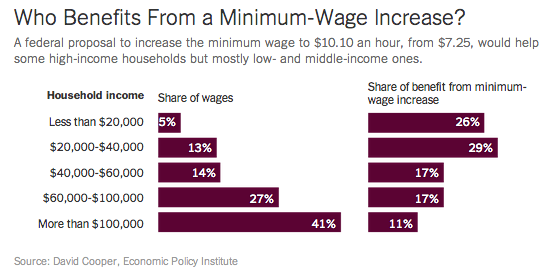
New Zealand has the highest minimum wage in the world in 2014

The marvel of the market: the remarkable foresight of young adults in choosing what to study

Known but yet to be exploited opportunities for profit do not last long in competitive markets, including hitherto unnoticed opportunities for the greater utilisation and development of skills and experience (Hakes and Sauer 2006, 2007; Ryoo and Rosen 2004; and Kirzner 1992). Moneyball is the classic example of entrepreneurial alertness to hitherto unexploited job skills which were quickly adopted by competing firms (Hakes and Sauer 2006, 2007).

There is considerable evidence that the demand and supply of human capital responds to wage changes. For example, over- or under-supplied human capital moves either in or out in response to changes in wages until the returns from education and training even out with time (Ryoo and Rosen 2004; Arcidiacono, Hotz and Kang 2012; Ehrenberg 2004).

As evidence of this equalisation of returns on human capital investments across labour markets, the returns to post-school investments in human capital are similar – 9 to 10 percent – across alternative occupations, and in occupations requiring low and high levels of training, low and high aptitude and for workers with more and less education (Freeman and Hirsch 2001, 2008). There is evidence that workers with similar skills in similarly attractive jobs, occupation and locations earn similar pay (Hirsch 2008; Vermeulen and Ommeren 2009; Rupert and Wasmer 2012; Roback 1982, 1988).

Ryoo and Rosen (2004) found that the labour supply and university enrolment decisions of engineers is “remarkably sensitive” to career earnings prospects. Graduates are the main source of new engineers. Engineers who moved out into other occupations such as management did not often moved back to work again as professional engineers. Ryoo and Rosen (2004) observed when summarising their work that:

 Both the wage elasticity of demand for engineers and the elasticity of supply of engineering students to economic prospects are large. The concordance of entry into engineering schools with relative lifetime earnings in the profession is astonishing.

Ryoo and Rosen (2004) found several periods of surplus in the market for engineers. These periods of shortage or surplus corresponded to unexpected demand shocks in the market for engineers such as the end of the Cold War.

Figure 1: New entry flow of engineers: a, actual vs. imputed from changes in stock of engineers; b, time-varying coefficients.

Source: Ryoo and Rosen (2004)

Ryoo and Rosen (2004) noted that importance of permanent versus transitory changes in earnings. Transitory rises and falls in earnings prospects have much less influence on occupational choices and the educational investments of students.

In light of these findings that the supply of engineers rapidly adapted to changing market conditions, Ryoo and Rosen (2004) questioned whether public policy makers have better information on future labour market conditions than labour market participants do. When politicians get worked up about skill shortages, the markets for scientists and engineers often where they make extravagant claims about the ability of the market to adapt to changing conditions because of the long training pipeline involved in university study, including at the graduate level.

There can be unexpected shifts in the supply or demand for particular skills, training or qualifications. These imbalances even themselves out once people have time to learn, update their expectations and adapt to the new market conditions (Rosen 1992; Ryoo and Rosen 2004; Bettinger 2010; Zafar 2011; Arcidiacono, Hotz and Kang 2012; Webbink and Hartog 2004).

For example, Arcidiacono, Hotz and Kang (2012) found that both expected earnings and students’ abilities in the different majors are important determinants of student’s choice of a college major, and 7.5% of students would switch majors if they made no forecast errors.

The wage premium for a tertiary degree was low and stable in New Zealand in the 1990s (Hylsop and Maré 2009) and 2000s (OECD 2013). This stability in the returns to education suggests that supply has tended to kept up with the demand for skills at least over the longer term at the national level. There were no spikes and crafts that would be the evidence of a lack of foresight among teenagers in choosing what to study.

All in all, the remarkable sensitivity of engineers to a career earnings prospects, the frequent changes of college majors by university students in response to changing economic opportunities, and the stability of the returns on human capital over time suggest that the market for human capital is well functioning.

The argument that the market was not working well was assumed rather than proven. Likewise, the case for additional subsidies for science, technology, engineering and mathematics because of perceived skill shortages has not been made out. There is a large literature showing that the market for professional education works well.

The onus is on those who advocate intervention to come up with hard evidence, rather than innate pessimism about markets that are poorly understood because of a lack of attempts to understand it. Studies dating back to the 1950s by George Stigler and by Armen Alchian found that the market for scientists and engineers works well and the evidence of shortages were more presumed than real.

How many New Zealand prime ministers and cabinet ministers have been convicted of sedition?

New Zealand must be forgiving place. 15 years after World War I, it elected into office a Prime Minister and three Cabinet ministers who were convicted of sedition during the First World War. They were the leaders of the first Labour Party government in New Zealand.

Peter Fraser was sentenced to 12 months in prison for a seditious speech. Walter Nash was fined £5 for importing seditious literature. Both became prime ministers in time.


These four men, all members of the newly founded Labour Party and lifelong Christian Socialists, opposed the introduction of conscription in World War I. A major factor in the formation of the Labour Party New Zealand in 1916 was the imposition of conscription in 1915.

Ironically, these same men, Prime Minister Peter Fraser and Cabinet minister and later Prime Minister Walter Nash, along with two other Cabinet members who were convicted of sedition for opposing conscription in World War I introduced conscription into New Zealand in 1940 to fight the Second World War. Difficulties in filling the Second and Third Echelons for overseas service in 1939 and 1940, the Allied disasters of May 1940 and public demand led to its introduction.

The total eventually conscripted was more than 312,000. About 800 were labelled ‘military defaulters’ and interned for the duration of the war in specially built camps in remote areas.

The police cracked down severely on anti-conscription groups. As Russia haven’t yet been invaded by the Nazis, leading opponents of conscription included those traitors in the Communist Party.

Zombie lending and lower Japanese productivity growth

The low Japanese productivity growth throughout the 1990s could have been the result of subsidies to inefficient firms and declining industries both directly and through a banking system rolling over loans in arrears to insolvent firms.

This policy is known as zombie lending, and it lowered productivity because higher cost firms kept producing a greater share of Japanese output than would otherwise have been the case (Hayashi and Prescott 2003; Ahearne and Shinada 2005).

  • Zombie firms are insolvent firms often propped up with new loans and loan rollovers from Japanese banks.
  • Zombie banks are insolvent banks propped up with loans from the central bank and by lax regulatory inspections of their weak loan portfolios and lack of adequate capital.

Japan’s economic policies have until recently kept insolvent banks operating, further encouraging zombie lending, which impeded the flow of capital to the more efficient firms.

The competitive process where zombies shed workers and lose market share was thwarted. The Japanese authorities subsidised insolvent banks and firms and provided credit to some firms and not to others (Prescott 2002; Hayashi and Prescott 2002; Caballero et al. 2005; Hoshi and Kashyap 2004).

The pervasiveness and long-term persistence of zombie lending as a shock to Japanese productivity growth cannot be understated. As Kashyap noted:

The government allowed even the worst banks to continue to attract financing and support their insolvent borrowers

By keeping these unprofitable borrowers alive, banks allowed the zombies to distort competition throughout the rest of the economy.

Caballero et al. (2008) estimated that 30 per cent of all publicly traded Japanese manufacturing, construction, real estate, retail, wholesale, and service sector firms were on life support from banks in the early 2000s, and that most large Japanese banks only complied with capital standards because regulators were lax in their inspections.

The percentage of zombies hovered between 5 and 15 per cent up until 1993 and rose sharply over the mid-1990s to exceed 25 per cent for every year after 1994 (Caballero et al. 2008).

Figure 1: Prevalence of Firms Receiving Subsidized Loans in Japan

Source: Caballero et al. (2008) Zombie Lending and Depressed Restructuring in Japan. American Economic Review.

Zombie lending is a more serious problem for Japanese non-manufacturing firms than for manufacturing firms (Caballero et al. 2008). Small and medium size firms were also major beneficiaries of zombie lending.

Zombie lending also discourages new investments that increase Japanese productivity, encourages inefficient firms to avoid making the decisions necessary to raise their profitability, and impedes the solvent Japanese banks from finding good lending opportunities (Caballero et al. 2008; Sekine et al. 2003). As Kashyap noted:

Usually when an industry is hit by a bad shock, many firms exit… In Japan, firms never exited. Given that they never exited, it is not surprising that new firms weren’t created.

Under normal conditions, higher cost firms would go bankrupt and be replaced by new and better ideas and firms. Instead, firms that were more efficient than the zombie firms tended to exit industries because their demise does not require the banks to acknowledge large bad loans. This exit of the firms of intermediate efficiency rather than the exit of the least efficient firms dragged productivity down even further (Nishimura et al. 2005; Okana and Horioka 2008). New Zealand in the 1970s and in the early 1980s also had a range of policy measures that supported high-cost firms and declining industries.

When bankrupt firms can stay in business, they retain workers who otherwise would be willing to work for lower wages at a healthy firm and depress market prices for their products. Low prices and high wages reduce the profits that more productive firms can earn which discourages entry and investment.

The creation of new jobs is a measure of industry dynamism. In manufacturing, which suffered the least from the zombie problem, job creation hardly changed from the early 1990s to the late 1990s. In contrast, there was a large decline in job creation in the non-manufacturing sectors, particularly in construction (Caballero et al. 2008; Hoshi 2006; Caballero et al. 2008).

There was less restructuring of employment and market shares in favour of the more productive firms. The gap in productivity growth between the Japanese manufacturing and non-manufacturing sectors more than doubled over the 1990s (Caballero et al. 2008).

Japanese R&D spending has also slowed down significantly since the start of the 1990s (Comin forthcoming). The gap in the rate of computer adoption between Japan and USA also increased in the 1990s. The speed of diffusion of new technologies slowed to the point that South Körea has now surpassed Japan in the diffusion of computers and the Internet (Comin forthcoming).

Over the 1990s, there were ten massive fiscal packages to maintain employment and investment. Much of this additional Japanese government spending was on public works and other projects whose social payoffs have been queried by independent observers. The consumption tax was increased from 3 per cent to 5 per cent in 1997. There were two rounds of temporary tax cuts – for 2 years only.

Japan pursued economic policies in response to a recession that stifled total factor productivity by providing bad incentives to the private sector.

null

The unproductive firms depressed Japanese productivity because they competed for labour and capital that could have been used by the more productive firms. Zombie lending allowed many firms to stay in business long after the monetary policy changes that uncovered their unprofitable petered out. The diversion of resources to these insolvent firms prevented a productivity recovery. The lack of a productivity recovery depressed wages, incomes and consumer demand.

The zombie lending and fiscal packages compounded the 1990 monetary contraction into the highly persistent shocks that were required to be able to depress Japanese productivity growth for more than a decade.

More and more resources were tied up in high cost firms and in declining industries. This was rather than be reallocated to more productive uses by the normal market processes of relative price and wage changes, free entry and profit and loss.  Kashyap argues that:

The experience in Japan definitely shows that providing subsidized credit to dying firms will be costly over time. Keeping an industry from restructuring only delays the day of reckoning and raises the cost substantially

…There are many examples besides Japan where people fail to recognize that it is dangerous to keep people attached to businesses that are fundamentally unprofitable

The massive Japanese government investments have echoes of the ‘Think Big’ energy investments in New Zealand in the late 1970s.

The productivity impact of ‘Think Big’ was suspect. In addition, state-owned enterprises offering a net return of zero to the Crown in the 1980s has Japanese parallels.

The propping up of high cost state owned and private firms in the 1970s and 1980s in New Zealand helped to depress productivity growth rates. State-owned enterprises offered a net return of about zero to the taxpayer, even as recently as last year in New Zealand.

More and more resources were tied up in New Zealand in the high cost firms and declining industries than be reallocated to more productive uses by the market processes of price and wage changes, free entry and profit and loss. The lack of productivity growth depressed wages, incomes and consumer demand in New Zealand.

The productivity based explanations for the slumps in New Zealand from 1974 to 1992 and in Japan from 1990 to 2003 have a number of common threads.

The payoff from foreign direct investment in the USA

Must everything be a crisis

image

Image

Not very likely alert: How much oil, gas and coal do we need to leave in the ground?

Image

Why is anybody still living in East Germany (or New Zealand)?

When I pointed to Jennifer Hunt’s so titled paper freshly released in 2000 on why does anyone still live in East Germany, none of my New Zealand colleagues understood the parallel with their own country.

The wage gap between East and West Germany is about the same as the wage gap between Australia and New Zealand.

  • East Germans have the advantage of being able to getting their car to go to the west. Some do commute from the east to jobs in the West; and
  • New Zealanders have to get into a plane and commuting done a daily basis is really out of the question – the air flight time alone is three hours.

There are in fact bigger language, or more correctly dialect differences between Germany than there are across the Tasman Sea between New Zealanders and Australians. Educational standards are similar between New Zealanders and Australians.


In 1997 GDP per capita in East Germany was 57% of that of West Germany, wages were 75% of western levels, and the unemployment rate was at least double the western rate of 7.8%.

The wage gap across the Tasman between New Zealand and Australia is about one third. Wage gaps between East and West Germany and between Australia and New Zealand are about the same.

Australia and New Zealand have a single integrated labour market. Any New Zealander Australian is free to work in the other country.

New Zealanders are not eligible for social security benefits if they first arrived in Australia after mid-2001. Prior to 2001, New Zealanders have the same rights as Australians for social security benefits.

One would expect that if capital flows and trade in goods failed to bring convergence between East and West Germany, labour flows should respond, enhancing overall efficiency.

Same goes between Australia and New Zealand. About 35,000 New Zealanders used to move to Australia each year, but that’s recently dried up to about zero. Funnily enough, by the late 1990s net emigration from East Germany has fallen from high levels in 1989-1990 to close to zero.

Jennifer Hunt found through her analysis of the eastern sample of the German Socio-Economic Panel for 1990-1997 that commuting is unlikely to substitute substantially for emigration.

Wage convergence between the East and the West was a main factor that stemmed immigration. The individual-level data further indicate that emigrants are disproportionately young and skilled, and that individuals suffering a layoff or non-employment spell are also much more likely to emigrate. This is all as predicted by the Roy model of immigration self-selection.


Like all human capital investments, both international and within country migration is based on the comparison of the present value of lifetime earnings in all available employment opportunities. Individuals compare the potential incomes and the destination country with the income in the home countries, and make the migration decision based on these income differentials (net of mobility costs).

What to do when the facts are against you

Today’s poor grow up with many amenities I didn’t have

Image

Here’s what school lunches look like around the world – Vox

SG1

sg8

sg4

sg5

SG6

sg7

via http://www.vox.com/2015/1/8/7513435/school-lunches-world

President Obama and his support for charter schools

Bizarro lefties alert: The Racist History of the Charter School Movement

The unthinking opposition to charter schools has reached new depths with SaveOurSchoolsNZ sharing The Racist History of the Charter School Movement.

This article relates the founding of charter schools and school choice to the opposition of the Democratic party to the desegregation of schools in the late 1950s in the southern States of America.

In Prince Edward County, Virginia, one of the five cases decided in Brown v. Board of Education (1954), the Democratic Party government threatened to close the public school system and transfer the assets to private hands to avoid school desegregation.

Naturally, the article, which was supposed to be recounting history was some accuracy and new insight, fails to mention that this racism was in the Democratic Party. That’s one dirty little secret to many. These Democratic party stalwarts were instead labelled segregationist whites.

The threat to close the public school system and transfer it to was never carried. From recollection, closure of the public school system to avoid desegregation may have been carried out in other southern states.

The current racism of the charter school movement is explained in this most bizarre way:

A 2010 report by the UCLA-based Civil Rights Project, “Choice without Equity: Charter School Segregation and the Need for Civil Rights Standards,” uncovers some troublesome facts in this regard. “While segregation for blacks among all public schools has been increasing for nearly two decades, black students in charter schools are far more likely than their traditional public school counterparts to be educated in intensely segregated settings. At the national level, 70 percent of black charter school students attend intensely segregated minority charter schools (which enrol 90-100 percent of students from under-represented minority backgrounds), or twice as many as the share of intensely segregated black students in traditional public schools.”

In the first decade of the 2000s, charter school enrolment nearly tripled; today around 2.5 percent of public school students are enrolled in charters.

Blacks are overrepresented in charter schools (32 percent vs. 16 percent in the entire public-school population), whites are underrepresented (39 percent versus 56 percent), and Latinos, Asians and American Indians are enrolled in roughly equal proportions in charters and traditional public schools. These snapshots mask considerable variation. In the West and some areas of the South, it appears that charter schools “serve as havens for white flight from public schools,” according to the Civil Rights Project.

Black Americans are fleeing the public school system in record numbers for charter schools because the public school system as failed them. The entire New Orleans school district is now chartered schools because the public school system was too slow to recover from Hurricane Katrina.

The three largest charter school movements are in New Orleans, Detroit and Washington DC. All three cities had public school systems that failed their predominantly black communities. The governments of New Orleans, Detroit and Washington DC are dominated by the black vote with black leadership in many  leadership positions.

Charter schools must attract their students from the existing Schools. They must compete and compete successfully to survive and avoid closure.

Not one of these black students in a charter school is required to attend them. They enter by choice, often having to compete in lotteries because so many wish to go to chartered school. It is highbrow condescension to suggest that they and their parents don’t know what they’re doing when they attempt  two enrol in a chartered school.

Graph showing Student Racial and Ethnic Composition in Charter Schools, 1998-99 to 2001-02; in 1998-99, 48% of students in charter schools were white, 24% were African American, 21% were Hispanic or Latino, 6% were Other Minority. In 1999-2000, 46% were white, 27% African American, 21% Hispanic, 4% Other. In 2000-01, 41% White, 28% African American, 22% Hispanic, 6% Other. In 2001-02, 37% White, 38% African American, 19% Latino, 5% Other.

Many charter schools tend to target students with educational disadvantages. Not surprisingly, some get into different difficulty while many others succeed.

Chartered schools in New Zealand, known as partnership schools, were initiated by the ACT party but the bill in Parliament required the support of the Maori party to pass.

The Maori Party supported chartered schools in New Zealand because they wanted a better deal from Maori in the education system. Maori Party co-leader Pita Sharples said

“We have to try new things – and if they don’t work, ditch them,” he told reporters yesterday.

“This is about giving charter schools a chance, we have to see how it can work here.”

New Zealand Charter schools will be state funded but run by community, church or business organisations. They will be able to set their own curriculum and term times, and don’t have to hire registered teachers.

Maori Party president Pem Bird appeared before Parliament’s Education and Science select committee when the chartered school bill was in its committee stage as the spokesman for Nga Kura-a-Iwi, a group of 23 Maori immersion-schools.

Mr Bird told MPs the  chartered schools  bill will free schools from rules and regulations that prevent them from doing a better job for Maori children.

Maori and Pasifika groups are desperate to improve their children’s educational performance and many will want to set up partnership schools, he said.

Maori organisations will come in in big numbers, as will Pasifika. And the reason is simple: they want to be architects of their own futures and destinies … We’ve got to get with the fact that this is desperation for us.

Mr Bird said several Maori-immersion schools wanted to become partnership schools.

Sadly,  I must say, the self appointed left-wing representatives of Maori and Pasifika want to keep them in a public school system that fails them for ideological reasons while they educate their own children in nice suburban schools.

The Labour Party in New Zealand  had its second worst Party vote ever in the most recent 2014 general election.

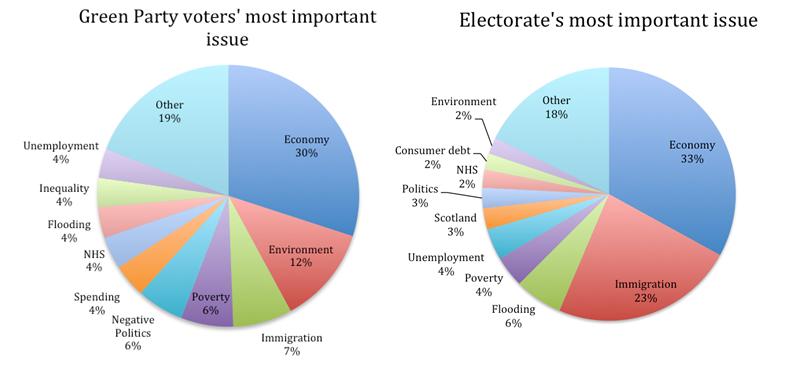
The Green Party vote did not increase its vote in the 2014 election, despite the failings of the Labour Party and a hard left campaign by the Greens emphasising education and child poverty.

The Green Party vote was abysmal in working-class electorates and among Maori and Pasifika. Most of the Green’s party vote is from the educated middle-class in rich electorates.

No NZ government bailout for the Sky City Casino extension cost overrun

Socialism and the intellectuals – Thomas Sowell

Previous Older Entries Next Newer Entries

Bassett, Brash & Hide

Celebrating humanity's flourishing through the spread of capitalism and the rule of law

Truth on the Market

Scholarly commentary on law, economics, and more

The Undercover Historian

Beatrice Cherrier's blog

Matua Kahurangi

Celebrating humanity's flourishing through the spread of capitalism and the rule of law

Temple of Sociology

Celebrating humanity's flourishing through the spread of capitalism and the rule of law

Velvet Glove, Iron Fist

Celebrating humanity's flourishing through the spread of capitalism and the rule of law

Why Evolution Is True

Why Evolution is True is a blog written by Jerry Coyne, centered on evolution and biology but also dealing with diverse topics like politics, culture, and cats.

Down to Earth Kiwi

Celebrating humanity's flourishing through the spread of capitalism and the rule of law

NoTricksZone

Celebrating humanity's flourishing through the spread of capitalism and the rule of law

Homepaddock

A rural perspective with a blue tint by Ele Ludemann

Kiwiblog

DPF's Kiwiblog - Fomenting Happy Mischief since 2003

The Dangerous Economist

Celebrating humanity's flourishing through the spread of capitalism and the rule of law

Watts Up With That?

The world's most viewed site on global warming and climate change

The Logical Place

Tim Harding's writings on rationality, informal logic and skepticism

Doc's Books

A window into Doc Freiberger's library

The Risk-Monger

Let's examine hard decisions!

Uneasy Money

Commentary on monetary policy in the spirit of R. G. Hawtrey

Barrie Saunders

Thoughts on public policy and the media

Liberty Scott

Celebrating humanity's flourishing through the spread of capitalism and the rule of law

Point of Order

Politics and the economy

James Bowden's Blog

A blog (primarily) on Canadian and Commonwealth political history and institutions

Science Matters

Reading between the lines, and underneath the hype.

Peter Winsley

Economics, and such stuff as dreams are made on

A Venerable Puzzle

"The British constitution has always been puzzling, and always will be." --Queen Elizabeth II

The Antiplanner

Celebrating humanity's flourishing through the spread of capitalism and the rule of law

Bet On It

Celebrating humanity's flourishing through the spread of capitalism and the rule of law

History of Sorts

WORLD WAR II, MUSIC, HISTORY, HOLOCAUST

Roger Pielke Jr.

Undisciplined scholar, recovering academic

Offsetting Behaviour

Celebrating humanity's flourishing through the spread of capitalism and the rule of law

JONATHAN TURLEY

Res ipsa loquitur - The thing itself speaks

Conversable Economist

In Hume’s spirit, I will attempt to serve as an ambassador from my world of economics, and help in “finding topics of conversation fit for the entertainment of rational creatures.”

The Victorian Commons

Researching the House of Commons, 1832-1868

The History of Parliament

Articles and research from the History of Parliament Trust

Books & Boots

Reflections on books and art

Legal History Miscellany

Posts on the History of Law, Crime, and Justice

Sex, Drugs and Economics

Celebrating humanity's flourishing through the spread of capitalism and the rule of law

European Royal History

Exploring the Monarchs of Europe

Tallbloke's Talkshop

Cutting edge science you can dice with

Marginal REVOLUTION

Small Steps Toward A Much Better World

NOT A LOT OF PEOPLE KNOW THAT

“We do not believe any group of men adequate enough or wise enough to operate without scrutiny or without criticism. We know that the only way to avoid error is to detect it, that the only way to detect it is to be free to inquire. We know that in secrecy error undetected will flourish and subvert”. - J Robert Oppenheimer.

STOP THESE THINGS

The truth about the great wind power fraud - we're not here to debate the wind industry, we're here to destroy it.

Lindsay Mitchell

Celebrating humanity's flourishing through the spread of capitalism and the rule of law

Alt-M

Celebrating humanity's flourishing through the spread of capitalism and the rule of law

croaking cassandra

Economics, public policy, monetary policy, financial regulation, with a New Zealand perspective

The Grumpy Economist

Celebrating humanity's flourishing through the spread of capitalism and the rule of law

International Liberty

Restraining Government in America and Around the World