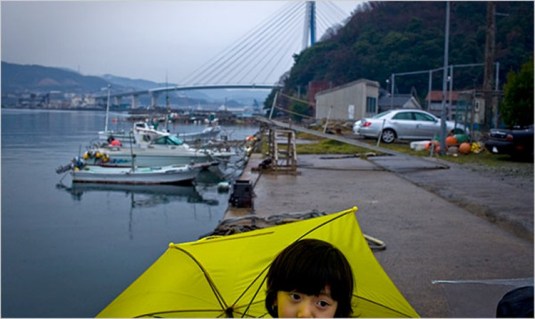
Wellington City Council builds inner city children’s sandpit next to red-stickered buildings marked for collapse in next earthquake

Average Marginal Income Tax Rates for New Zealand, 1907-2009 (WP 12/04) — The Treasury – New Zealand

Figure 5 - AMTRs for New Zealand 1907-2009   .

Note:  Average marginal tax rate calculations exclude the impact of ACC levies, the Benefit system and the Family Tax Credit (FTC) system which, at various times since the 1970s, involved lump sum transfers to lower income families with children that were withdrawn at higher income levels at rates of up to 30c/$, thereby adding to effective MTRs.

Comment: The average marginal tax rate has been pretty stable in New Zealand since about 1990 excepting for a drop in the late 1990s and then an increase in 1999.

via http://www.treasury.govt.nz/publications/research-policy/wp/2012/12-04

The quality of public policy debate in NZ: is the sale of surplus public housing an asset sale (privatisation)?

Prior to the October 2014 election, Prime Minister Key promised that there will be no further asset sales.

After the election, he announced an intention to possibly sell billions of dollars in public housing to use the sales to buy new public housing in other parts of New Zealand, such as in the suburbs and the perimeter of cities.

This was immediately denounced by the opposition as a broken election promise. Apparently a promise not to sell any further state owned enterprises is now interpreted not to sell any assets in the government balance sheet.

Journalists swallowed this criticism of the opposition, hook, line and sinker. The media seems to think that buying and selling of surplus government assets by Housing New Zealand and other social agencies is somehow unusual or new.

Any sensible observer would think it would be barmy for Housing New Zealand to have a whole bunch of old, rundown public houses purchased in the middle of the 20th century in the inner cities that are now worth a million of dollars each and not consider selling them.

These million-dollar public houses could be sold to finance the construction or purchase of several new houses for social housing purposes out in the suburbs.

What is the purpose of public housing? It is supposed to have something to do with helping the poor.

That would include managing the stock of public houses so that inner-city houses now worth a fortune are sold to finance more houses in the suburbs where most of the poor live.

Andrew Atkin explains how housing affordability has been destroyed in New Zealand.

The Feed the Kids Bill still leaves their parents to go hungry!

The Feed the Kids Bill that has been reintroduced into the new New Zealand Parliament still contains no provision to feed the parents who are too poor to make their children breakfast.

Why are these hungry parents not invited for breakfast as well? No parent would have breakfast if their children was to go hungry. Both the parent and child must have gone hungry that morning, perhaps morning after morning. There is no other charitable explanation.

The Bill aims to set up government funded breakfast and lunch programmes in all decile 1-2 schools. The cost is $100 million a year – including food, staffing, administration, monitoring and evaluation.

Lindsay Mitchell was on the money when she wrote:

Even parents reliant on a benefit are paid enough to provide some fruit and modest sandwiches daily.

An inability to do so is a symptom of a greater problem requiring scrutiny – for the sake of their child.

“The ‘income management’ regime provides a response to genuinely hungry children.

It may interest you that even Labour advocated for extended income management in its election manifesto.

Their 2014 ‘Social Development’ policy paper proposed, “…allow[ing] income management to be used as a tool by social agencies where there are known child protection issues and it is considered in the best interests of the child, especially where there are gambling, drug and alcohol issues involved.”

Hungry children is a child protection issue. Parents who fail to feed their children should come to the attention of the child protection authorities. Those on the benefit should be subject to income management  because they clearly are spending their money elsewhere.

On the Left, there is a refusal to discuss the role of addiction and incompetent parenting in child poverty. The 2014 election manifesto of the Labour Party is a welcome departure from that tradition of denial.

Solutions should reflect the problem definition and analysis: Duncan Garner on child poverty

Duncan Garner wrote a passionate column yesterday in the local paper calling for gutsy action on child poverty.

His analysis of the causes of child poverty in New Zealand was good. Garner’s solutions had nothing to do with what he had identified as the causes of child poverty. As Garner himself wrote:

… in order to tackle poverty it’s important to attempt to define what it means today.

Poverty is children living in crowded, damp homes who don’t get three square meals a day.

They may not have their own bed, they won’t see a doctor when they’re sick and many of them will be admitted to hospital with serious poverty-related illnesses such as respiratory problems and skin infections.

They may live in households where paying the rent accounts for 60 per cent of the family’s income every week.

Garner then discussed the plight of one particular family in Auckland:

The parents are nice people, with seven children.

They shared a tiny home with three other adults and another child.

Dad works full-time at a meat factory and they had been waiting 10 months for a state house. They had beds in the dining room and lounge.

They couldn’t afford the cost of a private rental home. One son, aged 11, had a serious lung problem. I saw poverty in action that day and it was deeply disturbing. I highlighted their plight on my radio show and within weeks a shamed Housing NZ had found them a home.

The family Garner discussed is in a tiny house because they lacked the income to rent a better one. They must rely on social housing provided by government with income related rents.

Recurring through his problem definition is the impact that rising housing costs is having on the poor.

Nonetheless, Garner then advocates cash payments to low income families, a tax credit system seen as more generous and inclusive, and a back to school bonus without addressing the supply of housing.

The evidence is overwhelming in New Zealand that the main driver of the increases in the child poverty since the 1980s is rising housing costs.

In the longer run after housing costs child poverty rates in 2013 were close to double what they were in the late 1980s mainly because housing costs in 2013 were much higher relative to income than they were in the late 1980s.

– Bryan Perry, 2014 Household Incomes Report – Key Findings. Ministry of Social Development (July 2014).

Any policy to reduce child poverty must increase the supply of houses by reducing regulatory restrictions on the supply of land.

The Metropolitan Limit confines the expansion of Auckland beyond the existing built-up area. This regulatory constraint explains the exceptionally high housing price-income ratio of Auckland.

The limit imposed on the horizontal expansion of the city in green fields encourages increases in residential prices. As demand for new housing increases, no new land supply can enter the market and stem price rises in response to this increased demand.

urban limit

If you serious about child poverty, you have to criticise government regulation: the dead hand of the Resource Management Act (RMA) on the poor and the vulnerable.

The Greens are the heirs of the 19th century Tory squires

Jim Rose's avatarUtopia, you are standing in it!

The Greens are no more than a reincarnation of the 19th century British Tory Radicals with their aristocratic sensibilities that combined strong support for centralised power with a paternalistic concern for the plight of the poor:

  • 19th century Tory radicals opposed the middle classes and the aesthetic ugliness they associated with an industrial economy; and
  • Like the 19th century Tory Radicals, today’s green gentry see the untamed middle classes as the true enemy.

Environmentalists have an aristocratic vision of a stratified, terraced society in which the knowing ones would order society for the rest of us.

Environmentalism offered the extraordinary opportunity to combine the qualities of virtue and selfishness

Many left-wingers thought they were expressing an entirely new and progressive philosophy as they mouthed the same prejudices as Trollope’s 19th century Tory squires: attacking any further expansion of industry and commerce as impossibly vulgar, because it was:

View original post 346 more words

John Armstrong: Seances and crackpot ramblings belong in Greens’ mystical past

Not so long ago, any Green MP who suggested sipping camomile tea or some other herbal concoction to ward off the horrific Ebola virus would surely have been deemed by his or her colleagues to be guilty – but only of being eccentric.

There used to be a lot of it about. Who can forget the senior party official who marked the opening session of one Green Party conference by lighting a large candle in recognition of any spirits that might have been present or invoke any that delegates wished to be present. (Sadly, the candle had to be extinguished soon after this mind-boggling seance. It fell foul of more earthly and more mundane forces – namely health and safety regulations.)

via John Armstrong: Seances and crackpot ramblings belong in Greens’ mystical past – Politics – NZ Herald News.

Homeopaths offer services ‘to help fight’ Ebola epidemic in west Africa | The Guardian

On their website, Van der Zee now urges supporters of homeopathy to sign the Change.org petition started in Australia, calling on WHO “to test and distribute homeopathy as quickly as possible to contain the outbreaks”.

Among the signatories is Steffan Browning, a Green Party MP in New Zealand.

He was publicly dismissed by the prime minister John Key as “barking mad”.

“Let’s be honest, this is a serious global issue, and if he really thinks that’s the answer I’d love to see the medical research,” said Key.

Browning admitted “it was probably a bit unwise” to sign the petition, which he also shared on his Facebook page encouraging other people to sign it. He said he had signed it “pretty late at night”, although he hoped WHO would keep an open mind on potential treatment options, since there was currently no cure.

New Zealand’s health minister, Jonathan Coleman, however, said treating Ebola patients with homeopathic remedies was “a wacko idea”, adding: “I don’t know what he’s thinking, it’s very, very dangerous. I think he really needs to engage his brain, it’s a really and stupid dangerous idea.”

via Homeopaths offer services ‘to help fight’ Ebola epidemic in west Africa | World news | The Guardian.

Anti-Science Left alert: Fight Ebola with homeopathy–NZ Green party MP – updated

NZ Green MP Steffan Browning says giving his support to a call for the World Health Organisation to deploy homeopathic remedies to combat the Ebola epidemic in West Africa.

Ebola

Mr Browning this week signed a petition started by Australian Fran Sheffield which calls on the World Health Organisation (WHO) to

End the suffering of the Ebola crisis. Test and distribute homeopathy as quickly as possible to contain the outbreaks.

Asked whether he thought homeopathy could cure Ebola, Mr Browning said:

It’s not for me to go down that track at all.

The World Health Organisation, world health authorities are doing that.

They will be considering I hope absolutely every possible options to this very concerning disease.

Green Party co-leader Russel Norman said the petition did not reflect the position of the party, and agreed it was unwise of Browning to have signed it.

Green party health spokesman Kevin Hague said he was "disappointed" Browning had signed the petition.

Browning is also on the record has been anti-GMOs, and is the green party spokesmen on genetic modification as well as the range of science-based portfolios such as agriculture and biosecurity.

To listen to most pundits, evolution, stem cells, and climate change are the only scientific issues worth mentioning—and the only people who are anti-science are on the right of politics.

Those on the left have numerous fallacies of their own. Aversion to clean energy programs, basic biological research, and even life-saving vaccines come naturally to many progressives. These are positions supported by little more than junk-science and paranoid thinking.

Concerns about vaccine safety and genetically modified organisms (GMOs) are often held up as evidence of anti-scientific beliefs among liberals. The anti-GMO movement is a product of the political left and has reached levels of delusion, paranoia and anti-intellectualism worthy of Michele Bachmann and young-earth creationists.

Though 70 percent of scientists support nuclear power, left-leaning organizations such as Greenpeace and the Sierra Club strongly oppose it.

Coalition Celebrating Equal Pay Case Outcome

I wonder who will pay for this? Caregiver wages are funded out of a fixed budget allocated by the government.

A higher wage will change the type of worker that the caregiving sector will seek to recruit, as happened after increases in the teenage went minimum wage.

When the teenage minimum wage went up in New Zealand, employment of 17 and 18-year-olds fell, while the employment of 18 to 19-year-olds increased because the latter were more mature and reliable than the younger contemporaries.

Eileen Brown's avatarPay Equity Challenge Coalition

Media release: Pay Equity Challenge Coalition

28 October 2014

Coalition Celebrating Equal Pay Case Outcome

“The Court of Appeal’s decision declining the employers’ appeal in the Kristine Bartlett case is a huge victory for women workers” said Pay Equity Coalition Challenge spokesperson Angela McLeod.

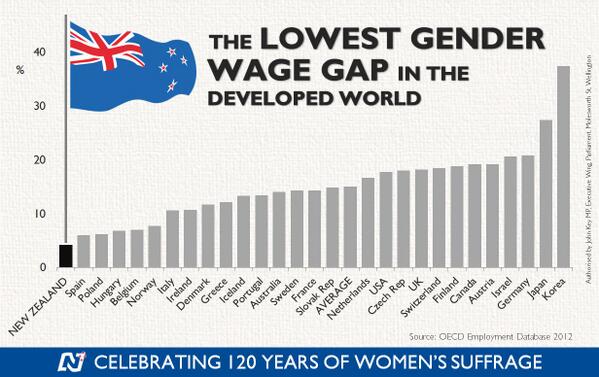
“The Courts’ decision that equal pay may be determined across industries in female-dominated occupations revitalises the Equal Pay Act 1972 and will be a major factor in closing New Zealand’s stubborn 14 percent gender pay gap”.

The judgement by the Court of Appeal upholding the Employment Court decision again validates the work of caregivers and that they are underpaid, she said.

“We commend the Service and Food Workers Union Nga Ringa Tota in taking this case and exposing the underpayment and undervaluation of aged care workers. And the decision is a victory for all the women’s organisations who have never given up fighting for equal pay,”…

View original post 92 more words

The fire of truth: the relationship between inequality and economic prosperity in New Zealand since the 1970s

Figure 1: Before Housing Costs Gini coefficient, New Zealand, 1982 – 2013

closertogether.org.nz/nzs-income-inequality-problem claims that NZ income inequality increased very rapidly in the late 1980s and 1990s — faster than in any other wealthy country.

Figure 2 shows that this rapid rise in inequality coincided with the resumption of economic growth after two lost decades: next to no increase in real GDP per working age New Zealander from 1974 to 1992.

Figure 2: Real GDP per New Zealander and Australian aged 15-64, converted to 2013 price level with updated 2005 EKS purchasing power parities, 1956-2012

image

Source: Source: Computed from OECD Stat Extract and The Conference Board, Total Database, January 2014, http://www.conference-board.org/economics

Perry (2014) found that:

  • Income inequality in New Zealand is at a similar level to Australia, Canada, Italy and Japan (Ginis of 32-33) and a little lower than the UK (34). Countries such as Denmark, Norway, Finland and Belgium have lower than average inequality (Ginis of 25-26). The US and Israel have higher scores of 39.
  • The top 1% in New Zealand received around 8% of all taxable income in 2010 and 2011 (before tax), similar to Norway, Finland and Australia, lower than Ireland and Switzerland (11%) and much lower than the UK and Canada (13%) and the US (18%).
  • The trend for the New Zealand share has been steady at around 8-9% since the mid 1990s, with perhaps a slight fall in the last few years. Many OECD countries saw small rises in the period, and in the USA the top 1% share continued to rise strongly, from 13% to 19%.

Perry (2014) concluded that:

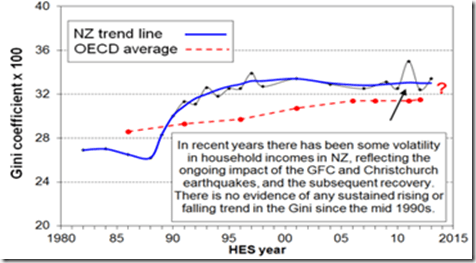
Overall, there is no evidence of any sustained rise or fall in inequality in the last two decades. The level of household disposable income inequality in New Zealand is a little above the OECD median. The share of total income received by the top 1% of individuals is at the low end of the OECD rankings.

This remark by Parry that there is no evidence of any sustained rise or fall in inequality in New Zealand in the last 20 years  is very much at odds with the claim of Closer Together New Zealand that income inequality inequality increased rapidly in the late 1980s and 1990s.

The increase in inequality in New Zealand  was in the late 1980s  and early 1990s. In the early 1990s, a long economic boom started that lasted until the global financial crisis.

Figure 3 : Income Inequality in New Zealand as Assessed by the Gini Coefficient

Source: Perry 2014 derived from Statistics NZ Household Economic Survey (HES) 1982–2012.

Figure 4: Income Inequality in New Zealand as Assessed by the P80/P20 Ratio

Source: Perry 2014 derived from Statistics NZ Household Economic Survey (HES) 1982–2012.

Figures 3 and 4 both show that after housing costs inequality in New Zealand is higher, but has been pretty stable for 20 years as measured by the Gini coefficient and by the P80/P20  ratio. (When individuals are ranked by equivalised household income and then divided into 100 equal groups, each group is called a percentile. If the ranking starts with the lowest income, then the income at the top of the 20th percentile is denoted P20; the income at the top of the 80th percentile is called P80. The ratio of the value at the top of the 80th percentile to the value at the top of the 20th percentile is called the P80/20 ratio and is often used as a measure of income inequality).

Figure 5: Proportion of HHs with housing cost outgoings to income of greater than 30%, by income quintile

clip_image002

Source: Perry (2014); OTI = outgoings to income

Figure 5 shows that

  • for the bottom quintile (Q1), the proportion with high outgoings to income (OTI) steadily reduced from 48% in 1994 to 34% in 2004, as unemployment fell, employment and income rose, and income-related rental policies were introduced in 2000 for those in HNZC houses. From HES 2009 to HES 2013 the proportion rose strongly from 33% to 42%, the highest it has been in the last 25 years except for the peak of 48% in 1994.
  • For households with incomes in the second quintile (Q2) there was a strong rise from the 1980s through to the mid 1990s, followed by a relatively flat trend to 2004. Since 2004, the proportion with high OTIs has risen strongly from 27% to 36%.
  • For the third quintile (Q3) the proportion with high OTIs settled at around 30% for 2007 to 2013, up from 21% in 2004 and 10% in 1988.

Rising housing costs in New Zealand have one explanation, which is restrictions on the supply of land under the Resource Management Act.

HT: nzchildren.co.nz/income_inequality for figures 3 and 4.

Trends in union membership in New Zealand, Australia, the UK and the USA

The Encyclopaedia of New Zealand says that the rate of union membership dropped sharply to under 20% when the Employment Contracts Act was passed in 1991 using the chart below.

Figure 1: Percentage of union members

Percentage of union members

The OECD union density data, which allows international comparisons back to 1970, tells a different story. OECD data on union membership in New Zealand started in 1970.

Figure 2: Union density,New Zealand, Australia, the UK and USA 1970-2013

image

Source: OECD Stats Extract

Note: Trade union density corresponds to the ratio of  wage and salary earners that are trade union members, divided by the total number of wage and salary earners (OECD Labour Force Statistics).

Figure 2 above shows that union membership has been in a long slow decline in New Zealand since the mid-1970s. This is been pretty much the pattern all round the world.

The much hated Employment Contracts Act 1991, much hated by the Left over Left, doesn’t really show up in the union density figures in figure 2. There is no sudden break in trend obvious in figure 2.

The longer time series in union membership in figure 1 compiled by the Encyclopaedia of New Zealand has long gaps between the data observations. Because of this, the sharp decline in union membership from the late 1970s, which it actually show up in its start-up , is not sufficiently distinguished from subsequent events because of the long gaps between observations reported in the figure 1.

If anything, union membership stopped declining in New Zealand in the late 1990s. Stabilising at about 20% of wage and salary earners.

Union membership continued to decline slowly in Australia, the UK and the USA  subsequent to 1998. Union membership stabilised in New Zealand by contrast. Perhaps the Employment Contracts act should be able to claim credit for that?

The Top 1% of income earners in NZ are lazy – the Occupy Movement have nothing to protest about – updated

The NZ top 1% share has been steady at 8-9% since the mid-1990s. The top 1%’s share rose strongly in the USA in recent decades, from 13% in the mid-1980s to 19% in 2012.

Figure 1: Top 1% income shares, USA, New Zealand and Sweden, 1970-2012

clip_image002

Source: The World Top Income Database at http://topincomes.g-mond.parisschoolofeconomics.eu/#Database

The top 1% in New Zealand is so lazy that Sweden is overtaking it – See figure 1.

The Occupy crowd blame everything from the global financial crisis to a bad environment on growing inequality and the top 1%. Such an argument has no foundation in fact in New Zealand.

Income inequality as measured by the Gini coefficient has not risen much in New Zealand for 20 years – See figure 2. How can the poor be getting getting poorer, ground under by  the yoke of capitalism, if the rich are not getting richer. The occupy movement should apply for unemployment benefits and seek career guidance.

Figure 2: Gini coefficient New Zealand 1980-2015

clip_image002[7]

Source: Bryan Perry, Household incomes in New Zealand: Trends in indicators of inequality and hardship 1982 to 2013. Ministry of Social Development (July 2014).

The last major increase in income inequality in New Zealand was  in the late 1980s and early 1990s and that was followed by a long economic boom – See figure 3 .

Figure 3:  Real GDP per New Zealander and Australian aged 15-64, converted to 2013 price level with updated 2005 EKS purchasing power parities, 1956-2012

image

Source: Computed from OECD Stat Extract and The Conference Board, Total Database, January 2014, http://www.conference-board.org/economics .

This long boom was after two decades of next to no economic growth in the 1970s and 1980s in New Zealand  – see figure 3 . This depression between 1974 and 1992 was New Zealand’s lost decades.

Figure 4 shows that both the lost decades of economic growth in New Zealand and the emergence of the trans-Tasman income gap the seemed to somewhat coincide with the top 1% of earners in Australia increasing their share of income from 6% to 10% of total incomes while the New Zealand top 1% sat on their hands. They are such lazy devils.

Figure 4: Top 1% income shares, USA, New Zealand and Australia, 1970-2012

image

Source: The World Top Income Database at http://topincomes.g-mond.parisschoolofeconomics.eu/#Database

The labour demographics of a NZ living wage

Distribution of families earning below the Living Wage

image

Source: Taxwell

The wage rates of people of different ages

image

Source: Taxwell

The distribution of wages by industry

image

Non-wage earners is mainly self employed. Source: Taxwell

NZ’s proposed Living Wage compared to other Living Wage proposals

image

Source: Living Wage campaign websites, and exchange rates as at 20 September 2013

  1. The Living Wage proposal is an ineffective way to help families with low incomes, because:
      • Many low income earners are people below the age of 30 who are single or part of a childless couple;
      • The extra earnings by parents would result in reduced tax credits or benefit payments (as they abate with higher income).
      1. If adopted as a minimum wage, New Zealand would be out of line with other countries, and it is likely to reduce employment, particularly of younger people trying to enter the labour market.
      2. The overall impact on poverty levels is likely to be small, but it would represent a change of focus from supporting families with children towards supporting young, single people.

      General source: The Treasury Living Wage Information Release

      Previous Older Entries Next Newer Entries

      Vincent Geloso

      Econ Prof at George Mason University, Economic Historian, Québécois

      Bassett, Brash & Hide

      Celebrating humanity's flourishing through the spread of capitalism and the rule of law

      Truth on the Market

      Scholarly commentary on law, economics, and more

      The Undercover Historian

      Beatrice Cherrier's blog

      Matua Kahurangi

      Celebrating humanity's flourishing through the spread of capitalism and the rule of law

      Temple of Sociology

      Celebrating humanity's flourishing through the spread of capitalism and the rule of law

      Velvet Glove, Iron Fist

      Celebrating humanity's flourishing through the spread of capitalism and the rule of law

      Why Evolution Is True

      Why Evolution is True is a blog written by Jerry Coyne, centered on evolution and biology but also dealing with diverse topics like politics, culture, and cats.

      Down to Earth Kiwi

      Celebrating humanity's flourishing through the spread of capitalism and the rule of law

      NoTricksZone

      Celebrating humanity's flourishing through the spread of capitalism and the rule of law

      Homepaddock

      A rural perspective with a blue tint by Ele Ludemann

      Kiwiblog

      DPF's Kiwiblog - Fomenting Happy Mischief since 2003

      The Dangerous Economist

      Celebrating humanity's flourishing through the spread of capitalism and the rule of law

      Watts Up With That?

      The world's most viewed site on global warming and climate change

      The Logical Place

      Tim Harding's writings on rationality, informal logic and skepticism

      Doc's Books

      A window into Doc Freiberger's library

      The Risk-Monger

      Let's examine hard decisions!

      Uneasy Money

      Commentary on monetary policy in the spirit of R. G. Hawtrey

      Barrie Saunders

      Thoughts on public policy and the media

      Liberty Scott

      Celebrating humanity's flourishing through the spread of capitalism and the rule of law

      Point of Order

      Politics and the economy

      James Bowden's Blog

      A blog (primarily) on Canadian and Commonwealth political history and institutions

      Science Matters

      Reading between the lines, and underneath the hype.

      Peter Winsley

      Economics, and such stuff as dreams are made on

      A Venerable Puzzle

      "The British constitution has always been puzzling, and always will be." --Queen Elizabeth II

      The Antiplanner

      Celebrating humanity's flourishing through the spread of capitalism and the rule of law

      Bet On It

      Celebrating humanity's flourishing through the spread of capitalism and the rule of law

      History of Sorts

      WORLD WAR II, MUSIC, HISTORY, HOLOCAUST

      Roger Pielke Jr.

      Undisciplined scholar, recovering academic

      Offsetting Behaviour

      Celebrating humanity's flourishing through the spread of capitalism and the rule of law

      JONATHAN TURLEY

      Res ipsa loquitur - The thing itself speaks

      Conversable Economist

      In Hume’s spirit, I will attempt to serve as an ambassador from my world of economics, and help in “finding topics of conversation fit for the entertainment of rational creatures.”

      The Victorian Commons

      Researching the House of Commons, 1832-1868

      The History of Parliament

      Articles and research from the History of Parliament Trust

      Books & Boots

      Reflections on books and art

      Legal History Miscellany

      Posts on the History of Law, Crime, and Justice

      Sex, Drugs and Economics

      Celebrating humanity's flourishing through the spread of capitalism and the rule of law

      European Royal History

      Exploring the Monarchs of Europe

      Tallbloke's Talkshop

      Cutting edge science you can dice with

      Marginal REVOLUTION

      Small Steps Toward A Much Better World

      NOT A LOT OF PEOPLE KNOW THAT

      “We do not believe any group of men adequate enough or wise enough to operate without scrutiny or without criticism. We know that the only way to avoid error is to detect it, that the only way to detect it is to be free to inquire. We know that in secrecy error undetected will flourish and subvert”. - J Robert Oppenheimer.

      STOP THESE THINGS

      The truth about the great wind power fraud - we're not here to debate the wind industry, we're here to destroy it.

      Lindsay Mitchell

      Celebrating humanity's flourishing through the spread of capitalism and the rule of law

      Alt-M

      Celebrating humanity's flourishing through the spread of capitalism and the rule of law

      croaking cassandra

      Economics, public policy, monetary policy, financial regulation, with a New Zealand perspective

      The Grumpy Economist

      Celebrating humanity's flourishing through the spread of capitalism and the rule of law