Gary Johnson and William Weld on Hillary, Trump, and Why You Should Vote Libertarian
27 Jul 2016 Leave a comment
in libertarianism, politics - USA Tags: 2016 presidential election
A far right populist contradicts the median voter theorem
25 Jul 2016 Leave a comment
in constitutional political economy, politics - USA, Public Choice Tags: British politics, left-wing populism, Leftover Left, median voter theorem, right-wing popularism, Twitter left
Hanson, Trump, UKIP, Alternative for Germany, Marine Le Pen, and the anti-immigration but pro-welfare state populist parties in northern Europe are all smeared by the media as far right parties but also are described as right-wing populists. Media bias is still constrained by the median voter theorem.
You cannot be on the far right but win lots of votes because the extremes of the political spectrum account for few votes. What do you think left-wingers stay within the Labour Party despite wanting its leader to be tried for war crimes.
Even in proportional representation systems, few far right and far left party set up on their own two feet and survive because of thresholds to win seats. There are Communist parties in European parliaments but their representation is small except for the Bundestag.
You cannot get into the 2nd round of the French presidential election, come 2nd in 40 British Labour Party seats, win the safest Labour Party seats in Queensland, and be attacked from Ted Cruz from the right and still be a far right winger.
All right-wing populist parties combine that heady brew of nationalism,opposition to immigration and free trade, and staunch support of the welfare state. Not surprisingly, something like 40% of their votes come from the traditional labour parties and social democratic parties.
Countering their appeal to the electorate cannot start with saying that anyone who votes for them is weird because the secret ballot allow secret malice.
The left is surprisingly bad at playing catch-up in identity politics. As one UKIP supporter said, I am a white working class Englishmen not on the benefit so Labour does not speak for me.
An inquiry established by Labour’s former policy chief, Jon Cruddas, MP found that Labour needs to
“stop patronising socially conservative Ukip voters and recognise the ways in which Ukip appeals to former Labour voters”, the report says, adding: “Labour is becoming a toxic brand. It is perceived by voters as a party that supports an ‘open door’ approach to immigration, lacks credibility on the economy, and is a ‘soft touch’ on welfare spending.”
At present, the report argues, Labour is “largely a party of progressive, social liberals who value principles such as equality, sustainability, and social justice.
It is losing connection with large parts of the voter population who are either pragmatists in their voting habits or social conservatives who value family, work, fairness and their country.” It adds: “Labour is becoming dangerously out of touch with the electorate and … unwilling to acknowledge this growing estrangement.”
Gary Johnson on Bill Maher
24 Jul 2016 Leave a comment
in politics - USA Tags: 2016 presidential election
Gary Johnson: He’s Also Running | Full Frontal with Samantha Bee
24 Jul 2016 Leave a comment
in constitutional political economy, libertarianism, politics - USA Tags: 2016 presidential election
HT: Lise Rose
Labor, Jobs, and the Modern Economy | Becker Friedman Institute
20 Jul 2016 Leave a comment
in economics, industrial organisation, Joseph Schumpeter, labour economics, politics - USA, population economics, technological progress Tags: creative destruction
% US top incomes from wages, salaries and pensions, 1913 – 2015,
18 Jul 2016 Leave a comment
in applied welfare economics, economic history, human capital, industrial organisation, labour economics, occupational choice, politics - USA, poverty and inequality, survivor principle Tags: CEO pay, entrepreneurial alertness, superstar wages, superstars, top 1%, top incomes
The rich in the USA long ago became a working rich; most top incomes are from wages and salaries.
Source: The World Wealth and Income Database.
US, Australian and NZ real house prices, March 1975 to March 2016
17 Jul 2016 Leave a comment
in economics of regulation, politics - Australia, politics - New Zealand, politics - USA, urban economics Tags: Australia, housing affordability
More on the @realdonaldtrump not being an extreme right winger
16 Jul 2016 Leave a comment
in constitutional political economy, politics - USA, Public Choice
Are Republicans or Democrats More Anti-Science?
16 Jul 2016 Leave a comment
in economics of information, economics of media and culture, economics of regulation, environmental economics, health economics, politics - USA Tags: Anti-Science left, rational irrationality
German, French, British, and US real housing prices, March 1975 to March 2016
15 Jul 2016 1 Comment
in economic history, economics of regulation, politics - USA, urban economics Tags: British economy, France, Germany, housing affordability
Still have not seen a decent explanation for why German housing prices seem to fall for decades on the trot.
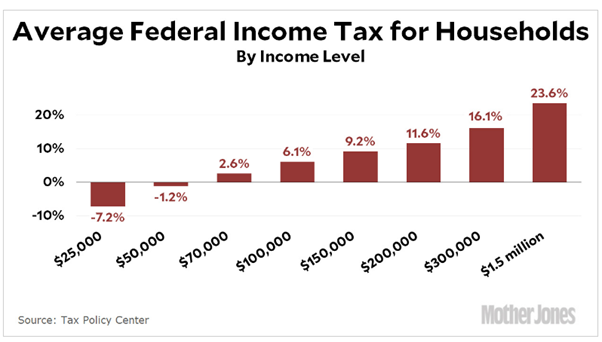
Do the Rich Pay Their Fair Share?
13 Jul 2016 Leave a comment
in politics - USA, public economics Tags: envy, superstars, taxation and entrepreneurship, taxation and investment, top 1%, top 10%
When a proper Marxist reviews Dark Money: The Hidden History of the Billionaires Behind the Rise of the Radical Right
12 Jul 2016 1 Comment
in constitutional political economy, politics - USA, Public Choice
The book Dark Money by jane Mayer on the influence of the Koch brothers and the reviews of the same were written stone cold sober. Two libertarian billionaires are a cabal that secretly rule the USA with hard right libertarian policies. The sense of alienation and powerless libertarians feel from the current political system is deeply mistaken if Mayer is to be believed. Libertarians secretly rule despite their minuscule numbers!
I only met a libertarian in person recently. Most people have never heard of libertarians or think they believe in sexual license. A number of libertarians do not know what a libertarian is because a good minority of them oppose marijuana decriminalisation.
There are no elected libertarian officeholders in the USA. The Australian libertarian senator was elected by the donkey vote in New South Wales. Voters confused his party name, the Liberal Democrats, with that of the Liberal party. Perhaps 20% of Liberal party voters do not know the correct name of the Liberal party.
Former New Mexico Republican governor and now libertarian presidential candidate Gary Johnson is attracting attention simply because Clinton and Trump are such appalling candidates. Previous libertarian presidential candidates have not got more than about half a percent of the vote in presidential campaigns.
There are libertarian minded senators such as Rand Paul and his father who was in the House of Representatives but they are but a handful. The Koch Brothers money had no success in pushing their names forward to true power in presidential primaries.
The Republican presidential primary candidate favoured by the Koch brothers, Governor Walker, dropped out before the Iowa caucuses despite having more money than the rest of the field.
Dark Money and its book reviews would have us believe that despite abysmal election results, libertarians still rule the roost. An example is the book review at the Guardian:
A veteran investigative reporter and a staff writer for the New Yorker, Mayer has combined her own research with the work of scores of other investigators, to describe how the Kochs and fellow billionaires like Richard Scaife have spent hundreds of millions to “move their political ideas from the fringe to the center of American political life”…
In the 2016 elections, the goal of the Koch network of contributors is to spend $889m, more than twice what they spent in 2012. Four years ago, because Obama had the most sophisticated vote-pulling operation in the history of American politics, and a rather lackluster opponent, a Democratic president was able to withstand such a gigantic financial onslaught. This time around, it’s not clear that any Democrat will be so fortunate.
Jane Mayer summarises her view relatively succinctly this way when discussing a study by Harvard academics of dark money
In essence, the Harvard study concludes, the Kochs and their allied donors have far financial influence over American politics that extends far beyond the Presidential race. They have acted as an ideological magnet, pulling the Republican Party far to the right on economic issues, in alignment with their own and other donors’ financial interests. On issue after issue, Republican candidates have sworn fealty to the Kochs’ ultra-free-market positions. The study calculates that Republican members of the House and Senate largely voted as Americans for Prosperity told them to eighty-eight per cent of the time last year, up from seventy-three per cent of the time in 2007. More eye-catching, the positions that A.F.P. took, and that the elected representatives adopted, put them far to the right of the general voting population, including many Republicans voters.
The review of Mayer’s book in the New York Review of Books accepts her hypothesis uncritically
Jane Mayer’s remarkable new book makes it abundantly clear that the Kochs, and the closely connected group of billionaires they’ve helped assemble, have spent thousands of times that much over the past few decades, and that in the process they’ve distorted American politics in devastating ways, impairing the chances that we’ll effectively respond to climate change, reducing voting rights in many states, paralyzing Congress, and radically ratcheting up inequality.
The book review in The Nation is even more breathless about the reach of the Koch brothers cabal
I’m ashamed to admit that I had little understanding of the scope of the activities that Charles and David Koch have undertaken to mainstream their radical libertarian ideology until I read Jane Mayer’s pathbreaking account in The New Yorker in 2010. (I fought a losing battle on the jury of the National Magazine Awards that year to award it the prize in the reporting category.) Back then, the fantastic reach of the Kochs’ personal investments and subterranean funding network was difficult to track. It has since grown to a size almost impossible to imagine, with a sphere of influence that touches nearly every aspect of American public life. That’s the message of Dark Money, the authoritative book on the Kochs that Mayer has spent the past five years reporting.
Jonah Goldberg’s review of Dark Money is a bit of a fresh air after all these dark conspiracy theories
“What people need to understand is the Kochs have been playing a very long game,” she told NPR’s Steve Inskeep. “And it’s not just about elections. It started four decades ago with a plan to change how America thinks and votes. So while some elections they win and some elections they lose, what they’re aiming at is changing the conversation in the country.” …the Kochs are secretive, sinister denizens of the stygian underworld of “dark money” and the “radical right.” Except for the fact that the Kochs have been out in the open for nearly a half-century. David Koch ran for vice president on the Libertarian ticket in 1980, which you might argue is a brilliant way to hide in plain sight, given how little attention the Libertarian Party gets.
To its credit, the book review in Dissent magazine is the only one on the left that actually enquires into the mechanisms of and divisions within political pressure groups and political parties:
By focusing on elite idea production and election messaging, Mayer overlooks divisions within the right and offers no insights that could help us understand the unruly Trump surge. Dark Money portrays an unstoppable, unified far-right juggernaut led by plutocrats. It correctly alerts us to many aspects of their secretive, unaccountable machinations. But the full story of what is happening on the right is more complex and volatile.
It took a proper Marxist to remember that conspiracy theories do not succeed on their own. They require grunt work on the ground and there are feuding factions galore not even aware of the Koch brothers, much less their influence and money:
From the top, Fox News and other right-wing media outlets hyped the “Tea Party” label as a way for conservative voters to express anger at newly installed President Obama and Democratic congressional majorities; and many professional advocacy organizations jumped on the bandwagon, offering buses to carry people to rallies where their own operatives gave speeches. But these top-down maneuvers were not the driving force of the movement. Ordinary conservative citizens and community activists, almost all white and mostly older, provided angry passion and volunteered their energies to make the early Tea Party more than just occasional televised rallies. Grassroots Tea Partiers accomplished an utterly remarkable feat: starting in 2009, they organized at least 900 local groups,
Mayer forgot that the Tea Party was not libertarian and was very much a grassroots movement as the Dissent Magazine reviewer points out:
We learned that grassroots Tea Partiers were far from disciplined libertarian followers of ultra-free-market advocacy groups. Local Tea Party groups met in churches, libraries, and restaurants, and collected small contributions or sold books, pins, bumper stickers and other Tea Party paraphernalia on commission to cover their modest costs. They did not get by on checks from the Koch brothers or any other wealthy advocacy organizations. Furthermore, the views of both grassroots Tea Party activists and of many other Republican-leaning voters who have sympathized with this label do not align with free-market dogmas.
The Tea Party was socially conservative but only fiscally conservative when it came to other groups than them receiving money from the government as the Dissent review reminds us
… ordinary Tea Party activists and sympathizers are worried about sociocultural changes in the United States, angry and fearful about immigration, freaked out by the presence in the White House of a black liberal with a Muslim middle name, and fiercely opposed to what they view as out of control “welfare spending” on the poor, minorities, and young people. Many Tea Partiers benefit from Social Security, Medicare, and military veterans’ programs, and do not want them to be cut or privatized. About half of Tea Party activists or sympathizers are also Christian conservatives intensely concerned with banning abortion and repealing gay marriage.
In what continues to be a devastating review of the Mayer book, Dissent reminds us that
Today’s Republican Party is being revamped and torn asunder from contradictory directions. Almost all GOP candidates and legislators, even most presidential aspirants, espouse free-market, anti-government ideas like those pushed by the Koch network. But these honchos are not necessarily carrying voters with them. Many centrist voters do not want to cut education or gut the Environmental Protection Agency, while many right-wing voters care most about stopping immigration, outlawing abortions, and cutting back on what they view as government largesse for the poor. The core Koch agenda of bashing unions, slashing taxes for the rich, blocking environmental protection measures, and dismantling Social Security is not the top priority for many conservative voters.
The Dissent magazine review still believes that the Koch brothers have the Republican Party in their grasp, but was sensible enough to remind that the Republican Party is divided and voters still think for themselves. That was a crucial concession. As the Wall Street Journal review said
It can be argued that the cynicism behind the politics-for-sale claim, even when displayed by a talented writer like Ms. Mayer, reflects a distrust of the American democratic system—as if “the people” are commodities to be purchased and not autonomous beings who can think for themselves. The cynicism also denigrates the work of activists and scholars who join up with Cato, the Manhattan Institute, Heritage, Brookings, Hoover, the Sierra Club, the World Wildlife Foundation, Common Cause—or whatever organization one might choose—because they believe in what those bodies stand for, not because they are the mindless slaves of some rich donor.
#Dallaspoliceshooting brought out best and worst in @ACLUTx @ACLU
09 Jul 2016 Leave a comment
in economics of crime, politics - USA
The American Civil Liberties Union seems to be against making policing safer.

Source: Was using the Dallas robot bomb legal? – The Washington Post.
Police are workers with the same right of any other worker not only to go home to their families safely and uninjured at the end of the day, they have the same right under the common law to defend their lives and the lives of others with reasonable force.
Whether there is a deadly threat to police, they are lawfully entitled to defend their own lives and those of others with deadly force. If the police reasonably believe that someone poses an imminent danger of death to others, and that killing him is necessary to prevent that danger, they can try to kill him.
Armed criminals can always lay down their arms and surrender. I am all for technologies that make policing safer and therefore the rest of us safer.
Despite the media hype, surprisingly few people are shot by police who are unarmed and not resisting. The Washington Post estimated that less than 5% of police killings are in any way suspicious.


Recent Comments