In 1800 the global average life expectancy was 32.
Global health inequality was low – no country had over 40 years! http://t.co/BRpzvw9XJA— Max Roser (@MaxCRoser) May 11, 2015
@MaxCRoser Now over the last decades many caught up – and inequality is declining. While average is now much higher. http://t.co/NDmWzivrhs— Max Roser (@MaxCRoser) May 11, 2015
If you’re willing to put your money where your grumpy socialist mouth is, you would step into a time machine to go back to the 70s because that would make you wealthier.
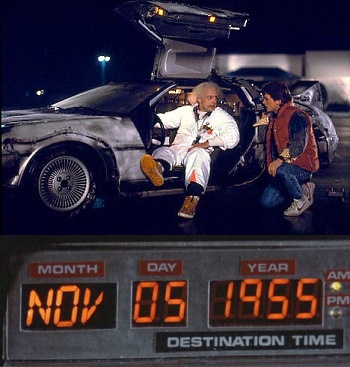
A way to grasp the conceptual difficulties of measuring changes in living standards and life expectancies across the decades is to step into Brad De Long’s time machine.
In this thought experiment, De Long asks how much you would want in additional income to agree to go back in time to a specific year. De Long was an economic historian examining the differences in American living standards since 1900.
Of course, to work how much you would want be paid (or were willing to pay to go back to the Senator Warren’s better times in the 1970), if you used a less biased estimate of price inflation, the answer is steady increases in incomes for the last 25 years so you would want to be paid.
Senator Warren’s linked article actually confirms the same results. For after-tax incomes, everybody is noticeably richer than 30 years ago, especially if you’re a woman.
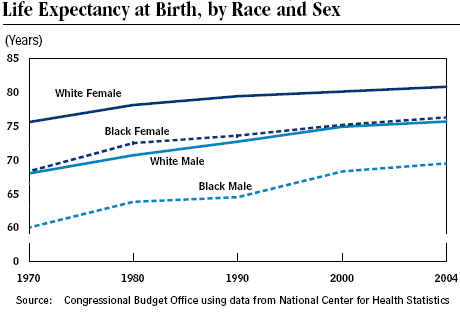
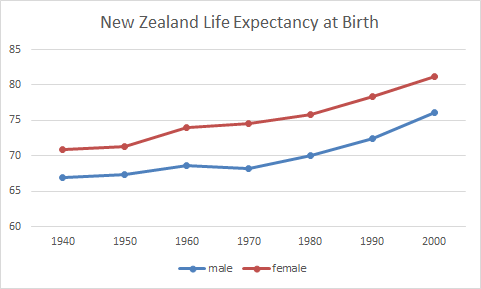
Senior citizen socialists should take care and think deeply about entering that time machine. It might mean instant death for them because of higher life expectancy is now as compared to the 1970s.
When you do step into that time machine be very picky about what part of the USA you go to if you like air conditioning. There wasn’t as much air conditioning in homes in the 1970s as compared to day, especially if you were poor.
Another thing is, don’t expect to take that many trips. Air travel was not as common in the 70s. Airline deregulation was at the very end of the 1970s.
To add to your boredom in your spare time, your chances of owning a car was a lot less back then than now despite Senator Warren’s assurance that there has been no income growth for the bottom 90% in the last 30 to 40 years. She said that, not me.
As for lifting yourself up in life, and living the American dream, which was the title of Senator Warren’s op-ed? You were much more likely to not go to college back in the glory days of the 70s than now, especially if you were poor.
The most curious anomaly in Senator Warren’s arguments is that many consumer goods are fallen rapidly in price over the last 40 years, but people are somehow unable to buy them from the same fixed income.
1. Today’s working women (henceforth described as “daughters”) have higher wages than their mothers – but do not have higher wages than their fathers. Men have higher wages than both their fathers and their mothers.
2. The poorest women are doing best. 80% of daughters raised in the bottom quintile have higher wages than their fathers did. (h/t Scott Winship)
3. “Men’s wages remain more important to increasing couples’ family income,” despite “women’s significant generational gains” …
4. Women who grew up in households where their mother did not work actually have the highest family incomes today—but not because they themselves earn more. Daughters’ individual incomes do not vary significantly by mother’s work status, but family income does—suggesting that daughters whose mothers didn’t work have higher earning husbands. (Catherine Rampell discovered this by asking Pew to split out their analyses by mothers’ labor choices.) Perhaps those raised in more traditional settings are more likely to replicate a traditional division of labor?
Why Evolution is True is a blog written by Jerry Coyne, centered on evolution and biology but also dealing with diverse topics like politics, culture, and cats.
“We do not believe any group of men adequate enough or wise enough to operate without scrutiny or without criticism. We know that the only way to avoid error is to detect it, that the only way to detect it is to be free to inquire. We know that in secrecy error undetected will flourish and subvert”. - J Robert Oppenheimer.






 Utopia, you are standing in it!
Recent Comments